
Berkeley Relocation Assistance: When You Owe 9,413 Per Tenant
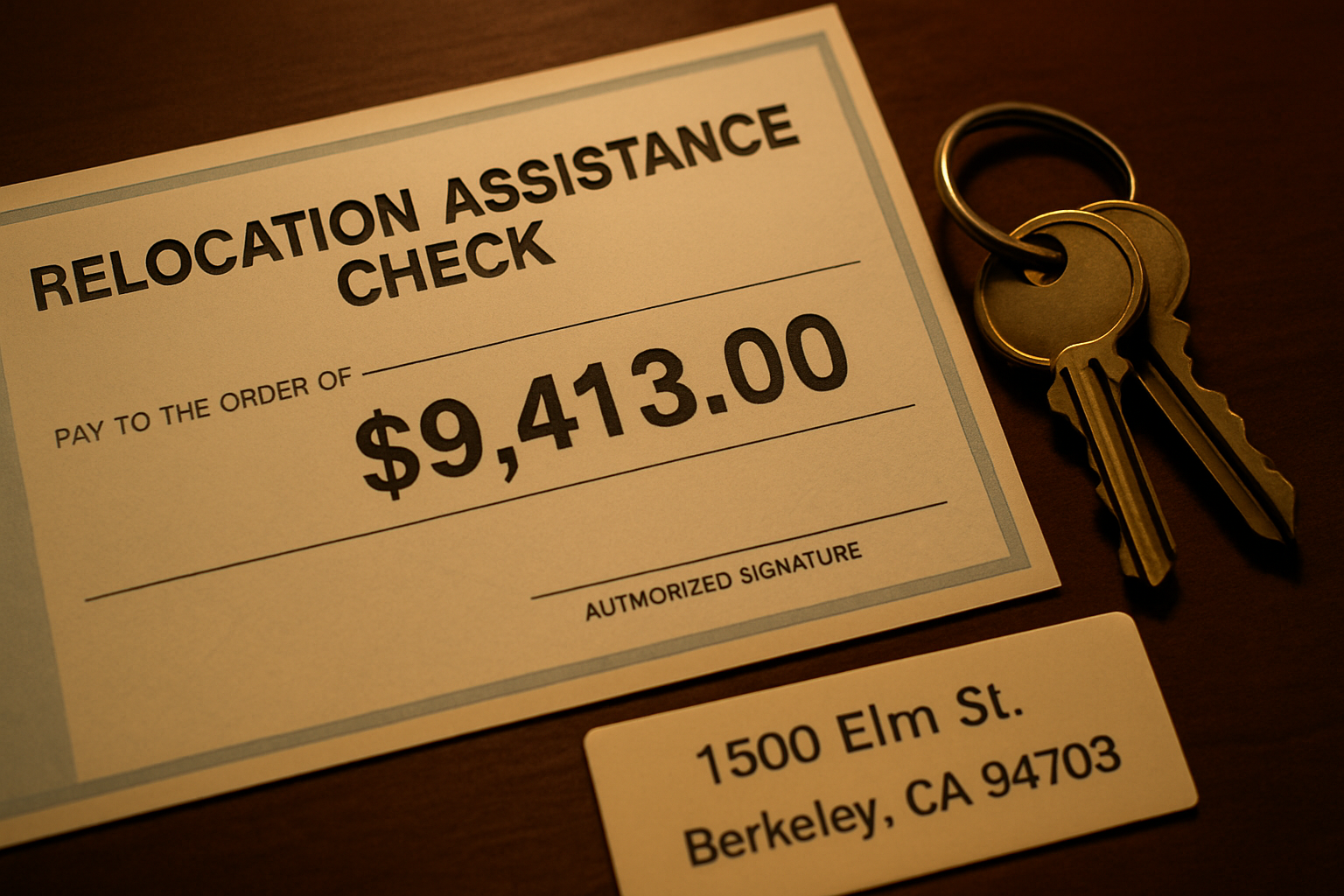
Berkeley Relocation Assistance 19413

Key Takeaways

  • Berkeley requires $19,413 per tenant in base relocation assistance for Ellis Act withdrawals and owner move-in evictions
  • Vulnerable tenants (elderly, disabled, low-income, families with minors) add $6,471 per qualifying tenant, totaling $25,884
  • A 4-unit building with 2 vulnerable tenants can generate $90,588 in relocation obligations before you collect a dollar
  • Berkeley’s relocation amounts are the highest in California and are adjusted annually by CPI
  • Ellis Act properties carry right-of-return restrictions that can follow the building for years

The $19,413 Number That Changes Your Math

If you own rental property in Berkeley, California, there is a number you need to memorize: $19,413. That is the base relocation assistance payment the City of Berkeley requires landlords to pay each tenant when removing a unit from the rental market through an Ellis Act withdrawal, owner move-in eviction, or certain other no-fault terminations.

This is not a typo. It is not a range. It is the current per-tenant minimum, adjusted annually by the Consumer Price Index. And it is only the starting point.

If any of your tenants qualify as “vulnerable” under Berkeley’s Rent Stabilization Ordinance, you owe an additional $6,471 per qualifying tenant. That pushes the total to $25,884 per vulnerable tenant. In a building with multiple tenants, several of whom qualify as vulnerable, total relocation obligations can exceed $75,000 or even $100,000 before you have filed a single permit or swung a single hammer.

This article breaks down exactly when Berkeley relocation assistance is triggered, who qualifies for additional payments, how Berkeley compares to other California cities, and how to calculate your total exposure before making any decisions about your property.

When Is Relocation Assistance Required in Berkeley?

Berkeley’s relocation assistance requirements are governed by the Berkeley Rent Stabilization Board and apply to specific categories of no-fault evictions. Unlike AB 1482, which requires only one month’s rent as relocation assistance for no-fault evictions statewide, Berkeley’s ordinance imposes fixed dollar amounts that far exceed most tenants’ monthly rent.

Relocation assistance is required for the following actions:

1. Ellis Act Withdrawals

The Ellis Act (Government Code 7060-7060.7) gives landlords the right to go out of the rental business entirely. You can withdraw all units in a building from the rental market. However, Berkeley layers significant financial obligations on top of that right. Every tenant in every unit must receive the full relocation payment. You cannot selectively withdraw individual units — the Ellis Act requires withdrawal of all units on the parcel.

For a four-unit building fully occupied, you are looking at a minimum of $77,652 in base relocation payments alone (4 tenants at $19,413 each). If any units have multiple tenants on the lease, each tenant is entitled to their own payment.

2. Owner Move-In Evictions

If you want to move into a rent-controlled unit yourself, or move in a qualifying family member (spouse, domestic partner, parent, child, grandparent, grandchild), you must pay relocation assistance to the displaced tenant. Berkeley’s owner move-in provisions are among the most restrictive in the state. You must actually occupy the unit as your primary residence for at least 36 months. If you fail to do so, the prior tenant has the right to return at their original rent, and you may face additional penalties.

3. Demolition

Demolishing a residential building to rebuild or repurpose the lot triggers relocation obligations for every displaced tenant. The city also requires demolition permits, which involve their own review process and potential delays. Relocation must be paid before the tenant vacates.

4. Substantial Renovation

If you plan renovations significant enough that the unit cannot be safely occupied during construction, you must temporarily relocate the tenant and pay relocation assistance. Berkeley distinguishes between minor repairs (which do not trigger relocation) and substantial rehabilitation (which does). The Rent Stabilization Board makes the determination, and the bar for “substantial” is lower than many landlords expect.

5. Condominium Conversion

Converting rental units to condominiums triggers relocation obligations. Berkeley has imposed a moratorium on condo conversions for most residential buildings, but where conversions are permitted, the full relocation payment schedule applies.

Who Qualifies as a “Vulnerable” Tenant?

Berkeley’s relocation ordinance adds a supplemental payment of $6,471 for each tenant who qualifies as vulnerable. This is in addition to the $19,413 base payment, bringing the total to $25,884 per vulnerable tenant. The vulnerable categories are:

  • Low-income tenants — Household income at or below 80% of the Area Median Income (AMI) for Alameda County. For a single person in 2026, that threshold is approximately $76,000. For a family of four, approximately $108,000.
  • Disabled tenants — Any tenant with a qualifying disability under state or federal law, including physical, mental, or developmental disabilities.
  • Elderly tenants — Age 62 or older at the time of the eviction notice.
  • Families with minor children — Any household that includes a child under 18 years of age.
  • Long-term tenants — Tenancies that predate January 1, 1999. These tenants have occupied their units for over 27 years and are considered particularly vulnerable to displacement given Berkeley’s housing market.

A single tenant can qualify under multiple categories, but the supplemental payment is a flat $6,471 regardless of how many categories apply. However, if a unit has two tenants on the lease and both qualify as vulnerable, you owe the supplemental payment to each of them individually.

This is where the numbers escalate quickly. A couple in their 60s who have lived in a Berkeley unit since 1995, both qualifying as elderly and long-term tenants, would each be entitled to $25,884. That single unit costs you $51,768 in relocation assistance alone.

How Berkeley Compares to Other California Cities

Berkeley’s relocation payments are the highest fixed-amount relocation obligations in California. Here is how they compare to other major rent-controlled jurisdictions:

City Base Relocation Vulnerable/Qualified Notes
Berkeley $19,413 per tenant $25,884 per tenant Highest fixed amount in CA; adjusted annually by CPI
Los Angeles $10,650 – $13,950 $22,450 – $26,550 Varies by length of tenancy; qualified = elderly, disabled, minor children
San Francisco $7,614 per tenant $7,614 + rent differential Plus rent differential for comparable unit; additional $5,076 for vulnerable
Oakland $8,042 – $12,218 + $2,500 per vulnerable tenant Varies by bedroom count; lower supplemental than Berkeley
San Jose $6,925 – $12,414 + 40% for qualified tenants Based on bedroom count; percentage-based supplemental
AB 1482 (statewide) 1 month’s rent N/A No-fault only; much lower than any local ordinance

The contrast with Oakland is particularly striking given the two cities share a border. An Ellis Act eviction in Oakland might cost $12,218 per tenant plus $2,500 for vulnerable tenants, totaling $14,718. The same action in Berkeley costs $25,884 for a vulnerable tenant — 76% more. For landlords who own property in both cities, this difference can swing a renovation or exit decision significantly.

Under AB 1482, the statewide baseline, no-fault relocation is capped at one month’s rent. For a tenant paying $2,000 per month, that is $2,000. Berkeley’s $19,413 base payment is nearly ten times that amount for the same type of eviction.

The Ellis Act Catch: Right of Return and Re-Rental Restrictions

Paying the relocation assistance is only the first cost of an Ellis Act withdrawal in Berkeley. The Rent Stabilization Ordinance imposes ongoing restrictions that can follow the property for years.

Right of return: If you withdraw units under the Ellis Act and later decide to return them to the rental market, the displaced tenants have the right of first refusal. You must offer the units back to the original tenants at the rent they were paying when they were displaced, adjusted only by the allowable annual increases that would have applied during the withdrawal period. This right of return applies for up to 10 years after the withdrawal.

Re-rental at market rate restricted: If you re-rent within five years of an Ellis Act withdrawal, the prior rent control provisions apply. You cannot simply withdraw, wait a year, and re-list at market rate. The Rent Board tracks withdrawals and will enforce these restrictions.

New construction exception: If you demolish the existing structure and build a genuinely new building, the new units may be exempt from rent control under the Costa-Hawkins Rental Housing Act (properties built after 1995 are generally exempt from local rent control vacancy decontrol restrictions). However, this is a full demolition-and-rebuild scenario, not a renovation, and it carries its own permitting timeline and costs in Berkeley.

The practical effect is that an Ellis Act withdrawal in Berkeley is a one-way door. Once you pull units off the market, re-entering the rental market with those same units carries obligations that persist for a decade. Landlords who use the Ellis Act as a short-term strategy to renovate and re-rent at higher rents will find Berkeley’s ordinance specifically designed to prevent that approach.

The Registration-AGA Link: Compliance Tied to Revenue

Berkeley has a unique compliance mechanism that ties your ability to take any rent increase to your registration status with the Rent Stabilization Board. Every covered rental unit in Berkeley must be registered with the Rent Board, and the landlord must pay an annual registration fee (currently approximately $300 per unit, though the amount is adjusted periodically).

Here is the catch: if your registration fees are unpaid, you cannot implement any rent increase — not even the Annual General Adjustment (AGA) that the Rent Board authorizes each year. This is not a theoretical restriction. The Rent Board actively tracks registration status, and tenants can verify whether their unit is properly registered through the Board’s public database.

In most other California rent-controlled cities, registration is required but non-compliance results in fines or administrative penalties. In Berkeley, non-compliance directly blocks your revenue. A landlord who forgets to pay the registration fee for two years effectively forfeits two years of allowable rent increases. Those increases cannot be banked or applied retroactively. The revenue is simply lost.

This makes Berkeley’s rent registration system uniquely punitive. For landlords managing multiple units, a missed registration payment on even one unit can create a significant gap between the rent you are collecting and the rent you are entitled to collect. If you are self-managing your rental properties, tracking registration deadlines is as important as tracking lease expirations.

Security Deposit Interest: An Annual Obligation

Berkeley is one of the few California cities that requires landlords to pay interest on security deposits. Under the Berkeley Municipal Code, landlords must pay tenants annual interest on their security deposits at a rate set by the City. The interest must be paid or credited to the tenant each year, not just at the end of the tenancy.

The required interest rate is typically tied to a benchmark rate and is published annually. While the dollar amount may seem small on a single deposit, the administrative burden is real: you must track the deposit amount, calculate the interest, and either pay it to the tenant or credit it against rent each year. Failure to pay interest can give tenants grounds to dispute deductions from the deposit at move-out.

This requirement applies regardless of whether you are using a separate interest-bearing account for the deposit. The obligation is on the landlord to pay the specified rate, even if the actual account earns less. For landlords managing multiple Berkeley units, this creates an annual compliance task that does not exist in most other California cities. Understanding all the nuances of California security deposit laws is essential to avoid costly mistakes.

Measure MM (2024): What Changed

In November 2024, Berkeley voters approved Measure MM, which amended the Rent Stabilization and Eviction for Good Cause Ordinance. The measure introduced several significant changes that affect landlords:

  • Expanded just cause protections: Measure MM extended eviction protections to cover additional categories of tenants and narrowed the grounds for no-fault evictions.
  • Strengthened relocation requirements: The measure reinforced and in some cases increased the relocation assistance obligations, making it more expensive to pursue no-fault evictions.
  • Enhanced enforcement: The Rent Stabilization Board received additional authority to investigate complaints, impose fines, and audit landlord compliance with registration and relocation requirements.
  • Tenant habitability standards: The measure codified minimum habitability standards and linked them to the landlord’s ability to pursue certain types of evictions. A landlord with outstanding habitability violations may be barred from filing owner move-in or Ellis Act evictions until the violations are resolved.
  • Anti-retaliation provisions: Measure MM strengthened protections against retaliatory evictions, making it harder for landlords to use no-fault eviction grounds as a pretext for displacing tenants who have filed complaints or exercised their legal rights.

The practical effect of Measure MM is that Berkeley’s rent control framework has become even more restrictive. Landlords who have not reviewed their compliance posture since November 2024 should consult the Rent Stabilization Board’s updated guidelines or speak with a local attorney familiar with the amended ordinance.

How to Calculate Your Total Relocation Exposure

Before making any decision about an Ellis Act withdrawal, owner move-in, or major renovation in Berkeley, you need to calculate your total relocation exposure. Here is a worked example.

Scenario: 4-Unit Building, Ellis Act Withdrawal

Building: 4 residential units in Berkeley, all occupied

Unit 1: Single tenant, age 45, moved in 2018, income above AMI
Relocation: $19,413 (base only)

Unit 2: Couple, both age 67, moved in 1996, income below 80% AMI
Both qualify as elderly + long-term tenants + low-income = vulnerable
Relocation: $25,884 x 2 tenants = $51,768

Unit 3: Family of 3 (two adults, one child age 8), moved in 2015, income above AMI
Qualifies as family with minor = vulnerable
Relocation: $25,884 (1 payment for the household — note: if both adults are on the lease, each is entitled separately)
If both adults on lease: $25,884 x 2 = $51,768

Unit 4: Single tenant, age 35, moved in 2020, no qualifying vulnerability
Relocation: $19,413 (base only)

Total (conservative, one payment per unit):
$19,413 + $51,768 + $25,884 + $19,413 = $116,478

Total (if Unit 3 has two tenants on lease):
$19,413 + $51,768 + $51,768 + $19,413 = $142,362

That is $116,478 to $142,362 in relocation assistance alone. This does not include legal fees for preparing and serving the notices, filing fees with the Rent Board, lost rent during the notice period (which can be 120 days for Ellis Act withdrawals), or the opportunity cost of a building sitting vacant.

For landlords weighing an Ellis Act exit against a sale, these numbers change the calculus significantly. Selling the property as-is with tenants in place may net less per unit, but it avoids six-figure relocation obligations. This is one of the most consequential financial decisions a Berkeley landlord can make, and it should not be made without a full accounting of every cost.

Factors That Increase Your Exposure

  • Multiple tenants per unit: Roommates who are all named on the lease each receive individual relocation payments. A unit with three named tenants means three payments.
  • Long-term tenancies: Units with pre-1999 tenants automatically qualify for the vulnerable supplement, regardless of age or income.
  • Neighborhood demographics: In neighborhoods with older residents or lower incomes, a higher percentage of tenants will qualify as vulnerable.
  • CPI adjustments: The relocation amounts are adjusted annually. The $19,413 figure will increase each year with inflation.

Strategic Considerations for Berkeley Landlords

Given the scale of Berkeley’s relocation obligations, landlords should consider these factors before pursuing any action that triggers relocation payments:

Get a tenant profile first. Before deciding on an Ellis Act withdrawal or owner move-in, determine exactly who lives in each unit, how many tenants are on each lease, and which tenants qualify as vulnerable. This is not optional due diligence — it is the foundation of your financial analysis.

Consult a Berkeley-specific attorney. Berkeley’s rent control laws are among the most complex in California. General landlord-tenant attorneys may not be current on the latest Rent Board regulations, Measure MM changes, or administrative interpretations. An attorney who regularly practices before the Berkeley Rent Stabilization Board is worth the consultation fee.

Compare your options. An Ellis Act withdrawal is irreversible for practical purposes. Compare the total cost (relocation + lost rent + legal + permitting + right-of-return restrictions) against alternative strategies: selling as-is, negotiating buyout agreements with individual tenants (which can sometimes be less expensive than mandatory relocation), or holding the property and continuing to collect rent under the current framework.

Factor in the timeline. Ellis Act withdrawals in Berkeley require 120 days’ notice to tenants (one year for elderly or disabled tenants). During this period, you are still responsible for maintaining the property and tenants continue to pay their current rent. The total timeline from decision to vacant building can exceed 18 months.

Track your registration and AGA status. As discussed above, unpaid registration fees block rent increases. Before pursuing any major action, ensure your Rent Board registration is current, all fees are paid, and you have properly implemented all allowable AGAs. This protects your revenue during the notice period and ensures you are in good standing with the Board. Using a compliance checklist can help you stay on top of these requirements.

Berkeley Rent Control in the Broader California Context

Berkeley’s relocation requirements do not exist in isolation. They sit on top of state law (AB 1482, the Ellis Act, Costa-Hawkins) and interact with Alameda County regulations. Understanding the layered system is important:

  • AB 1482 provides statewide baseline protections but explicitly defers to stricter local ordinances. Berkeley’s ordinance is stricter in every respect. See our AB 1482 calculator for statewide requirements.
  • The Ellis Act guarantees the right to withdraw from the rental market, but it does not preempt local relocation obligations. Berkeley can (and does) impose financial conditions on the exercise of that right.
  • Costa-Hawkins limits local rent control in some respects (e.g., prohibiting vacancy control on most units), but it does not restrict relocation assistance amounts.
  • Oakland has its own rent control ordinance with lower relocation amounts. Landlords with properties in both cities should compare the Oakland rent control requirements against Berkeley’s before making portfolio-level decisions.
  • Berkeley’s own rent control ordinance governs allowable rent increases (typically 1-3% annually via the AGA), which are far below the AB 1482 statewide cap.

Frequently Asked Questions

How much is Berkeley relocation assistance in 2026?

The base relocation payment is $19,413 per tenant. Vulnerable tenants (elderly 62+, disabled, low-income, families with minors, tenancies predating 1999) receive an additional $6,471, totaling $25,884 per vulnerable tenant. These amounts are adjusted annually by CPI.

Does relocation assistance apply to all evictions in Berkeley?

No. Relocation assistance applies to no-fault evictions: Ellis Act withdrawals, owner move-in, demolition, substantial renovation, and condominium conversion. At-fault evictions (nonpayment of rent, lease violations, nuisance) do not trigger relocation obligations.

Can I negotiate a buyout instead of paying relocation assistance?

Yes. Berkeley allows landlords and tenants to negotiate voluntary buyout agreements. The tenant must be informed of their rights, given time to consider the offer, and the agreement must be filed with the Rent Board. Buyouts can sometimes be less expensive than mandatory relocation, but they require genuine negotiation — tenants are not obligated to accept.

What happens if I do not pay relocation assistance?

Failure to pay required relocation assistance can result in the eviction being invalidated, fines from the Rent Board, and potential liability for the tenant’s damages including moving costs, rent differential at a new unit, and attorney’s fees. The Rent Board takes enforcement seriously.

Do I owe relocation to each person or each unit?

Each tenant named on the lease is individually entitled to relocation assistance. A unit with two tenants on the lease means two full payments. This is one of the most commonly misunderstood aspects of Berkeley’s ordinance and one of the biggest sources of cost overruns for landlords who do not check their leases carefully.

“Berkeley’s relocation numbers force a different kind of analysis. You’re not just asking ‘can I afford the renovation?’ — you’re asking ‘can I afford to start the renovation?’ The relocation payment comes first, before permits, before construction, before any return on investment. That front-loaded cost changes how you evaluate every exit and repositioning strategy for Berkeley properties.”

Rachid Abadli, Founder & CEO at LeaseBase, California landlord and property management technology builder

Stay on Top of Berkeley Compliance

Berkeley’s rent control framework is one of the most complex in California. Between registration deadlines, AGA calculations, security deposit interest, relocation obligations, and the latest Measure MM changes, the compliance burden is significant — and the financial penalties for mistakes are real.

LeaseBase tracks Berkeley rent control compliance automatically, including registration status, allowable rent increases, relocation exposure calculations, and regulatory changes. Instead of manually tracking deadlines and amounts that change every year, you get a clear view of your obligations and your exposure across your entire portfolio.

Related reading

California City Guides

LeaseBase provides city-specific compliance tracking for California landlords:

  • Sacramento — AB 1482 + local CPI tracking for the capital region
  • Berkeley — Rent Board registration, relocation assistance, and local ordinance compliance
  • Glendale — Local rent stabilization on top of state-level AB 1482
  • Oakland — The lowest rent cap in California (0.8% in 2026)
  • California Rent Control Map 2026 — Every city with local ordinances

Get weekly landlord tips

Practical advice on rent collection, compliance, and self-managing profitably.

Ready to self-manage your rentals without the chaos?

LeaseBase™ handles rent collection, maintenance, leases, compliance, and reporting — so you don’t have to.

Free for up to 3 units. No credit card required.

The Landlord Independence Platform™

Every month without a system is another month of unnecessary stress.

You’re already doing the work. Now do it with a system that keeps you organized, compliant, and profitable.

14-day trial. No credit card required.