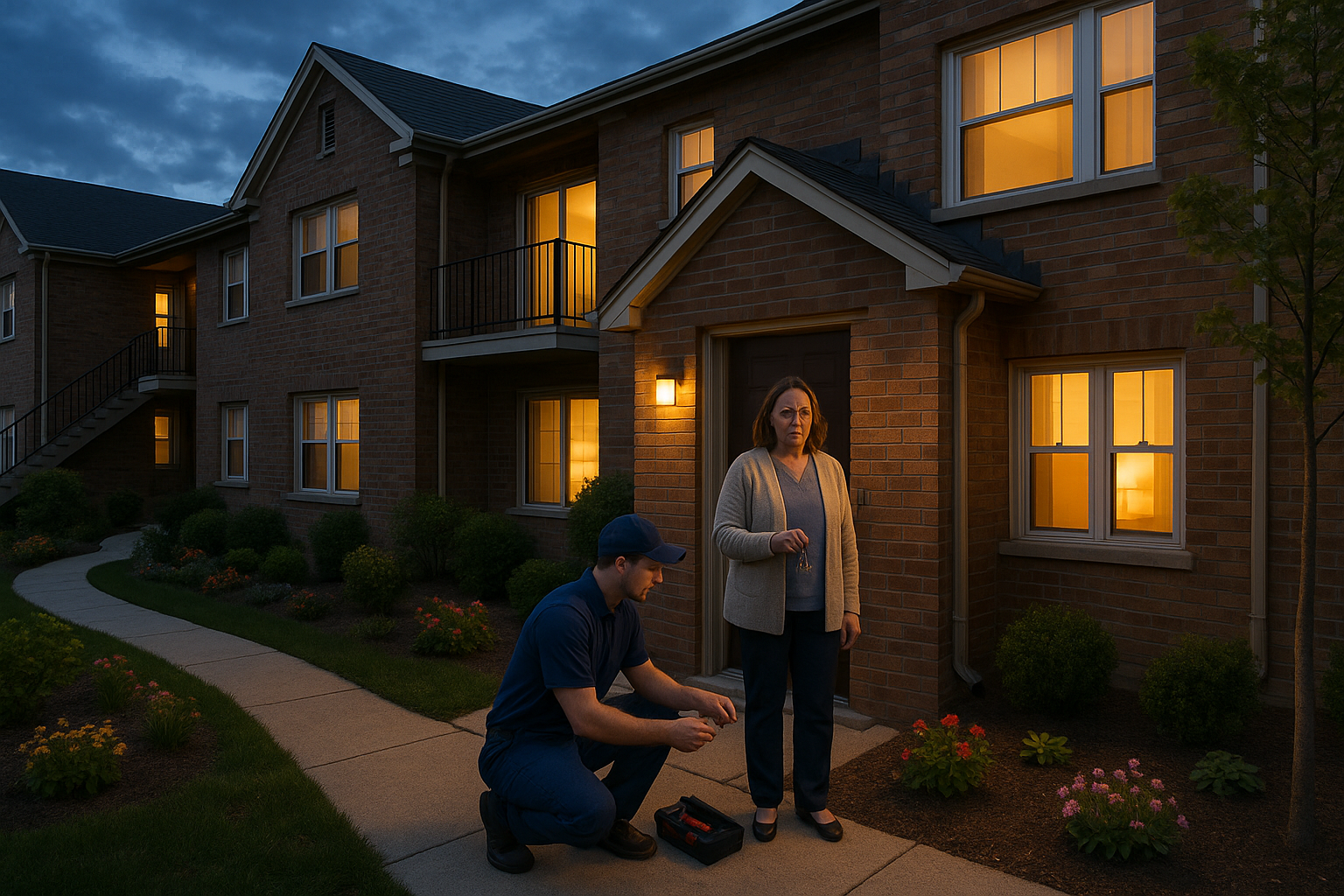
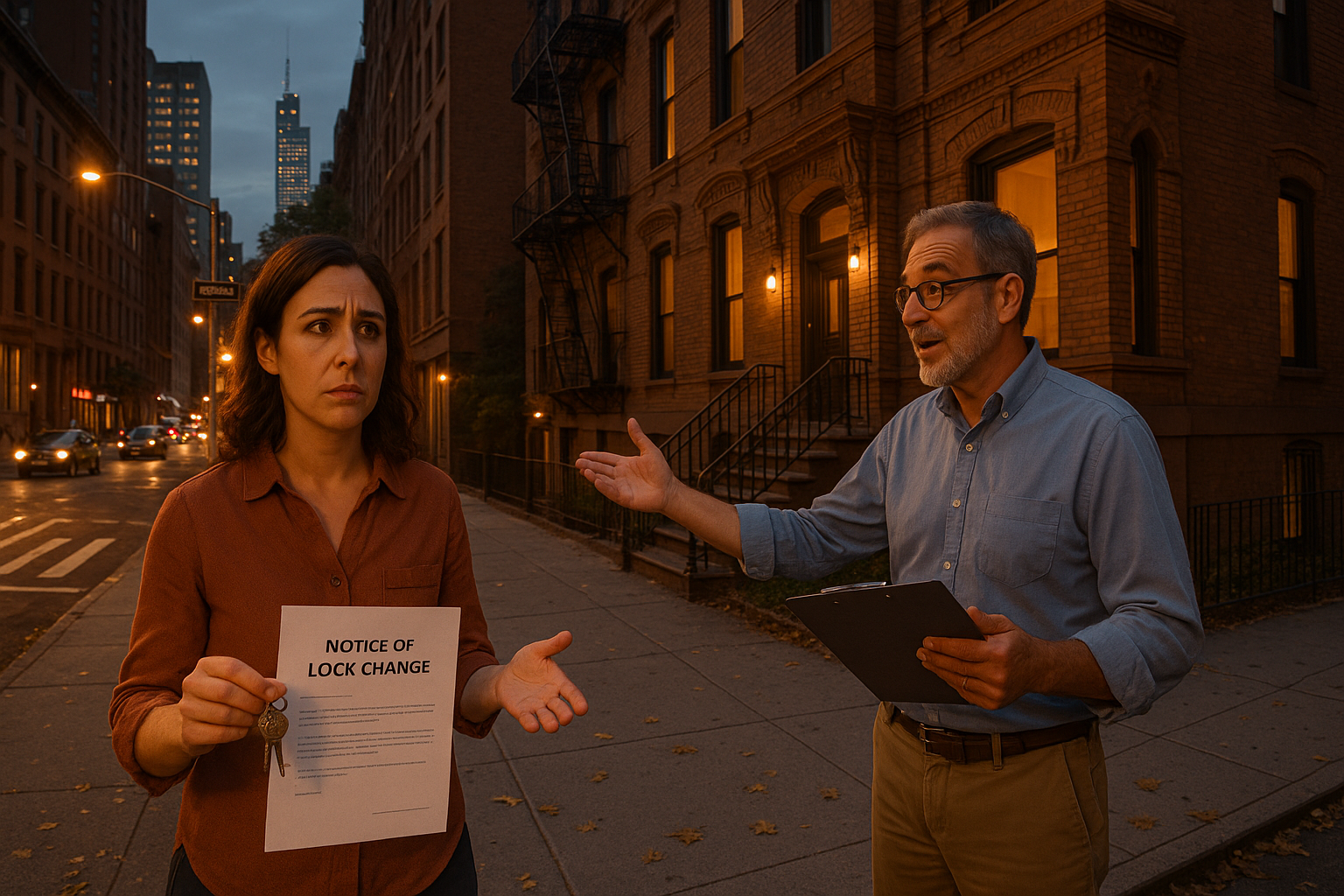
765 ILCS 750/20 requires landlords to change locks at no cost — when a tenant requests it in connection with an order of protection or domestic violence incident, you must comply within reasonable timeframes or face liability.
Request documentation matters — tenants must provide a copy of the protective order or credible evidence of domestic violence; absent documentation, you have greater discretion over lock change obligations.
Timing is critical — Illinois courts have found landlord delays in lock changes to constitute constructive eviction or breach of quiet enjoyment; same-day or next-business-day compliance is the safe standard.
Cost responsibility is clear — you cannot charge tenants for lock changes related to domestic violence protection; doing so may violate the statute and expose you to civil liability.
Occupant access issues require written clarity — if a co-occupant (spouse, domestic partner) has lease rights, you must understand jurisdiction-specific rules about who can demand locks be changed before acting.
Failure to comply can result in civil damages — tenants may sue for breach of statutory duty, and Illinois courts recognize emotional distress and ongoing safety concerns as compensable damages in DV lock-change cases.
What Illinois Law Actually Requires: 765 ILCS 750/20
Illinois domestic violence law places a specific, non-negotiable obligation on landlords: you must change locks when a tenant requests it in connection with domestic violence protection. This isn't discretionary. 765 ILCS 750/20 doesn't allow for debate, delay, or conditions.
The statute is short but binding. It states that a landlord shall change locks or permit a tenant to change locks when the tenant has obtained an order of protection under the Illinois Domestic Violence Act of 1986, or when the tenant has credible evidence of domestic violence and requests the lock change. The landlord cannot charge the tenant for this service.
The operative word in Illinois law is "shall"—not "may" or "should." Courts interpret "shall" as a mandatory legal obligation. When a qualifying tenant makes a lock-change request, you have crossed from permission into requirement.
Who Can Request a Lock Change?
Tenants with Orders of Protection
Any tenant who holds a current order of protection (also called a protective order or restraining order) issued under the Illinois Domestic Violence Act has the clearest right to demand a lock change. The order of protection is court-issued evidence that domestic violence has been documented by a judge.
When a tenant presents you with a valid order of protection, your compliance deadline begins immediately. Do not wait for the order to take full effect. Do not ask for additional proof. Do not negotiate terms. The tenant has met the statutory requirement with a court document.
Tenants with Credible Evidence (No Order Yet)
Illinois law also protects tenants who have "credible evidence of domestic violence" but may not yet have an order of protection. This is more nuanced and requires you to understand what counts as credible evidence.
Credible evidence can include:
Police reports documenting domestic violence at the property
Hospital or medical records showing injuries consistent with abuse
Testimony from domestic violence advocates or counselors
Documentation from shelters or crisis centers
Photographs of injuries or property damage from violence
Written statements from witnesses who observed abuse
Prior court filings (civil or criminal) related to the abuser
The statute does not define "credible" with mathematical precision, but Illinois courts have consistently held that evidence must be trustworthy and relevant. A tenant's bare assertion—without any supporting document—may not be enough. However, documentation from law enforcement, healthcare providers, or abuse advocates generally meets the credibility threshold.
Your role is not to investigate or judge the evidence. If a tenant presents something that reasonably appears to be credible evidence of domestic violence, your safest course is to treat the request seriously and comply. The consequence of wrongly denying a lock change to a genuine abuse victim far outweighs the cost of changing a lock.
Practical Compliance Steps: What You Must Do
Step 1: Receive and Document the Request
When a tenant requests a lock change related to domestic violence, immediately document the request in writing. You can do this via email, lease operations platform, or letter. Record:
Date and time of the request
Name and unit of the requesting tenant
Whether they provided an order of protection or credible evidence
What documentation they submitted (or will submit)
Your receipt acknowledgment
This documentation protects you if the request later becomes disputed or if you need to prove timely compliance in court. It also creates a clear paper trail for your records and your property management system.
Step 2: Verify Documentation (Briefly)
Ask the tenant to provide either the order of protection or the credible evidence. Do not demand extensive documentation, but do not ignore the requirement for some evidentiary basis either.
If they provide an order of protection, verify it appears legitimate (court header, judge signature, valid dates). You are not required to call the courthouse, but if the order looks fraudulent on its face, you may have grounds to slow your response pending clarification.
If they provide credible evidence without an order, review it briefly. If it comes from police, a hospital, a counselor, or an advocacy organization, it almost always qualifies as credible. If it's a personal letter from a friend, you can ask more questions, but do not use this as a reason to deny the request outright.
Step 3: Comply Within a Reasonable Timeframe
Illinois law does not specify an exact deadline (e.g., "within 24 hours"), but courts have interpreted "reasonable" in the domestic violence context to mean urgently—typically within one business day, and preferably the same day if the request is made during business hours.
Do not delay. Do not require the tenant to give notice to other occupants. Do not wait for scheduled maintenance. If a tenant is fleeing an abuser and needs locks changed, a one-week delay is not reasonable, even if your locksmith is busy.
If you use a property management company or maintenance vendor, ensure they understand that domestic violence lock-change requests are priority. Build this into your vendor communication protocols and your lease operations procedures.
Step 4: Manage Co-Occupant Access Issues
A common complication: both the abuse survivor and the abuser are on the lease, or the abuser has occupancy rights. What happens then?
Illinois law prioritizes the safety of the abuse victim. If a tenant with protective order status requests a lock change, the statute supports the lock change even if a co-occupant object. However, this creates potential liability if the co-occupant claims wrongful eviction or that you've locked them out of their rental unit.
Best practice:
Verify the order of protection explicitly names the tenant requesting the change as the protected party and the co-occupant as the restrained party (or suspect).
If both parties claim lease rights, consult an attorney before acting. The protective order may resolve the occupancy question, but some cases are fact-specific.
Once locks are changed, provide new keys only to the tenant who requested the change (the abuse survivor). Do not give copies to the ex-spouse or abuser even if they claim tenant status.
Document your decision and the reasoning in your file. If the other party sues, you'll need a record showing you acted in good faith to comply with a protective order.
In most cases, an order of protection from a court will clarify occupancy. The restrained party is typically excluded from the premises. If an order is ambiguous or if you receive conflicting requests, this is the moment to get legal advice before acting.
Step 5: Do Not Charge the Tenant
765 ILCS 750/20 explicitly prohibits charging the tenant for the lock change. You cannot bill them for the locksmith, the new keys, administrative time, or any other cost associated with the change.
If your lease includes a clause allowing tenants to pay for maintenance or repairs, that clause does not override the domestic violence lock-change statute. The statute is a special protection and supersedes standard lease terms.
Charging a tenant for a DV-related lock change is a statutory violation and can result in civil liability. Some tenants' advocates and legal aid groups have sued landlords who attempted to bill abuse victims for lock changes, and Illinois courts have awarded damages.
Tenant Requests to Change Their Own Locks
765 ILCS 750/20 allows a tenant to either request that the landlord change the locks or to change the locks themselves (with the landlord's permission or under the statute's authorization).
If a tenant asks to change their own locks in a domestic violence situation, you can permit this, but understand the implications:
Maintain master key access. You have a right to access the unit for repairs, inspections, and emergencies. Ensure the tenant understands that lock changes cannot prevent you from entering when necessary for habitability or safety.
Require reversion after tenancy ends. The lease should specify that any tenant-installed locks revert to the landlord's control when the lease terminates. A lock change made during domestic violence doesn't give the tenant the right to keep altered locks permanently.
Get the new key. Request that the tenant provide you with a copy of any new key or the key code. This protects your access rights and your liability profile.
Maintain documentation. Record in writing that the tenant changed the locks and when. This protects you if there's a later dispute about lock access or if you need to prove you didn't negligently allow an abuser access.
If you affirmatively permit a tenant to change locks, you are not breaching the statute. But if a tenant changes locks without permission and you do nothing, you may be implicitly authorizing a change that conflicts with your master-key rights. Act proactively to set terms if the tenant wants to self-install new locks.
What Happens If You Don't Comply?
Civil Liability for Breach of Statutory Duty
If you refuse or delay a lock change that meets the statutory criteria, the tenant can sue you for breach of the statutory duty imposed by 765 ILCS 750/20. This is not a breach of contract claim (which would depend on lease language); it's a claim that you violated the law itself.
In Illinois, breach of statutory duty can result in:
Actual damages — the cost of hiring a locksmith, the cost of relocation if the tenant had to flee, medical bills if the abuser gained access and caused harm.
Emotional distress damages — Illinois courts recognize that denying a DV protection measure causes psychological injury, and awards have been made for ongoing anxiety and PTSD symptoms.
Attorney's fees — some courts award attorney's fees in statutory violation cases, especially if the violation is willful or reckless.
Punitive damages in egregious cases — if you knowingly or recklessly endangered a tenant's safety by refusing a lock change, courts may award punitive damages to deter similar conduct by other landlords.
There is no fixed penalty table for DV lock-change violations, but reported cases show awards ranging from $5,000 to $50,000+ depending on severity and whether harm resulted.
Regulatory Complaints
A tenant can file a complaint with the Illinois Department of Human Services (IDHS) Domestic Violence Hotline or with local domestic violence advocacy organizations. While these agencies don't directly fine landlords, complaints create a record and can trigger investigations or regulatory attention.
Constructive Eviction or Breach of Quiet Enjoyment
In some cases, a landlord's refusal to change locks in response to documented domestic violence has been found to constitute a breach of the tenant's right to quiet enjoyment of the premises. This can support a constructive eviction claim, in which the tenant breaks the lease without penalty because the landlord made the unit uninhabitable (unsafe).
A tenant asserting constructive eviction can move out, stop paying rent, and defend an eviction action based on your breach. This can be more costly than simply changing a lock.
Common Scenarios and How to Handle Them
Scenario 1: Tenant Claims DV But Offers No Documentation
What to do: Ask the tenant to provide documentation (order of protection, police report, medical record, or letter from a domestic violence advocate). If they refuse or cannot provide anything, you have more discretion. However, given the life-safety stakes, consider erring toward caution. If the tenant seems credible and is in visible distress, offering to change the lock may be safer than refusing and later learning the claim was genuine.
Document your decision. Write down what the tenant told you, what you asked for, and why you did or did not comply. If you decline to change the lock without documentation, explain your reasoning in writing.
Scenario 2: Abuser (Also Tenant) Demands You Not Change Locks
What to do: Do not comply with the abuser's demand. If the abuse victim (also a tenant) has an order of protection or credible evidence, the statute protects their request. The abuser's objection does not override the law. Change the locks as requested and document that you received conflicting requests, which you resolved by following the protective order (or the credible evidence from the abuse victim).
Scenario 3: Tenant Wants Locks Changed But Cannot Yet Provide an Order of Protection
What to do: If the tenant is actively seeking a protective order or has just left an unsafe situation, they may have credible evidence but not a finalized court order. Ask them to provide any credible evidence they have. If they show you a police report, medical records, or a letter from a shelter, that often suffices. You do not have to wait for the order to be finalized. The statute covers both situations (orders and credible evidence), and the credible evidence standard acknowledges that abuse victims may not yet have court documentation.
Scenario 4: Tenant Changes Locks Without Permission
What to do: If a tenant changed locks without asking you (or without your permission), contact them immediately. Clarify that you support their safety but that you need a copy of the new key or key code to maintain your legal right to access the unit. If they refuse, consult an attorney. In some cases, a tenant's unilateral lock change without landlord permission could constitute a lease violation, but given the DV context, courts would likely side with the tenant's safety over your access rights. Resolve this cooperatively rather than confrontationally.
Coordination with Your Lease and Property Management System
Update Your Lease to Address DV Lock Changes
Your lease should include a clause acknowledging that you comply with Illinois domestic violence protection law, including lock-change obligations. A simple addition:
"In compliance with Illinois law (765 ILCS 750/20), Landlord will change locks at no cost to Tenant if Tenant provides evidence of a protective order or credible evidence of domestic violence. Tenant should contact [contact info] to make this request. Lock changes in this context are completed within one business day."
This clause serves two purposes: it sets clear tenant expectations and it documents your commitment to compliance if a dispute later arises.
Train Your Team
If you manage multiple units or use a property manager or leasing agent, ensure they understand the DV lock-change obligation. Provide them with a copy of 765 ILCS 750/20 and written procedures for handling these requests. The cost of a lock change is minimal compared to the liability cost of a lawsuit or a complaint filed against you for refusing a DV protection measure.
Integrate into Your Compliance Operations
If you use a property management platform like LeaseBase's lease operations tools, flag DV requests as priority and set automatic reminders for next-business-day compliance. Create a workflow that routes these requests to your locksmith or maintenance team with an urgent flag. The goal is to make compliance automatic, not discretionary.
Document each request and compliance action in your system. This creates a clear record that protects you if you ever need to defend your conduct in court or in response to a complaint.
Special Consideration: Rental Properties with Multiple Units
If you own a multi-unit building, the same rules apply to each unit. A lock-change request from any tenant in any unit must be treated with the same urgency and seriousness. Do not treat domestic violence protection as a lower priority just because you have other units to manage.
One additional consideration: if the abuser also occupies your building (in a different unit or the same unit), take steps to document the separation and ensure that changing locks in one unit does not inadvertently create a situation where the abuser can access shared spaces (hallways, laundry, parking) and encounter the victim. While you cannot prohibit a co-tenant from accessing common areas without a protective order specifically barring it, be aware of the safety dynamics and encourage the victim to involve law enforcement if the abuser breaches the protective order by appearing in shared spaces.
Illinois Orders of Protection: Key Details
Understanding what constitutes a valid order of protection will help you evaluate a tenant's request quickly and confidently.
Types of protective orders in Illinois:
Emergency protective order (EPO) — issued by police or a judge based on evidence of immediate danger; valid for up to 14 days; does not require a court hearing.
Interim protective order — issued by a judge at the first court appearance; typically valid for 14-21 days pending a full hearing.
Plenary protective order — issued after a full hearing; valid for up to two years and renewable.
Any of these orders gives the tenant the right to demand a lock change. An EPO is not "less valid" than a plenary order; if a tenant has an EPO, you must still comply immediately.
Orders of protection are issued by Illinois circuit courts (through the Domestic Violence Act of 1986 or through civil orders of harassment/stalking protection statutes). The order will be stamped with the court seal and the judge's signature. If a tenant presents a document that looks like an official court order, assume it is legitimate unless you have specific reason to doubt it.
Frequently Asked Questions
Q1: Can I charge the tenant a "lock change fee" if they request it for domestic violence protection?
A: No. 765 ILCS 750/20 explicitly prohibits charging the tenant any cost related to a domestic violence lock change. This includes locksmith fees, new key costs, administrative fees, or any other expense. Charging violates the statute and can result in civil liability. Absorb this cost as a business expense.
Q2: What if the tenant's request seems fraudulent or is made in bad faith?
A: If a tenant claims domestic violence but provides no documentation and you have strong reason to believe the claim is false (e.g., the tenant recently added a new occupant to the lease and is now claiming abuse), you can ask for credible evidence and document your skepticism. However, the burden of proof is on you to show the claim is fraudulent, not on the tenant to prove it's genuine. Given the life-safety stakes, erring on the side of caution is advisable. If you truly believe a request is fraudulent, consult an attorney before denying it.
Q3: Can I require the tenant to provide notice to the other occupant before I change the locks?
A: No, not in the context of domestic violence protection. Requiring notice to a potential abuser defeats the purpose of the protection. Change the locks without notifying the restrained party or other occupants. The tenant requesting the change can notify others if they choose, but you should not make that a condition of compliance.
Q4: What if the order of protection expires? Do I have to change the locks back?
A: No. Once locks have been changed in response to a protective order, they remain changed. The tenant maintains the benefit of the changed locks even after the order expires. The statute does not require you to revert to old locks. If the tenant wants the original locks back after the order expires, that is their choice to arrange; you are not obligated to do so.
Q5: Does the tenant have to be on the lease to request a lock change under this law?
A: The statute applies to "tenants," which typically means the person or persons listed on the lease or rental agreement. However, Illinois law has also recognized occupancy rights for family members and domestic partners in some contexts. If an occupant who is not on the lease requests a lock change due to domestic violence, consult an attorney. The safest approach is to treat any occupant of the unit who has credible evidence of domestic violence with seriousness, but verify their occupancy status before committing to the lock change.
Use this checklist to ensure you comply with 765 ILCS 750/20 every time a tenant makes a request:
☐ Tenant requested lock change verbally or in writing
☐ I documented the request (date, time, unit, tenant name, method of request)
☐ I asked tenant for documentation (order of protection or credible evidence)
☐ Tenant provided order of protection OR credible evidence (police report, medical records, shelter letter, advocate letter, other)
☐ I verified the order of protection appears legitimate (court seal, judge signature, dates valid) OR credible evidence appears genuine
☐ I contacted my locksmith/maintenance team and flagged as URGENT
☐ Lock change was completed within one business day (or same-day if possible)
☐ I received confirmation from locksmith that locks were changed
☐ I provided new keys only to the tenant who requested the change
☐ I did NOT charge the tenant any fee or cost
☐ I documented compliance in writing (email, system note, letter to tenant)
☐ I retained a copy of the order of protection or credible evidence in my tenant file
☐ I updated my lease operations system to reflect the lock change and date
Bottom Line: Why Compliance Matters Here
Illinois domestic violence law is not ambiguous, and courts take it seriously. A tenant in danger has the right to secure locks, and your job is to facilitate that right without delay or cost. The law balances your property ownership with the public policy of protecting abuse victims.
The consequences of non-compliance—civil lawsuits, emotional distress damages, attorney's fees, and the moral weight of contributing to a tenant's unsafe situation—far outweigh the cost of changing a lock.
If you manage properties in Illinois, whether you have 2 units or 75, treat every lock-change request related to domestic violence as a top priority. Build the process into your lease operations, train anyone who works with you, and keep clear records. Doing so protects the tenant, protects you, and keeps your compliance record clean.
For multi-unit or complex scenarios involving co-occupants, shared leases, or disputed occupancy status, consult an attorney before acting. For straightforward requests—a tenant with an order of protection or clear credible evidence—change the lock and document what you did. The law is on your side when you comply.
Disclaimer
This article is for informational purposes only and does not constitute legal advice. Consult a qualified attorney licensed to practice in Illinois for guidance specific to your situation. Landlord-tenant law varies by jurisdiction and evolves. This article reflects the law as of September 2026 but may not account for recent statutory changes or court decisions. Always verify current law with a legal professional before taking action.
DV survivors can terminate leases early under 765 ILCS 750/2 — you must accept qualified requests without penalty or retaliatory action
Acceptable documentation includes police reports, protective orders, and third-party professional certifications — you cannot demand specific forms or require the survivor to disclose details of abuse
Minimum notice period is 30 days after you receive valid documentation — not 30 days from the date the abuse occurred
You cannot charge early termination fees, lease break penalties, or hold a security deposit as punishment — violations can result in attorney's fees and damages
Retaliation is prohibited under 765 ILCS 750/3.5 — any adverse action against a tenant exercising Safe Homes Act rights is illegal and creates liability
Illinois Department of Human Services enforces compliance — complaints can trigger investigation and civil liability
What Is the Illinois Safe Homes Act?
The Illinois Safe Homes Act (765 ILCS 750) is a state statute that allows tenants who are experiencing domestic violence, sexual assault, or stalking to terminate their lease early without penalty. Enacted to address the housing insecurity that often traps abuse survivors in dangerous living situations, the law creates a clear legal pathway for tenants to exit leases while imposing strict compliance obligations on landlords.
As a self-managing landlord, understanding this statute is not optional. Violations expose you to:
Attorney's fees and court costs paid by you (not the tenant)
Actual damages (lost rent, etc.) plus punitive damages
Civil rights complaints to the Illinois Department of Human Services
Potential criminal liability for retaliation
The law applies to all rental properties in Illinois, regardless of size. If you manage even 2–3 units, you are subject to 765 ILCS 750. There are no exemptions for small landlords.
Who Qualifies for Early Termination Under the Safe Homes Act?
The statute defines eligibility broadly. A tenant qualifies if they are a victim of:
Domestic violence — abuse by a current or former intimate partner (spouse, dating partner, cohabitant)
Sexual assault — non-consensual sexual contact or conduct
Stalking — repeated or pattern conduct that causes reasonable fear for safety or emotional distress
Human trafficking — exploitation for labor or commercial sex act
A critical point: The statute protects tenants AND household members who are victims. This means if a minor child, elderly parent, or other family member living in the rental is the abuse survivor, the leaseholder can still invoke the law to move the entire household to safety.
765 ILCS 750/1 does not require the tenant's name to appear on the lease. Qualifying household members—including undocumented immigrants—have the same rights as named lessees. You cannot deny the right to terminate based on immigration status.
Required Documentation: What You Must Accept
765 ILCS 750/2(c) sets the documentation standard. You must accept ANY of the following:
Documentation Type
Examples & Details
Issued By
Protective Order (Order of Protection)
Issued under 750 ILCS 60 (Domestic Violence Act). Can be temporary (ex parte) or plenary (final).
Illinois courts (circuit, county, or municipal)
Police Report
Any incident report documenting domestic violence, sexual assault, or stalking.
Local police department or state police
Third-Party Professional Certification
Written statement from DV counselor, shelter advocate, attorney, nurse, doctor, or social worker confirming the abuse claim.
Licensed professional or advocate working with DV organizations
Medical Records
Hospital, clinic, or physician documentation of injuries consistent with abuse.
Healthcare provider
Criminal Justice Documentation
Arrest record, charges filed, or prosecution documents related to the abuser.
District Attorney or court
Critical Documentation Rules for Landlords
You cannot require a specific form. The statute does not mandate that a tenant use your form, an attorney's form, or any standardized template. If a tenant provides a police report, email from a domestic violence counselor, or certified copy of a protective order, you must accept it.
You cannot demand disclosure of abuse details. A tenant does not need to describe what happened, name the abuser, or provide a narrative of the abuse. You must accept minimal documentation that confirms the victim status.
You cannot request documents unrelated to abuse documentation. For example, you cannot ask for a lease cosigner confirmation, proof of employment, or rental history as a condition of accepting the Safe Homes Act request. The only issue is abuse documentation.
You cannot delay based on document verification. Once you receive documentation that reasonably appears to fall into one of the five categories above, you must begin counting the 30-day notice period. You cannot hold the request pending "verification" with the police department, court, or counselor.
Confidentiality is mandatory. 765 ILCS 750/2(g) requires landlords to keep all Safe Homes Act documentation confidential. You cannot disclose to other tenants, the alleged abuser, or publicly. Violations can result in liability.
The 30-Day Notice Timeline
Once you receive documentation meeting 765 ILCS 750/2(c) standards, the clock starts. The statute requires a minimum 30-day notice period before the tenant can vacate.
Timeline Breakdown
Event
What Happens
Your Action
Day 0: Tenant submits documentation
Tenant provides police report, protective order, or professional certification.
Acknowledge receipt in writing. Do not request additional documents unless clearly insufficient.
Days 1–30: Notice period runs
Tenant continues to occupy and pay rent (unless they move early). You continue to maintain the premises.
Process rent normally. Do NOT issue a notice to vacate or begin eviction.
Day 30: Notice period expires
Tenant can vacate at end of business on Day 30 or may stay longer (negotiable).
Prepare unit for turnover. Release security deposit per 765 ILCS 750/2(d).
After move-out
Unit is vacant. No further rent obligation from tenant.
Conduct normal move-out inspection. Account for damages (not rent arrears, which are waived).
Key compliance point: The 30-day period runs from when YOU receive the documentation, not from when the abuse occurred. If a tenant is abused on March 1 but doesn't submit documentation until June 15, the notice period starts June 15. This is intentional—the statute recognizes that abuse survivors may need time to gather documents and plan their exit safely.
Can the tenant move out before 30 days? Yes. The statute guarantees a minimum 30-day right to stay, but the tenant can vacate earlier if they choose. If they vacate on Day 15, you still must hold the security deposit and calculate any deductions fairly.
Security Deposit Handling After Safe Homes Act Termination
765 ILCS 750/2(d) creates a special security deposit rule for Safe Homes Act terminations. This differs significantly from standard lease terminations.
What You Must Do
Release the full security deposit without deduction for early termination. You cannot charge an "early lease break" fee or apply the security deposit to cover remaining rent. The termination is legal and authorized; there is no breach.
Deduct only for actual property damage. You can deduct for:
Holes in walls beyond normal wear
Broken windows or fixtures
Carpet stains or burns
Damaged appliances (if tenant-caused)
You cannot deduct for:
Unpaid rent for the remainder of the lease term
Cleaning costs (normal turnover)
Painting or carpet replacement (normal wear)
Any "early termination" or "lease break" fees
Utility arrears or other tenant debts
Return the deposit within 30 days of move-out. Illinois law (765 ILCS 700/14) requires security deposit return within 30 days, with itemized deductions. The Safe Homes Act does not change this timeline. If you fail to return the deposit timely, the tenant can recover double the deposit amount plus attorney's fees (see 765 ILCS 700/14(c)).
Provide an itemized accounting. Send a written statement showing:
Original deposit amount
Itemized deductions with cost estimates
Remaining amount due to tenant
Check or payment method for return funds
Common Landlord Mistakes to Avoid
Do not retain the security deposit as "compensation" for losing the tenant's rent for the remainder of the lease. The statute explicitly authorizes the termination—you have no legal right to this money. If a tenant sues and proves you did this, you may owe double damages under 765 ILCS 700/14(c).
Do not offset the security deposit against unpaid utilities, attorney fees you incurred, or lost rent. These debts are separate from the security deposit and must be pursued independently (if legally collectible at all).
Rent Obligations After Safe Homes Act Termination
765 ILCS 750/2(e) is clear: Once the 30-day notice period expires, the tenant owes no further rent. Period.
If the tenant vacates on Day 30: You cannot charge rent for Day 31 onward. The lease is terminated.
If the tenant vacates early (Day 15): You cannot charge rent from Day 16 onward. The lease is terminated as of the early departure date.
What about prorated rent? If the tenant vacates mid-month, you may charge rent only through the move-out date. For example, if rent is $1,500/month (30 days) and the tenant vacates on Day 15, you can charge $750 for Days 1–15. Days 16–30 are waived.
Can you pursue unpaid rent after the tenant moves? No. 765 ILCS 750/2(e) explicitly waives rent liability after termination. You cannot sue for unpaid rent, report to collections, or pursue garnishment. This is a statutory immunity.
Retaliation Protections: 765 ILCS 750/3.5
Illinois law prohibits retaliation against tenants who exercise their Safe Homes Act rights. This is among the broadest anti-retaliation provisions in Illinois landlord-tenant law.
What Constitutes Retaliation?
You cannot take any adverse action against a tenant within 6 months of learning they invoked the Safe Homes Act. Prohibited actions include:
Increasing rent
Decreasing services (heat, water, maintenance)
Filing an eviction
Threatening to report the tenant to immigration authorities
Threatening to involve child protective services
Refusing to renew the lease
Filing a counterclaim or cross-complaint in court
Harassing phone calls, texts, or emails
Increasing security deposit requirements (if the tenant later signs a new lease)
6-month protection window: The retaliation protection runs for 180 days from the date you receive the Safe Homes Act documentation. This is a strict liability period. Even if you had legitimate, independent reasons for an adverse action, taking it during this window creates a rebuttable presumption of retaliation.
What if the tenant stays after 30 days? If the tenant negotiates with you to remain in the unit (e.g., "I need 60 days instead of 30"), the retaliation protection continues from the original documentation date, not the extended move-out date.
Burden of Proof in Retaliation Cases
Under 765 ILCS 750/3.5(b), if you take an adverse action within 6 months of a Safe Homes Act request, the burden shifts to you to prove the action was not retaliatory. This is rare in Illinois law—typically, the tenant bears the burden. Here, you must show:
Independent, documented reason for the action (not the Safe Homes Act request)
The reason existed before you learned of the abuse claim
You would have taken the same action against other tenants in similar circumstances
Example: If you increase rent in retaliation and then claim it was a "market adjustment," you must produce evidence of prior rent increases at the property and show the increase was proportional to similar units. Simply saying "the market changed" is insufficient.
Step-by-Step Compliance Checklist
Use this checklist when a tenant submits a Safe Homes Act request:
Receive documentation
☐ Accept police report, protective order, professional certification, medical records, or criminal justice documentation
☐ Do NOT request additional forms or narrative detail
☐ Do NOT delay pending verification with police/court
Acknowledge in writing
☐ Send email or letter confirming receipt of documentation
☐ State the 30-day notice period start date
☐ Do NOT include language disputing the claim or suggesting disbelief
Secure confidentiality
☐ Store documentation in a locked file (physical or digital)
☐ Do NOT share with co-tenants, property managers, or other properties
☐ Do NOT mention abuse or Safe Homes Act to neighbors or contractors
Process rent normally during notice period
☐ Continue to accept and deposit rent payments
☐ Do NOT issue a notice to vacate or start eviction
☐ Do NOT increase rent or reduce services
Prepare for move-out
☐ Schedule final walk-through inspection with tenant or agent
☐ Document any damage (photos/video) unrelated to abuse
☐ Arrange utility shutoff or transfer after tenant move-out date
Process security deposit within 30 days
☐ Deduct only for actual property damage (not lost rent, cleaning, or "early termination")
☐ Provide itemized deduction statement
☐ Return remaining balance to tenant's last known address or per written request
☐ Keep copy of accounting and delivery confirmation
Avoid retaliation for 6 months
☐ Do NOT increase rent, decrease services, or file eviction
☐ Treat tenant professionally if they remain past 30 days
☐ Document any independent business reasons for future actions (if any)
Common Landlord Pitfalls and Liability Exposure
Pitfall 1: Demanding Proof or Verification
What landlords do: Tenant submits a police report from 2 years ago. You call the police department to "verify" or ask the tenant for more recent documentation.
Legal problem: 765 ILCS 750/2(c) does not allow you to cherry-pick documentation or demand verification. If the police report is genuine (and most police departments will not release false reports), you must accept it. Delaying the 30-day period while you "investigate" is a violation.
Liability: Attorney's fees, actual damages for breach of the statute, and possible punitive damages if a court finds willful violation.
Pitfall 2: Charging Early Termination Fees
What landlords do: Tenant invokes Safe Homes Act. You return the security deposit but charge a $500 "lease break" fee or claim the tenant owes rent through the end of the original lease term.
Legal problem: 765 ILCS 750/2(e) explicitly waives rent liability and 765 ILCS 750/2(d) prohibits using the security deposit to cover early termination. A lease break fee is not mentioned in the statute—the legislature chose not to allow one. Courts interpret this as a prohibition.
Liability: Tenant can sue for damages (the fee itself plus actual damages for violation), attorney's fees, and possibly treble damages if the court finds willful violation. The Illinois Department of Human Services can also investigate.
Pitfall 3: Retaliation Within the 6-Month Window
What landlords do: Tenant invokes Safe Homes Act on June 1. On August 1 (within 6 months), you increase rent for the renewed lease or refuse to renew the lease.
Legal problem: 765 ILCS 750/3.5 creates a rebuttable presumption of retaliation for any adverse action within 6 months. You must prove the action was not motivated by the Safe Homes Act claim. If you cannot produce clear, contemporaneous documentation of a legitimate reason, you lose.
Liability: Damages (amount of the illegal increase or cost to find new housing), actual attorney's fees, and potential civil rights complaint to the state.
Pitfall 4: Failing to Return the Security Deposit Timely
What landlords do: You hold the security deposit for 45 days before returning it, then deduct $300 for "wear and tear."
Legal problem: Illinois law (765 ILCS 700/14) requires return within 30 days. The Safe Homes Act doesn't change this. Additionally, 765 ILCS 700/14(c) allows the tenant to recover double the deposit (treble damages) if you fail to return it timely or fail to provide itemization.
Liability: If the original deposit was $1,500, you owe the tenant $3,000 plus attorney's fees, regardless of whether damage deductions were legitimate.
Frequently Asked Questions
Q1: What if the tenant won't leave after 30 days? Can I file an eviction?
A: Not under the Safe Homes Act. Once the 30-day notice period expires, the lease is terminated. If the tenant remains, you can file an eviction for "holdover" (unlawful detainer) under standard Illinois eviction law. However, you cannot file the eviction before the 30 days expire or claim the tenant breached by invoking the Safe Homes Act. If you file an eviction within 6 months of the original Safe Homes Act request, the tenant can raise a retaliation defense (765 ILCS 750/3.5).
Q2: Can I ask the tenant to sign a waiver of their Safe Homes Act rights?
A: No. 765 ILCS 750/4 states that waiver of Safe Homes Act rights is void as against public policy. Any lease clause, agreement, or side letter in which a tenant waives the right to invoke the statute is unenforceable. Attempting to obtain such a waiver may also constitute retaliation.
Q3: What if the alleged abuser is also on the lease?
A: The victim-tenant can still terminate. The statute protects household members regardless of who signed the lease. If both the victim and abuser are on the lease, the victim's 30-day notice applies to the entire lease. The abuser cannot remain in the unit with the survivor gone. If the abuser tries to stay, you must proceed with standard eviction procedures for non-payment or holdover, but you cannot use the survivor's departure as justification.
Q4: Does the Safe Homes Act apply to month-to-month leases?
A: Yes. The statute applies to all lease types, including fixed-term leases and month-to-month agreements. The 30-day notice period applies regardless of lease type. If the monthly rent is due on the 15th and the tenant submits a Safe Homes Act request on the 10th, the 30 days runs from the 10th, not the next rent due date.
Q5: Can I require the tenant to stay if they want to use the security deposit as a last month's rent payment after early termination?
A: No. The security deposit is the tenant's money, held in trust. They cannot "apply it" to rent, and you cannot condition acceptance of the Safe Homes Act on the tenant waiving the deposit. Once the lease terminates under the statute, you must return the deposit (less legitimate damage deductions) within 30 days of move-out. The tenant cannot prepay rent with the deposit.
Compliance Automation and Tracking
Managing Safe Homes Act requests manually across multiple units creates compliance risk. If you self-manage 2–25 units and receive a Safe Homes Act request, you must track:
Documentation receipt date and type
30-day notice period expiration
Rent payment status during notice period
Move-out date and condition assessment
Security deposit deduction calculations
Retaliation window (6 months from documentation date)
Missing a deadline or retaliation date can expose you to liability. LeaseBase's Compliance Engine automatically flags statutory deadlines, tenant rights triggers, and retaliation windows based on your state and local law. When a tenant submits Safe Homes Act documentation, the system logs it, calculates the notice period end date, and alerts you to security deposit return deadlines. You can also use Lease Operations to document tenant communications and track move-out inspections, creating an audit trail if disputes arise.
For properties with higher turnover or multiple simultaneous lease terminations, Workflow automation can flag retaliation risks before you take action—for instance, alerting you that rent increase documentation within 6 months of a Safe Homes Act claim will trigger a retaliation presumption.
State Enforcement and Complaint Process
The Illinois Department of Human Services (IDHS) enforces Safe Homes Act compliance. Tenants can file complaints with IDHS if they believe a landlord violated 765 ILCS 750. IDHS can:
Investigate the complaint
Issue a determination of violation
Order the landlord to comply and pay damages
Refer cases to the Illinois Attorney General for civil action
Additionally, tenants can file private lawsuits in circuit court for damages, attorney's fees, and injunctive relief. There is no statute of limitations specified in 765 ILCS 750, so the standard civil statute of limitations (typically 5 years) applies.
If a tenant sues and wins, you pay:
Actual damages (lost deposits, increased rent, housing costs, etc.)
Punitive damages (at court's discretion, often 1–3x actual damages)
Attorney's fees and court costs (tenant's attorney is paid by you)
Any injunctive relief (e.g., order to stop certain practices)
Even if IDHS does not fine you directly, a finding of violation can support a tenant's private lawsuit and strengthens the damages claim.
Final Compliance Summary
The Illinois Safe Homes Act is not a discretionary landlord option—it is a mandatory statutory right. Compliance is binary: either you follow the law or you face liability. There is no middle ground of "partial compliance" or "good faith effort."
The statute prioritizes tenant safety over landlord convenience. The 30-day notice period, deposit rules, and anti-retaliation provisions are deliberately tenant-protective. The legislature recognized that abuse survivors often cannot afford to lose deposits or pay breach fees, and cannot risk eviction for legal conduct.
As a self-managing landlord, your compliance obligation requires:
Accept qualified documentation without hesitation or delay.
Start the 30-day period immediately and mark it in your calendar.
Process rent and maintain services normally during the notice period.
Return security deposits within 30 days, deducting only for actual damage.
Avoid any adverse action for 6 months after the Safe Homes Act request.
Keep all documentation confidential.
Failure to comply exposes you to attorney's fees, damages, and state enforcement action. Compliance is not just legally required—it also protects you from costly litigation and regulatory investigation.
Disclaimer: This article is for informational purposes only and does not constitute legal advice. Consult a qualified attorney for guidance specific to your situation. Landlord-tenant law is complex and varies by municipality. Always verify current statutes before taking action affecting a tenant's rights.
You must allow lock changes for DV victims — RPL §227-a requires you to permit domestic violence victims to rekey or change locks without landlord consent, with limited notice requirements
No lease violation or lease termination allowed — Tenants cannot be penalized, evicted, or have their lease terminated for exercising this statutory right
Reasonable notice requirement — Tenants must provide written notice (email acceptable) stating DV circumstances; you have a duty to act in good faith
Tenant covers costs and liability — The tenant pays all costs; you're not liable for injuries or damage resulting from lock changes made under this statute
No retaliation protection — Taking any adverse action against a tenant for requesting lock changes violates RPL §223 and can trigger treble damages
Documentation protects you — Maintain records of all DV-related lock change requests, notices, and tenant compliance to defend against retaliation claims
What Is RPL §227-a? The Domestic Violence Lock Change Statute
New York Residential Tenancy Law §227-a, enacted in 2008 and refined through case law and guidance, gives domestic violence victims a statutory right to change or rekey locks on their rental unit without seeking landlord permission. This law recognizes that immediate physical security is a matter of life safety, not a lease violation.
For self-managing landlords with 2-75 units in New York, this statute creates a specific compliance obligation: you cannot prevent a domestic violence victim from securing their unit, and you cannot retaliate against them for doing so. The statute does not require your participation or consent—only that you not obstruct the tenant's exercise of this right.
Unlike other landlord-tenant protections that focus on habitability, lease termination, or rent disputes, RPL §227-a operates at the intersection of housing security and domestic violence safety planning. It shifts the burden of physical security entirely to the tenant while protecting landlords from liability if the tenant's lock change creates problems down the road.
The Exact Language of RPL §227-a and What It Requires of Landlords
The statute states that a tenant who is a victim of domestic violence, a sexual offense, or a stalking offense (as defined in Penal Law §485.05) may, upon reasonable notice to the landlord, change the locks on the dwelling unit. The tenant must provide written notice; verbal requests do not trigger the obligation.
The key phrase is "upon reasonable notice." New York courts and the Division of Housing and Community Renewal (DHCR) have interpreted this to mean:
Notice must be in writing — Email, text with timestamp, certified mail, or hand-delivered written notice all satisfy this requirement
"Reasonable notice" is flexible — Courts have found notice reasonable even if given same-day or next-day before lock change, so long as the tenant genuinely attempted to inform the landlord
Tenant must identify themselves as a DV victim — The notice need not include detailed proof or police reports, but must make clear the person requesting is a victim of domestic violence, sexual offense, or stalking
Landlord must acknowledge receipt — While not explicitly required by statute, best practice is to confirm you received the notice and understood the request
What the statute does NOT require:
Proof of domestic violence (police report, order of protection, medical records)
Landlord approval or consent
Advance notice of specific dates/times
Landlord participation in the lock change process
Landlord reimbursement or cost-sharing
Critical Compliance Trigger: Retaliation Prohibitions Under RPL §223
This is where many self-managing landlords unknowingly create liability. RPL §227-a lock change rights are explicitly protected from retaliation under RPL §223, which prohibits adverse action against tenants who assert statutory housing rights.
What constitutes retaliation?
Under RPL §223(a), it is unlawful for a landlord to:
Refuse to renew a lease
Increase rent or fees
Decrease services
Bring or threaten an eviction or lease termination
Take any other adverse action
...if the action is taken because the tenant exercised rights under §227-a (or any other statutory housing right).
The burden is on the landlord. Under RPL §223(b), there is a "rebuttable presumption of retaliation" if the landlord takes adverse action within six months of the tenant's protected activity. This means:
Tenant proves they requested lock change and landlord took adverse action within 6 months
Retaliation is presumed
YOU must prove the adverse action had nothing to do with the lock change request
This reversal of burden is critical. If you raise rent, deny a lease renewal, or file a non-payment eviction within 6 months of a DV lock change request, the tenant's attorney will argue retaliation, and you'll need evidence (maintenance logs, prior rent increase notices, documented lease violations unrelated to DV) to overcome the presumption.
Penalties for retaliation:
Actual damages (difference in rent owed, relocation costs, etc.)
Treble damages (3× actual damages) if the violation is willful
Attorney fees and court costs
Possible injunctive relief (court order preventing eviction)
A typical retaliation case can cost $15,000–$50,000 in legal fees alone, even if you ultimately win.
Step-by-Step: What to Do When You Receive a DV Lock Change Notice
Step 1: Confirm Receipt Immediately
As soon as you receive written notice (email, letter, text) that a tenant is requesting a lock change under §227-a, send a written acknowledgment within 24 hours. This creates a documented timeline and shows you did not ignore the request.
Template response:
"[Tenant name]: I acknowledge receipt of your notice dated [date] regarding lock change under New York RPL §227-a. I understand you are exercising your statutory right to change the locks on [unit address]. Please confirm the date/time of the lock change and the name and contact info of the locksmith if you wish to coordinate building access."
Do not express disapproval, skepticism, or request proof of DV status.
Step 2: Do Not Request Proof or Details
RPL §227-a does not require tenants to prove domestic violence. Do not ask for:
Police reports or case numbers
Order of protection documents
Medical records or counseling records
Details about the abuse or stalking
Names of the abuser
Proof of prior incidents
Requesting such proof is not only unnecessary—it can be used as evidence of bad faith if a retaliation claim arises. The tenant's statement that they are a DV victim is sufficient.
Step 3: Coordinate Access Only if Necessary
If the tenant's lock change requires access to common areas (hallways, breaker boxes, etc.) or if you need to provide a key for emergency access, communicate this separately from any acknowledgment of the lock change right.
Example:
"For building access purposes, our locksmith will be available [times] on [date]. If you prefer not to coordinate, please proceed and notify us once the change is complete."
Do not make access contingent on the tenant providing explanations or proof.
Step 4: Protect Your Ownership Interests (Key Control)
After the lock change, you have a legitimate interest in maintaining master keys or access for emergency maintenance and repairs. Address this proactively:
Request new keys: Send a brief written request asking the tenant to provide copies of new keys or a temporary access code within 7 days. Frame this as routine property management, not as a condition of their lock change right.
Clarify emergency protocols: Outline your policy: "In case of fire, water damage, or other emergency, our staff or emergency responders may override locks. Non-emergency maintenance will require 24-hour notice and tenant approval."
Do not threaten lockout: Never state that failure to provide keys will result in penalties, lease violations, or other adverse action.
If the tenant refuses to provide keys, document the refusal and do not escalate. Forcing the issue could be construed as retaliation.
Step 5: Document Everything
Maintain a file for each DV-related lock change request containing:
Date and time received, method of notice (email, mail, etc.)
Exact text of tenant's notice
Your written acknowledgment
Any communications about access or key coordination
Date lock change was completed (if provided by tenant)
Any subsequent lease actions, lease renewals, or rent changes with dates and business justifications
This documentation is essential if a retaliation claim arises later. Courts will examine whether your subsequent actions were pretextual or had legitimate, documented reasons unrelated to the lock change.
Common Landlord Mistakes That Create Liability
Mistake 1: Treating Lock Change as Lease Violation
Some landlords interpret lease clauses like "Tenant shall not alter the premises" or "Tenant must maintain locks as-provided" to prohibit lock changes. Under RPL §227-a, these lease terms are void as to DV victims. Enforcing them—by threatening eviction, withholding security deposit funds, or imposing fines—is a statutory violation and triggers retaliation liability.
Compliance action: Review your lease template and ensure no language discourages or prohibits lock changes. Add clarifying language: "Except as permitted by New York law for victims of domestic violence, harassment, or stalking, tenant shall not alter locks."
Mistake 2: Raising Rent or Non-Renewing Within 6 Months
Even if unrelated, any adverse action within 6 months of a DV lock change request triggers the retaliation presumption. This includes:
Annual lease renewal with increased rent
Notice of non-renewal
Conversion from rent-stabilized to market-rate (if applicable)
Shift to month-to-month with intent to increase or terminate
Application of late fees or other charges
If you have a documented, legitimate reason for the action (lease renewal scheduled before DV notice, multiple prior non-payments, documented lease violations), document it thoroughly and have a qualified attorney review before proceeding.
Mistake 3: Conditioning Services or Maintenance on Providing Keys
A tenant cannot be penalized by slow maintenance, refusal of repairs, or threat of habitability complaints for not providing new lock keys. If a tenant exercises their §227-a right and then requests routine maintenance, you must provide it without conditioning it on key access.
Proper approach: Inform the tenant in advance (before any DV notice) that your standard maintenance protocol requires access, and ask them to be present or provide temporary access. After a DV lock change, maintain this same standard—don't suddenly demand keys as a precondition for repairs.
Mistake 4: Involving Police or Demanding Proof
Do not contact police, family court, or law enforcement to "verify" a tenant's DV status. This is not your role and can constitute tortious interference or harassment. Additionally, many DV victims are reluctant to involve police, and pressure to do so could endanger them.
The statute explicitly says proof is not required. Trust the tenant's statement.
Cost, Liability, and Key Provisions
Who Pays for the Lock Change?
The tenant bears all costs. You have no obligation to pay for rekeying, new locks, locksmith services, or any associated expenses. Make this clear in your acknowledgment, if necessary:
"The cost of lock change is the responsibility of the tenant."
Are You Liable for Problems After Lock Change?
No. RPL §227-a protects landlords from liability arising out of the lock change itself. If the tenant's new lock causes damage, fails, or creates security gaps, you are not liable for property damage or injuries (with limited exceptions for gross negligence).
However, you remain liable for habitability issues unrelated to the DV lock change. For example, if a lock change is installed improperly and prevents egress in violation of fire code, that's a habitability issue you must remediate.
Can You Require the Tenant to Restore Original Locks?
No. RPL §227-a is a permanent right. The tenant may keep the new locks for the duration of their tenancy. You cannot require restoration as a condition of lease renewal, move-out, or any other action. Doing so is retaliation.
You can include in lease-end move-out procedures that the tenant must provide a functioning lock for the unit, but you cannot specify that it must be the original lock.
Special Circumstances: Orders of Protection and Lease Enforcement
When a DV Victim Has an Order of Protection
If a tenant provides you with a copy of an order of protection (restraining order, order of protection) that prohibits the abuser from entering the building, you should:
Accept it as additional documentation of DV status (though not required by statute)
Maintain it in a secure, confidential file
Inform building security or property managers (if applicable) of the order's existence without disclosing details to other tenants
Cooperate with law enforcement if they cite the order as basis for removing the abuser from the premises
Do not use the order as grounds to evict or penalize the victim-tenant
What If the Lock Change Prevents You From Serving Eviction or Legal Notices?
If you need to serve a notice of non-renewal, lease termination, or eviction, the lock change does not prevent you. Legal service can be accomplished by:
Certified mail (presumed delivered)
Hand delivery to the tenant personally or to any adult family member
Conspicuous posting (if certified mail fails)
Publication (if tenant cannot be located)
You do not need physical access to the unit to initiate eviction proceedings. That said, serving notice within 6 months of a DV lock change request will be viewed skeptically by courts, and you must have documented, legitimate business reasons.
Integration With Your Lease and Move-In Process
What Should Your Lease Say About §227-a?
Include explicit acknowledgment language to prevent disputes:
"Tenant acknowledges that under New York Residential Tenancy Law §227-a, victims of domestic violence, sexual offense, or stalking have the statutory right to change or rekey the locks on the premises upon reasonable written notice to Landlord. This right may be exercised notwithstanding any other provision of this lease. Tenant further acknowledges that the cost of such lock change is the tenant's responsibility, and that Landlord must receive copies of new keys or access information for emergency maintenance purposes."
This language is protective because it:
Shows you informed the tenant of their rights
Clarifies cost allocation
Establishes reasonable expectations about key access
Demonstrates you did not attempt to waive or restrict §227-a rights
Move-In Documentation
Include in your move-in packet or lease a simple flyer explaining DV resources:
New York State Domestic Violence Hotline: 1-800-942-6906
Local domestic violence organizations (customize by county/borough)
Your confirmation that tenants have a right to change locks under §227-a
Contact info for notice submission
This demonstrates awareness and good-faith compliance and may reduce liability in disputes.
Compliance Timeline and Checklist
Action
Timeline
Requirement
Receive DV lock change notice
Ongoing (reactive)
Written notice (email, mail, text acceptable)
Send written acknowledgment
Within 24 hours
Confirm receipt; do not dispute right or request proof
Coordinate access if needed
Same day or next business day
Offer assistance; do not condition on tenant compliance
Request new keys from tenant
Within 7 days of completion
Politely request copies; do not demand or threaten
Document in file
Ongoing
Maintain all correspondence, dates, responses
Avoid adverse lease actions
6+ months post-notice
If action taken, document business justification thoroughly
Frequently Asked Questions
Q: Can I require the tenant to provide a police report or court order to prove DV status?
A: No. RPL §227-a does not require proof. The tenant's statement that they are a victim of domestic violence, sexual offense, or stalking is sufficient. Demanding proof is not only unnecessary—it can expose you to retaliation liability and may delay the tenant's safety planning.
Q: What if the tenant's partner/abuser is also on the lease or has a right of occupancy?
A: The statute applies to the tenant claiming DV victim status. If both tenants are on the lease, the victim's right to change locks does not automatically remove the abuser's legal right to occupancy. However, the victim can change locks unilaterally as a matter of immediate safety. Longer-term solutions (lease modification, buyout, or eviction of the non-victim tenant) require legal action. Consult an attorney before taking any steps involving the non-victim co-tenant.
Q: If the tenant doesn't provide new keys after changing locks, can I treat it as a lease violation and evict?
A: No. You cannot use the tenant's refusal to provide keys as grounds for eviction or any other adverse action. This would be retaliation under RPL §223. If lack of access to the unit genuinely prevents emergency repairs needed to maintain habitability, you may pursue legal remedies, but eviction based on DV lock change is prohibited. Consult an attorney before proceeding.
Q: Can I raise rent or not renew the lease if the lock change happened 5 months ago?
A: Legally, yes, but it will trigger the retaliation presumption under RPL §223(b) because your adverse action falls within 6 months of the DV lock change notice. You must have clear, documented, legitimate business reasons for the action (e.g., planned eviction filed before the lock change notice, pattern of non-payment with prior enforcement action) and should have an attorney review before proceeding. The burden is on you to rebut the retaliation presumption.
Q: Who do I contact if the tenant's DV-related lock change creates an actual problem (e.g., fire code violation, structural damage)?
A: Consult a New York housing attorney. If the lock change itself creates a habitability or safety violation (improper egress, damage to the unit), you have a duty to remediate—but you should not frame it as retaliation for the lock change. Document the safety issue independently and address it through your normal maintenance procedures.
Staying Compliant: Self-Managing Landlord Tools and Systems
For self-managing landlords, compliance with RPL §227-a requires systematic record-keeping and clear communication protocols. The risks of inadvertent retaliation are high because the 6-month rebuttable presumption creates a wide window of vulnerability.
Use a compliance system to flag and track any tenant communications related to DV, housing rights, or protective orders. This ensures:
No lock change notice gets missed or handled casually
All acknowledgments are documented and timestamped
Lease actions (renewals, rent increases, repairs delays) are logged with business justification
You can demonstrate no adverse action was related to DV rights if challenged
Additionally, maintain a centralized lease operations file for each tenant that includes all housing-related requests, notices, and actions. This protects you in two ways: (1) it prevents retaliation by making clear the timing and justification of your actions, and (2) it provides a complete record if litigation arises.
Resources and Reporting Agencies
If you have questions about your obligations under RPL §227-a, contact:
New York Division of Housing and Community Renewal (DHCR): 1-844-628-4282 or hcr.ny.gov — handles landlord-tenant complaints and retaliation claims
New York State Domestic Violence Hotline: 1-800-942-6906 — for tenant resources and referrals
Your local housing court: Contact information varies by county; DHCR can direct you
New York State Bar Association Lawyer Referral Service: 1-800-342-3661 — to find a housing attorney in your area
Conclusion: Protecting Both Tenant Safety and Landlord Interests
RPL §227-a reflects a clear public policy: tenant safety from domestic violence takes priority over landlord control of physical access. For self-managing landlords, this means recognizing the statute as a boundary, not a negotiation point.
Compliance is straightforward: acknowledge DV lock change requests in writing, do not demand proof or details, do not retaliate, and document your actions. The six-month retaliation presumption is the real liability exposure; any adverse lease action within that window must be justified by documented, pre-existing business reasons.
By building RPL §227-a acknowledgment into your lease, training yourself on the statute's scope, and maintaining clear records of all tenant communications and lease actions, you eliminate most compliance risk while still protecting your legitimate interests as a property owner.
Disclaimer: This article is for informational purposes only and does not constitute legal advice. Consult a qualified attorney for guidance specific to your situation. Landlord-tenant law varies by jurisdiction and changes frequently. LeaseBase recommends reviewing this material with a New York housing attorney before taking any action regarding lock changes or tenant disputes.
Tenants can terminate leases early without penalty under 765 ILCS 750/30 — if they provide proper documentation of domestic violence, sexual assault, stalking, or human trafficking within 30 days of the incident or discovery
You cannot deny, increase rent, or retaliate against tenants — Illinois law prohibits landlords from taking adverse action against survivors who exercise Safe Homes Act protections (penalties: actual damages plus $250 minimum statutory damages per violation)
Required documentation includes police reports, protective orders, or medical/counseling records — tenants must provide credible evidence, but you cannot demand copies of police reports or court documents if they refuse to share them
Early termination takes effect 30 days after proper notice — tenant pays rent through the termination date; no forfeiture of security deposit for early termination alone
Written lease addendum or notice of rights is now standard practice — while not explicitly mandated by statute, failure to inform tenants of Safe Homes protections increases liability exposure in retaliation cases
Enforcement by Illinois Attorney General and Cook County State's Attorney — violations can result in civil suits, attorney fees awards, and injunctive relief preventing retaliation
What Is the Illinois Safe Homes Act?
The Illinois Safe Homes Act, codified at 765 ILCS 750, is a tenant protection statute that allows survivors of domestic violence, sexual assault, stalking, and human trafficking to terminate their lease early without penalty. Enacted to address the housing instability that often traps abuse survivors in dangerous situations, the law creates a narrow but powerful exception to the binding nature of lease agreements.
For self-managing landlords in Illinois, this statute creates hard legal obligations you must comply with. Violations are not technical or ambiguous—they trigger explicit statutory damages, attorney fees, and potential injunctive actions by state and county prosecutors. Understanding the mechanics of Safe Homes Act compliance isn't optional; it's a core operational requirement in Illinois.
As of September 2026, the Safe Homes Act remains unchanged since its 2018 enactment, but enforcement has intensified. The Cook County State's Attorney's office and the Illinois Attorney General have prioritized landlord retaliation cases, and private civil suits by tenant advocacy organizations have increased. This is a high-compliance-risk area for self-managing landlords.
Who Qualifies for Safe Homes Act Early Termination?
Under 765 ILCS 750/10, a tenant qualifies if they are a victim of:
Domestic violence (defined as abuse by a current or former intimate partner)
Sexual assault
Stalking
Human trafficking
The statute does not restrict qualification to any tenant category—it applies equally to individual tenants, co-tenants, occupants, and even residents who are not on the lease (e.g., a dependent child of a lease-holder victim). This broad language means you cannot assume who may invoke the statute based on the lease alone.
Key Definitional Limits
Intimate Partner. Illinois defines intimate partner as a spouse, former spouse, dating partner, or person with whom the victim shares a child. This is narrower than some state laws and excludes roommates or family members who are not dating partners or spouses.
Domestic Violence Must Involve Control or Pattern. A single incident of physical contact may not qualify if the conduct is isolated. The statute and related Illinois case law (see People v. Sesler, 2015 IL 115635) recognize that domestic violence typically involves a pattern of controlling behavior: physical abuse, emotional abuse, isolation, economic control, or threats.
Timing Requirement. The survivor must have experienced the abuse within 30 days before requesting early termination, OR discovered the abuse within 30 days. This is a strict deadline that applies to the tenant's notice, not to when the abuse occurred. If a tenant was abused six months ago but only now discloses it to you, the 30-day clock may have expired unless they can argue they "discovered" it within 30 days (e.g., a protective order was just served).
Documentation Requirements Under 765 ILCS 750/30
The statute requires tenants to provide "credible documentation" of their victim status. The law specifies three forms of acceptable documentation, listed in order of preference:
Documentation Type
Issued By
Your Compliance Obligation
Police report or police incident report documenting domestic violence, sexual assault, stalking, or trafficking
Law enforcement (local police department)
Accept if provided; do not demand copies or request case numbers for investigation
Order of protection issued by Illinois court (domestic violence, stalking, sexual abuse, human trafficking)
Illinois state or federal court
Accept; verify court name and issuance date; do not contact the protective order issuer or abuser's attorney
Written statement from victim advocate, counselor, clergy, medical professional, or domestic violence organization employee confirming victim status
Licensed or credentialed professional with knowledge of victim
Accept; can ask for letterhead verification but cannot require licensed status disclosure or contact the provider for verification
Requiring a police report if the tenant refuses to provide one (e.g., fear of police involvement, immigration status concerns)
Demanding copies of protective orders or police reports for your own investigation
Contacting the victim advocate, counselor, or medical professional to verify the statement
Asking for details of the abuse beyond what the documentation itself discloses
Denying the termination request because documentation is "incomplete" if it clearly identifies the tenant as a victim and falls into one of the three categories above
Violating these prohibitions is treated as retaliation under 765 ILCS 750/60, which carries statutory damages of $250 minimum plus actual damages (lost housing, moving costs, emotional distress awards in prior cases).
Documentation Best Practices for Landlords
Do not photograph, digitize for longer than necessary, or retain documentation after processing. Once you accept a tenant's proof of victim status, store it in a locked file (physical or password-protected digital) separate from the lease file. Some courts have found that retaining documentation longer than needed for compliance verification could itself constitute harassment or create an intimidation effect.
Create a brief internal record. Document the date you received the request, the type of documentation provided (e.g., "police report provided," "victim advocate letter provided"), and the date you confirmed early termination. Do not describe the abuse or summarize the documentation. This protects you if the tenant later alleges you disclosed her status to other residents or prospective tenants.
Acknowledge receipt in writing. Send a simple, dated email or letter confirming: "We received your request for early lease termination under Illinois Safe Homes Act, 765 ILCS 750, on [date]. We have processed your termination, effective [termination date]. No further rent is due after [date]." This contemporaneous acknowledgment defeats later claims that you ignored or delayed the request.
The 30-Day Termination Timeline and Notice Requirements
Once a tenant provides valid documentation, the following timeline applies under 765 ILCS 750/30(a):
Day 1: Tenant submits written request + documentation — The request must be in writing and include or be accompanied by the credible documentation outlined above. Verbal requests are not sufficient to start the clock.
Days 1–5: You must acknowledge and verify documentation — While the statute does not explicitly set a verification deadline, best practice and case law suggest landlords must process requests promptly (within 5 business days is reasonable). Delays beyond 10 business days without explanation may constitute retaliation.
Day 30: Early termination effective date — If documentation is valid, the lease terminates 30 days after your receipt of the request. The tenant remains responsible for rent through day 30.
Days 31+: Tenant has no further lease obligation — The tenant may vacate after the termination date without penalty. You may not charge a lease-break fee, forfeiture, or other penalty.
If a tenant submits a request on September 10, 2026, and provides valid documentation on the same day, the earliest termination date would be October 10, 2026. The tenant must pay rent through September 30 (if rent is due on the 1st) and October 1–10 for the partial month. After October 10, no rent is due.
What If Documentation Is Incomplete or Unclear?
If a tenant provides documentation that does not clearly fit one of the three categories (e.g., a letter from a counselor that mentions "difficulties in the relationship" but does not explicitly state the tenant is a domestic violence victim), you may ask for clarification in a neutral, non-accusatory way.
Example of compliant inquiry: "We received your request and supporting letter. To process your termination, we need clarification that the letter confirms you are a victim of domestic violence, sexual assault, stalking, or human trafficking as defined under Illinois law. Please ask your counselor to revise the letter to include this confirmation."
Example of non-compliant inquiry: "The letter you provided is too vague. We need more details about what happened. Can you tell us more about the abuse?"
The statute does not impose a deadline for the tenant to provide clarification, but a reasonable interpretation is 5–10 business days. If the tenant does not respond, you cannot deny the request based on incomplete documentation—you must accept it if it reasonably supports victim status.
Rent, Security Deposits, and Financial Obligations
Under 765 ILCS 750/30(c), a tenant who terminates under the Safe Homes Act:
Must pay rent through the 30-day termination notice period — The tenant cannot skip rent payments simply because the lease is terminating early.
Is not liable for penalties, fees, or forfeiture — You cannot charge a "lease-break fee," "early termination penalty," or any other amount beyond prorated rent owed.
Retains full rights to their security deposit — The deposit must be returned, with interest (as required by Illinois law at 765 ILCS 710/1a), within 30 days of lease termination, less lawful deductions for damages or unpaid rent. Early termination alone is not grounds for deposit forfeiture.
Calculating Prorated Rent
If a tenant's rent is due on the 1st of each month ($1,200/month) and requests early termination on September 15 with an October 15 termination date:
October 1–15 prorated rent due: $1,200 ÷ 31 days × 15 days = $581 (approximately)
No additional fees or charges may be imposed
If the tenant has already paid rent in full for October when they submit the request, you must credit that payment toward the prorated amount and refund the overage within 30 days of lease termination.
Retaliation Prohibitions and Penalties
765 ILCS 750/60 is the enforcement engine of the Safe Homes Act. It prohibits landlords from taking any adverse action against a tenant or occupant because they:
Seek early lease termination under the Safe Homes Act
Provide documentation of victim status
Communicate with police, prosecutors, or victim advocates about abuse
File a complaint about the landlord's violation of Safe Homes Act rights
What Constitutes Retaliation?
Prohibited retaliatory acts include (but are not limited to):
Increasing rent or fees (even by $1)
Decreasing services or making repairs conditional on the tenant staying
Threatening eviction or lease non-renewal
Denying the early termination request despite valid documentation
Disclosing the tenant's victim status to other residents, prospective tenants, or the public
Changing lease terms, deposit requirements, or other conditions
Refusing to accept rent payments or take other action to constructively evict the tenant
Requiring the tenant to sign waivers or modified lease provisions as a condition of processing the termination
Retaliation Penalties
If a court finds that you violated 765 ILCS 750/60 through retaliation, the tenant may recover:
Actual damages: Lost rent paid, moving costs, hotel housing, increased insurance, therapy costs, relocation expenses, and emotional distress (damage awards in Illinois DV cases typically range from $2,500 to $25,000+)
Statutory damages: Minimum of $250 per violation, with no upper cap specified in the statute
Attorney fees and costs: The prevailing tenant's attorney fees are recoverable in full
Injunctive relief: Court order prohibiting further retaliation, eviction, or adverse action
Lease termination: In some cases, courts have ordered the entire lease null and void as a remedy for severe retaliation
Importantly, the burden of proof is on you as the landlord if retaliation is alleged within 30 days after the Safe Homes Act termination request. If you take any adverse action (including rent increase, non-renewal, or repair denial) within 30 days of a tenant's Safe Homes Act request, a court will presume retaliation unless you can prove by clear and convincing evidence that your action was for a legitimate, non-retaliatory reason.
Co-Tenancy and Occupant Complications
The Safe Homes Act creates unique challenges when more than one person is on the lease.
Scenario 1: One Co-Tenant Invokes Safe Homes Act, Other Stays
If Tenant A (victim) requests early termination but Tenant B (co-tenant) wishes to remain, the statute allows Tenant A to terminate their lease obligation alone. You must allow Tenant A to vacate without penalty. Tenant B remains bound by the original lease terms unless they also request early termination.
Your obligation: Modify the lease to remove Tenant A's name and rent obligation, effective on the termination date. Tenant B's rent obligation remains unchanged. Do not increase Tenant B's rent or decrease services as a condition of the modification (that would be retaliation against Tenant B for allowing Tenant A's termination).
Scenario 2: Occupant (Not on Lease) Is Victim
If a dependent child, parent, or other household member who is not on the lease is a victim of domestic violence, they may still invoke the Safe Homes Act. This can create liability if you attempt to enforce the lease against the leaseholder (e.g., for housing a victim).
Your obligation: Do not retaliate against the leaseholder for harboring a victim. If an occupant's presence is a lease violation, you cannot enforce it more strictly if you learn that occupant is a DV victim. In practice, the safest approach is to accept that Safe Homes Act protections extend to all household members, not just signatories.
Lease Language and Disclosure Requirements
765 ILCS 750/50 does not mandate a specific lease addendum or disclosure form, but Illinois administrative guidance and best practices strongly recommend providing tenants with written notice of their Safe Homes Act rights at lease execution or move-in.
Why Disclosure Matters (Beyond Statute)
While failure to disclose is not an explicit violation, courts have considered non-disclosure as evidence of landlord bad faith in retaliation cases. Additionally, some Illinois municipalities and the Cook County Commissioner's office recommend or require Safe Homes Act notices as part of fair housing compliance audits.
Recommended disclosure language:
Illinois Safe Homes Act Notice
If you are a victim of domestic violence, sexual assault, stalking, or human trafficking, you may have the right to terminate your lease early under the Illinois Safe Homes Act, 765 ILCS 750. You may terminate your lease without penalty by providing written notice and credible documentation (such as a police report, protective order, or letter from a victim advocate) to the landlord within 30 days of the abuse or its discovery. If you exercise this right, you must continue to pay rent through the 30-day notice period. No lease-break fees or penalties apply. For more information, contact the Illinois Domestic Violence Hotline at 1-877-TO END DV (1-877-863-6338) or a local victim advocacy organization.
Provide this notice in English and, if the lease is signed in another language, in that language as well. Display it prominently in the lease packet and also post it in common areas of multi-unit buildings.
Practical Compliance Checklist for Illinois Landlords
Use this checklist to manage Safe Homes Act compliance proactively:
☐ Include Safe Homes Act disclosure in every lease or lease packet
☐ Train yourself and any property manager on the statute's requirements before managing Illinois properties
☐ Create a written policy for handling Safe Homes Act requests that complies with 765 ILCS 750/30 and 750/60
☐ Establish a secure filing system (locked cabinet or password-protected folder) for victim documentation
☐ When a tenant submits a Safe Homes Act request, immediately:
☐ Date-stamp the request and documentation
☐ Review documentation against the three qualifying categories (police report, protective order, advocate letter)
☐ If documentation is valid, calculate the 30-day termination date (not fewer than 30 days from receipt)
☐ Send written acknowledgment confirming termination date and final rent due date within 2 business days
☐ Update rent ledger to reflect no further rent after termination date
☐ Flag the file to prevent accidental rent collection, eviction proceedings, or lease renewal notices
☐ During the 30-day notice period, do not:
☐ Increase rent, fees, or deposit requirements
☐ Decrease maintenance, cleaning, or other services
☐ Issue a non-renewal notice or eviction notice
☐ Contact the tenant in a way that suggests coercion to stay (e.g., "This is a big mistake—we can negotiate")
☐ Disclose the tenant's victim status to other residents or prospective tenants
☐ Upon lease termination date:
☐ Accept the return of keys and final inspection
☐ Process security deposit refund (with interest) minus lawful deductions within 30 days, per Illinois law
☐ Do not reference Safe Homes Act termination in any reference letter, dispute, or future communication
☐ Retain documentation for 7 years (statute of limitations for retaliation claims) in a secure location separate from the lease file
☐ Never require a tenant to waive future claims related to the Safe Homes Act as a condition of processing termination
Recent Enforcement Actions and Case Trends (2024–2026)
Over the past two years, enforcement of the Safe Homes Act has intensified:
Cook County State's Attorney (2025): Filed retaliation case against Chicago landlord for increasing rent $200/month within 30 days of tenant's Safe Homes Act request, claiming it was "routine market adjustment." Settled for $3,500 in statutory damages plus $8,000 in attorney fees.
Illinois Attorney General (2024): Issued guidance clarifying that victim advocates' letters are "credible documentation" even if the advocate does not have in-person contact with the victim (some landlords had been rejecting letters as "hearsay"). Opinion reinforced that landlords cannot demand verification by contacting the advocate.
Tenant advocacy organizations (2025–2026): Increased test-case litigation targeting landlords who delay Safe Homes Act responses beyond 5 business days. Courts have begun awarding statutory damages for delays even absent explicit denial, treating delay as a form of retaliation.
The trend is clear: Illinois courts are interpreting the Safe Homes Act expansively to favor survivor protections and punishing any landlord conduct that creates delay, doubt, or financial pressure on the tenant to remain in an unsafe situation.
Technology and Compliance Tools
Managing Safe Homes Act compliance manually—through email, spreadsheets, or scattered paper files—significantly increases your retaliation risk. Inconsistent documentation practices, missed deadlines, and poor audit trails are typical in landlord liability cases.
A compliance-focused platform can help by:
Centralizing all tenant communications and documentation in one secure, date-stamped record
Automating termination date calculations and flagging the lease to prevent accidental rent collection
Generating compliant acknowledgment notices without manual drafting (reducing language that could be misinterpreted as retaliation)
Alerting you to critical deadlines (e.g., security deposit return window)
Segregating victim documentation from general lease files to prevent inadvertent disclosure
LeaseBase's compliance engine includes state-specific Safe Homes Act workflows that ensure you meet all deadlines and generate the required notices. For multi-unit properties or portfolios managing several tenancies, this reduces manual error and creates defensible audit trails in the event of a dispute.
Frequently Asked Questions
Q: Can I ask the tenant to explain what kind of abuse she experienced before processing her termination request?
A: No. 765 ILCS 750/30(b) explicitly prohibits landlords from requesting details about the abuse beyond what the documentation itself discloses. Your role is to confirm that the documentation falls into one of the three qualifying categories (police report, protective order, victim advocate letter), not to evaluate the severity or credibility of the abuse. Any questions beyond "Is this a valid police report, protective order, or advocate letter?" risks violating the retaliation prohibition.
Q: What if the tenant provides documentation that is dated more than 30 days ago? Can I deny the request?
A: Not automatically. The 30-day clock runs from when the abuse occurred or was discovered, not from when the documentation was issued. For example, if a tenant was abused on July 1 but obtained a protective order on September 8, the 30-day period began on July 1 (or possibly September 8 if she first "discovered" the abuse when the protective order was issued). However, if the documentation is dated September 1 and today is October 15, you have grounds to question whether the 30-day window is still open. A reasonable follow-up is: "We received your termination request on [date]. Can you confirm the date you experienced or discovered the abuse to ensure we calculate the 30-day window correctly?" If the tenant responds that the abuse was more than 30 days ago and was not recent, you may deny the request—but document your reasoning carefully.
Q: I have two tenants on the lease. One is a victim and invoked Safe Homes Act. The other tenant is now upset and refusing to pay rent. What are my options?
A: The non-victim co-tenant remains bound by the lease and must continue paying their share of rent (or 100% of rent if it's a joint and several liability lease). You cannot evict them for the early termination of their co-tenant; doing so would be retaliatory against the victim. However, if the remaining tenant genuinely fails to pay rent post-modification, you may pursue eviction under standard Illinois non-payment procedures (see 735 ILCS 5/9-201). Be very careful: any eviction filed shortly after the Safe Homes Act termination will be scrutinized as retaliatory. Wait at least 60 days and ensure you document the non-payment thoroughly before filing.
Q: The tenant provided an undated letter from a counselor. Does that qualify as "credible documentation"?
A: Probably, but you have grounds to ask for clarification. A letter without a date or letterhead creates ambiguity about authenticity. A reasonable request: "We received your counselor's letter. To process your termination, can your counselor revise the letter to include the date it was written and their professional title or license?" This is not asking for details about the abuse (which is prohibited); you're simply asking for standard authenticating information. If the tenant refuses or the counselor cannot provide these details, you may deny the request, but document your reasoning in writing and be prepared to defend it if the tenant sues for retaliation.
Q: Can I charge a deposit for holding the unit open after the 30-day termination period ends?
A: No. Any charge beyond prorated rent violates the statute. This includes "lease-break fees," "early termination penalties," "vacancy loss fees," or any other surcharge. Even if your lease includes such fees, they are void and unenforceable when a tenant exercises their Safe Homes Act rights. Attempting to collect them is retaliation and exposes you to statutory damages of at least $250 plus actual damages.
Disclaimer
This article is for informational purposes only and does not constitute legal advice. Consult a qualified attorney for guidance specific to your situation. Illinois landlord-tenant law is complex and subject to local ordinance variations. An attorney licensed in Illinois can provide personalized advice based on your property, tenants, and circumstances.
765 ILCS 750/5 requires landlords to allow lease termination for domestic violence, sexual assault, and stalking victims without penalty or forfeiture of security deposits
Tenants must provide written notice and documentation (police report, order of protection, or signed affidavit) within 30 days of lease termination request
Lease ends 30 days after written notice — landlords cannot impose early termination fees, remaining rent, or lease-break penalties
Landlords who refuse termination face damages up to $500 plus attorney fees under 765 ILCS 750/10, plus potential local ordinance violations
Tenant confidentiality is mandatory — sharing survivor information with other parties violates state law and exposes landlord to civil liability
Notice must be served in writing — email, certified mail, or in-person delivery; verbal requests alone do not trigger statutory obligations
What Is the Illinois Safe Homes Act?
The Illinois Safe Homes Act (765 ILCS 750, effective January 1, 2023) is a state statute that prohibits landlords from penalizing tenants who terminate their leases due to domestic violence, sexual assault, or stalking. Unlike many states with limited protections, Illinois grants survivors an unqualified right to break their lease at any point during the rental agreement without forfeiting rent, security deposits, or facing other lease penalties.
This law applies to all rental properties in Illinois, regardless of size or lease type. For self-managing landlords operating 2–75 units, the Safe Homes Act creates specific compliance obligations that differ significantly from standard lease termination procedures. Non-compliance exposes you to statutory damages, attorney fees, and potential local enforcement action.
Who Qualifies for Safe Homes Act Protections?
Under 765 ILCS 750/2, the following individuals qualify for lease termination rights:
Domestic violence victims — defined as individuals abused by a current or former spouse, domestic partner, or intimate partner with whom they share a residence or have shared a residence
Sexual assault survivors — individuals who have been subjected to sexual assault as defined under Illinois criminal law (720 ILCS 5/12-13 through 12-16)
Stalking victims — individuals targeted by conduct meeting the statutory definition of stalking (720 ILCS 5/12-7.3)
Parent/guardian of a victim — an adult who is responsible for a child or dependent adult victim and must relocate for safety
Household members of victims — family members or roommates of a DV/sexual assault/stalking victim living at the same address
The statute does not require the abuser to be the tenant, the co-tenant, or even the leaseholder. For example, if a tenant's spouse commits domestic violence against the tenant, or if an ex-partner stalks the tenant at the rental unit, the tenant qualifies for protection even if the abuser is not on the lease.
Documentation Requirements and Verification Process
765 ILCS 750/5(a) specifies that tenants must provide written notice of intent to terminate and at least one form of documentation to establish they qualify for protection. Landlords cannot demand excessive proof or make judgment calls about the credibility of the survivor.
Acceptable Documentation
Tenants may provide any of the following to satisfy the statute:
A copy of a police report documenting the domestic violence, sexual assault, or stalking incident
An order of protection (also called a protective order, restraining order, or civil no-contact order) issued by a court
A signed statement or affidavit from the tenant, sworn under penalty of perjury, attesting to the abuse, assault, or stalking (does not require notarization)
Documentation from a domestic violence shelter, victim advocate, counselor, or social worker confirming the individual's status as a victim
Documentation from law enforcement, a prosecutor, or court indicating the tenant is a victim
Illinois law does NOT require police involvement, a criminal conviction, or an active restraining order. A tenant's own sworn affidavit is sufficient documentation. This is critical for compliance: if a tenant provides a signed statement, you must accept it unless you have reasonable grounds to believe it is fraudulent.
Landlord Verification Procedures
When a tenant submits documentation, landlords should:
Accept the documentation in writing — do not require the tenant to appear in person or re-submit materials
Make a reasonable review — verify that the documentation meets one of the statutory categories (e.g., police report is dated and references the property address or the tenant's name)
Do not demand additional proof — if you reject documentation, you must have a specific, documented reason (e.g., the document is illegible, predates the lease by years, or does not reference the tenant)
Maintain confidentiality — store all documentation in a secure file separate from routine tenant records; do not share it with property managers, maintenance staff, co-landlords, or prospective tenants
Issue written confirmation — send the tenant written acknowledgment that the lease termination has been approved, with the effective date (30 days from the date of your written notice, not from when the tenant submitted documentation)
Do not contact the tenant's abuser, alleged abuser, or anyone the tenant identifies as a threat. Do not verify facts or investigate the abuse claim. Your role is limited to confirming that the tenant has provided documentation that fits one of the statutory categories.
Notice and Termination Timeline
765 ILCS 750/5(b) establishes a specific notice and termination timeline that is non-negotiable and applies regardless of the lease term.
Step 1: Tenant Submits Written Notice and Documentation
The tenant must provide written notice to the landlord (or property manager) that they intend to terminate the lease under the Safe Homes Act. The notice should include:
A statement that the lease termination is being requested under 765 ILCS 750
The effective date of termination (tenant-selected, but at least 30 days from the date the landlord receives written notice)
One or more acceptable forms of documentation as described above
Written notice means email, certified mail, hand delivery, or any method that creates a written record. Verbal notice does not comply with the statute.
Step 2: Landlord Acknowledges Receipt Within Reasonable Time
There is no statutory deadline for the landlord to respond, but best practice is to acknowledge receipt of the notice and documentation in writing within 5 business days. This protects you by creating a dated record of compliance. In your acknowledgment, confirm:
The date you received the tenant's notice
The date the lease will terminate (30 days after your receipt of notice, unless the tenant specified a later date)
That no fees, penalties, or rent forfeitures will apply
The security deposit handling process (see below)
Step 3: Lease Terminates 30 Days After Landlord's Receipt
The lease automatically ends 30 days after the landlord receives written notice. The tenant has no obligation to pay rent for any period after the 30-day notice window closes. If the tenant's lease runs through December 31 and you receive written notice on October 15, the lease terminates on November 14 (30 days later). The tenant does not owe rent for November 15–December 31.
Event
Deadline
Landlord Action
Tenant submits written notice + documentation
Any date
Document date received
Landlord acknowledges (recommended)
Within 5 business days
Confirm termination date, no penalties
Lease terminates
30 days after notice receipt
Tenant must vacate; accept final rent payment (if any)
Security deposit return
45 days after vacate
Return full deposit minus documented deductions only
Security Deposit Treatment
765 ILCS 750/5(c) prohibits landlords from forfeiting, deducting from, or applying security deposits as penalties for Safe Homes Act terminations. However, you can deduct for legitimate damage or unpaid rent accrued before the termination notice date.
What You Can Deduct
Unpaid rent through the date of lease termination (30 days after notice)
Repairs for damage beyond normal wear and tear caused by the tenant (not the alleged abuser, if different)
Cleaning costs if the unit is left in an excessively soiled condition beyond normal use
What You Cannot Deduct
Early termination fees or lease-break penalties of any kind
Rent for the period after the lease terminates
Cleaning or painting for normal move-out wear
Any charges related to the circumstances of the abuse, assault, or stalking (e.g., damage caused by the abuser)
Under 765 ILCS 750/5(c), the tenant's security deposit must be returned within 45 days of vacating the unit, with an itemized accounting of any deductions. If you fail to return the deposit timely or make unlawful deductions, you expose yourself to the same damages provisions as outlined in Illinois' general security deposit statute (see Illinois Landlord-Tenant Act requirements).
Prohibited Landlord Actions and Penalties
765 ILCS 750/7 and 750/10 establish strict prohibitions on how landlords must handle Safe Homes Act requests.
What Landlords Cannot Do
Refuse to terminate the lease based on the tenant's domestic violence, sexual assault, or stalking status
Impose fees, charges, or penalties of any kind for early termination
Require the tenant to pay remaining rent after the lease terminates (30-day window)
Demand excessive documentation or documentation beyond the six categories listed in 765 ILCS 750/5(a)
Disclose or share survivor information with third parties without the tenant's written consent
Discriminate against or retaliate against the tenant for requesting Safe Homes Act protections
Contact the alleged abuser or allow them to remain in the unit if the lease is being terminated for their conduct
Advertise or lease the unit before the 30-day notice period has elapsed
Statutory Penalties for Violation
765 ILCS 750/10 establishes the following consequences for landlords who violate the Safe Homes Act:
Actual damages — any economic harm caused by the violation (e.g., costs of moving, lost wages, therapy)
Statutory damages of $500 — minimum recovery regardless of actual damages
Reasonable attorney fees and court costs — if the tenant sues and prevails
Injunctive relief — a court order requiring the landlord to terminate the lease or cease violating the statute
These damages are in addition to any remedies available under local ordinances, the Illinois Residential Tenants' Rights Act, or other state laws. A tenant can pursue a claim in small claims court (up to $10,000) or file a civil lawsuit in circuit court for damages exceeding that amount.
Retaliation Risk
765 ILCS 750/8 specifically prohibits retaliation against a tenant who exercises Safe Homes Act rights. Retaliation includes:
Refusing to renew the lease for a surviving household member who remains at the unit
Increasing rent or imposing new fees on the household member who remains
Threatening eviction or lease termination for requesting protections
Reducing services or maintenance for the unit
Negative references or false statements to prospective landlords
If a surviving household member remains at the unit after a co-tenant's departure, the landlord must continue the lease on the same terms or provide proper notice under Illinois law (typically 30 days for month-to-month tenancies or compliance with lease renewal provisions). Any adverse action taken against the remaining household member within one year of the Safe Homes Act termination is presumed retaliatory unless the landlord can prove a legitimate, non-retaliatory reason with written documentation.
Confidentiality and Privacy Obligations
765 ILCS 750/6 establishes strict confidentiality requirements that extend beyond the lease termination itself.
What Information Is Confidential
All of the following must be treated as confidential:
The tenant's name and contact information (once they have terminated and vacated)
The nature of the abuse, assault, or stalking
The documentation provided (police reports, protective orders, affidavits)
Any communication with the tenant regarding the termination request
The fact that a Safe Homes Act termination occurred
Storage and Handling Protocols
To ensure compliance, implement these procedures:
Separate file storage — keep all Safe Homes Act documents in a locked file or password-protected digital folder separate from routine tenant records
Limited access — do not share with co-owners, property managers, maintenance staff, leasing agents, or anyone else unless required by law (e.g., subpoena)
Destruction policy — establish a document retention schedule (typically 3–7 years) and securely destroy records after the retention period expires; do not throw documents in the trash
No disclosure to prospective tenants or references — if a prospective landlord calls asking about the survivor, provide no information about the Safe Homes Act termination or circumstances; provide only standard reference information (dates of tenancy, rent payment history) or decline to provide a reference
Written consent for disclosure — if the survivor explicitly asks you to provide information or a positive reference, obtain written consent specifying what information may be shared
Violating confidentiality is an independent violation of the statute and can support a separate lawsuit, even if the landlord otherwise complied with the lease termination process.
Multi-Unit Properties and Co-Tenant Scenarios
Self-managing landlords with multiple units or co-tenant situations must understand how the Safe Homes Act applies to these arrangements.
Co-Tenants on Same Lease
If two tenants are on a single lease and one is a domestic violence victim, only that tenant's portion of the lease terminates. The other co-tenant may remain if they choose. The survivor is released from all financial obligations; the remaining tenant remains liable for full rent unless the lease explicitly states otherwise. This creates a significant practical issue: if the rent was $1,200 for two tenants, the remaining tenant now owes $1,200, not $600.
Best practice: before accepting a new lease with multiple tenants, consider adding language that the lease terminates in its entirety if any tenant exercises Safe Homes Act rights, or that remaining co-tenants assume full rent liability. Consult an Illinois attorney to draft compliant lease language.
Roommate or Household Member Scenario
If a tenant requests termination and the abuser is a roommate or other household member on the same lease, the statute still applies. The victim can terminate without penalty. If the other household member is the alleged abuser and is not on the lease (e.g., a cohabiting partner), the tenant can request termination and the landlord must comply, but the landlord can take no action against the non-tenant abuser (cannot evict, exclude, or trespass them) unless requested in writing by the leaseholder or ordered by a court.
Lease Assignment or Takeover
If a tenant requests Safe Homes Act termination and another individual has agreed to take over the lease (assignment), the lease still terminates under the statute. The assignment cannot proceed as a workaround. However, the landlord may offer the individual a new lease on the same or different terms after the original lease ends, subject to fair housing and other tenant screening laws.
Compliance Checklist for Self-Managing Landlords
Use this checklist to ensure compliance with 765 ILCS 750:
☐ Review your lease agreement and remove any provisions that penalize early termination based on domestic violence or abuse
☐ Develop a written policy for receiving and handling Safe Homes Act requests, including documentation procedures and confidentiality protocols
☐ Train any property managers, maintenance staff, or leasing agents on the statute and confidentiality requirements
☐ Create a secure file system for storing Safe Homes Act documentation, separate from routine tenant records
☐ When a tenant requests termination, obtain written notice and documentation before acknowledging approval
☐ Verify documentation fits one of the six statutory categories; do not demand additional proof or investigate
☐ Send written acknowledgment confirming the termination date (30 days from receipt) and stating no fees or penalties apply
☐ Calculate the tenant's final rent payment and any legitimate deductions (damage, unpaid rent through termination date)
☐ Prepare the security deposit accounting; ensure no early termination fees are deducted
☐ Return the security deposit within 45 days of vacate with itemized deductions
☐ Do not advertise or show the unit during the 30-day notice period
☐ Do not contact the alleged abuser or share tenant information with third parties
☐ Document all communications with the tenant regarding the termination (retain copies of emails, letters, notices)
☐ Securely destroy Safe Homes Act records after your document retention period expires
☐ If a surviving household member remains at the unit, ensure no rent increases or service reductions for one year
Interaction with Other Illinois Landlord-Tenant Laws
The Safe Homes Act operates alongside other Illinois rental laws, and some requirements overlap or create unique compliance questions.
Illinois Residential Tenants' Rights Act (765 ILCS 715)
The general landlord-tenant law still applies to the lease term before the tenant's Safe Homes Act termination. For example, the landlord must still maintain habitable conditions, make repairs within statutory timeframes, and properly handle the security deposit. The Safe Homes Act does not excuse the landlord from these obligations.
Notice to Quit Requirements
A Safe Homes Act termination is not an eviction. The tenant is not being "quit" or forced to leave; they are exercising a statutory right to terminate the lease. Therefore, you do not need to file a notice to quit or pursue an eviction if the tenant vacates by the termination date. If the tenant refuses to leave after 30 days, then you would need to file for eviction under Illinois' forcible detainer statute (735 ILCS 5/9-101 et seq.), following proper notice procedures.
Security Deposit Return Deadlines
765 ILCS 750/5(c) requires security deposit return within 45 days of vacate for Safe Homes Act terminations, which is shorter than the 30-day standard under 765 ILCS 715/1 for regular tenancies. Use the 45-day timeline. If you fail to return the deposit timely, you are liable for double damages and attorney fees under both statutes, creating compounding liability.
Lease Language and Fair Housing
Your lease must comply with the Safe Homes Act. Any provision that contradicts the statute (e.g., "tenant forfeits security deposit if lease ends before 12 months") is void and unenforceable. Additionally, ensure your lease does not include language that discourages or obscures the Safe Homes Act right (e.g., burying the termination right in small print in a confidentiality clause).
Local Ordinances and Additional Protections
Some Illinois municipalities have enacted local domestic violence tenant protections that exceed state law. For example, Chicago has expanded protections under its own ordinances. Check whether your city or county has adopted additional requirements:
Shorter notice periods (fewer than 30 days)
Expanded documentation acceptance
Landlord liability for providing abusers with tenant information
Mandatory lease language disclosures
Record confidentiality or seal requirements
Contact your local municipal clerk's office or housing authority to confirm applicable local ordinances. If local law provides stronger protections, you must comply with the local standard, not the state standard.
FAQs: Illinois Safe Homes Act Compliance
Q: Can I require the tenant to prove the abuse actually occurred before accepting the lease termination?
A: No. The statute lists six categories of acceptable documentation, and a tenant's own signed affidavit (sworn statement) is sufficient. You are not a fact-finder or investigator. You cannot demand police involvement, a criminal conviction, a protective order, or corroborating witnesses. If the tenant provides documentation in one of the six categories, you must accept it. The only exception is if you have a specific, documented reason to believe the document is fraudulent (e.g., it is obviously forged, predates the lease by a decade, or contains the wrong tenant's name). Even then, consult an attorney before rejecting the documentation.
Q: What if I do not believe the abuse happened? Can I refuse the termination and make the tenant sue me?
A: Refusing termination based on doubt about the credibility of the abuse allegation is a violation of 765 ILCS 750/5 and exposes you to statutory damages of $500 plus attorney fees. The statute does not give landlords discretion to judge the merits of the claim. If a tenant provides acceptable documentation, the lease terminates. If you refuse and the tenant sues, you will almost certainly lose and will pay the tenant's attorney fees on top of damages. The cost-benefit analysis heavily favors compliance.
Q: The tenant's abuser is also a tenant on the lease. Can I evict just the abuser and keep the survivor?
A: If the survivor requests lease termination under the Safe Homes Act, the entire lease terminates 30 days after notice. Both the survivor and the abuser must leave (or the abuser can sign a new individual lease after the original lease ends). You cannot unilaterally evict the abuser. However, if the survivor requests termination and the abuser refuses to leave, the survivor can pursue an independent eviction action against the abuser or seek a protective order. Your role is to allow the survivor to terminate and handle the lease termination process; you are not responsible for removing the abuser from the property if they resist.
Q: A prospective tenant asked me about the previous tenant, and I mentioned it was a domestic violence termination to explain the short tenancy. Did I violate the statute?
A: Yes. 765 ILCS 750/6 mandates strict confidentiality. You cannot disclose that a Safe Homes Act termination occurred, even if the tenant has vacated and you believe you are providing neutral information. When a prospective landlord or employer calls asking about a past tenant, provide only standard reference information (dates of tenancy, payment history, move-out condition) or politely decline to provide a reference. Never mention abuse, assault, stalking, or Safe Homes Act terminations. This violation exposes you to civil liability, even if you did not otherwise violate the termination process.
Q: The tenant is claiming Safe Homes Act protection, but they are 30 days behind on rent. Can I offset the back rent from the security deposit and only return the remainder?
A: Yes, but only for rent accrued before the lease termination date. If the tenant submitted Safe Homes Act notice on October 1 and the lease terminates on October 31, you can deduct unpaid rent through October 31 from the security deposit. However, you cannot deduct rent for November, December, or beyond the termination date. The tenant has no obligation to pay rent after the lease ends. Additionally, ensure your deduction is documented in the security deposit accounting and complies with Illinois' general security deposit requirements (765 ILCS 715). If you deduct more than is legally allowed, you are liable for double damages.
Q: Can I require the tenant to show me the protective order in person or have it notarized?
A: No. Acceptable documentation can be provided by email, mail, or in-person delivery. A copy is sufficient; the original is not required. Notarization is not required for affidavits or any other documentation. Do not impose procedural burdens beyond what the statute requires. Making it difficult for the survivor to provide documentation is effectively a refusal of the statutory right and can support a violation claim.
Using Compliance Software to Manage Safe Homes Act Obligations
Self-managing landlords handling multiple units face significant administrative and confidentiality challenges when processing Safe Homes Act requests. Compliance software designed for rental property management can reduce errors and liability by:
Creating standardized templates for Safe Homes Act requests and acknowledgment letters that meet statutory requirements
Automating the 30-day termination timeline calculation and reminder notifications
Maintaining encrypted, role-based access to confidential tenant documentation, ensuring only authorized personnel can view sensitive records
Generating security deposit accounting reports that automatically exclude early termination fees and calculate rent-through-termination-date deductions
Tracking confidentiality obligations and flagging when a tenant is added to reference or lease renewal inquiries
Documenting all communications related to the termination (emails, notices, documentation received) in a secure, audit-ready format
If you are managing 10 or more units, a compliance platform with state-specific rule sets can be a cost-effective way to ensure you do not inadvertently violate confidentiality, documentation, or timing requirements. Alternatively, many property management platforms offer module-based tools for lease operations and document storage.
Reporting and Documentation Best Practices
Maintaining thorough documentation of your Safe Homes Act compliance protects you if a tenant later files a complaint or lawsuit. Keep records of:
Date and method of notice receipt — when did the tenant submit the termination request, and how (email, certified mail, hand-delivery)?
Documentation received — what did the tenant provide (police report, protective order, affidavit, shelter documentation)?
Your written acknowledgment — your dated response confirming the termination date, no fees, and security deposit process
Rent and deductions calculation — a detailed accounting of rent through the termination date, damages (if any), and the amount returned
Vacate inspection notes — photos or written notes of the unit condition when the tenant leaves, used to justify damage deductions if any
Security deposit return receipt — proof that the deposit was returned by the 45-day deadline (delivery confirmation, bank transfer receipt, cancelled check)
Communication log — dates and summaries of any phone calls, emails, or in-person conversations with the tenant regarding the termination
Store these records in the same secure file as the confidential documentation, and retain for 3–7 years in case a dispute arises. If a tenant claims you violated the Safe Homes Act, your documentation will be your first line of defense in demonstrating compliance.
Conclusion: Compliance Is Mandatory, Not Optional
The Illinois Safe Homes Act is a strict-liability statute. Compliance is not discretionary or contextual — if a tenant provides acceptable documentation, the lease terminates, and the landlord has no choice but to process the termination according to statutory procedures. Non-compliance exposes self-managing landlords to $500 statutory damages, attorney fees, and potential retaliation claims. The confidentiality obligations are equally strict and create separate liability if violated.
For landlords managing 2–75 units, the most effective compliance strategy
RPL §227-c mandates lease bifurcation — you must remove a domestic violence (DV) survivor from a joint lease without breaking the other tenant's lease or creating grounds for eviction
Valid request requires specific documentation — a signed certification form, police report, order of protection, or qualified professional affidavit proving DV, sexual assault, or stalking within the past 12 months
You have 30 days to comply — failure to bifurcate or wrongfully evicting a DV survivor can trigger liability claims, attorney fees, and damages up to $1,500 per violation
Bifurcation doesn't excuse rent obligations — the remaining tenant(s) remain liable for the full lease rent unless you agree otherwise; you cannot charge extra fees for the bifurcation process
Retaliation is illegal — you cannot evict, increase rent, decrease services, or change lease terms against the remaining tenant(s) because one tenant invoked DV protections
Documentation must be kept confidential — storing DV certification forms separately and securely is required; disclosure violates privacy protections and can expose you to civil liability
What Is Lease Bifurcation Under New York Law?
Lease bifurcation is the legal splitting of a joint lease into two separate leases when one tenant is a victim of domestic violence, sexual assault, or stalking. Instead of requiring the DV survivor to break the lease (and face eviction, credit damage, or judgments), New York law lets them exit cleanly while keeping the other tenant(s) on the lease without disruption.
This protects survivors from being trapped in housing with abusers or losing their home because they're seeking safety. For landlords, bifurcation is a mandatory compliance duty, not an optional courtesy. Refusing or delaying bifurcation can expose you to damages, attorney fees, and regulatory action.
Effective Date: RPL §227-c went into effect January 1, 2020, and applies to all residential leases in New York State.
Understanding RPL §227-c: The Complete Statute
New York's Real Property Law §227-c reads:
"A landlord shall not be liable for any damages resulting from the removal of a tenant from a lease executed by multiple parties in situations where such removal is made at the request of a remaining tenant who has suffered domestic violence, sexual assault, or stalking and has provided the landlord with documentation of such domestic violence, sexual assault, or stalking."
This statute does two things:
Protects landlords from liability when bifurcating — you won't be sued by the evicted abuser for "wrongful removal"
Requires landlords to bifurcate — remaining tenants have the right to request removal of a co-tenant who committed DV/SA/stalking against them
The statute doesn't give you discretion to refuse. Once proper documentation is provided, you must process the bifurcation.
Who Can Request Lease Bifurcation?
The remaining tenant (not the survivor leaving) initiates the bifurcation request. This is critical: the law protects the tenant staying in the unit, not the one departing. The remaining tenant proves they were the victim and requests the abuser's removal.
Eligible requesters must show they are a victim of:
Domestic violence (intimate partner abuse, including physical, emotional, or sexual abuse)
The abuse must have occurred within the past 12 months for bifurcation to apply. Older abuse still matters for other protections (like lock-out orders), but bifurcation is specifically for recent incidents.
The remaining tenant can be a spouse, domestic partner, roommate, or family member — anyone on the original lease is eligible to request bifurcation if they're the documented victim.
Required Documentation: What Counts as Proof
RPL §227-c specifies four forms of acceptable documentation. The remaining tenant must provide at least one of these:
Documentation Type
Issuing Authority
Compliance Notes
Signed certification form (RPL §227-c(2))
Tenant self-declaration under penalty of perjury
No specific form required; tenant signs affidavit confirming DV/SA/stalking. You can request this form from the tenant or they can provide their own.
Police report
Local police department (NYPD, county, or municipal police)
Official incident report documenting DV/SA/stalking. Does not require arrest or conviction. Redacted report is acceptable for privacy.
Order of protection
New York State court (Family Court, Supreme Court, or Criminal Court)
Temporary or final order of protection naming the co-tenant as the defendant/respondent. Most direct proof of abuse.
Affidavit from qualified professional
Licensed counselor, social worker, DV advocate, or healthcare provider
Written statement (on letterhead preferred) confirming the tenant disclosed DV/SA/stalking. Must be signed under oath or signed affidavit format.
What documentation is NOT acceptable:
Text messages, emails, or photos alone (use as supporting evidence only)
Divorce or custody orders without specific DV findings
Hearsay statements from friends or family
Anonymous tips or third-party allegations (without victim confirmation)
Expired or dismissed restraining orders from more than 12 months ago
Privacy rule: Do not ask for specific details about the abuse. The statute protects tenant privacy — you only need to verify one document exists, not the content. Never request photos, medical records, or graphic descriptions.
Step-by-Step Bifurcation Compliance Checklist
Timeline: 30 days from receipt of documentation
Step 1: Tenant Submits Request (Day 1)
Remaining tenant contacts you in writing (email, certified mail, or in-person delivery) requesting bifurcation
Tenant provides one of the four approved documents listed above
Tenant should identify which co-tenant(s) to remove from the lease
You must acknowledge receipt in writing within 5 business days (best practice, not statutory, but creates proof of notice)
Step 2: Verify Documentation (Days 1-10)
Review the document to confirm it qualifies under RPL §227-c
Verify the date — abuse must be within past 12 months
Confirm the named victim matches the requesting tenant and the defendant/respondent matches the co-tenant to be removed
Do not investigate further or demand additional proof — one qualified document is sufficient
Store the document in a separate, secure file (not in the general lease file)
Draft a new lease for the remaining tenant(s) with identical terms as the original lease, minus the removed co-tenant's name and signature
Update rent amount if applicable — it remains the same unless you negotiate
Do not add fees, penalties, or rent increases as a result of bifurcation
Prepare a formal lease termination notice to the removed tenant (see below)
Include language clarifying that remaining tenant(s) are not liable for removed tenant's actions or departures
Step 4: Execute and Deliver (Day 30 or sooner)
Provide the new lease to the remaining tenant for signature — they should sign and return within 5 days
Serve the removed co-tenant with a lease termination notice (see notice requirements below)
Effective termination date should be within 30 days of documentation receipt — do not delay
Keep signed new lease in your files and document the bifurcation date in your lease records
Update your rent roll and rent payment system to reflect the new lease structure
Step 5: Follow Up (Days 31+)
Confirm the removed tenant vacates on the termination date
Conduct a move-out inspection if required by lease
Return security deposit per standard law (within 30 days, with itemized deductions if applicable)
Do not impose additional move-out costs on the removed tenant as retaliation
Notice Requirements for the Removed Tenant
You must formally notify the co-tenant being removed from the lease. This is a lease termination, not an eviction, so you're not filing in court. However, proper notice is still required.
Notice Requirements:
Form: Written notice (certified mail with return receipt recommended)
Content: State that the lease is being terminated based on bifurcation under RPL §227-c; do not disclose the victim's name or details
Effective date: Can be 14-30 days from notice, aligned with the remaining tenant's new lease
Example language: "Notice of Lease Termination: Your tenancy on [original lease address] is terminated on [date] pursuant to Real Property Law §227-c. A co-tenant has requested bifurcation of the lease due to documented domestic violence. You must vacate by [date]."
Can you charge the removed tenant extra fees? No. The bifurcation cannot result in additional charges, break-lease fees, or accelerated rent. You terminate the lease without penalty to either party.
The Remaining Tenant's Rent and Lease Obligations
After bifurcation, the remaining tenant(s) stay on the lease with the same rent and terms — unless you both agree to modify them.
Key rent rules:
Total rent obligation does not change — the remaining tenant(s) owe the original full lease rent
You cannot increase rent as retaliation for the bifurcation request (see retaliation section below)
The remaining tenant is NOT liable for the removed co-tenant's arrears — if the removed tenant owed back rent, you cannot charge it to the remaining tenant
If rent was split in the original lease (e.g., 50/50), the remaining tenant now owes the full amount unless the lease specifies otherwise
Example scenario:
Jane and Tom are on a joint lease at $2,000/month. Jane is the DV victim. Tom stays; Jane is removed. The remaining lease is between you and Tom. Tom now owes the full $2,000/month (unless lease specified he only owed $1,000). You cannot charge Tom extra or claim he's liable for Jane's portion.
Retaliation Protections: What You Cannot Do
New York law (RPL §223-f and §227-c combined) prohibits retaliation against the remaining tenant for invoking bifurcation rights.
Prohibited retaliation actions (within 6 months of bifurcation request):
Eviction or termination — cannot serve a notice to quit or eviction papers to the remaining tenant
Rent increases — cannot increase rent beyond what the lease allows or any legal limit (consider local rent control rules)
Decrease in services — cannot reduce heat, hot water, maintenance, or other services
Lease modification — cannot alter terms, add fees, or change conditions
Harassment or intimidation — cannot threaten the tenant, change locks, remove utilities, or create hostile conditions
Discrimination — cannot treat the remaining tenant differently based on DV status
If you retaliate, the tenant can sue you for:
Actual damages (rent overpaid, harm suffered)
Treble damages (3x the amount, per RPL §223-f)
Attorney fees and court costs
Up to $1,500 per violation (if multiple violations occur)
Retaliation is presumed if any prohibited action occurs within 6 months of bifurcation request. The burden shifts to you to prove the action was not retaliatory — for example, proving a rent increase was justified by market conditions or lease language, not DV status.
Safe actions after bifurcation:
Collect rent on the new lease date (same amount as original)
Perform normal maintenance and repairs
Conduct standard inspections (with proper notice)
Enforce lease rules uniformly (no extra enforcement against remaining tenant)
Enforce rent increase provisions in the lease if tied to lease renewal or CPI clause (document the legal basis)
Common Compliance Mistakes That Expose You to Liability
Mistake 1: Refusing bifurcation because "it's too complicated"
You have no discretion. Once a tenant submits valid documentation, you must bifurcate. Refusal can trigger damages of up to $1,500 per violation plus attorney fees.
Mistake 2: Demanding extra proof or details about the abuse
One qualified document is sufficient. Asking for graphic details, medical records, or multiple forms is harassment and potentially violates the tenant's privacy rights under the Domestic Violence Survivors Justice Act (DVSJJ).
Mistake 3: Including bifurcation costs in the lease**
You cannot charge the removed tenant, the remaining tenant, or anyone else a fee for processing bifurcation. This is a legal duty, not a service. Any fee is illegal.
Mistake 4: Increasing rent on the remaining tenant post-bifurcation
Even if the lease allows renewal increases, raising rent within 6 months of bifurcation is presumed retaliation. Document that increases are contractual, not retaliatory, with specific lease language or pre-existing rate schedules.
Mistake 5: Storing DV documentation in the main lease file**
Keep certification forms, police reports, and orders of protection in a separate, locked file. If the removed tenant (or their attorney) requests the lease file in court, disclosing the DV documentation breaches the victim's privacy and can trigger liability.
Mistake 6: Telling the removed tenant why they're being evicted**
Do not disclose the victim's identity or the DV allegation. State only: "Your lease is terminated under RPL §227-c." The removed tenant will understand they're being bifurcated, and the victim's privacy is protected.
Mistake 7: Evicting the remaining tenant for the removed tenant's arrears**
You cannot pursue eviction against the remaining tenant for unpaid rent owed by the removed co-tenant. Pursue the removed tenant separately or absorb the loss. Trying to evict the innocent remaining tenant is retaliation.
Interaction with Other Lease Protections
Bifurcation vs. Early Lease Termination (RPL §227-b)
New York's early termination law (effective 2019) allows a DV survivor to break the entire lease early without penalty. This is different from bifurcation.
Bifurcation (§227-c): Removes one co-tenant; remaining tenant(s) stay on lease
Early termination (§227-b): Lets the survivor (or any tenant) exit the entire lease without penalty
A DV survivor can choose either option or use both (early termination if bifurcation fails). Bifurcation is often preferred because it allows the survivor to stay if they want to keep the housing.
Bifurcation vs. Lock-Out Orders**
A DV survivor can also seek a court-ordered lock-out or removal without bifurcating the lease. This requires a separate court process (Order of Protection with lock-out provision). Bifurcation is the residential lease equivalent — you handle it directly without court.
Bifurcation vs. Eviction for Non-Payment**
If the removed co-tenant owes back rent, you can pursue a separate nonpayment eviction against them. However, you cannot pursue the remaining tenant. Follow standard lease operations procedures and consult an attorney before filing.
State and Local Resources for Landlords
New York State Office of the Attorney General — Tenant Rights Bureau
Handles tenant complaints about landlord non-compliance with bifurcation laws
New York City Commission on Human Rights (NYC landlords only)
Enforces fair housing and DV protections under NYC Admin. Code §8-107
Can levy fines up to $125,000 for discrimination or retaliation
National Domestic Violence Hotline**
1-800-799-SAFE (7233) — 24/7 helpline for tenants and landlords
Provides bifurcation guidance and victim referrals
New York Tenants Advocates**
Publishes model bifurcation forms and guidance for landlords
Offers free consultation on compliance
How to Stay Compliant with Lease Bifurcation Laws
Bifurcation is a high-stakes compliance issue. One mistake can cost you $1,500+ in damages, plus attorney fees. Here's how to operationalize compliance:
1. Create a bifurcation policy document**
Write down your process: how tenants request bifurcation, what documents you accept, your 30-day timeline, and how you'll handle notice to the removed tenant
Include language prohibiting retaliation and confidentiality pledges
Share this policy with all tenants in the lease addendum or lease itself
2. Train yourself (and any property manager) on RPL §227-c**
Know the four acceptable documents and the 12-month window
Understand that you have no discretion to refuse valid requests
Know the 30-day deadline and retaliation triggers
3. Implement secure document storage**
Use a separate file folder (physical or digital) for DV documentation
Encrypt digital files and password-protect physical files
Limit access to yourself and any property manager handling the case
Do not include DV documents in files shared with attorneys, accountants, or lenders unless they have a specific legal need
Generate new leases with updated tenant names automatically
Flag retaliation risks (e.g., pending rent increases) within 6 months of bifurcation
Maintain an audit trail of all bifurcation-related communications
6. Consult an attorney before denying a request**
If a document seems questionable (e.g., undated, unsigned, or vague), run it past a real estate attorney before refusing it
Erring on the side of bifurcation is safer than refusing and facing liability
Frequently Asked Questions
Q: Can I evict the remaining tenant if they're not related to the removed co-tenant?
A: No. After bifurcation, the remaining tenant has a new lease and full tenant protections. You cannot evict them for the removed tenant's actions or arrears. You can only evict the remaining tenant for violations of their own lease. Any eviction within 6 months of bifurcation will be presumed retaliatory unless you can prove otherwise with documented lease violations occurring before the bifurcation request.
Q: What if the "victim" tenant is actually the abuser?
A: You cannot investigate whether the documentation is truthful. Once a tenant submits a valid document (police report, order of protection, certification form, or professional affidavit), you must bifurcate. If you believe the request is fraudulent, that's a matter for the courts — not something you can judge. If the removed tenant sues you for wrongful removal, they can challenge the victim's credibility, but you're protected under §227-c for removing a tenant at a co-tenant's documented request. Do not refuse bifurcation based on your judgment of the abuse's legitimacy.
Q: Can I charge the remaining tenant extra rent because one tenant left?
A: No. The remaining tenant's rent obligation does not increase as a result of bifurcation. If the original lease was $2,000 for two people and one is removed, the remaining tenant still owes $2,000 unless they negotiate a new amount (which you can offer, but cannot demand). Any rent increase within 6 months is presumed retaliatory.
Q: What if bifurcation happens and the remaining tenant stops paying rent?
A: You follow standard nonpayment eviction procedures under RPL §721 (summary proceeding). The fact that a co-tenant was bifurcated is irrelevant to the remaining tenant's rent obligation. However, document that the nonpayment began after the bifurcation request so you can show it was not retaliatory. Filing for eviction immediately after bifurcation (before the remaining tenant misses a payment) will be presumed retaliatory.
Q: Does bifurcation apply to month-to-month tenancies?
A: Yes. RPL §227-c applies to all residential leases, including month-to-month. The remaining tenant can stay on the month-to-month tenancy. You still cannot retaliate with notice to quit, decreased services, or harassment. The 6-month retaliation window applies to month-to-month tenants as well.
Q: Can I require both tenants to notify me of DV before allowing bifurcation?
A: No. The law does not require the victim to notify you or ask permission. The victim can stay silent and the other tenant can request bifurcation on the victim's behalf once the victim discloses the abuse to the requesting tenant. You cannot condition bifurcation on the victim's consent or cooperation. However, in practice, you will need documentation from the victim (signed certification, police report, order of protection, or professional affidavit) to approve bifurcation. The victim does not have to come forward directly; the requesting tenant can obtain the documentation and submit it on the victim's behalf (e.g., the remaining tenant obtains a copy of the order of protection and submits it).
What Happens If You Don't Comply?
Refusal to bifurcate or retaliatory action after bifurcation triggers serious liability:
Violation
Penalty/Damages
Statute
Refusing bifurcation or delaying beyond 30 days
Actual damages + attorney fees + up to $1,500 per violation
RPL §227-c; common law damages
Retaliation (eviction, rent increase, service reduction)
Treble damages (3x actual damages) + attorney fees + statutory penalty up to $1,500
RPL §223-f (retaliation statute)
Wrongful eviction of remaining tenant (retaliation)
Judgment for possession overturned; holdover dismissed; attorney fees awarded to tenant
RPL §223-f; CPLR §3211
Privacy violation (disclosing DV documentation)
Damages under DVSJJ (Domestic Violence Survivors Justice Act)
NY Exec. Law §296(2-a)
Fair housing complaint (discrimination based on DV status)
Penalties up to $125,000; damages; attorney fees; injunctive relief
RCW 59.18.575 requires you to allow lease termination — Domestic violence, sexual assault, and stalking survivors can break leases with proper documentation, and you cannot charge penalties or rent beyond the termination date.
Qualifying survivors need written notice plus supporting documentation — A police report, protective order, medical records, or certified counselor letter satisfies the statute; you have no discretion to demand additional proof.
Minimum 20-day notice period applies — Tenants must provide notice within 30 days of the incident or when they first reasonably believed the need to move; you cannot extend this timeline or charge for the notice period.
Non-compliance exposes you to actual damages plus attorney fees — Violating RCW 59.18.575 creates civil liability; courts award damages for wrongful retention and may impose treble damages in bad faith cases.
Lease provisions that waive this right are void — Any clause attempting to block or charge for early termination under this statute is unenforceable; violating it strengthens a tenant's legal claim.
You must process requests confidentially — Washington's Residential Tenancy Act includes privacy protections; disclosure of a survivor's status or circumstances can create additional liability under state privacy law.
What Is RCW 59.18.575 and Why Does It Matter to Self-Managing Landlords?
In July 2023, Washington State enacted RCW 59.18.575, a statute that fundamentally changed how landlords handle lease terminations involving domestic violence, sexual assault, and stalking survivors. If you self-manage residential property in Washington, understanding this law is not optional—it is a compliance requirement that affects your ability to enforce leases, collect rent, and maintain occupancy predictability.
The statute creates an affirmative obligation: you must release tenants from their lease obligations early, free of penalty, when they provide evidence of being a victim of domestic violence, sexual assault, or stalking. This applies regardless of how long remains on the lease, the rental market, or whether you have replacement tenants ready.
Many Washington landlords operate under the assumption that lease terms are mutual and binding. This statute carves out a specific exception, grounded in public policy, that overrides traditional contract law. Non-compliance—including refusing a valid termination request, charging a fee, or withholding the security deposit—creates measurable legal liability.
The Full Text and Scope of RCW 59.18.575
RCW 59.18.575 states that a tenant may terminate a residential tenancy without penalty if the tenant, a family member, or an authorized occupant is a victim of domestic violence, sexual assault, or stalking. The statute applies to month-to-month leases, fixed-term leases of any length, and both furnished and unfurnished rental units.
Key definitions under the statute:
Domestic violence — As defined in RCW 26.50.010: assault, battery, sexual assault, stalking, or maltreatment of a family or household member by an intimate partner or household member.
Sexual assault — As defined in RCW 9A.44: any non-consensual sexual conduct or contact, including rape, child molestation, and indecent exposure.
Stalking — As defined in RCW 9A.46.110: intentional and repeated harassment or following that causes fear or emotional distress and serves no lawful purpose.
Victim — The tenant, a family member, or an authorized occupant who experiences or fears one of the above.
The statute does not limit the cause of termination to acts committed by a landlord, property manager, or co-tenant. A tenant can terminate because an intimate partner outside the lease is perpetrating abuse, or because a family member or roommate is the perpetrator. The statute's scope is intentionally broad to capture real-world DV and SA situations.
Documentation Requirements: What Evidence Do You Need to Accept?
RCW 59.18.575 specifies four types of documentation that satisfy the statute's proof requirement. You cannot demand additional verification, refuse valid documentation, or require the tenant to disclose details beyond what the statute allows.
Acceptable Forms of Documentation
1. Law Enforcement Report or Incident Report
A written report filed with any law enforcement agency documenting the incident. This includes reports from local police departments, county sheriffs, Washington State Patrol, tribal police, or federal law enforcement. The report must reference the domestic violence, sexual assault, or stalking incident. You are not required to verify the report's status (arrest, investigation ongoing, charges filed) or obtain a disposition. A copy of the report itself, provided by the tenant, is sufficient.
2. Protective Order or Order for Protection
A court-issued order that names the tenant or family member as the protected party. This includes:
Domestic violence protective orders (RCW 26.50)
Anti-harassment protective orders (RCW 10.14)
Stalking protective orders (RCW 9A.46)
Sexual assault protective orders (RCW 7.105)
Civil anti-harassment orders
Extreme risk protection orders (if DV-related)
A copy of the order, certified or uncertified, is acceptable. The order must clearly identify the tenant or family member as the protected person and name the respondent.
3. Medical or Mental Health Documentation
A written record from a healthcare provider, mental health professional, or counselor that documents the victim's condition consistent with being a victim of domestic violence, sexual assault, or stalking. This does not require a clinical diagnosis or explicit mention of abuse. For example, documentation noting trauma, anxiety, PTSD, or emotional distress arising from interpersonal violence satisfies the requirement.
The provider must be:
A licensed physician, physician assistant, or nurse practitioner
A licensed mental health professional (psychiatrist, psychologist, licensed clinical social worker, licensed professional counselor, marriage and family therapist)
A certified counselor or victim advocate working with a domestic violence, sexual assault, or stalking advocacy organization
4. Written Certification by the Tenant
If the tenant does not have access to law enforcement reports, protective orders, or medical records, they may provide a written statement under penalty of perjury certifying that they are a victim of domestic violence, sexual assault, or stalking. The statement must identify the type of abuse and, if relevant, the approximate date of the most recent incident. This self-certification is valid even if no other documentation is available.
Documentation You Cannot Require
The statute explicitly limits your authority. You cannot:
Demand the identity of the abuser or stalker
Require the tenant to disclose details of the abuse
Ask for additional proof beyond the four categories listed
Request social services evaluations, victim advocate interviews, or third-party verification
Demand proof that criminal charges were filed or that a conviction occurred
Require the tenant to obtain a protective order if they prefer not to pursue one
Ask questions about the nature, severity, or timing of the abuse beyond what is on the provided document
Many landlords worry about fraud—accepting a false claim to terminate early for other reasons. The statute addresses this by permitting written certification under penalty of perjury. If a tenant makes a false statement under oath, they expose themselves to criminal charges for perjury (RCW 9A.72.010), which is a Class B felony. This creates an incentive for truthfulness that protects you without requiring invasive investigation on your part.
The Termination Process: Timeline, Notice Requirements, and Rent Obligations
RCW 59.18.575 sets a clear procedural framework for early termination. Deviation from these requirements violates the statute and creates liability.
Notice and Timing
Tenant must provide notice within 30 days of the incident or first reasonable belief that moving is necessary. This is not a statute of limitations; it is a condition for invoking the statute. If a tenant experiences an assault on January 15 but does not notify you until March 1, the 30-day window has closed, and they may not have a valid claim under this statute (though they may have other legal remedies).
Notice must be in writing and must include the required documentation. The tenant should provide:
Written notice stating intent to terminate under RCW 59.18.575
One of the four forms of qualifying documentation
Requested move-out date (at least 20 days from the date you receive notice)
You can establish a process for receiving such notices (e.g., email, in-person delivery, certified mail) as part of your lease terms, but you cannot impose requirements that make it harder to submit a valid request. If a tenant email arrives on a Sunday and you don't see it until Tuesday, the notice is effective when sent, not when you read it.
Your Obligation to Accept and Confirm
Once you receive valid notice and documentation, you must:
Accept the termination request. You have no discretion. Even if the lease has two years remaining, you must release the tenant.
Confirm the termination in writing. Respond with a written confirmation stating the lease terminates on the requested date, the reason (simply reference the statute, not the details of abuse), and that rent is due only through that date.
Establish the move-out date. The statute requires a minimum of 20 days' notice. If a tenant notifies you on July 10 and requests a move-out date of July 25, you must accept it. You cannot demand 30, 60, or 90 days.
Collect rent only through the termination date. If the lease term runs monthly and the termination date falls mid-month, you calculate rent on a per-diem basis. If rent is $1,200/month and the tenant moves on the 15th, you are entitled to $600 (assuming a 30-day month), not the full month's rent.
Rent and Fee Obligations After Termination
Once the lease is terminated under RCW 59.18.575:
You cannot charge a lease termination fee, early termination fee, or breakage fee. Any such charge is a violation of the statute.
You cannot hold rent beyond the termination date. If the tenant is entitled to move on July 31 and you collect rent for August, you have unlawfully retained funds. They must be refunded with interest (RCW 59.18.370).
You cannot impose a penalty or loss of deposit. The tenant is not in breach of the lease by exercising this statutory right. Any deductions from the security deposit based on early termination are improper.
You must return the security deposit in accordance with RCW 59.18.370. Within 30 days of move-out, you must return the deposit (less any legitimate deductions for damage or unpaid utilities) along with an itemized statement. Improper deductions based on early termination can result in treble damages (triple the deposit amount) if you acted in bad faith.
Specific Compliance Violations and Penalties
Washington law provides multiple remedies for tenants whose rights under RCW 59.18.575 are violated. Understanding these penalties helps clarify why non-compliance is costly.
Actual Damages
A tenant who is wrongfully denied the right to terminate can recover:
Rent paid after the requested termination date (if you refuse to release them from the lease)
Costs incurred to secure alternative housing due to your refusal
Utility deposits and move-in costs for replacement housing
Difference in rent if forced to relocate to a more expensive unit
Attorney Fees and Court Costs
RCW 59.18.575 is part of the Residential Tenancy Act, which permits courts to award attorney fees to the prevailing party in any action. If a tenant sues you for violating this statute and wins, you must pay their attorney fees in addition to damages. A typical DV termination dispute, even if straightforward, can generate $2,000–$5,000 in attorney fees before trial.
Treble Damages (Triple Damages)
If you act in bad faith—meaning you knowingly or recklessly disregard the statute—the tenant may recover treble (triple) damages under RCW 59.18.370 and general civil remedy provisions. Bad faith examples include:
Refusing to release a tenant despite valid documentation and statutory notice
Withholding a security deposit as leverage to force a tenant to pay rent beyond the termination date
Charging a "termination fee" explicitly to punish the tenant for invoking this statute
Disclosing the tenant's abuse history to other tenants or the public
Injunctive Relief
A tenant can petition a court for injunctive relief (a court order) forcing you to accept the termination and cease any unlawful conduct. This bypasses the need to wait for damages and can result in immediate lease release. An injunction also becomes part of the public record and can affect your standing in future housing disputes.
Retaliation Claims
If you refuse a DV termination request and the tenant pursues legal action, and you then retaliate (such as by filing an eviction, increasing rent, or reducing services), you are liable under RCW 59.18.240 (the retaliation statute). Retaliation claims carry damages of up to three times the rent for the relevant period plus attorney fees.
Lease Language and Policy Compliance
A proactive compliance step is to audit your lease agreement and establish internal procedures that acknowledge RCW 59.18.575 explicitly.
Lease Provisions to Review
Early Termination Clause
If your lease includes a standard early termination clause (e.g., "Tenant may terminate by paying a $500 fee"), you must add language that this fee does not apply to terminations under RCW 59.18.575. For example:
"Notwithstanding any provision in this lease regarding early termination, a tenant who is a victim of domestic violence, sexual assault, or stalking, or whose family member is such a victim, may terminate this lease without penalty in accordance with RCW 59.18.575."
Severability Clause
Ensure your lease includes a severability clause stating that if any provision is found illegal or unenforceable, the rest of the lease remains valid. This protects you if a court strikes a lease provision that conflicts with RCW 59.18.575.
Notice Procedures
Your lease should specify how tenants provide notice to you (e.g., email to manager@property.com, hand-delivered, certified mail). However, do not create procedures so burdensome that they effectively block access to the statutory right. For example, requiring in-person notice with a notarized affidavit would likely be unenforceable as an unreasonable barrier to a statutory right.
Documentation Handling and Privacy
Establish a process for receiving and storing abuse documentation that protects tenant privacy:
Limit access: Only you (or a designated property manager) should review the documentation. Do not share it with maintenance staff, co-tenants, or other occupants.
Segregate storage: Keep DV-related documentation in a separate, locked file or encrypted digital folder, separate from standard lease files.
Limit disclosure: If you disclose the documentation to a third party (such as an attorney for legal advice), inform them of the confidential nature and ensure they do not disclose further.
Destruction policy: After the tenancy ends, establish a timeline for destroying the documentation (e.g., six months after lease termination) to minimize the risk of inadvertent disclosure.
Unnecessary disclosure of a tenant's abuse history can create liability under Washington's privacy laws (including potential claims under common law privacy tort or state privacy statutes) in addition to violation of the DV statute itself.
Practical Compliance Checklist for Landlords
Use this checklist to ensure you comply with RCW 59.18.575:
Task
When
Completed
Review lease for any clause that prohibits or penalizes early termination under RCW 59.18.575
Before next lease renewal
☐
Add explicit language to lease confirming RCW 59.18.575 rights and stating no fee applies
Before next lease renewal
☐
Document your notice procedures and require tenants to follow them for DV terminations
Before next lease renewal
☐
Create a written policy for handling DV termination requests (including documentation acceptance, rent calculation, deposit handling)
Immediately
☐
Establish secure, confidential storage for DV-related documentation
Immediately
☐
Train yourself (or property manager) on the four acceptable forms of documentation
Immediately
☐
Receive a DV termination request and provide written confirmation of lease release within 5 business days
Upon receipt of request
☐
Calculate and collect rent only through the termination date (pro-rated if mid-month)
Before move-out
☐
Process security deposit return within 30 days; do not deduct for early termination
Within 30 days of move-out
☐
Ensure no retaliation or adverse action taken against tenant for requesting DV termination
Ongoing
☐
Frequently Asked Questions
Q: Can I ask the tenant to provide a protective order instead of accepting another form of documentation?
A: No. RCW 59.18.575 lists four acceptable forms of documentation and does not prioritize one over another. If a tenant provides a police report, medical records, or written certification under penalty of perjury, you must accept it. You cannot demand a protective order if the tenant prefers not to pursue one. Many DV survivors avoid the court system, and the statute protects their choice by allowing alternative documentation.
Q: What if the tenant provides a protective order but it doesn't specifically mention domestic violence—just lists a restraining distance or contact prohibition?
A: The statute requires that the protective order "names the tenant or an authorized occupant as the protected party." It does not require explicit language stating "domestic violence" on the order itself. If the order is issued by a court under one of the relevant statutes (RCW 26.50, RCW 10.14, RCW 9A.46, RCW 7.105), you should treat it as qualifying documentation. If you are uncertain whether the order falls within one of these statutes, consult a Washington landlord-tenant attorney, but do not reject the order based on ambiguity.
Q: The tenant says they are a victim of stalking, but the alleged stalker is not their intimate partner—just an acquaintance they went on one date with. Does this qualify?
A: RCW 59.18.575 requires the conduct to meet the legal definition of stalking under RCW 9A.46.110, which does not limit stalking to intimate partners. A stranger's repeated, harassing, and threatening conduct that causes fear can constitute stalking. If the tenant provides a police report, protective order, or medical documentation showing stalking-related harm, it qualifies under the statute. You are not the arbiter of whether the stalking claim is valid—that is a law enforcement and court function. Your role is to accept valid documentation.
Q: If a tenant terminates under RCW 59.18.575 mid-month, how do I calculate the pro-rated rent they owe?
A: Most Washington residential leases use a calendar month basis (e.g., rent due on the 1st for occupancy during the full month). If a tenant terminates mid-month, you are entitled to rent only for the days they occupy the unit. Divide the monthly rent by the number of days in that month (28, 29, 30, or 31), then multiply by the number of days the tenant occupies the unit. Example: Monthly rent is $1,200; the tenant terminates on July 15. July has 31 days. Pro-rated rent = ($1,200 ÷ 31) × 15 = $581.45. Collect that amount, and return the remainder if they already paid the full month.
Q: The tenant provided a police report, but I'm worried it's forged or fake. Can I verify it with the police department?
A: The statute does not explicitly permit you to verify documentation with law enforcement. In practice, a forged police report exposes the tenant to criminal charges for forgery (RCW 9A.60.040) and false reporting (RCW 9.69.100), which creates a substantial deterrent. If you have reasonable suspicion that a document is fraudulent (e.g., inconsistent formatting, signature that does not match known officer signatures, impossible case numbers), you can reject it on that narrow ground. However, you cannot reject a report based on general distrust or because the incident is recent. If the document appears legitimate on its face, accept it. If you later discover it was forged, consult an attorney about potential remedies (civil fraud claim against the tenant, defense to any counter-suit, etc.), but do not retroactively charge the tenant rent or revoke the lease termination.
How LeaseBase Supports RCW 59.18.575 Compliance
Self-managing landlords juggle multiple compliance requirements across different states and jurisdictions. Tracking Washington's DV termination statute—including the 30-day notice window, acceptable documentation, pro-rated rent calculation, and deposit handling—adds operational friction.
LeaseBase's compliance engine flags incoming tenant requests and matches them against state-specific statutes. When a tenant submits notice of a DV termination, the platform:
Confirms the notice is within the 30-day window
Validates that the provided documentation matches one of the four RCW 59.18.575 categories
Calculates pro-rated rent automatically based on move-out date
Generates a compliant termination confirmation letter and security deposit worksheet
Flags the termination in your lease operations module to prevent accidental rent collection or retaliation
This removes the guesswork and reduces the risk of inadvertent violation. Portfolio management features also let you track lease terminations by reason, so you can identify patterns and audit your compliance over time.
You don't need a property manager at $800+/month to stay compliant; you need systems that know your state's rules.
Key Takeaway: Your Liability Is Real
RCW 59.18.575 is not a suggestion or best practice. It is a legal requirement that overrides lease terms, contract law, and landlord prerogative. Denying a valid termination request exposes you to:
Damages equal to rent retained after the valid termination date
Treble damages if you act in bad faith
Attorney fees (potentially $2,000–$10,000 or more)
Injunctive relief forcing immediate lease release
Retaliation claims if you pursue adverse action afterward
The statute's four forms of acceptable documentation are designed to balance tenant protection with landlord concerns about fraud. A police report, protective order, medical record, or written certification under penalty of perjury is sufficient. You cannot demand more. And once valid documentation is provided, you have no discretion to refuse the termination.
Compliance begins with a clear lease clause acknowledging this statutory right, a written process for receiving termination requests, and reliable calculations of pro-rated rent and deposit returns. For self-managing landlords, documenting your process protects you if a dispute ever arises.
---
Disclaimer: This article is for informational purposes only and does not constitute legal advice. Consult a qualified attorney for guidance specific to your situation. Laws change, and this article reflects the law as of July 2026. Always verify current statutes and case law before making landlord decisions.
Mandatory accommodation under Civil Code §1941.5 — You must allow a tenant experiencing domestic violence, sexual assault, stalking, or human trafficking to change locks at their own expense, without landlord approval delays
Notice requirements are strict — Tenant must provide written notice, proof of abuse (police report, court order, or signed declaration), and 24-hour advance notice before making changes
You retain a master key right — California law explicitly allows landlords to keep a copy of the new key for emergency access, liability, and unit turnover purposes
Security deposits cannot be forfeited — You cannot charge lock replacement costs against security deposits or claim damages if the tenant properly documented their request under §1941.5
Violation penalties are serious — Denying or interfering with a tenant's §1941.5 right can trigger retaliation claims under §1941.6, statutory damages up to $2,000, plus attorney fees and court costs
Restraining order housing accommodations — You must allow reasonable modifications to prevent abuser access (additional locks, door reinforcement, security cameras in common areas) without charging the tenant
What California Civil Code §1941.5 Actually Requires
As of January 1, 2020, California Civil Code §1941.5 gave tenants facing domestic violence, sexual assault, stalking, or human trafficking an explicit legal right to change or rekey the locks on their unit—even if the lease prohibits it. This isn't a suggestion. It's a statutory mandate that overrides lease language.
The law exists because abusers often retain copies of keys, and emergency locks are a safety tool, not a property right violation. Your job as a landlord is to understand the mechanics, enforce the procedural requirements, and protect yourself from retaliation liability.
The Four Qualifying Categories of Abuse
A tenant can invoke §1941.5 lock-change rights if they are experiencing:
Domestic violence — Abuse by an intimate partner (married, cohabiting, dating, or formerly dating)
Sexual assault — Non-consensual sexual contact by any person
Stalking — Repeated behavior that causes reasonable fear of injury or serious emotional distress
Human trafficking — Exploitation through force, fraud, or coercion for labor or commercial sex
The abuse does not have to occur at the rental unit. A tenant who is being abused by an ex-partner in their personal life can request lock changes to secure their home, even if the abuser has never visited the property.
What Proof Can a Tenant Provide?
California law allows three types of documentation to establish abuse eligibility:
A police report documenting the abuse
A court order (restraining order, protective order, or criminal court order)
A signed statement under penalty of perjury describing the abuse and the abuser's identity
You cannot require the tenant to provide a police report or court order as a precondition. They can simply submit a declaration. This is intentional—many abuse victims do not report to police due to fear, immigration status, prior negative police experiences, or distrust of the system.
Your role is to accept the documentation, not judge its credibility. If a tenant provides a signed declaration, you must treat it as valid unless you have affirmative evidence it is false (which is rare and legally risky to challenge).
Step-by-Step Compliance Process for Lock Changes
Step 1: Establish Your Intake Procedure
Create a written policy for receiving lock-change requests. This should be in your lease or provided separately. The policy must state:
Tenants can request lock changes under Civil Code §1941.5
The request must be in writing (email is sufficient)
Tenants must provide documentation of abuse (police report, court order, or signed declaration)
Tenants must provide 24-hour advance notice before changing locks
Tenants are responsible for the cost of lock changes and installation
Landlord will retain a copy of the new key for emergency access
Make this policy available to all tenants at lease signing and in your move-in materials. This is not creating a loophole—it's demonstrating good faith compliance and reducing the likelihood that a tenant feels they must hide the lock change.
Step 2: Accept the Request and Documentation
When a tenant requests a lock change, respond immediately. Do not delay. Do not ask clarifying questions beyond confirming you received the documentation. Do not request additional proof.
Send a written response (email works) confirming:
"I acknowledge your request to change the locks under California Civil Code §1941.5."
"I have received [police report / court order / signed declaration] dated [date]."
"You may proceed with changing the locks, subject to the following conditions: [list your requirements]."
This email creates a paper trail showing you complied with the law and did not interfere with the tenant's statutory right.
Step 3: Set Clear Conditions for the Lock Change
You have the right to impose reasonable procedural conditions on the lock change:
24-hour advance notice — Tenant must tell you when they will change the locks so you know it's happening (prevents confusion about unauthorized entry)
Licensed locksmith requirement — You can require a licensed, bonded locksmith to perform the work (protects the door and hardware)
Master key provision — You must receive a copy of the new key within 24 hours of the change, or immediately if the door is damaged during rekeying
Lock type approval — You can require the new lock to be a standard deadbolt compatible with the door, not a padlock or other damage-causing device
Lock ownership — You can require the tenant to reinstall the original lock at move-out, or allow you to charge lock removal and reinstallation to the deposit (but not the lock change itself)
You cannot require the tenant to use your locksmith, pay your locksmith, or reimburse you for the time you spend obtaining the key. The law is clear: the tenant pays for the service, and you get a copy for emergency and turnover purposes only.
Step 4: Obtain and Secure the Master Key
Within 24 hours of the lock change, the tenant must provide you with a copy of the new key. Store this key in your secure key cabinet or locked office, with limited access. Document who has copies and when they were distributed.
You may use this key only for:
Emergency situations (fire, gas leak, medical emergency, active threat to safety)
Unit inspections with proper notice under California law (24 hours written notice)
Maintenance and repairs with proper notice
Lock removal and original lock reinstallation at lease end
You may not use the key to check on the tenant, conduct surprise inspections, retrieve items, or verify the tenant is complying with lease terms. Unauthorized entry is a crime in California (Penal Code §602.5) and grounds for a retaliation claim under §1941.6.
Understanding Civil Code §1941.6 and Retaliation Liability
Civil Code §1941.6 is the enforcement mechanism. It prohibits retaliation against tenants who exercise their rights under §1941.5 (and other tenant protections).
What Counts as Retaliation?
Retaliation includes any adverse action taken against a tenant because they requested a lock change. Examples include:
Refusing to accept a lock-change request or delaying approval
Charging the tenant for the locksmith cost or lock change
Forfeiting the lock-change cost from the security deposit
Entering the unit without proper notice after learning about the lock change
Increasing rent within 6 months of the lock-change request
Issuing a notice to vacate within 6 months of the lock-change request
Decreasing services (removing a mailbox, blocking access, reducing maintenance responsiveness)
Threatening to report the tenant to immigration authorities
Any form of harassment or hostile treatment
The law creates a rebuttable presumption of retaliation if you take these actions within 6 months of a §1941.5 request. This means if a tenant requests a lock change on June 1, and you serve a 3-day notice to vacate on July 15, you will face an uphill legal battle proving the two events are unrelated.
Penalties for Retaliation Violations
If a tenant sues under §1941.6, the penalties are substantial:
Statutory damages: up to $2,000 per violation
Actual damages: rent overpayment, emotional distress, relocation costs, and other real losses
Attorney fees and court costs: paid by you, the landlord, even if the tenant is unrepresented
Injunctive relief: court orders blocking you from further retaliation
Lease continuation: courts may order that the lease remain valid and enforceable, preventing you from evicting the tenant
A single retaliation claim can cost $5,000–$25,000 in legal fees and damages, depending on the severity and the tenant's actual damages.
The Safe Harbor: 6-Month Waiting Period
You are presumed not to have retaliated if you take adverse action more than 6 months after the lock-change request. But "more than 6 months" is the only safe harbor. Any action within the 6-month window triggers the rebuttable presumption and shifts the burden to you to prove the action was for legitimate, non-retaliatory reasons.
Document your reasons for any adverse action in writing. If you increase rent, issue a notice to vacate, or reduce services, create a contemporaneous written record explaining the legitimate business reason (e.g., market-rate increases across all units, lease violation documented before lock-change request, routine maintenance schedule).
Restraining Order and Protective Order Housing Accommodations
California law also requires landlords to allow tenants with restraining or protective orders to make reasonable modifications to prevent abuser access. This is distinct from lock changes and covers a broader range of security measures.
What Qualifies as a "Reasonable Modification"?
Under §1941.5 and related fair housing law, a tenant with a restraining order can request:
Additional deadbolts or security locks on bedroom or bathroom doors
Door reinforcement hardware (door jammers, door guards)
Security cameras in common areas (hallways, entries) of multi-unit buildings, if permitted by lease
Permanent marker or sticker identifying the unit number at the entrance
Notification to property security or on-site management about the abuser's identity and appearance
Changes to the building directory to prevent the abuser from identifying the unit
Approval to add a second adult (domestic violence advocate, support person) to the lease without additional rent or approval delay
You cannot charge the tenant for these modifications. The cost of installation, hardware, and labor is the tenant's responsibility if they want it done, but you cannot bill them or deduct from their deposit.
You also cannot deny the request because it might alarm other tenants or affect the property's appearance. The tenant's safety takes precedence.
What You Can Require in Return
You can require that:
Modifications are installed by a licensed professional, not DIY-installed
Modifications do not damage the unit structure or walls (e.g., door reinforcement that uses existing door frames is acceptable; permanent wall modifications are not)
Modifications are removed or the unit restored at lease end, unless the modification is a lock or key change (which the tenant may leave in place)
The tenant provides proof the modification was done (invoice, photos) within a reasonable timeframe
You cannot require the tenant to provide proof of the abuser's identity, specific threats, or the restraining order conditions. The existence of a restraining order is sufficient.
Practical Compliance Checklist for Your Lease and Policies
Add these provisions to your lease or provide as a separate addendum:
☐ "Tenant may request to change or rekey the locks under California Civil Code §1941.5 if experiencing domestic violence, sexual assault, stalking, or human trafficking. Tenant will provide written notice, documentation of abuse, and 24-hour advance notice. Tenant pays the cost. Landlord will retain a master key."
☐ "Tenant must provide Landlord with a copy of the new key within 24 hours of the lock change."
☐ "Landlord will not retaliate, interfere with, or charge Tenant for exercising rights under Civil Code §1941.5 or §1941.6."
☐ "Tenant may request reasonable security modifications (additional locks, door reinforcement, security cameras in common areas) related to a restraining or protective order. Landlord will approve reasonable requests. Tenant will pay for installation. Modifications must be removed at lease end unless otherwise agreed."
☐ "Tenant should inform Landlord of any changes to the abuser's identity, residence, or known threats, so Landlord can assist with emergency access prevention."
Create a documented process for your files:
☐ Intake form for lock-change requests (can be simple email template)
☐ Documentation checklist (police report, court order, or signed declaration received?)
☐ Approval letter sent to tenant confirming acceptance
☐ 24-hour notice log showing when tenant notified you of lock change
☐ Key receipt log showing date tenant provided new key and your signature accepting it
☐ Storage location for master key (secure, limited access)
☐ Master key usage log (if you ever use the key, document the reason, date, and time)
☐ Restraining order modification request form (separate from lock changes)
☐ Proof of modification received and stored in tenant file
Common Compliance Mistakes to Avoid
Mistake 1: Asking for "Better" Proof
A tenant provides a signed declaration, and you ask for a police report or court order. Violation. §1941.5 explicitly allows declarations, and you cannot impose a higher burden of proof. Accept the documentation and process the request.
Mistake 2: Charging the Tenant for the Lock Change
You tell a tenant they must hire your locksmith and pay $300, or you will not approve the request. Violation. The tenant chooses the locksmith and pays for it. You get a copy of the key; you don't get reimbursement.
Mistake 3: Delaying the Request for More Than 24 Hours
Tenant requests lock change on Monday morning. You don't respond until Friday. Violation. Respond immediately and approve the request. The 24-hour notice is the tenant's notice to you about when the work will happen, not approval time.
Mistake 4: Using the Master Key Without Proper Notice
You keep the new key but never tell the tenant. You enter the unit to check the lock or inspect the change without 24-hour written notice. Violation and potential criminal entry. Only enter under emergency conditions or with proper notice (as required for all unit entries).
Mistake 5: Increasing Rent or Evicting Within 6 Months
Tenant requests lock change on January 1. You serve a notice to vacate on March 15. Even if you have a legitimate reason (lease violation, owner move-in), the timing will trigger the retaliation presumption, and you'll have to prove your reason was unrelated. Better practice: wait 6+ months or document the reason contemporaneously.
Mistake 6: Requiring the Tenant to Remove the New Lock at Move-Out
At lease end, you demand the tenant reinstall the original lock. This is your right for security modifications, but not for §1941.5 lock changes. You can require the tenant to provide the key or allow you to keep it for security reasons, but you cannot force removal. You own the option to keep the new lock (and bill removal to the new tenant or absorb it as a cost of doing business).
Integration with Your Compliance Workflow
Managing lock-change requests, restraining order documentation, and master key retention across a multi-unit portfolio is complex. LeaseBase's compliance engine tracks these requests and flags the 6-month retaliation window for each unit. When you're considering a rent increase or notice to vacate, the system alerts you if a tenant has a recent §1941.5 request, so you can pause and document your reason before proceeding.
Lease operations modules store the lock-change documentation, key logs, and modification approvals in one searchable file, so your team doesn't accidentally mishandle the request or lose documentation in a dispute.
For portfolio-wide compliance, portfolio management tools let you ensure every unit has an updated lease addendum covering §1941.5 and §1941.6 protections, and you can run reports showing which units have active lock changes or restraining orders on file.
Recent Law Changes and Trends (2024–2026)
California has strengthened DV protections in recent years:
SB 1130 (2024) expanded the definition of "abuse" under the Domestic Violence Prevention Act, making more tenants eligible for protections.
Local ordinances in Los Angeles, San Francisco, and Oakland have imposed additional requirements on landlords to provide DV-sensitive practices, including faster response times to requests and restrictions on housing discrimination based on abuse history.
Enforcement trends: California's Attorney General has brought retaliation cases against landlords, and legal aid organizations actively defend tenants in §1941.6 disputes. Expect stronger enforcement in 2026.
FAQ: Lock Changes and Restraining Order Accommodations
Q: Can I require a tenant to disclose the abuser's identity before approving a lock change?
A: No. §1941.5 requires only that the tenant provide documentation of abuse (police report, court order, or signed declaration) and proof they are experiencing one of the four qualifying categories (domestic violence, sexual assault, stalking, human trafficking). You do not need to know the abuser's name, relationship to the tenant, or specific threats. Requiring this information could chill a tenant's willingness to seek protection and violates the spirit of the law.
Q: What if a tenant changes the locks without notifying me first?
A: This is a violation of §1941.5's notice requirement. You should contact the tenant immediately and request they provide the new key within 24 hours. Do not enter the unit. Do not threaten eviction. Document the conversation. If the tenant refuses, consult an attorney, as this may be a habitability or safety issue warranting mediation, not eviction. Courts are very protective of DV survivors' rights and will not punish a tenant for changing locks without prior notice if they can show fear or emergency circumstances.
Q: Can I charge a tenant for removing the new lock and reinstalling the original lock at move-out?
A: This is gray. §1941.5 does not explicitly address lock removal or reinstallation. Best practice: include in your lease that the tenant may leave the new lock in place, or must remove it and restore the original lock at their expense. If the tenant leaves the new lock, you can absorb the cost of removal (a standard turnover expense) or charge it to the security deposit as a turnover cost (not as a lock-change penalty). Courts tend to view lock replacement as a normal turnover cost, not a tenant-caused damage, so charging to the deposit should be defensible.
Q: If a tenant has a restraining order against an ex who is a co-occupant, can I deny the ex-occupant tenancy or request removal?
A: Yes, but carefully. A restraining order is a court order that you, as a property owner, must respect. If the ex-occupant is prohibited from residing at the address, they cannot legally occupy the unit. You can notify the ex-occupant that their residency violates the order (with a copy of the order) and give them a reasonable timeframe to leave (3–7 days). If they do not leave, you can pursue removal, but do so through the courts, not self-help eviction. Involve your attorney and law enforcement if necessary.
Q: What if the abuser or someone associated with them calls or emails requesting the tenant's contact information?
A: Provide no information. A restraining order typically includes a "no-contact" clause. Providing the tenant's phone number, new address, work location, or any identifying information could violate the order and expose you to liability. Tell the caller, "I cannot disclose tenant contact information for privacy reasons," and hang up. Document the call in the tenant's file. Notify the tenant that someone requested their information, so they can alert their attorney or law enforcement if needed.
Disclaimer
This article is for informational purposes only and does not constitute legal advice. Consult a qualified attorney for guidance specific to your situation. Landlord-tenant law is complex and varies by location. This content reflects California law as of July 2026, but new statutes, case law, and local ordinances may apply. Before taking action on lock changes, restraining orders, or related matters, seek counsel from a California-licensed attorney with experience in landlord-tenant law.
765 ILCS 750/20 mandates lock changes at no cost to the tenant — You must change or rekey locks within 24 hours of receiving written notice from a tenant experiencing domestic violence, sexual assault, or stalking
Failure to comply can result in civil liability — Tenants may sue for actual damages, court costs, and attorney's fees if you refuse or delay lock changes
Notice requirements are specific — Tenants must provide written notice and, in most cases, either a police report, an order of protection, or certification from a domestic violence counselor
You may recoup costs only from the abusive party — You cannot charge the fleeing tenant; any cost recovery attempt must be directed at the person who caused the harm
Emergency situations allow immediate action — If a tenant reasonably believes they face imminent danger, they can request same-day lock changes, and you must comply or face legal exposure
Documentation is your protection — Keep all lock change requests, receipts, and proof of compliance in your tenant file to defend against future claims
What Illinois Law Requires: The Lock Change Mandate
Illinois Property Code Section 765 ILCS 750/20, enacted to protect tenants experiencing domestic violence, imposes a specific legal duty on landlords. The statute reads:
"A landlord shall, at the request of a tenant, change the locks at the leased premises at no cost to the tenant, within 24 hours of receiving a written notice from the tenant... that the tenant reasonably believes he or she is a victim of domestic violence, sexual assault, or stalking."
This is not a discretionary provision. It is a mandatory duty. As a self-managing landlord in Illinois, you must understand that this law overrides standard lease terms, house rules, and normal repair procedures. A tenant's request for a lock change under this statute is not a maintenance request—it is a legal notice that triggers immediate compliance obligations.
Who Qualifies: Scope of Protected Persons
The statute applies to tenants who reasonably believe they are victims of three distinct categories of harm:
Domestic violence — Abuse between current or former intimate partners, household members, or family relationships (including dating relationships as defined in the Illinois Domestic Violence Act, 750 ILCS 60/103)
Sexual assault — Any sexual act or contact committed without consent, including criminal sexual assault, sexual abuse, and aggravated sexual assault under Illinois Criminal Code (720 ILCS 5/12-12 through 12-16)
Stalking — Conduct that causes a reasonable person to fear for their safety or suffer significant emotional distress, including repeated unwanted contact (750 ILCS 60/103)
The key word in the statute is "reasonably believes." You are not required to investigate the tenant's claims, verify abuse, or make a judgment call about whether the threat is "real enough." Your job is to accept the written notice and act on it. Courts have consistently held that landlords who second-guess tenants' safety concerns expose themselves to liability for damages if harm occurs after they delay or deny a lock change request.
The 24-Hour Deadline: Non-Negotiable Timeline
The statute explicitly requires you to change locks within 24 hours of receiving written notice. This is a hard deadline, not a guideline.
Here's what this means in practice:
If a tenant submits written notice on a Monday at 10 a.m., locks must be changed by Tuesday at 10 a.m.
Weekends and holidays do not extend the deadline—24 hours means 24 hours
If you cannot personally change the locks, you must arrange for a licensed locksmith or contractor to do so immediately
You cannot wait for the tenant to provide additional documentation or for a court order to be issued
If you miss the deadline, you are in violation of state law, regardless of reason
Many Illinois landlords mistakenly believe they can delay a lock change request while waiting for police involvement, a court order of protection, or other official confirmation. This is incorrect and creates legal liability. The statute's plain language requires you to act on written notice alone—no official documentation is a prerequisite to starting the 24-hour clock.
Notice Requirements: What Tenants Must Provide
While the statute does not require pre-approval before changing locks, it does specify what information tenants should provide with their written notice. Understanding these requirements helps you process requests correctly and document compliance.
Written Notice Format and Content
The tenant's notice must be in writing. This can be delivered via:
Hand delivery to you or your property manager
Email to your designated contact address
Certified mail to your business address
Any other documented written method
The notice should identify the tenant, the property address, the reason for the request (domestic violence, sexual assault, or stalking), and ideally, a statement that the tenant reasonably believes they are at risk. The notice does not need to name the alleged abuser or provide detailed facts about the abuse.
What you should NOT require:
A police report (though tenants may voluntarily provide one)
A court order of protection (though this strengthens a request)
Proof of a domestic violence shelter intake or counselor certification (though these are valuable supporting documents)
The name of the abuser
A detailed description of specific abuse incidents
Photos, medical records, or other corroborating evidence
Requesting excessive documentation before changing locks violates the spirit of the statute and may expose you to liability. Domestic violence survivors face real barriers to obtaining formal documentation—police may not respond, courts take time, and survivors may fear escalating danger by filing reports. The law recognizes this reality by setting a low evidentiary bar.
Supporting Documentation (Optional but Protective)
While the statute does not require supporting documentation, tenants may voluntarily provide:
Police report — Documentation of a call or report related to domestic violence, sexual assault, or stalking
Order of protection — A civil or criminal protective order issued by a court under 750 ILCS 60 (Domestic Violence Act) or 720 ILCS 5/12-3.4 (Stalking statute)
Certification from a domestic violence counselor — A statement from a staff member at a recognized DV shelter or counseling agency confirming the person has sought services related to abuse
Medical records — Documentation from a healthcare provider noting injuries consistent with abuse
If a tenant provides any of these documents, retain them in your records. They serve as evidence that you acted in good faith and in compliance with the law. However, never make the receipt of these documents a condition of the lock change. Process the request based on written notice alone, and accept supporting documentation if the tenant volunteers it.
Your Compliance Obligations: Step-by-Step Process
Here is how to structure your response to a lock change request under 765 ILCS 750/20:
Step 1: Receive and Document the Notice (Immediately)
When you receive written notice from a tenant requesting a lock change, do the following immediately:
Note the date and time you received the notice
Note the method of delivery (email, hand delivery, mail, etc.)
Retain the original notice or a copy in your tenant file
Take a screenshot if the notice came via email; print and date it if received on paper
Do not delay to investigate the claim or require additional information
Step 2: Notify Your Locksmith or Contractor (Within 2 Hours)
Contact a licensed locksmith or maintenance contractor and inform them that you need locks changed within 24 hours. Provide:
The property address
The specific locks that need to be changed (front door, back door, mailbox, etc.)
Your preferred timeline (same-day if possible, next business day at the latest)
Instructions to provide you with documentation (invoice, work order, time stamp) upon completion
If your regular locksmith is unavailable, call others immediately. Do not wait for your preferred vendor's schedule. This is a compliance deadline, not a routine maintenance task.
Step 3: Execute the Lock Change (Within 24 Hours)
The locks must be changed, rekeyed, or replaced so that the previous keys no longer work. This can involve:
Rekeying — The locksmith changes the internal mechanism so old keys no longer fit; new keys are issued to the tenant
Full replacement — The lock is removed entirely and a new one installed; new keys are provided
Master key rotation — If you maintain master keys to the unit, the locks are rekeyed and a new master key set is created
Ensure the locksmith provides the tenant with a minimum of two new keys. The tenant should receive their new keys immediately after the work is complete—do not withhold keys or impose additional conditions.
Step 4: Gather and Retain Documentation (Same Day as Lock Change)
Obtain and file the following documentation:
Locksmith invoice with date, time, and description of work performed
Work order or service receipt showing the property address and completion timestamp
Your own internal record noting the date/time you received the request and the date/time the work was completed
A copy of the tenant's notice (saved in your tenant file)
Any supporting documentation the tenant provided (police report, order of protection, etc.)
This documentation is your evidence of compliance if the tenant later disputes whether you acted timely, or if a third party questions your adherence to the law. Keep these records for at least three years.
Step 5: Communicate with the Tenant (Within 24 Hours)
Send the tenant written confirmation that the lock change has been completed. Include:
The date and time the locks were changed
Which locks were changed
How the tenant can pick up their new keys (or that they have already been provided)
A request that they confirm receipt of the new keys
Send this confirmation via email (with read receipt requested) or certified mail so you have proof of delivery. This communication creates a clear record that you complied with the law.
Cost Allocation and Tenant Rights
You Cannot Charge the Fleeing Tenant
765 ILCS 750/20 explicitly states the lock change must occur "at no cost to the tenant." This means:
The tenant pays nothing for the lock change itself
The tenant is not responsible for locksmith fees, labor, or materials
You cannot deduct the cost from the security deposit
You cannot bill the tenant for the service or add it to rent
You cannot require the tenant to reimburse you later
This is a landlord's cost of doing business in Illinois. If the cost bothers you, direct it at the appropriate party: the abuser.
Recovering Costs from the Abusive Party
Illinois law does not explicitly authorize you to recover lock change costs from the abuser, but it does not prohibit it either. If you can identify the person who caused the domestic violence, sexual assault, or stalking, you may have grounds to pursue them civilly for the locksmith fees. However:
Do not attempt to collect from the tenant's abuser directly—this can escalate danger
Consider small claims court if the amount is modest (under $10,000 in Illinois)
Document the locksmith invoice and the reason for the change in your case file
Consult an attorney before pursuing this action; the cost of litigation may exceed the locksmith bill
In most cases, self-managing landlords absorb this cost rather than spend thousands litigating against an abuser who may lack resources to pay.
What NOT to Do: Common Compliance Mistakes
Mistake 1: Requiring Prior Approval or Additional Documentation
Wrong approach: Telling a tenant, "I'll change the locks once you get a protective order from the court."
Why this violates the law: The statute requires action within 24 hours of written notice. You cannot condition the lock change on the tenant jumping through additional hoops. If the tenant is in danger, delay tactics put them at risk and expose you to liability.
Correct approach: Change the locks based on written notice alone. If the tenant provides a protective order or police report afterward, document it. If they don't, that's fine—you've complied with the law.
Mistake 2: Investigating the Claim or Judging Credibility
Wrong approach: Asking the tenant detailed questions about the abuse, calling the alleged abuser to hear their side, or deciding whether you believe the tenant's story is "credible enough."
Why this violates the law: You are not a judge. The statute says the tenant must "reasonably believe" they are at risk. Courts have held that this is a low bar—you defer to the tenant's judgment about their own safety. Second-guessing or investigating turns you into an obstacle to safety and creates liability.
Correct approach: Accept the tenant's statement at face value. If a tenant says they are experiencing domestic violence, treat their request as valid and act within 24 hours. Your job is to secure the premises, not to validate trauma.
Mistake 3: Charging the Tenant or Co-Signers
Wrong approach: Sending the tenant an invoice for the locksmith and threatening to deduct it from their security deposit if unpaid.
Why this violates the law: The statute says "at no cost to the tenant." This is unambiguous. If you charge the tenant, you have violated state law, and the tenant can sue you for damages, court costs, and attorney's fees.
Correct approach: Pay the locksmith from your operating account. Absorb the cost as a business expense. If the thought of this bothers you, keep in mind that defending against a lawsuit will cost far more than the lock change.
Mistake 4: Delaying for Convenience or Cost Reasons
Wrong approach: Waiting three or four days to call a locksmith because you're busy, or postponing until your regular vendor is available to get a better price.
Why this violates the law: The deadline is 24 hours from notice. Waiting for convenience reasons shows bad faith and violates the statute. If the tenant is harmed during the delay, you may face civil liability for damages related to that harm.
Correct approach: Change locks within 24 hours, even if it means paying an emergency locksmith rate. The cost of emergency service is far less than the cost of defending a lawsuit.
Mistake 5: Failing to Provide New Keys or Withholding Access
Wrong approach: Changing the locks but then telling the tenant they have to apply for new keys, or requiring them to meet you at a specific time to receive them.
Why this violates the law: The entire purpose of the lock change is to prevent the abuser from entering. If you change the locks but don't give the tenant keys, you've defeated the purpose and created a habitability violation. The tenant cannot safely occupy the unit if they can't lock the abuser out.
Correct approach: Provide the tenant with new keys immediately after the lock change—same day if possible. If the locksmith completes the work in the evening, have the keys ready for the tenant to pick up or arrange for delivery. Do not impose conditions or delays.
Emergency Situations and Expedited Lock Changes
Imminent Danger: Same-Day or Immediate Action
If a tenant contacts you and says they are in immediate danger—such as an abuser is at the property, threatening to break in, or has just assaulted them—the 24-hour timeline is not fast enough. The statute contemplates this scenario, though it does not explicitly address emergency timing.
Illinois courts and legal commentators recognize that domestic violence can create sudden, life-threatening situations. If a tenant reasonably believes they face imminent harm, you should:
Treat their request as urgent and act immediately (within hours, if possible)
Call an emergency or after-hours locksmith if needed
Advise the tenant to call 911 if they believe they are in immediate physical danger
Do not refuse to act because it's evening, a holiday, or inconvenient
Document that the request was emergency-based and that you prioritized it accordingly
If you miss the 24-hour deadline in an emergency situation because you were genuinely unable to reach a locksmith, document your efforts (calls made, voicemails left, attempts to contact vendors) and complete the lock change as soon as a vendor becomes available. This does not excuse the delay, but it demonstrates good faith.
Multiple Locks and Shared Access Issues
Some properties have multiple locks (front door, back door, garage, mailbox, laundry room, etc.). The statute requires you to change "the locks" at the property, which courts interpret as all entry points that the abuser might use to gain access.
Main entry door: Always change this first and immediately
Back doors, patio doors, basement doors: Change if the tenant is vulnerable through these points
Shared entry doors (in multi-unit buildings): Do not change shared building locks unless the abuser is a tenant or authorized occupant in the building; changing shared locks affects other tenants and is not required by the statute
Mailbox locks: Change if the abuser has had access to mail
Garage or storage locks: Change if the unit has these and the abuser had keys
Ask the tenant which locks are relevant to their safety. Err on the side of changing more locks rather than fewer—the cost of extra locks is minimal, and the safety benefit is significant.
Tenant Rights After Lock Change: What You Must Allow
Access for Other Occupants
After a lock change, the tenant may have other household members (children, dependents, caretakers, or new roommates) who need keys. You must provide keys to anyone the tenant authorizes. Do not require written permission from you or impose additional conditions.
You also cannot require these occupants to sign lease amendments or pay additional rent simply because they need keys after a lock change. The lock change is a safety measure, not a lease modification.
Access for Landlord Entry
After the lock change, you will need keys to the new locks for your own entry (for repairs, inspections, emergency response, etc.). You have two options:
Request a copy: Ask the tenant for a spare key to the new locks. Many tenants will voluntarily provide one, especially if you explain that you need it for legitimate landlord purposes (emergency maintenance, fire safety)
Obtain a master key: Work with the locksmith to ensure your master key set is updated to work with the new locks (this is standard practice and the locksmith typically handles it as part of the rekeying service)
Do not attempt to access the unit without a key, and do not demand that the tenant return the new keys. The tenant must retain control of their keys to maintain their own safety.
Tenant's Right to Privacy and Safety Measures
After a lock change, respect the tenant's safety measures and privacy. Do not:
Give the old keys to anyone, including the abuser (this should be obvious, but enforce it explicitly with any co-owners or agents)
Disclose that a lock change occurred or hint at the reason to neighbors, other tenants, or third parties
Request that the tenant allow the abuser to retrieve personal property from the unit
Suggest that the tenant resolve the domestic violence situation in ways that involve the abuser having access to the unit
Encourage reconciliation or contact between the tenant and the abuser under the guise of "helping"
Your role is to facilitate the lock change and then step back. The tenant's relationship decisions are not your concern.
Related Tenant Protections: Early Lease Termination and Eviction Stays
Early Termination for Domestic Violence Victims
While 765 ILCS 750/20 addresses lock changes, Illinois law provides additional protections for domestic violence victims. Under 765 ILCS 750/21, a tenant may terminate their lease early (without penalty) if they are a victim of domestic violence, sexual assault, or stalking and provide proper notice. This is separate from the lock change obligation but often occurs in tandem.
If a tenant requests a lock change under 750/20 and later requests early lease termination under 750/21, do not punish them with non-renewal, negative references, or increased scrutiny on future applications. Legal termination due to abuse is not a lease violation and should not affect the tenant's rental history.
Eviction Protections and Stay of Proceedings
If you have initiated eviction proceedings against a tenant, and that tenant is experiencing domestic violence, the eviction may be stayed (paused) if they file an affidavit with the court asserting abuse. Illinois courts recognize that domestic violence can affect a tenant's ability to pay rent or maintain the premises, and judges have discretion to delay eviction while the victim secures safety and services.
This is not a reason to refuse to change locks. If a tenant requests a lock change and is also facing eviction, process the lock change immediately. Any dispute about the eviction is separate and should be handled through the court system, not by withholding safety measures.
Documentation and Record-Keeping Best Practices
What to Keep in Your Tenant File
For every lock change request, your tenant file should include:
Original written notice from the tenant — Email, letter, or other documented communication
Date and time stamp — When you received the notice
Method of delivery — Email, hand delivery, certified mail, etc.
Locksmith invoice — Showing date, time, property address, work performed, and cost
Your own internal log entry — A brief note documenting when you called the locksmith and when the work was completed
Confirmation email or letter to the tenant — Showing that you informed them the lock change was complete and how to obtain new keys
Tenant's confirmation of receipt of keys — A note or email from the tenant confirming they received the new keys
Supporting documentation (if provided) — Police report, protective order, DV agency certification, or other documents the tenant voluntarily shared
Keep these records for at least three years. If the tenant later sues you for any reason related to the domestic violence situation, your documentation proves you acted in compliance with the law.
What NOT to Keep in Your Tenant File
Be careful not to create a file that stigmatizes the tenant or invades their privacy:
Do not keep detailed notes about the abuse itself (who hurt them, what happened, etc.)
Do not keep the tenant's private communications with a DV agency or counselor
Do not keep medical records or photos of injuries
Do not keep investigative notes in which you questioned the tenant's credibility
Do not keep information about the identity of the abuser unless it's relevant to a court order or police report you received
Your file should document the lock change transaction and your compliance, not the trauma underlying it.
Confidentiality and Tenant Privacy
Treat all lock change requests as confidential. Do not:
Disclose to other tenants or neighbors that a lock change occurred or why
Share information with property management companies, contractors, or third-party vendors without the tenant's consent
Mention the lock change on a lease renewal or in any future communication unless the tenant brings it up first
Use the information in any advertisement, review, or public statement about your property
Domestic violence is sensitive information. Unauthorized disclosure can put the tenant at risk and may violate privacy laws.
Liability Exposure: What Happens If You Don't Comply
Civil Liability Under 765 ILCS 750/20
The statute itself does not specify penalties, but Illinois courts have held that violations create civil liability. A tenant who is harmed as a result of your failure to change locks may sue you for:
Actual damages — Medical bills from injuries sustained after you refused or delayed the lock change, lost wages, relocation costs, etc.
Pain and suffering — Compensation for emotional distress and trauma resulting from your non-compliance
Court costs and attorney's fees — The tenant can recover the cost of suing you if they prevail
Punitive damages — In cases of gross negligence or intentional non-compliance, courts may award extra damages to punish bad behavior
Wrongful Eviction Claims
If you attempt to evict a tenant in retaliation for requesting a lock change, you may face a wrongful eviction lawsuit. Illinois law (750 ILCS 5/9.4) prohibits retaliatory eviction, and refusing a lock change request and then serving an eviction notice within six months can constitute retaliation.
Habitability Violations
If you refuse to change locks, the tenant may argue that the premises are unsafe and uninhabitable. This can lead to:
Tenant withholding rent pending repairs
Tenant hiring a locksmith and deducting the cost from rent (an offset allowed in some Illinois jurisdictions)
Tenant breaking the lease early without penalty
Tenant filing a complaint with local housing authorities
Criminal Liability (Rare but Possible)
In extreme cases where a landlord's refusal to change locks results in serious bodily injury or death, a criminal prosecution for reckless endangerment or negligent homicide may be theoretically possible, though this has not been tested extensively in Illinois courts. The civil liability risk far exceeds the criminal risk, but the possibility underscores how seriously courts view lock change violations.
Integration with LeaseBase Compliance Tools
Managing lock change requests manually—tracking dates, coordinating with locksmiths, maintaining records—creates administrative burden and risk. LeaseBase's compliance engine flags all state and local legal requirements for your properties, including lock change obligations and timelines specific to Illinois law.
When a tenant submits a lock change request through your intake system or property portal, compliance automation logs the date and time, calculates your 24-hour deadline, and sends reminders if the work hasn't been documented as complete. This reduces the risk of missed deadlines due to oversight or competing priorities.
Vendor coordination tools allow you to quickly route lock change requests to your locksmith or emergency contractors, with automated reminders and invoice tracking. This means less manual phone calling and clearer documentation of what was paid and when.
For portfolio landlords managing multiple units across Illinois, centralized record-keeping ensures that lock change requests, locksmith receipts, and tenant communications are stored in one searchable location. When you're defending against a claim, having 10 years of perfect documentation at your fingertips is worth more than any other protection you can buy.
FAQ: Common Questions About Lock Change Obligations
Q: If a tenant claims they are experiencing domestic violence but doesn't have a police report or protective order, must I still change the locks?
A: Yes. The statute requires you to change locks based on written notice alone. The tenant's reasonable belief is sufficient; you do not require official documentation as a condition of proceeding. If the tenant provides a police report or court order later, document it, but do not withhold the lock change pending its receipt. Refusing to act without formal proof violates the law and exposes you to liability.