Category: Illinois Compliance

Chicago RLTO, Cook County, Evanston, and Illinois statewide landlord compliance requirements.

  • Illinois Junk Fee Ban July 2026: What Landlords Must Disclose on the Lease

    Illinois Junk Fee Ban July 2026: What Landlords Must Disclose on the Lease

    Key Takeaways

    • Illinois HB 3564 requires all non-optional fees listed on the first page of the lease starting July 2026
    • Tenants are not liable for any fees not disclosed in this manner
    • Affected fees include application fees, pet fees, amenity fees, parking, trash, and any other mandatory charges
    • The law applies statewide — every Illinois landlord, not just Chicago
    • Combined with the Safer Homes Act, the first page of every IL lease now has two mandatory disclosures

    What Is the Illinois Junk Fee Ban?

    Effective July 2026, Illinois House Bill 3564 imposes a new statewide requirement on all residential landlords: every non-optional fee charged to tenants must be listed on the first page of the lease. If a fee is not disclosed in this manner, the tenant is not liable for it — period.

    The law targets what consumer advocates and legislators have called “junk fees” — charges that inflate the true cost of renting beyond the advertised price. In practice, this means that the move-in cost a tenant actually pays can be hundreds or even thousands of dollars more than the listed rent due to application fees, pet deposits, amenity fees, administrative fees, and other charges that are not disclosed until after the tenant has committed to the property.

    HB 3564 does not ban these fees. It bans hiding them. Landlords can still charge any fee they want, as long as it is clearly disclosed on the first page of the lease before the tenant signs. The law’s power comes from its remedy: if a fee is not listed on the first page, the tenant simply does not have to pay it.

    Which Fees Must Be Disclosed

    The law applies to all non-optional fees — any charge that the tenant must pay as a condition of renting the property. This includes but is not limited to:

    Fee Type Must Disclose? Notes
    Application fee Yes Must be listed even though it is charged before the lease is signed
    Security deposit Yes Amount and any non-refundable portion
    Pet fee / pet deposit Yes Both one-time fees and monthly pet rent
    Pet rent (monthly) Yes Separate from base rent
    Parking fee Yes If parking is a mandatory charge (not optional)
    Trash/recycling fee Yes If charged separately from rent
    Amenity fee Yes Gym, pool, common area access fees
    Administrative fee Yes Move-in fee, lease preparation fee, etc.
    Technology / internet fee Yes If mandatory for all tenants
    Utility billing fee (RUBS) Yes Ratio Utility Billing System administration fees
    Late fee Yes Amount or formula and when it applies
    Move-out cleaning fee Yes If a non-refundable charge (not deducted from deposit)
    Optional services No Truly optional services (e.g., extra storage the tenant can decline) do not need first-page disclosure

    The First-Page Requirement

    The law specifies that fees must be listed on the first page of the lease. This creates a practical challenge for landlords because the Safer Homes Act (also effective 2026) requires the state-issued Summary of Rights to be the first page of every lease. The two requirements must coexist.

    In practice, this means the first page of an Illinois lease signed after July 2026 must contain:

    1. The Safer Homes Act Summary of Rights (or the fee disclosure on the same first page, depending on how the state publishes guidance)
    2. A complete list of all non-optional fees with amounts

    The Illinois Attorney General’s office is expected to publish guidance on how to reconcile the two first-page requirements. Until then, landlords should plan to include both elements prominently on the first page of the lease, or use a two-part first page that satisfies both requirements.

    What Happens If a Fee Is Not Disclosed

    The remedy under HB 3564 is straightforward and powerful: the tenant is not liable for any fee that is not disclosed on the first page of the lease. This means:

    • If you charge a $200 pet fee that is not listed on the first page, the tenant can refuse to pay it
    • If you charge a monthly $50 amenity fee that is buried on page 12 of the lease, the tenant can stop paying it and you cannot evict for non-payment of that fee
    • If you attempt to deduct an undisclosed move-out cleaning fee from the security deposit, the tenant can challenge the deduction
    • If you charge a late fee that is not disclosed on the first page, the tenant can argue it is unenforceable

    This is not a “reasonable notice” standard. The law is binary: the fee is either on the first page or it is not. If it is not, the tenant does not owe it. There is no cure period and no opportunity to amend the lease after the fact to retroactively disclose the fee.

    Impact on Lease Templates

    Most standard lease templates will need to be updated to comply with HB 3564. Common templates from national landlord websites, legal document services, and even some state-specific providers may not include a first-page fee disclosure section. Here is what needs to change:

    Before HB 3564 (Typical Lease Structure)

    • Page 1: Parties, property address, lease term, rent amount
    • Pages 2–5: Lease terms and conditions
    • Pages 6–8: Rules, maintenance responsibilities, signatures
    • Attachments: Disclosures (scattered throughout)

    After HB 3564 (Required Structure)

    • Page 1: Safer Homes Act Summary of Rights + complete fee disclosure table
    • Pages 2+: Parties, property address, lease term, rent amount, terms, conditions
    • Attachments: Other required disclosures (RLTO summary, lead paint, etc.)

    The fee disclosure should be a clear, readable table that lists every non-optional fee, its amount (or formula), and when it is charged. Do not bury fees in dense paragraph text — use a table format that tenants can easily scan and understand.

    Fees Landlords Can Still Charge

    HB 3564 does not ban any specific fee. It bans undisclosed fees. As long as a fee is listed on the first page of the lease, landlords can continue to charge:

    • Application fees (within any applicable local limits)
    • Security deposits (within any applicable local limits)
    • Pet fees and pet rent
    • Parking fees
    • Amenity fees
    • Administrative fees
    • Late fees (within the RLTO formula for Chicago properties)
    • Move-in/move-out fees
    • Utility charges and RUBS fees

    The key change is transparency, not prohibition. Tenants will see the full cost of renting before they sign, and landlords who have been relying on undisclosed fees to increase revenue will need to either disclose those fees (which may reduce demand) or eliminate them.

    Interaction with Chicago RLTO

    For Chicago landlords, HB 3564 interacts with existing RLTO provisions in several ways:

    • Late fees — the RLTO already limits late fees to the $10 + 5% formula. HB 3564 adds the requirement that the late fee amount or formula must be disclosed on the first page of the lease. A late fee that complies with the RLTO formula but is not disclosed on the first page may be unenforceable under HB 3564.
    • Security deposit — the deposit amount must now be on the first page in addition to being documented in the 14-day receipt required by the RLTO.
    • Application fees — while application fees are charged before the lease is signed, they must still be disclosed on the first page of the lease. This allows tenants to verify after the fact that the application fee they paid matches the disclosed amount.

    Practical Compliance Checklist

    1. Inventory all fees you currently charge tenants — base rent, security deposit, application fee, pet fee, pet rent, parking, trash, amenity, admin, late fee, move-in/out, utility, technology, and any other charges
    2. Create a fee disclosure table listing each fee, its amount (or formula), frequency (one-time, monthly, annual), and when it is charged
    3. Add the table to the first page of your lease template, alongside the Safer Homes Act Summary of Rights
    4. Review every lease before signing to ensure the fee disclosure is current and complete
    5. Update the disclosure whenever fees change — if you add a new fee mid-tenancy, it must be disclosed before it can be charged
    6. Train your team (if you have one) on the first-page requirement and the consequence of missing a fee

    Frequently Asked Questions

    Does this apply to leases signed before July 2026?

    No. HB 3564 applies to leases signed on or after the effective date in July 2026. Existing leases are not retroactively affected. However, when those leases renew and a new lease document is signed, the fee disclosure must be included on the first page of the new lease.

    What if I add a new fee after the lease is signed?

    If you want to charge a new fee that was not disclosed on the first page of the original lease, you must provide the tenant with a written amendment disclosing the fee before it can be charged. The tenant is not liable for any fee that was not disclosed at the time of signing or properly amended thereafter. Note that adding fees mid-lease may also be subject to the Fair Notice Ordinance’s tiered notice requirements in Chicago.

    Are optional services affected?

    Truly optional services — those that the tenant can decline without affecting their tenancy — are generally not subject to the first-page disclosure requirement. Examples include optional storage unit rental, optional pet DNA testing services, or optional renter’s insurance purchased through the landlord. However, if a “optional” fee is practically mandatory (e.g., the only way to access the building’s gym), it may be considered non-optional and subject to disclosure.

    Can I just include “see lease for details” on the first page?

    No. The law requires the fees to be listed on the first page, not referenced. A cross-reference to another page does not satisfy the requirement. The actual fee amounts must appear on the first page of the lease.

    What about rent increases — is that a “fee”?

    Rent itself is not a “fee” under HB 3564. The base monthly rent does not need to be listed in the fee disclosure (though it should obviously appear in the lease). The law targets charges in addition to base rent. However, if you charge rent components separately (e.g., base rent + mandatory utility surcharge + mandatory amenity fee), the surcharges and fees must be disclosed.

    Related Resources

    ← Illinois Compliance Hub

  • Illinois Safer Homes Act 2026: New Lease Disclosure Requirement for All Landlords

    Illinois Safer Homes Act 2026: New Lease Disclosure Requirement for All Landlords

    Key Takeaways

    • The Illinois Safer Homes Act requires a state-issued Summary of Rights as the first page of every new lease starting January 1, 2026
    • The requirement applies statewide — every Illinois landlord, not just Chicago
    • The Summary of Rights is a standardized document — landlords cannot modify it or substitute their own version
    • Tenants must acknowledge receipt by signing the first page
    • Penalties for non-compliance reach up to $2,000 per violation

    What Is the Illinois Safer Homes Act?

    The Illinois Safer Homes Act is a statewide tenant protection law that took effect on January 1, 2026. It requires every landlord in Illinois — from Chicago to Carbondale, from single-family home owners to operators of large apartment complexes — to include a state-issued Summary of Rights as the first page of every new residential lease.

    This is not a voluntary best practice or a recommended disclosure. It is a legal mandate with penalties of up to $2,000 per violation. The Summary of Rights is published by the State of Illinois and covers the fundamental rights and obligations of both landlords and tenants under Illinois law. Landlords cannot modify the document, paraphrase it, or substitute their own version. The official state-published form must be used exactly as issued.

    For Chicago landlords already complying with the RLTO’s nine required disclosures, the Safer Homes Act adds one more document to an already extensive lease packet. For downstate landlords who previously had relatively few disclosure requirements, it represents a meaningful new compliance obligation.

    What the Summary of Rights Covers

    The state-issued Summary of Rights outlines the following tenant protections and landlord obligations:

    Habitability Requirements

    The summary explains the landlord’s duty to maintain the rental property in a habitable condition, including functioning plumbing, heating, electrical systems, and structural integrity. It informs tenants of their right to request repairs and the remedies available if the landlord fails to maintain the property.

    Retaliation Protections

    The document outlines protections against landlord retaliation for tenants who report code violations, join tenant organizations, or exercise their legal rights. Under Illinois law, a landlord cannot raise rent, reduce services, or threaten eviction in response to a tenant’s protected activities. The summary explains what constitutes retaliation and what remedies are available.

    Security Deposit Rights

    The summary covers the tenant’s rights regarding security deposits, including the landlord’s obligation to return the deposit within a reasonable time, the requirement to provide an itemized statement of deductions, and the penalties for non-compliance. For properties in Chicago, Cook County, or Evanston, the applicable local ordinance provides additional deposit protections beyond the state baseline.

    Reasonable Accommodations

    The document informs tenants of their right to request reasonable accommodations for disabilities under both the federal Fair Housing Act and Illinois law. This includes modifications to the unit or common areas, changes to rules or policies, and the process for making and responding to accommodation requests.

    Domestic Violence Protections

    Illinois law provides specific protections for tenants who are victims of domestic violence, sexual assault, or stalking. The summary explains these protections, including the right to terminate a lease early, the right to request lock changes, and protections against eviction based on incidents of domestic violence.

    Right to Organize

    The summary informs tenants of their right to form or join tenant organizations without landlord interference or retaliation. This right exists under Illinois law and is reinforced by the Safer Homes Act’s explicit inclusion in the Summary of Rights.

    How to Comply: Step by Step

    1. Obtain the official Summary of Rights from the State of Illinois. The document is available from the Illinois Attorney General’s office and the Illinois Department of Financial and Professional Regulation. Do not use a third-party version or a summary from a national landlord website — only the official Illinois-published form satisfies the requirement.
    2. Print the summary as the first page of every new lease. It must be the first page — not an attachment, not an addendum, not page 47 of a lease packet. The first physical page of the lease document must be the Summary of Rights.
    3. Have the tenant sign the Summary of Rights page to acknowledge receipt. The signature line is included in the state-published form. Both the landlord and tenant should sign and date the page.
    4. Keep a signed copy in your records for the duration of the tenancy plus the applicable statute of limitations (typically 5 years in Illinois for contract-related claims).
    5. Include the summary in every new lease going forward. This includes new tenancies, lease renewals where a new lease document is signed, and lease modifications that result in a new lease agreement. It does not retroactively apply to existing leases that were signed before January 1, 2026.

    Who Must Comply

    The Safer Homes Act applies to all residential landlords in Illinois, with very limited exceptions:

    • Commercial landlords are exempt — the Act applies only to residential tenancies
    • Owner-occupied buildings with 4 or fewer units may have limited exemptions under certain provisions, though the Summary of Rights requirement generally applies to all residential leases
    • Government-owned housing may be subject to separate federal requirements that supersede state law

    For practical purposes, if you are renting a residential property in Illinois to a tenant, the Safer Homes Act applies to you. This includes single-family homes, condos, duplexes, multi-unit buildings, and mobile homes.

    Penalties for Non-Compliance

    The Safer Homes Act provides for penalties of up to $2,000 per violation. A violation occurs each time a landlord executes a new lease without the required Summary of Rights as the first page. Multiple leases without the summary can result in multiple penalties.

    Beyond the statutory penalty, failure to include the Summary of Rights may give the tenant additional remedies:

    • The tenant may argue that the lease is voidable due to the landlord’s failure to comply with a mandatory statutory requirement
    • In disputes over other lease provisions, the tenant can use the landlord’s non-compliance to argue that the landlord acted in bad faith
    • If the tenant was unaware of rights that would have been disclosed in the summary (e.g., domestic violence protections, retaliation protections), the landlord may face additional liability for the consequences of that lack of knowledge

    Interaction with Chicago RLTO

    For Chicago landlords, the Safer Homes Act Summary of Rights is the ninth required disclosure under the RLTO. It does not replace any existing RLTO requirements — it adds to them. A Chicago landlord must now include:

    1. Safer Homes Act Summary of Rights (first page of lease)
    2. RLTO Summary (attached to lease)
    3. Lead paint disclosure (pre-1978 buildings)
    4. Radon disclosure
    5. Bed bug disclosure
    6. Heating disclosure
    7. Recycling information
    8. Security deposit receipt (within 14 days)
    9. Flood disclosure

    The key distinction is placement: the Safer Homes Act summary must be the first page of the lease itself, while the RLTO summary is an attachment to the lease. These are two different documents with two different placement requirements.

    Impact on Lease Renewals

    The Safer Homes Act applies to leases signed on or after January 1, 2026. For existing tenants:

    • Lease renewals with a new document — if the tenant signs a new lease agreement (even if it’s substantially the same as the prior lease), the Summary of Rights must be included as the first page
    • Automatic renewals — if a lease automatically renews without a new document being signed, the Safer Homes Act does not retroactively apply. However, the next time a new lease document is signed, the summary must be included
    • Month-to-month conversions — if a fixed-term lease converts to month-to-month without a new lease document, the summary is not required until a new document is executed

    Best practice is to include the Summary of Rights in all lease renewals going forward, even if the renewal is technically an extension of an existing lease. This eliminates any ambiguity about compliance.

    Comparison with Other States

    Illinois is not the first state to require a standardized tenant rights summary. Similar requirements exist in:

    State Requirement Placement Penalty
    Washington HB 1217 standardized notice form Attached to rent increase notices Notice may be invalid
    Oregon Landlord-tenant rights summary Provided at lease signing Varies
    New York City Tenant rights notice Attached to lease Varies
    Illinois (2026) Safer Homes Act Summary First page of lease Up to $2,000

    Illinois’s requirement is notable for its placement mandate (first page, not just attached) and its specific penalty amount ($2,000), making it one of the more enforceable tenant rights summary requirements in the country.

    Frequently Asked Questions

    Where do I get the official Summary of Rights form?

    The official form is published by the State of Illinois, available through the Attorney General’s office and the Department of Financial and Professional Regulation. Most major Illinois landlord associations (including the Chicago Association of Realtors) also distribute the official form to members. Do not use unofficial versions — only the state-published form satisfies the requirement.

    Can I include the Summary of Rights as an attachment instead of the first page?

    No. The Safer Homes Act specifically requires the Summary of Rights to be the first page of the lease document. Including it as an attachment, addendum, or separate handout does not comply with the law. The first page the tenant sees and signs must be the Summary of Rights.

    Does this apply to existing leases signed before 2026?

    No. The requirement applies to leases signed on or after January 1, 2026. Existing leases are not retroactively affected. However, when those leases are renewed or replaced with new lease documents, the Summary of Rights must be included.

    What if I use an electronic lease?

    The same requirement applies. If you use electronic lease signing (e.g., DocuSign, HelloSign), the Summary of Rights must be the first page of the electronic document. The tenant’s electronic signature on the summary page satisfies the acknowledgment requirement.

    Is the Summary of Rights the same as the RLTO summary?

    No. These are two different documents. The Safer Homes Act Summary of Rights is a statewide document published by the State of Illinois covering state-level tenant rights. The RLTO Summary is a city-published document covering Chicago-specific rights under the Residential Landlord and Tenant Ordinance. Chicago landlords must include both documents.

    Related Resources

    ← Illinois Compliance Hub

  • Chicago Fair Notice Ordinance: 30, 60, or 120 Days? (2026 Update)

    Chicago Fair Notice Ordinance: 30, 60, or 120 Days? (2026 Update)

    Key Takeaways

    • Chicago’s Fair Notice Ordinance requires 30, 60, or 120 days’ notice depending on tenancy length
    • The notice requirement applies to both non-renewals and rent increases
    • Tenancies over 3 years require 120 days’ notice — that is 4 full months ahead
    • Missing the notice deadline means the tenancy automatically renews at the existing rent
    • Updated April 2026 — the ordinance now applies to all rent increases, not just non-renewals

    30, 60, or 120 Days: How the Fair Notice Ordinance Works

    One of the most commonly violated provisions of Chicago’s landlord-tenant regulations is the Fair Notice Ordinance. Most landlords know they need to give notice before declining to renew a lease or raising rent. What many don’t realize is that the required notice period depends on how long the tenant has lived in the unit — and for long-term tenants, that notice period stretches to an entire season ahead.

    The Fair Notice Ordinance establishes three tiers:

    Tenancy Length Required Notice Example (Dec 31 Lease Expiration)
    Under 6 months 30 days Notice by December 1
    6 months – 3 years 60 days Notice by November 1
    Over 3 years 120 days Notice by September 1

    These notice periods apply to both non-renewals and rent increases. This is the part that catches most landlords. You might think a 30-day notice is sufficient to raise rent by $100 on a tenant who has been there for five years. It is not. A five-year tenant requires 120 days’ written notice before any rent increase takes effect.

    Why 120 Days Matters More Than You Think

    One hundred and twenty days is four full months. For landlords accustomed to a standard 30-day notice, this timeline fundamentally changes how you plan lease renewals and rent increases for long-term tenants.

    Consider a common scenario: you have a tenant who has been in your Chicago two-flat for four years. Their lease expires on March 31, 2027. You want to increase their rent from $1,800 to $1,950 starting April 1.

    Under the Fair Notice Ordinance, you need to deliver written notice by December 1, 2026 — four months before the lease expires. If you wait until January (three months out), your notice is late. If you wait until February (two months out), it is very late. In either case, the consequence is the same: the tenancy automatically renews at the existing rent.

    This automatic renewal is not just a formality. Courts have consistently enforced it, and tenants (and their attorneys) know to assert this right. A landlord who misses the 120-day deadline and then attempts to impose a rent increase can face a claim for any excess rent collected.

    What Triggers the Notice Requirement

    The Fair Notice Ordinance applies to two types of actions:

    1. Non-Renewal of Lease

    If you decide not to renew a tenant’s lease (for any reason, since Illinois has no statewide just cause eviction requirement outside of certain local ordinances), you must provide the required notice before the lease expiration date. Failure to do so means the lease renews — typically on a month-to-month basis at the same rent.

    2. Rent Increases

    As updated in April 2026, the Fair Notice Ordinance explicitly applies to all rent increases. If you want to raise rent for an existing tenant, you must provide notice that meets the tiered deadline based on the tenant’s length of tenancy. This applies whether the increase is $50 or $500 — any rent increase triggers the notice requirement.

    Importantly, the ordinance does not cap the amount of the increase. Illinois has no rent control, so you can increase rent by any amount — as long as you provide the required notice. The Fair Notice Ordinance is about timing, not amount.

    How to Calculate the Notice Deadline

    The notice period is counted backward from the date the change takes effect (typically the lease expiration date or the effective date of a rent increase):

    1. Determine the effective date of the non-renewal or rent increase
    2. Count backward by the required number of days (30, 60, or 120)
    3. Deliver the notice on or before that date

    Here are examples for common lease expiration dates with a tenant who has been in the unit for over 3 years (120-day notice required):

    Lease Expiration 120-Day Notice Deadline Plan By
    January 31 October 3 Late September
    March 31 December 1 Late November
    June 30 March 2 Late February
    August 31 May 3 Late April
    September 30 June 2 Late May
    December 31 September 2 Late August

    What Happens If You Miss the Deadline

    If you fail to provide notice within the required timeframe, the consequences depend on what you were trying to do:

    Missed Non-Renewal Notice

    The lease automatically renews, typically on a month-to-month basis at the same rent and substantially the same terms. You cannot force the tenant to leave until you provide proper notice for a future date that satisfies the required notice period. This can effectively extend a tenancy by several months beyond what the landlord intended.

    Missed Rent Increase Notice

    The rent increase is ineffective. The tenant’s rent remains at the current level until proper notice is provided for a future increase. Any excess rent collected is considered an overcharge and must be refunded. The tenant can also assert the missed deadline as a defense if the landlord later tries to claim non-payment based on the new (improperly noticed) rent amount.

    How to Deliver Notice Properly

    The Fair Notice Ordinance requires written notice. While the RLTO does not mandate a specific delivery method for this notice (unlike some other provisions), best practices include:

    • Personal delivery with a witness — hand the notice directly to the tenant and have a witness present who can later testify to the delivery
    • First-class mail — add 5 days to the notice period to account for mail delivery time
    • Certified mail with return receipt — provides proof of delivery but adds cost
    • Email — may be acceptable if the lease specifically provides for email notices, but physical delivery is more defensible

    Keep a copy of the notice with the delivery date documented. If the tenant later disputes that they received timely notice, your documentation is your evidence.

    Fair Notice vs Other Chicago Notice Requirements

    The Fair Notice Ordinance is separate from other notice requirements under the RLTO and state law:

    Notice Type Source Required Period
    Non-renewal / rent increase Fair Notice Ordinance 30/60/120 days (tiered)
    Eviction for non-payment Illinois state law 5-day demand notice
    Eviction for lease violation Illinois state law 10-day cure notice
    Entry for repairs/inspection Chicago RLTO 48 hours (2 days)
    Lock change after eviction Illinois state law Must be court-ordered

    The Fair Notice Ordinance does not affect eviction proceedings. If a tenant fails to pay rent, you can still serve a 5-day demand notice regardless of how long they have lived in the unit. The tiered notice periods apply only to non-renewals and rent increases.

    Month-to-Month Tenancies

    The Fair Notice Ordinance applies to month-to-month tenancies as well as fixed-term leases. If you want to terminate a month-to-month tenancy or raise rent on a month-to-month tenant, the same tiered notice periods apply based on the total length of the tenancy.

    This means a tenant who has been renting month-to-month for four years still requires 120 days’ notice. Many landlords assume that a month-to-month tenancy can be terminated with 30 days’ notice regardless of duration — this is incorrect in Chicago. The Fair Notice Ordinance overrides the standard 30-day presumption for long-term tenancies.

    Practical Tips for Compliance

    1. Track tenancy start dates for every tenant and know when they cross the 6-month and 3-year thresholds
    2. Set calendar reminders at 150 days before lease expiration for long-term tenants — this gives you a 30-day buffer to prepare and deliver the 120-day notice
    3. Standardize your renewal process so that notice deadlines are calculated automatically based on tenancy length and lease expiration
    4. Use property management software that tracks notice deadlines by jurisdiction — LeaseBase tracks Fair Notice deadlines for every Chicago property
    5. When in doubt, use 120 days — sending a 120-day notice for a tenant who only requires 30 days is not a violation; sending a 30-day notice for a tenant who requires 120 days is

    Frequently Asked Questions

    Does the Fair Notice Ordinance apply to all Chicago rentals?

    The Fair Notice Ordinance applies to residential tenancies governed by the RLTO. The RLTO generally applies to buildings with six or more units, though certain provisions (including security deposit rules) extend to smaller buildings. Verify whether your specific property is covered based on size and type.

    Can I give more notice than required?

    Yes. You can always provide more notice than the minimum required. In fact, providing a 120-day notice for all tenants regardless of tenancy length is a simple way to ensure compliance without needing to track each tenant’s notice tier.

    What if the tenant agrees to shorter notice?

    The Fair Notice Ordinance cannot be waived by agreement. Even if the tenant signs a lease provision agreeing to 30-day notice, the statutory notice period based on tenancy length still applies. A waiver clause in the lease is unenforceable.

    Does the notice period count from delivery or from postmark?

    The notice period counts from the date the tenant receives the notice. If sent by mail, add 5 days for delivery time. If personally delivered, the notice period begins on the delivery date. Always err on the side of sending notice earlier rather than later.

    What if I want to raise rent on a tenant who has been there for exactly 3 years?

    The 120-day tier applies to tenancies over 3 years. A tenancy of exactly 3 years would fall in the 60-day tier (6 months to 3 years). However, if the tenant has been there for 3 years and 1 day, the 120-day tier applies. Track the exact start date to determine the correct tier.

    Related Resources

    ← Illinois Compliance Hub

  • Chicago vs. Cook County vs. Evanston Landlord Rules: Which Applies to You?

    Chicago vs. Cook County vs. Evanston Landlord Rules: Which Applies to You?

    Key Takeaways

    • Chicago (RLTO), Cook County (RTLO), and Evanston (ERLTO) are three separate ordinances with different rules
    • Which ordinance applies depends entirely on where your property sits — not where you live
    • Chicago requires 9 lease disclosures; Cook County and Evanston require fewer
    • Chicago has tiered notice periods (30/60/120 days); Cook County uses 30 days; Evanston uses 60 days
    • All three jurisdictions impose 2x deposit + attorney fees for security deposit violations

    Three Cities, Three Ordinances, One Metro Area

    The Chicago metropolitan area presents a unique compliance challenge for landlords: three overlapping jurisdictions, each with its own tenant protection ordinance, governing properties that may be only a few miles apart. A landlord with one building in Lincoln Park (Chicago), another in Skokie (suburban Cook County), and a third in Evanston must comply with three different sets of rules.

    The Chicago Residential Landlord and Tenant Ordinance (RLTO) is the most comprehensive of the three, with nine required lease disclosures, a specific late fee formula, tiered notice periods, and a $500/day lockout penalty. The Cook County Residential Tenant Landlord Ordinance (RTLO) provides a baseline set of protections for unincorporated Cook County and municipalities that have not adopted their own ordinances. The Evanston Residential Landlord Tenant Ordinance (ERLTO) is Evanston’s own version, which shares some provisions with Chicago but differs in important ways.

    None of these jurisdictions have rent control — Illinois preempted it statewide in 1997. But the absence of rent caps does not mean the absence of regulation. The regulatory complexity in the Chicago area rivals or exceeds many rent-controlled markets, particularly when it comes to security deposits, disclosures, and notice requirements.

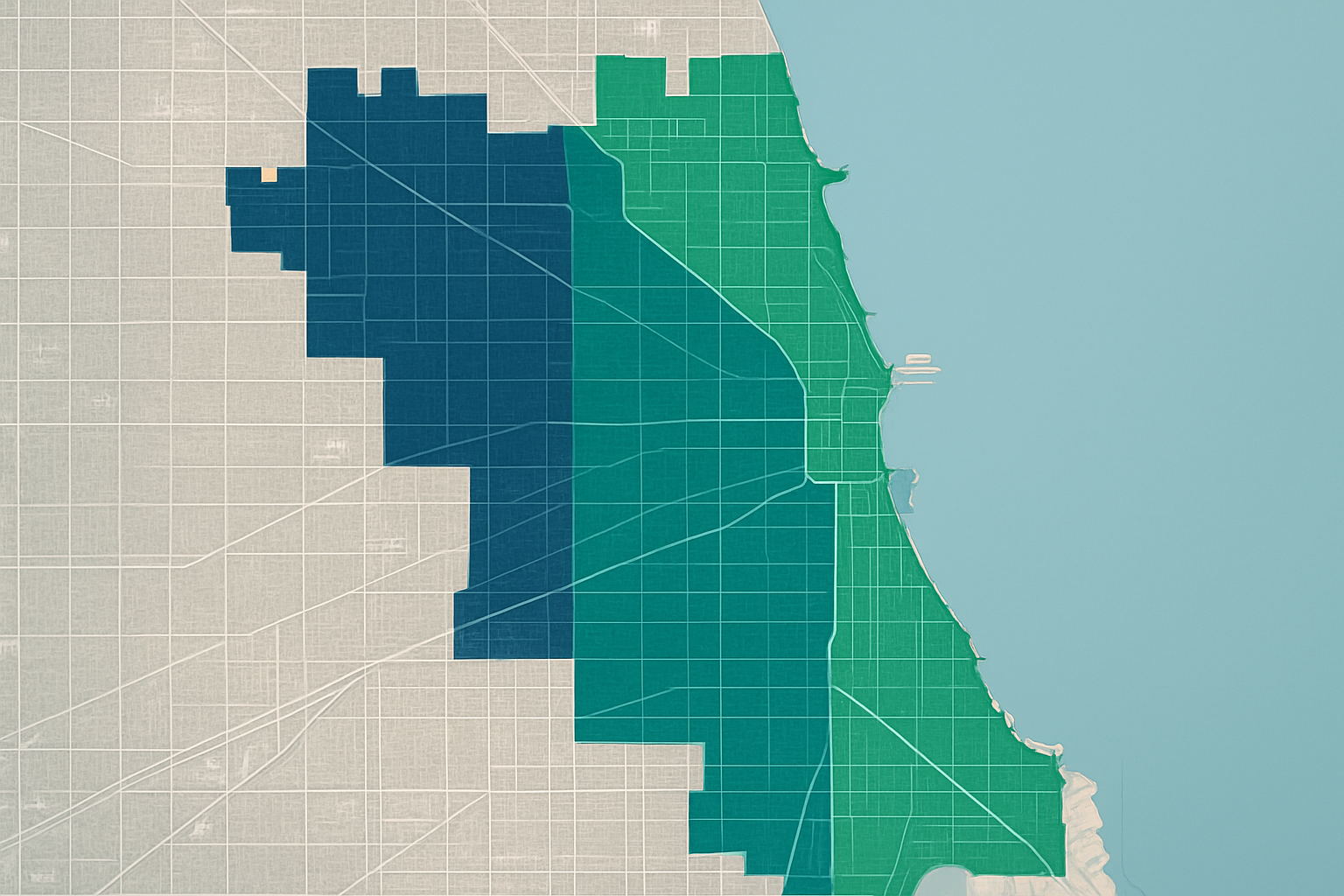
    Jurisdiction Map: Which Ordinance Applies Where

    The first step in compliance is determining which ordinance governs your property. This is based on the physical location of the property, not where the landlord lives or where the lease is signed:

    Property Location Governing Ordinance Notes
    Within Chicago city limits Chicago RLTO Most comprehensive; 9 disclosures
    Unincorporated Cook County Cook County RTLO County-level baseline
    Suburban Cook County municipality (no local ordinance) Cook County RTLO Default if municipality has not opted out
    Evanston Evanston ERLTO Own ordinance; separate from both Chicago and Cook County
    Oak Park Oak Park Tenant Ordinance Mirrors many RLTO provisions
    Outside Cook County (DuPage, Lake, Will, Kane, McHenry) Illinois state law only Fewer specific requirements

    Some suburban Cook County municipalities have opted out of the RTLO or adopted their own ordinances. Before relying on the RTLO for a suburban property, verify with the municipality whether they have adopted the county ordinance, opted out, or enacted their own version.

    Side-by-Side Comparison

    The following table compares the key provisions across all three major ordinances and Illinois state law:

    Provision Chicago (RLTO) Cook County (RTLO) Evanston (ERLTO) IL State Only
    Rent Control No No No No (preempted)
    Late Fee Formula $10 + 5% over $500 $10 + 5% over $500 $10 + 5% over $500 No state formula
    Grace Period 5 days 5 days 5 days No state requirement
    Deposit Interest 0.01% (annual) Rate varies (annual) Rate varies (annual) Not required
    Deposit Penalty 2x deposit + attorney fees 2x deposit + attorney fees 2x deposit + attorney fees Actual damages
    Deposit Receipt 14 days Required Required Not required
    Deposit Return 30 days 30 days 30 days 30–45 days
    Required Disclosures 9 documents 3–5 documents 5–6 documents 2–3 documents
    Notice (Non-Renewal) 30/60/120 days (tiered) 30 days 60 days 30 days
    Lockout Penalty $500/day Varies Varies Court order required
    Bed Bug Disclosure Required (120-day lookback) Required Required Not specifically required
    RLTO/RTLO Summary Must attach to lease Must provide Must provide N/A

    Security Deposit Rules: The Biggest Difference

    While all three ordinances impose security deposit interest requirements, the details differ in important ways:

    Chicago RLTO

    The most prescriptive rules. Deposits must be held in a federally insured, interest-bearing account at an Illinois financial institution. Interest must be paid within 30 days of the tenancy anniversary. A written receipt must be provided within 14 days showing the institution name, address, and interest rate. The 2025–2026 rate is 0.01%. Any violation triggers 2x the deposit plus attorney fees.

    Cook County RTLO

    Similar interest requirement, though the specific rate may differ from Chicago’s rate. The receipt and account requirements are comparable but the county ordinance is generally less detailed in its procedural requirements. The penalty structure (2x deposit + attorney fees) is the same.

    Evanston ERLTO

    Evanston has its own deposit interest rate that may differ from both Chicago and Cook County. The ERLTO requires similar deposit handling procedures but has its own specific provisions regarding receipt timing and return deadlines. Like the other two, violations trigger the 2x penalty.

    Illinois State Law

    For properties outside Cook County, Illinois state law does not require landlords to pay interest on security deposits. The deposit must be returned within a reasonable time (generally 30–45 days) with an itemized statement of deductions, but the penalties for violations are limited to actual damages rather than the statutory 2x multiplier. This makes compliance significantly simpler for downstate landlords.

    Notice Period Differences

    Notice periods are one of the most significant areas of divergence between the three ordinances:

    Chicago: Tiered by Tenancy Length

    Chicago’s Fair Notice Ordinance requires different notice periods depending on how long the tenant has lived in the unit: 30 days for tenancies under 6 months, 60 days for 6 months to 3 years, and 120 days for tenancies over 3 years. This tiered system is unique to Chicago and catches many landlords off guard, particularly the 120-day requirement for long-term tenants.

    Cook County: 30 Days Standard

    The RTLO uses a standard 30-day notice period for non-renewals and rent increases, regardless of tenancy length. This is significantly simpler than Chicago’s tiered system.

    Evanston: 60 Days Standard

    The ERLTO requires 60-day notice for non-renewals, positioning Evanston between the Cook County minimum and Chicago’s tiered system. This fixed period applies regardless of tenancy length.

    Disclosure Requirements: 9 vs 5 vs 3

    The number and type of required lease disclosures is another major point of divergence:

    Chicago: 9 Required Disclosures

    The RLTO requires nine specific documents: RLTO summary, lead paint disclosure, radon disclosure, bed bug disclosure, heating disclosure, recycling information, security deposit receipt, Safer Homes Act summary (2026), and flood disclosure. This is the most extensive disclosure requirement of any Illinois jurisdiction. See our complete guide to all 9 Chicago disclosures.

    Evanston: 5–6 Required Disclosures

    Evanston requires fewer disclosures than Chicago but more than the state baseline. The ERLTO mandates lead paint, radon, bed bug disclosures, security deposit receipt, the ERLTO summary, and the Safer Homes Act summary (2026). Recycling, heating, and flood disclosures are not specifically required by the ERLTO (though lead paint and radon are required statewide and federally).

    Cook County: 3–5 Required Disclosures

    The RTLO requires fewer disclosures than either Chicago or Evanston. Lead paint (federal requirement), radon (state requirement), bed bug disclosure, security deposit receipt, and the Safer Homes Act summary (2026) are the primary obligations. The RTLO does not require a separate county ordinance summary attachment comparable to Chicago’s RLTO summary requirement.

    Illinois State (Outside Cook County): 2–3 Required Disclosures

    Outside Cook County, landlords must comply with federal lead paint disclosure (pre-1978 buildings), state radon disclosure, and the Safer Homes Act summary (2026). There is no local ordinance layer, making compliance significantly simpler.

    Multi-Jurisdiction Landlords: Practical Guidance

    If you own properties in multiple jurisdictions within the Chicago metro area, here are practical strategies for managing the compliance burden:

    1. Create jurisdiction-specific lease packets — do not use the same lease packet for a Chicago property and a suburban Cook County property. The disclosure requirements differ, and using Chicago disclosures for a Cook County property (or vice versa) can create confusion.
    2. Default to the strictest standard — when in doubt, comply with the Chicago RLTO for all properties. It is the most comprehensive, and over-complying with Cook County or Evanston rules does not create liability. However, be careful about attaching the RLTO summary to a non-Chicago lease, as the tenant might rely on RLTO provisions that don’t actually apply to their tenancy.
    3. Track notice periods by property — a 30-day notice is fine for Cook County but could be a violation for a Chicago property with a long-term tenant. Use property management software that tracks notice requirements by jurisdiction.
    4. Maintain separate deposit accounts by jurisdiction — this simplifies interest rate tracking and ensures each deposit is governed by the correct ordinance’s rules.

    Use the LeaseBase Chicago Compliance Calculator to see exactly which ordinance applies to each of your properties and what specific obligations you need to meet.

    Frequently Asked Questions

    What if my property is right on the Chicago city border?

    The governing ordinance is determined by which side of the municipal boundary the property physically sits on. A building one block inside Chicago follows the RLTO; a building one block outside follows the RTLO or the applicable suburban municipality’s rules. If you are unsure, check the property’s tax records, which will show the municipality.

    Can a tenant sue under the wrong ordinance?

    Technically, the tenant must sue under the ordinance that actually applies to the property. However, if a landlord provides the RLTO summary to a suburban Cook County tenant, the tenant might argue that the landlord agreed to be bound by RLTO terms. This is why it’s important to use the correct jurisdiction-specific lease packet.

    Do state laws apply on top of local ordinances?

    Yes. State law (including the Safer Homes Act, radon disclosure, and the Junk Fee Ban) applies statewide as a floor. Local ordinances (RLTO, RTLO, ERLTO) add requirements on top of the state baseline. Where a local ordinance is stricter than state law, the local ordinance governs. Where state law imposes a requirement that the local ordinance does not address, the state requirement applies independently.

    Does Oak Park follow the RLTO or the RTLO?

    Oak Park has its own tenant protection ordinance that mirrors many Chicago RLTO provisions. It does not follow the Cook County RTLO. Oak Park’s ordinance includes its own late fee formula, security deposit rules, and disclosure requirements. If you own property in Oak Park, verify the current requirements with the Village administration.

    Related Resources

    ← Illinois Compliance Hub

  • Chicago Security Deposit Interest: The $4,000 Mistake Landlords Make

    Chicago Security Deposit Interest: The $4,000 Mistake Landlords Make

    Key Takeaways

    • Chicago landlords must pay 0.01% annual interest on security deposits (2025–2026 rate)
    • Interest must be paid within 30 days of the tenancy anniversary each year
    • Penalty for any deposit violation: 2x the full deposit amount + attorney fees
    • Deposits must be held in a federally insured, interest-bearing account at an Illinois bank
    • A written receipt must be provided within 14 days showing institution name, address, and rate

    The Most Expensive Compliance Mistake in Chicago Real Estate

    Here is the math that makes Chicago’s security deposit rules the most dangerous compliance trap in Illinois landlord-tenant law: the annual interest on a $2,000 security deposit at 0.01% is $0.20. The penalty for not paying that twenty cents on time is $4,000 plus attorney’s fees.

    That is not a typo. Under the Chicago Residential Landlord and Tenant Ordinance (RLTO), any violation of the security deposit provisions — including failure to pay annual interest within the required timeframe — triggers a statutory penalty of two times the full deposit amount plus reasonable attorney’s fees. The penalty is not proportional to the interest owed. It is proportional to the deposit.

    This penalty structure is one of the primary reasons tenant-side attorneys in Chicago actively seek out security deposit violations. The cases are straightforward, the penalties are statutory (no need to prove actual harm), and the attorney’s fees provision makes them economically viable to pursue. For landlords, the stakes are disproportionately high relative to the obligation — which makes understanding and complying with the rules essential.

    The 0.01% Interest Rate Explained

    The City of Chicago Comptroller sets the security deposit interest rate annually. For 2025–2026, the rate is 0.01%. This rate has been near zero for several years, reflecting the low-interest-rate environment for savings accounts at major financial institutions.

    To calculate the annual interest owed, multiply the deposit amount by 0.0001:

    Security Deposit Annual Interest (0.01%) Penalty If Not Paid (2x Deposit)
    $500 $0.05 $1,000 + attorney fees
    $1,000 $0.10 $2,000 + attorney fees
    $1,500 $0.15 $3,000 + attorney fees
    $2,000 $0.20 $4,000 + attorney fees
    $2,500 $0.25 $5,000 + attorney fees
    $3,000 $0.30 $6,000 + attorney fees

    The absurdity of these numbers is intentional. The RLTO’s penalty structure is designed to force compliance through the severity of consequences, not the magnitude of the obligation. Whether you owe five cents or fifty cents in interest, the penalty for non-compliance is the same: two times the deposit.

    When and How to Pay Interest

    The RLTO requires landlords to pay security deposit interest within 30 days of the tenancy anniversary date each year. The anniversary date is the date the tenancy began, not the date the deposit was received (though these are usually the same or close).

    There are two acceptable methods of payment:

    • Direct payment — write a check or issue a direct payment to the tenant for the interest amount
    • Rent credit — apply the interest as a credit toward the next month’s rent, with a written notice to the tenant explaining the credit

    The rent credit method is more common because writing a check for $0.20 is impractical. However, you should document the credit in writing — a text, email, or written notice that says “Your rent for [month] has been credited $0.20 for security deposit interest per the RLTO.” This documentation is your evidence of compliance if the tenant later claims the interest was not paid.

    The Interest-Bearing Account Requirement

    Chicago security deposits must be held in a federally insured, interest-bearing account at a financial institution located in Illinois. This means:

    • The account must be at a bank, savings and loan, or credit union insured by the FDIC or NCUA
    • The account must be interest-bearing — a basic checking account that pays no interest does not qualify
    • The institution must be located in Illinois — an online bank headquartered out of state may not qualify
    • The deposit must be segregated — you cannot commingle the deposit with your personal or operating funds

    The practical challenge is that most savings accounts at major banks pay interest rates comparable to or lower than the RLTO-mandated rate. The requirement is not about generating meaningful returns for the tenant — it is about ensuring the deposit is held in a regulated, insured account rather than in the landlord’s personal checking account or, worse, spent on operating expenses.

    The 14-Day Receipt Requirement

    Within 14 days of receiving the security deposit, the landlord must provide the tenant with a written receipt that includes:

    1. The amount of the deposit received
    2. The name and address of the financial institution holding the deposit
    3. The interest rate on the account

    Failure to provide this receipt within 14 days is itself a violation of the RLTO that triggers the 2x deposit penalty. Many landlords provide a receipt of some kind when collecting the deposit but omit the institution details or interest rate, making the receipt non-compliant.

    The 30-Day Return and Itemized Statement

    When the tenancy ends, the landlord must return the security deposit (minus legitimate deductions) within 30 days of the tenant vacating. If making deductions, the landlord must provide an itemized statement within 30 days that lists each deduction, the amount, and a description of the damage or charge.

    Failure to return the deposit or provide the itemized statement within 30 days forfeits the landlord’s right to retain any portion of the deposit, regardless of actual damages. The tenant can then sue for the full deposit plus the 2x penalty plus attorney’s fees.

    Common deductions that are permitted include unpaid rent, damage beyond normal wear and tear, and cleaning costs if the unit is left in a condition below the standard at move-in. Common deductions that are not permitted include normal wear and tear (painting, carpet cleaning after multi-year tenancy), pre-existing damage, and cleaning that the landlord would have done between tenants regardless.

    The 45-Day Rule for Itemized Statements

    There is an important nuance: while the deposit must be returned within 30 days, the landlord has an additional 15 days (45 days total from move-out) to provide the itemized statement of deductions. However, most practitioners treat the 30-day deadline as the operative deadline for both the return and the statement, because failing to provide the statement within 30 days can be argued as a violation even if the deposit is returned on time.

    The safest practice is to provide both the deposit return and the itemized statement within 30 days. If you need additional time to assess damages (e.g., waiting for a contractor estimate), communicate this to the tenant in writing and aim to complete the process well within the 45-day outer limit.

    How Tenant Attorneys Find Deposit Violations

    Tenant attorneys in Chicago have developed efficient processes for identifying security deposit violations. Common approaches include:

    • Requesting the deposit receipt — if the landlord cannot produce the 14-day receipt with institution details, that is an immediate violation
    • Asking for interest payment records — if the landlord cannot show documentation of annual interest payments, that is a violation
    • Checking the account type — if the deposit is held in a non-interest-bearing account, that is a violation
    • Timing the return — if the deposit is returned after 30 days, the landlord forfeits the right to retain any portion

    These cases are popular among tenant attorneys because the 2x penalty plus attorney’s fees makes them financially viable even for small deposits. A tenant with a $1,500 deposit can recover $3,000 in penalties plus $2,000–$5,000 in attorney’s fees, making the total exposure $5,000–$8,000 for a single deposit violation.

    How to Protect Yourself

    1. Open a dedicated savings account at an FDIC-insured Illinois bank for security deposits. Do not commingle with operating funds.
    2. Provide the receipt within 14 days — include the institution name, address, and interest rate. Keep a signed copy.
    3. Set calendar reminders for 30 days before each tenancy anniversary to pay the annual interest.
    4. Document interest payments in writing — even if you apply the credit to rent, send a written confirmation.
    5. Return deposits within 30 days with an itemized statement. When in doubt, return the full deposit and avoid the litigation risk.
    6. Use property management software that tracks deposit deadlines automatically — LeaseBase tracks all RLTO deposit obligations for every unit in your portfolio.

    Frequently Asked Questions

    Does the interest rate change every year?

    Yes. The City of Chicago Comptroller sets the security deposit interest rate annually. The rate has been at or near 0.01% for several years, but it can change based on prevailing interest rates. Landlords should check the current rate each year before the anniversary payment is due.

    What if my tenant has been there for 5 years and I never paid interest?

    You are in violation for each year you failed to pay. The 2x penalty applies to each violation. In practice, if a tenant discovers five years of unpaid interest and sues, the court will likely award the 2x deposit penalty plus attorney’s fees. Some courts have awarded the penalty for each year of non-compliance, though this varies by judge. The safest course is to immediately pay all back interest with a written explanation and begin regular annual payments going forward.

    Does this apply to small landlords with only one unit?

    The security deposit provisions of the RLTO apply to all residential landlords in Chicago, regardless of the number of units. Whether you own a 100-unit building or rent out a single condo, the same rules apply. There is no small-landlord exemption for security deposit interest.

    Can I avoid all this by not collecting a security deposit?

    Yes. If you do not collect a security deposit, the RLTO deposit provisions do not apply. Some Chicago landlords have moved to “no deposit” models using security deposit alternatives (e.g., deposit insurance products) to avoid the compliance burden entirely. However, this means you have no deposit to draw from if the tenant causes damage or leaves unpaid rent.

    Related Resources

    ← Illinois Compliance Hub

  • Chicago Late Fee Calculator: The RLTO Formula Explained (2026)

    Chicago Late Fee Calculator: The RLTO Formula Explained (2026)

    Key Takeaways

    • Chicago’s RLTO caps late fees at $10 for the first $500 of rent + 5% of rent above $500
    • Late fees cannot be charged until 5 days after the rent due date (mandatory grace period)
    • Most landlords overcharge by using flat percentages or fixed fees that exceed the RLTO formula
    • Cook County uses the same formula but is governed by a separate ordinance (RTLO)
    • Overcharging late fees can entitle the tenant to recover the excess plus damages

    The Chicago Late Fee Formula Most Landlords Get Wrong

    Ask ten Chicago landlords what their late fee is, and you will likely hear answers like “5% of rent,” “$50 flat,” or “$100 after five days.” Most of these answers are wrong. The Chicago Residential Landlord and Tenant Ordinance (RLTO) uses a specific two-part formula that many landlords either don’t know about or don’t calculate correctly.

    The maximum late fee under the RLTO is:

    $10 for the first $500 of monthly rent
    + 5% of any rent amount above $500

    This formula produces a lower maximum than most landlords expect. A tenant paying $2,000 per month has a maximum late fee of $85 — not $100, not $200, and certainly not the $250 or $300 that some landlords charge. Charging more than the formula allows is not just bad practice — it is a violation of the RLTO that can entitle the tenant to recover the overcharge and potentially additional damages.

    Worked Examples at Common Rent Levels

    The formula is straightforward once you understand it, but seeing it applied at different rent levels helps clarify how it works in practice. The key insight is that the first $500 of rent always generates a flat $10 fee, and only rent above $500 is subject to the 5% calculation.

    Monthly Rent First $500 ($10 flat) Amount Above $500 5% of Excess Maximum Late Fee
    $500 or below $10 $0 $0 $10.00
    $800 $10 $300 $15 $25.00
    $1,000 $10 $500 $25 $35.00
    $1,200 $10 $700 $35 $45.00
    $1,500 $10 $1,000 $50 $60.00
    $1,800 $10 $1,300 $65 $75.00
    $2,000 $10 $1,500 $75 $85.00
    $2,500 $10 $2,000 $100 $110.00
    $3,000 $10 $2,500 $125 $135.00
    $3,500 $10 $3,000 $150 $160.00
    $4,000 $10 $3,500 $175 $185.00
    $5,000 $10 $4,500 $225 $235.00

    The 5-Day Grace Period

    Under the RLTO, landlords cannot charge a late fee until five full days after the rent due date. If rent is due on the first of the month, the earliest you can impose a late fee is the sixth of the month. This is a mandatory grace period — you cannot waive it in the lease, and charging a late fee during the grace period is a violation.

    The grace period exists to protect tenants from penalties due to minor payment delays — a check in the mail, a bank processing delay, or a weekend that pushes the payment date by a day or two. Many landlords include the grace period in their lease but then charge the late fee on day four or five, which is too early.

    There is also a practical consideration: if the due date falls on a weekend or holiday, the grace period effectively extends because the tenant has until the next business day to pay without penalty. While the RLTO does not explicitly address this, courts have generally interpreted the grace period to mean five business-available days.

    What Happens If You Overcharge

    Charging a late fee that exceeds the RLTO formula is a violation of the ordinance. The consequences include:

    • Recovery of the excess — the tenant can sue to recover any late fees charged above the maximum
    • Actual damages — if the overcharge caused the tenant financial harm (e.g., insufficient funds for other bills), the tenant may recover those damages
    • Lease termination — in some cases, overcharging late fees can be considered a material breach of the landlord’s obligations, giving the tenant grounds to terminate the lease
    • Attorney’s fees — if the tenant prevails in an RLTO action, the landlord may be required to pay the tenant’s reasonable attorney’s fees

    The most common overcharge scenarios occur when landlords use a flat percentage (e.g., 10% of rent, which would be $200 on $2,000 rent — more than double the allowed $85) or a fixed fee (e.g., “$150 late fee” that exceeds the formula for rents under approximately $3,300).

    Chicago vs Cook County: Same Formula, Different Ordinance

    The Cook County Residential Tenant Landlord Ordinance (RTLO) uses the same late fee formula as Chicago’s RLTO: $10 for the first $500 plus 5% of rent above $500. The same 5-day grace period applies. The key difference is jurisdictional — the RLTO governs properties within Chicago city limits, while the RTLO governs properties in unincorporated Cook County and some suburban municipalities.

    Evanston’s ERLTO also follows the same formula structure. However, landlords with properties in multiple jurisdictions should verify each municipality’s specific rules, as some suburban Cook County towns have opted out of the county ordinance or have their own tenant protection provisions.

    For properties outside Cook County, Illinois state law does not impose a specific late fee formula. Landlords in these areas have more flexibility in setting late fees, though the fees must still be “reasonable” under Illinois contract law — courts can invalidate fees that are deemed punitive rather than compensatory.

    Common Late Fee Mistakes

    Based on common RLTO enforcement actions and tenant complaints, here are the most frequent late fee mistakes Chicago landlords make:

    Mistake 1: Flat Percentage Late Fees

    Many leases include a clause like “Late fee: 5% of monthly rent.” At $2,000 rent, 5% is $100 — but the RLTO maximum is $85. At $1,000 rent, 5% is $50 — but the RLTO maximum is $35. A flat 5% always exceeds the RLTO formula for rents above about $700.

    Mistake 2: Charging During the Grace Period

    Rent is due on the 1st. The landlord sends a “late notice with fee” on the 3rd. This is too early — the 5-day grace period means no late fee until the 6th.

    Mistake 3: Daily Accumulating Late Fees

    Some leases include “$25 per day after the 5th.” The RLTO maximum is a one-time fee per month. Daily accumulating fees are not permitted. The maximum late fee is assessed once per late payment, not per day.

    Mistake 4: Including Late Fees in Rent

    Some landlords add unpaid late fees to the next month’s rent and then charge a late fee on the combined amount. The late fee formula applies to the base monthly rent, not to outstanding balances or accumulated fees.

    Mistake 5: Using Late Fee Templates from Other States

    Lease templates downloaded from national landlord websites often include late fee clauses that comply with the laws of other states but violate the RLTO. Always verify that your lease’s late fee provision matches the Chicago formula if your property is within city limits.

    How to Set Your Late Fee Correctly

    1. Calculate the RLTO maximum using the formula: $10 + (5% × (rent − $500)). If rent is $500 or less, the maximum is $10.
    2. Set your lease late fee at or below the maximum — you can charge less than the maximum, but never more.
    3. Specify the 5-day grace period in the lease — and enforce it consistently.
    4. Charge the fee once per month — no daily accumulation.
    5. Keep records of when rent was due, when it was paid, and when the late fee was assessed.

    Use the LeaseBase Chicago Compliance Calculator to automatically calculate your maximum late fee based on your rent amount, and see all other RLTO obligations that apply to your property.

    Frequently Asked Questions

    Can I charge a higher late fee if the tenant agrees to it in the lease?

    No. The RLTO late fee formula is a maximum that cannot be waived or increased by agreement. Even if the tenant signs a lease with a higher late fee, the excess is unenforceable. The tenant can recover any excess late fees charged, plus potentially attorney’s fees.

    Does the late fee formula apply to commercial leases?

    No. The RLTO applies only to residential tenancies. Commercial leases are not subject to the late fee formula and can set late fees by agreement between the parties.

    What if the tenant pays partial rent?

    If the tenant pays partial rent by the due date plus grace period, the late fee is calculated on the full monthly rent, not the unpaid balance. The late fee is a penalty for being late, not a percentage of the amount owed.

    Can I charge a late fee and also start eviction proceedings?

    Yes. Charging a late fee and pursuing eviction for non-payment are separate remedies. However, accepting a late payment with a late fee may waive your right to evict for that month’s non-payment. Consult an attorney before combining late fee enforcement with eviction proceedings.

    Related Resources

    ← Illinois Compliance Hub

  • Chicago Landlord Compliance: 9 Required Lease Disclosures (2026)

    Chicago Landlord Compliance: 9 Required Lease Disclosures (2026)

    Key Takeaways

    • Chicago’s RLTO requires 9 specific disclosures attached to or included with every residential lease
    • The Safer Homes Act (2026) adds a new statewide requirement — a Summary of Rights as the first page of every lease
    • Missing even one disclosure can entitle the tenant to terminate the lease or recover damages
    • Security deposit receipt violations trigger 2x the deposit amount + attorney fees
    • Lead paint and radon disclosures are the most commonly missed — especially in older Chicago buildings

    Why Chicago Has 9 Required Lease Disclosures

    If you’re a landlord in Chicago, you already know the city doesn’t have rent control. Illinois preempted it statewide in 1997. What many landlords don’t realize is that Chicago’s Residential Landlord and Tenant Ordinance (RLTO) compensates for the lack of rent caps with one of the most prescriptive disclosure regimes in the country.

    Every residential lease signed in Chicago must include or be accompanied by nine specific documents. This isn’t a suggestion — it’s a legal requirement with real penalties for non-compliance. A landlord who misses one disclosure can face the tenant terminating the lease, recovering actual damages, and in some cases, collecting attorney’s fees. For security deposit-related violations, the penalty escalates to 2x the deposit amount plus attorney fees.

    Starting in 2026, a new statewide requirement — the Illinois Safer Homes Act — adds a tenth obligation for landlords across the state, though it functions as the ninth required document for compliance purposes since it replaces no existing requirement. This article covers all nine disclosures in detail, with the penalties for missing each one and practical advice for getting them right.

    Disclosure 1: RLTO Summary

    The most fundamental — and most commonly missed — disclosure is the city-published summary of the RLTO itself. The City of Chicago publishes an official summary document that outlines the rights and obligations of both landlords and tenants under the ordinance. This summary must be attached to every residential lease as a separate document.

    The summary covers security deposit rules, late fee limits, lock change rights, repair obligations, and the tenant’s right to terminate a lease for landlord non-compliance. It is not sufficient to paraphrase or summarize the RLTO in your own words — you must use the official city-published version, which is available from the City of Chicago’s Department of Housing.

    Penalty for missing this disclosure: The tenant may terminate the lease or recover actual damages. Courts have consistently held that failure to attach the RLTO summary is a material violation of the ordinance, and tenants have successfully used this as grounds to break leases without penalty.

    Disclosure 2: Lead Paint Disclosure

    Federal law requires lead paint disclosure for all residential properties built before 1978. In Chicago, where a significant portion of the housing stock predates 1978, this is one of the most common disclosure obligations. The disclosure has two components:

    • The EPA pamphlet “Protect Your Family from Lead in Your Home” must be provided to the tenant
    • A signed disclosure form in which the landlord either discloses known lead-based paint hazards or certifies that they have no knowledge of such hazards

    Both parties must sign the disclosure form, and the landlord must retain a copy for at least three years. This is a federal requirement (42 U.S.C. § 4852d) enforced by both the EPA and HUD, with penalties of up to $19,507 per violation as of 2024 (adjusted annually for inflation).

    For Chicago landlords with pre-war buildings, this disclosure is particularly important. Many buildings in neighborhoods like Lincoln Park, Lakeview, Wicker Park, and Logan Square were built well before 1978 and may contain lead-based paint on interior and exterior surfaces, window frames, and trim.

    Disclosure 3: Radon Disclosure

    Illinois requires radon disclosure for all rental properties under the Radon Awareness Act (420 ILCS 46). Landlords must provide tenants with the Illinois Emergency Management Agency (IEMA) radon guide, which explains the health risks of radon exposure and how to test for it.

    Radon is a naturally occurring radioactive gas that enters buildings through cracks in foundations, floors, and walls. It is the second leading cause of lung cancer in the United States after smoking. The EPA recommends that all homes below the third floor be tested for radon, making this disclosure particularly relevant for basement and ground-floor units in Chicago’s extensive inventory of garden apartments and two-flats.

    Penalty for missing this disclosure: Violation of the Radon Awareness Act can result in fines and may give the tenant grounds to void the lease. Additionally, if a tenant develops radon-related health issues and the landlord failed to provide the required disclosure, the landlord faces significant tort liability exposure.

    Disclosure 4: Bed Bug Disclosure

    Under Chicago’s Bed Bug Ordinance, landlords must disclose any known bed bug infestations in the unit or building within the past 120 days. This applies to both the specific unit being rented and to common areas or other units in the building if the landlord has knowledge of infestations there.

    The disclosure must be made before the tenant signs the lease. Simply including a bed bug clause in the lease is not sufficient — the landlord must affirmatively disclose known infestations. The obligation extends to information the landlord “knew or should have known,” which means that ignoring tenant complaints about bed bugs does not eliminate the disclosure obligation.

    Bed bugs are a persistent problem in Chicago’s dense multi-unit housing stock. The city has consistently ranked among the top cities in the U.S. for bed bug infestations, making this disclosure particularly relevant for landlords operating in older buildings with multiple units.

    Disclosure 5: Heating Disclosure

    If the landlord provides heat, the lease must specify the type of heating system used in the building (gas, electric, steam, etc.). If the tenant is responsible for heating costs, this must be clearly stated in the lease. This disclosure helps tenants understand their expected utility costs before committing to a lease.

    In Chicago, where winters regularly bring temperatures below zero, heating costs can be a significant portion of a tenant’s monthly housing expense. A tenant who signs a lease expecting heat to be included, only to discover they are responsible for heating a poorly insulated vintage building with gas radiators, has grounds for a complaint under the RLTO.

    Disclosure 6: Recycling Information

    Chicago landlords must provide information about recycling services available at the property, including collection schedules and what materials are accepted. For buildings with fewer than five units, the city provides blue cart recycling pickup. For larger buildings, landlords must arrange for recycling service through a licensed hauler.

    This disclosure is relatively straightforward but is frequently overlooked. The requirement comes from the city’s waste management ordinance and is intended to increase recycling participation rates in multi-unit buildings, where recycling compliance tends to be significantly lower than in single-family homes.

    Disclosure 7: Security Deposit Receipt

    Within 14 days of receiving a security deposit, the landlord must provide a written receipt that includes:

    • The amount of the deposit received
    • The name and address of the financial institution holding the deposit
    • The interest rate on the account

    The deposit must be held in a federally insured, interest-bearing account at an Illinois financial institution. Commingling the deposit with personal or operating funds is a violation. The annual interest rate for 2025–2026 is 0.01%, set by the City Comptroller.

    Penalty for violations: This is where the RLTO gets expensive. Any violation of the security deposit provisions — including failing to provide the receipt within 14 days, failing to pay annual interest, or failing to hold the deposit in an interest-bearing account — triggers a penalty of 2x the full deposit amount plus reasonable attorney’s fees. For a $2,000 deposit, that is $4,000 in penalties plus legal costs, even if the landlord’s only mistake was not paying $0.20 in annual interest on time.

    This penalty structure is one of the most aggressive in the country and is the single biggest source of RLTO litigation. Tenant attorneys in Chicago actively seek out security deposit violations because the penalties are statutory — meaning the tenant doesn’t need to prove actual harm to recover.

    Disclosure 8: Safer Homes Act Summary (2026)

    The Illinois Safer Homes Act, effective January 1, 2026, adds a new statewide requirement: every residential lease must include a state-issued Summary of Rights as the first page. This summary is published by the State of Illinois and outlines tenant rights including:

    • Habitability requirements and the landlord’s duty to maintain
    • Retaliation protections for tenants who report violations
    • Security deposit rights and return timelines
    • Right to request reasonable accommodations
    • Domestic violence tenant protections

    The tenant must acknowledge receipt of the summary by signing the first page. The Summary of Rights is a standardized document — landlords cannot modify it or substitute their own version.

    Penalty for missing this disclosure: Penalties of up to $2,000 per violation, and the tenant may have grounds to void the lease. Since the requirement is statewide, it applies to all Illinois landlords, not just those in Chicago. However, for Chicago landlords, it adds to the existing nine-document RLTO burden.

    Disclosure 9: Flood Disclosure

    If the property is in a known flood zone or has a history of flooding, the landlord must disclose this information to the tenant before lease signing. Chicago has experienced several significant flooding events in recent years, particularly in neighborhoods with aging sewer infrastructure and in areas near the Chicago River and Lake Michigan.

    The disclosure should include information about past flooding events, FEMA flood zone designations, and whether the landlord carries flood insurance. While flood insurance is not required for all properties, disclosure of flood risk is mandatory when the landlord has knowledge of the risk.

    Garden apartments (below-grade units) in Chicago are particularly susceptible to flooding during heavy rain events. If you own a building with garden-level units and have experienced flooding in the past, this disclosure is critical. Failure to disclose can result in liability for tenant property damage and potential lease termination claims.

    How to Stay Compliant

    The most common mistake Chicago landlords make is not having a standardized lease packet that includes all nine disclosures. Here’s a practical approach:

    1. Create a master checklist of all nine disclosures and verify each one is included before every lease signing
    2. Use the official versions of city-published documents (RLTO summary, EPA lead paint pamphlet, IEMA radon guide, Safer Homes Act summary)
    3. Date and sign every disclosure — keep copies for your records for at least the duration of the tenancy plus the statute of limitations
    4. Track your security deposit deadlines — set calendar reminders for the 14-day receipt window and annual interest payment dates
    5. Update your packet annually — disclosure requirements change, interest rates change, and new laws (like the 2026 Safer Homes Act) add requirements

    Use the LeaseBase Chicago Compliance Calculator to see exactly which disclosures apply to your specific property based on location, building age, and unit characteristics.

    Frequently Asked Questions

    What happens if I miss one of the nine required disclosures?

    The consequences depend on which disclosure is missing. For most disclosures, the tenant may be entitled to terminate the lease or recover actual damages. For security deposit-related violations, the penalty is 2x the deposit amount plus attorney fees. For lead paint violations, federal penalties can reach $19,507 per violation. For the Safer Homes Act summary, penalties can reach $2,000.

    Do these disclosures apply to month-to-month tenancies?

    Yes. The RLTO disclosure requirements apply to all residential tenancies in Chicago, regardless of lease term. Month-to-month tenancies, fixed-term leases, and even oral agreements are all covered. The disclosures should be provided at the start of the tenancy.

    Do the disclosures apply to single-family homes?

    Most RLTO provisions, including the disclosure requirements, apply to buildings with six or more units. However, certain disclosures like lead paint (federal), radon (state), and the Safer Homes Act (state) apply regardless of building size. Additionally, the security deposit rules apply to all Chicago residential landlords, including those with single-family homes. Always verify which specific provisions apply to your property type.

    Where do I get the official RLTO summary document?

    The official RLTO summary is published by the City of Chicago Department of Housing. It is available for download from the city’s website. Do not use a third-party version or paraphrase the summary in your own words — courts have held that only the official city-published version satisfies the disclosure requirement.

    Is the Safer Homes Act requirement retroactive?

    The Safer Homes Act applies to leases signed on or after January 1, 2026. It does not require landlords to retroactively amend existing leases. However, when an existing lease renews or a new lease is signed with an existing tenant, the Summary of Rights must be included as the first page of the new document.

    Related Resources

    ← Illinois Compliance Hub