
Chicago vs. Cook County vs. Evanston Landlord Rules: Which Applies to You?
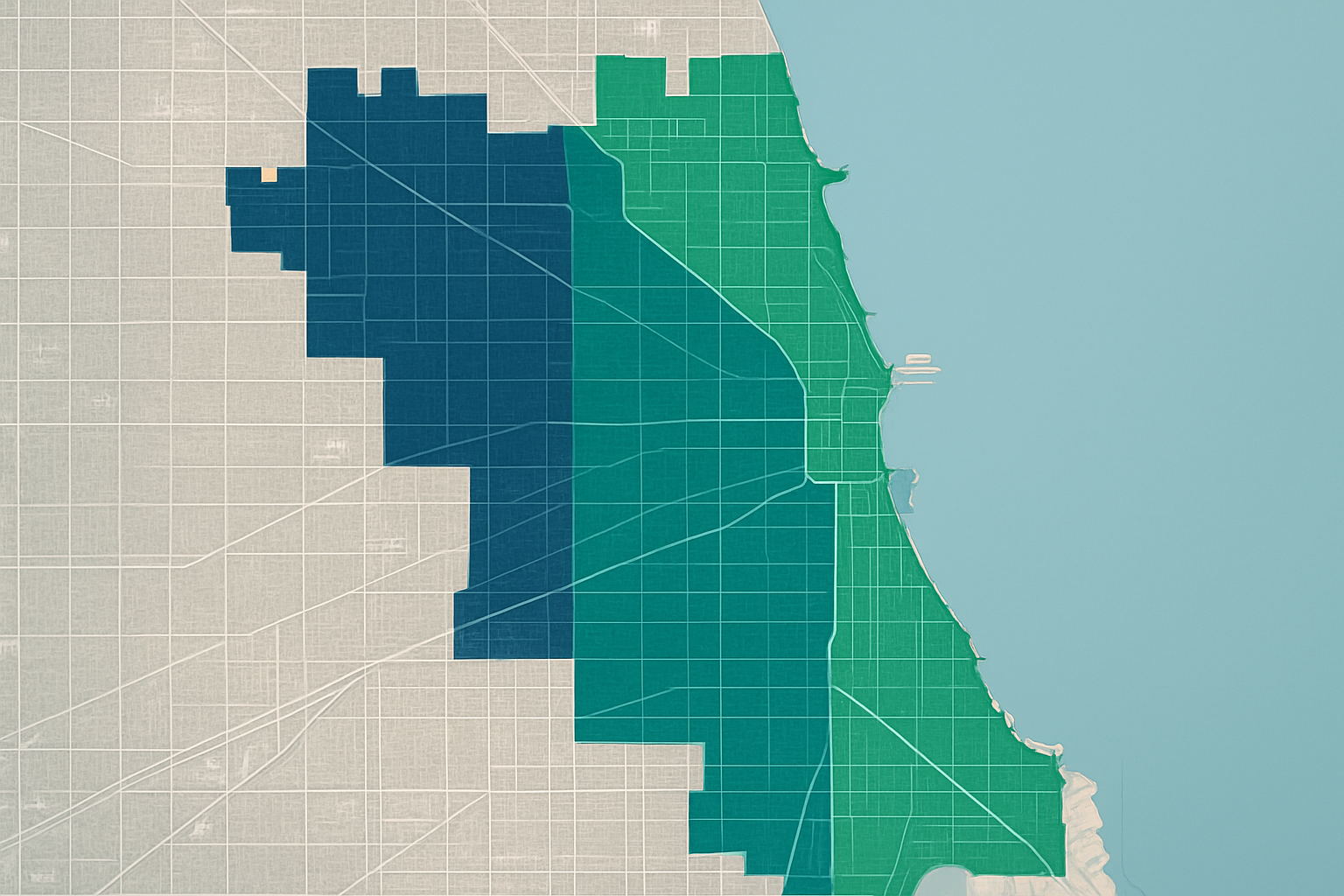
Chicago vs Cook County vs Evanston Landlord Rules

Key Takeaways

  • Chicago (RLTO), Cook County (RTLO), and Evanston (ERLTO) are three separate ordinances with different rules
  • Which ordinance applies depends entirely on where your property sits — not where you live
  • Chicago requires 9 lease disclosures; Cook County and Evanston require fewer
  • Chicago has tiered notice periods (30/60/120 days); Cook County uses 30 days; Evanston uses 60 days
  • All three jurisdictions impose 2x deposit + attorney fees for security deposit violations

Three Cities, Three Ordinances, One Metro Area

The Chicago metropolitan area presents a unique compliance challenge for landlords: three overlapping jurisdictions, each with its own tenant protection ordinance, governing properties that may be only a few miles apart. A landlord with one building in Lincoln Park (Chicago), another in Skokie (suburban Cook County), and a third in Evanston must comply with three different sets of rules.

The Chicago Residential Landlord and Tenant Ordinance (RLTO) is the most comprehensive of the three, with nine required lease disclosures, a specific late fee formula, tiered notice periods, and a $500/day lockout penalty. The Cook County Residential Tenant Landlord Ordinance (RTLO) provides a baseline set of protections for unincorporated Cook County and municipalities that have not adopted their own ordinances. The Evanston Residential Landlord Tenant Ordinance (ERLTO) is Evanston’s own version, which shares some provisions with Chicago but differs in important ways.

None of these jurisdictions have rent control — Illinois preempted it statewide in 1997. But the absence of rent caps does not mean the absence of regulation. The regulatory complexity in the Chicago area rivals or exceeds many rent-controlled markets, particularly when it comes to security deposits, disclosures, and notice requirements.

Jurisdiction Map: Which Ordinance Applies Where

The first step in compliance is determining which ordinance governs your property. This is based on the physical location of the property, not where the landlord lives or where the lease is signed:

Property Location Governing Ordinance Notes
Within Chicago city limits Chicago RLTO Most comprehensive; 9 disclosures
Unincorporated Cook County Cook County RTLO County-level baseline
Suburban Cook County municipality (no local ordinance) Cook County RTLO Default if municipality has not opted out
Evanston Evanston ERLTO Own ordinance; separate from both Chicago and Cook County
Oak Park Oak Park Tenant Ordinance Mirrors many RLTO provisions
Outside Cook County (DuPage, Lake, Will, Kane, McHenry) Illinois state law only Fewer specific requirements

Some suburban Cook County municipalities have opted out of the RTLO or adopted their own ordinances. Before relying on the RTLO for a suburban property, verify with the municipality whether they have adopted the county ordinance, opted out, or enacted their own version.

Side-by-Side Comparison

The following table compares the key provisions across all three major ordinances and Illinois state law:

Provision Chicago (RLTO) Cook County (RTLO) Evanston (ERLTO) IL State Only
Rent Control No No No No (preempted)
Late Fee Formula $10 + 5% over $500 $10 + 5% over $500 $10 + 5% over $500 No state formula
Grace Period 5 days 5 days 5 days No state requirement
Deposit Interest 0.01% (annual) Rate varies (annual) Rate varies (annual) Not required
Deposit Penalty 2x deposit + attorney fees 2x deposit + attorney fees 2x deposit + attorney fees Actual damages
Deposit Receipt 14 days Required Required Not required
Deposit Return 30 days 30 days 30 days 30–45 days
Required Disclosures 9 documents 3–5 documents 5–6 documents 2–3 documents
Notice (Non-Renewal) 30/60/120 days (tiered) 30 days 60 days 30 days
Lockout Penalty $500/day Varies Varies Court order required
Bed Bug Disclosure Required (120-day lookback) Required Required Not specifically required
RLTO/RTLO Summary Must attach to lease Must provide Must provide N/A

Security Deposit Rules: The Biggest Difference

While all three ordinances impose security deposit interest requirements, the details differ in important ways:

Chicago RLTO

The most prescriptive rules. Deposits must be held in a federally insured, interest-bearing account at an Illinois financial institution. Interest must be paid within 30 days of the tenancy anniversary. A written receipt must be provided within 14 days showing the institution name, address, and interest rate. The 2025–2026 rate is 0.01%. Any violation triggers 2x the deposit plus attorney fees.

Cook County RTLO

Similar interest requirement, though the specific rate may differ from Chicago’s rate. The receipt and account requirements are comparable but the county ordinance is generally less detailed in its procedural requirements. The penalty structure (2x deposit + attorney fees) is the same.

Evanston ERLTO

Evanston has its own deposit interest rate that may differ from both Chicago and Cook County. The ERLTO requires similar deposit handling procedures but has its own specific provisions regarding receipt timing and return deadlines. Like the other two, violations trigger the 2x penalty.

Illinois State Law

For properties outside Cook County, Illinois state law does not require landlords to pay interest on security deposits. The deposit must be returned within a reasonable time (generally 30–45 days) with an itemized statement of deductions, but the penalties for violations are limited to actual damages rather than the statutory 2x multiplier. This makes compliance significantly simpler for downstate landlords.

Notice Period Differences

Notice periods are one of the most significant areas of divergence between the three ordinances:

Chicago: Tiered by Tenancy Length

Chicago’s Fair Notice Ordinance requires different notice periods depending on how long the tenant has lived in the unit: 30 days for tenancies under 6 months, 60 days for 6 months to 3 years, and 120 days for tenancies over 3 years. This tiered system is unique to Chicago and catches many landlords off guard, particularly the 120-day requirement for long-term tenants.

Cook County: 30 Days Standard

The RTLO uses a standard 30-day notice period for non-renewals and rent increases, regardless of tenancy length. This is significantly simpler than Chicago’s tiered system.

Evanston: 60 Days Standard

The ERLTO requires 60-day notice for non-renewals, positioning Evanston between the Cook County minimum and Chicago’s tiered system. This fixed period applies regardless of tenancy length.

Disclosure Requirements: 9 vs 5 vs 3

The number and type of required lease disclosures is another major point of divergence:

Chicago: 9 Required Disclosures

The RLTO requires nine specific documents: RLTO summary, lead paint disclosure, radon disclosure, bed bug disclosure, heating disclosure, recycling information, security deposit receipt, Safer Homes Act summary (2026), and flood disclosure. This is the most extensive disclosure requirement of any Illinois jurisdiction. See our complete guide to all 9 Chicago disclosures.

Evanston: 5–6 Required Disclosures

Evanston requires fewer disclosures than Chicago but more than the state baseline. The ERLTO mandates lead paint, radon, bed bug disclosures, security deposit receipt, the ERLTO summary, and the Safer Homes Act summary (2026). Recycling, heating, and flood disclosures are not specifically required by the ERLTO (though lead paint and radon are required statewide and federally).

Cook County: 3–5 Required Disclosures

The RTLO requires fewer disclosures than either Chicago or Evanston. Lead paint (federal requirement), radon (state requirement), bed bug disclosure, security deposit receipt, and the Safer Homes Act summary (2026) are the primary obligations. The RTLO does not require a separate county ordinance summary attachment comparable to Chicago’s RLTO summary requirement.

Illinois State (Outside Cook County): 2–3 Required Disclosures

Outside Cook County, landlords must comply with federal lead paint disclosure (pre-1978 buildings), state radon disclosure, and the Safer Homes Act summary (2026). There is no local ordinance layer, making compliance significantly simpler.

Multi-Jurisdiction Landlords: Practical Guidance

If you own properties in multiple jurisdictions within the Chicago metro area, here are practical strategies for managing the compliance burden:

  1. Create jurisdiction-specific lease packets — do not use the same lease packet for a Chicago property and a suburban Cook County property. The disclosure requirements differ, and using Chicago disclosures for a Cook County property (or vice versa) can create confusion.
  2. Default to the strictest standard — when in doubt, comply with the Chicago RLTO for all properties. It is the most comprehensive, and over-complying with Cook County or Evanston rules does not create liability. However, be careful about attaching the RLTO summary to a non-Chicago lease, as the tenant might rely on RLTO provisions that don’t actually apply to their tenancy.
  3. Track notice periods by property — a 30-day notice is fine for Cook County but could be a violation for a Chicago property with a long-term tenant. Use property management software that tracks notice requirements by jurisdiction.
  4. Maintain separate deposit accounts by jurisdiction — this simplifies interest rate tracking and ensures each deposit is governed by the correct ordinance’s rules.

Use the LeaseBase Chicago Compliance Calculator to see exactly which ordinance applies to each of your properties and what specific obligations you need to meet.

Frequently Asked Questions

What if my property is right on the Chicago city border?

The governing ordinance is determined by which side of the municipal boundary the property physically sits on. A building one block inside Chicago follows the RLTO; a building one block outside follows the RTLO or the applicable suburban municipality’s rules. If you are unsure, check the property’s tax records, which will show the municipality.

Can a tenant sue under the wrong ordinance?

Technically, the tenant must sue under the ordinance that actually applies to the property. However, if a landlord provides the RLTO summary to a suburban Cook County tenant, the tenant might argue that the landlord agreed to be bound by RLTO terms. This is why it’s important to use the correct jurisdiction-specific lease packet.

Do state laws apply on top of local ordinances?

Yes. State law (including the Safer Homes Act, radon disclosure, and the Junk Fee Ban) applies statewide as a floor. Local ordinances (RLTO, RTLO, ERLTO) add requirements on top of the state baseline. Where a local ordinance is stricter than state law, the local ordinance governs. Where state law imposes a requirement that the local ordinance does not address, the state requirement applies independently.

Does Oak Park follow the RLTO or the RTLO?

Oak Park has its own tenant protection ordinance that mirrors many Chicago RLTO provisions. It does not follow the Cook County RTLO. Oak Park’s ordinance includes its own late fee formula, security deposit rules, and disclosure requirements. If you own property in Oak Park, verify the current requirements with the Village administration.

Related Resources

← Illinois Compliance Hub

Get weekly landlord tips

Practical advice on rent collection, compliance, and self-managing profitably.

Ready to self-manage your rentals without the chaos?

LeaseBase™ handles rent collection, maintenance, leases, compliance, and reporting — so you don’t have to.

Free for up to 3 units. No credit card required.

The Landlord Independence Platform™

Every month without a system is another month of unnecessary stress.

You’re already doing the work. Now do it with a system that keeps you organized, compliant, and profitable.

14-day trial. No credit card required.