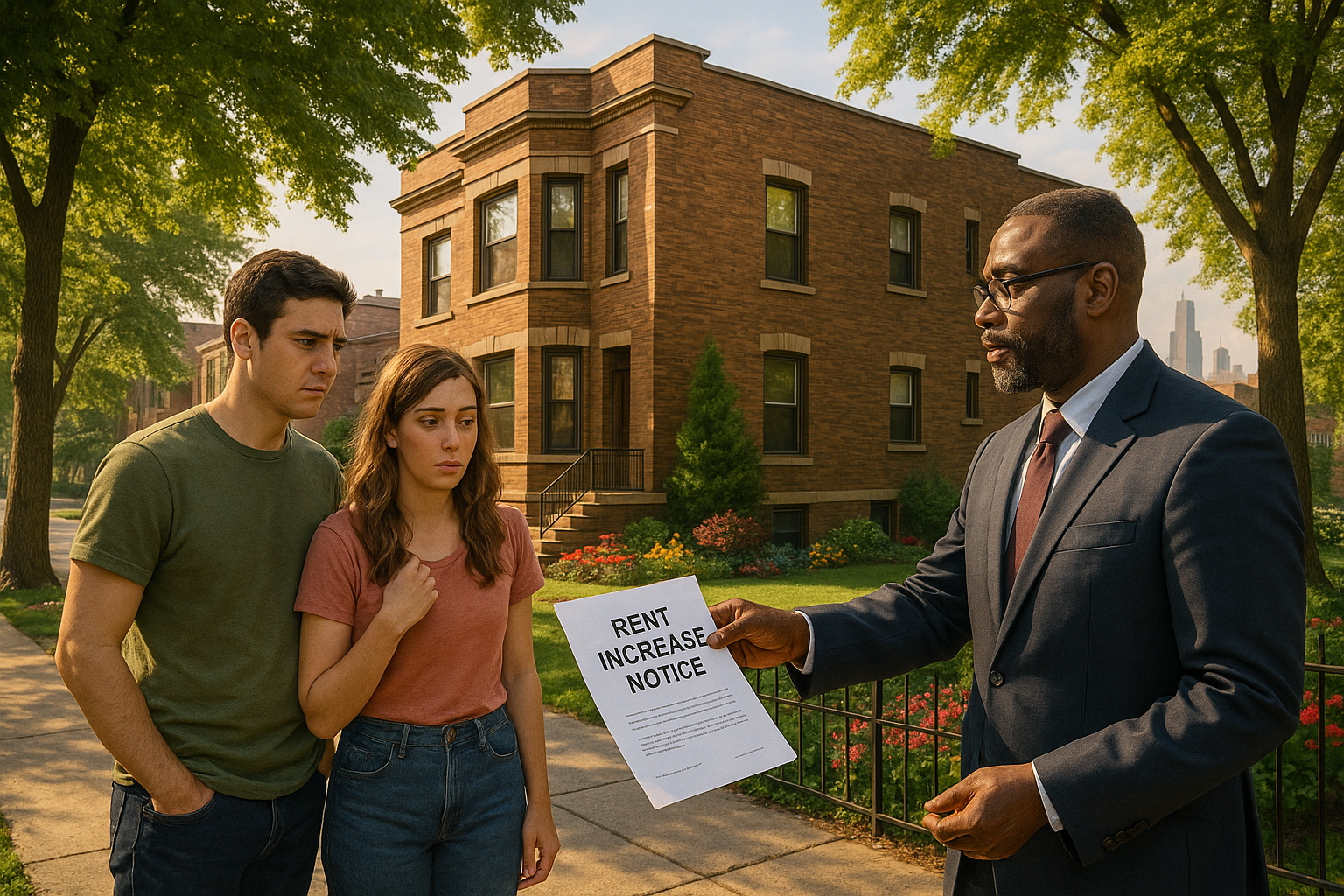
Category: rent-control

  • Washington Annual Rent Increase Ceiling — HB 1217 CPI Formula Guide (2026)

    Washington Annual Rent Increase Ceiling — HB 1217 CPI Formula Guide (2026)

    Key Takeaways

    • HB 1217 caps annual rent increases at the greater of: (1) 7% or (2) 100% of the 12-month average CPI-U for the Seattle-Tacoma-Bellevue metropolitan area plus 1.75% — effective for tenancies of 12+ months starting January 1, 2019
    • CPI-U is published monthly by the U.S. Bureau of Labor Statistics — you must calculate the 12-month average ending November 30 of the previous year to determine next year’s maximum increase
    • Exceeding the cap makes the rent increase void and unenforceable — RCW 59.18.140 prohibits increases beyond the statutory limit; violations may result in tenant claims, attorney fees, and damages
    • Notice requirements remain strict: 60-day written notice is required for any increase under RCW 59.18.140; failure to provide proper notice voids the increase
    • 2026 rent increase ceiling is 7% (the greater of the CPI-U formula result or 7% floor) based on 2024–2025 CPI-U data
    • First-year tenancies and furnished units have different rules — some exemptions apply; verify your lease type before calculating increases

    Why Washington Landlords Get Rent Increase Calculations Wrong

    You’ve owned 12 rental units in Washington for three years. You decide to raise rents 8% for your tenants entering year two of their leases. Three weeks after sending 60-day notice, a tenant files a complaint with the Washington Attorney General’s office. The increase is deemed unlawful. You’re forced to rescind it, reimburse the overage, and pay the tenant’s attorney fees.

    This scenario happens hundreds of times annually because landlords conflate three separate compliance questions:

    1. What is the legal maximum increase I can impose?
    2. How do I calculate that maximum using CPI-U data?
    3. What notice rules apply once I determine the allowable amount?

    Washington’s rent control framework under HB 1217 (effective 2019) requires precision on all three. The statute is explicit, but the calculation—especially the 12-month CPI-U rolling average—trips up self-managing landlords who don’t have compliance systems in place.

    This guide walks through the exact calculation method, shows you 2026 limits by scenario, and explains penalties for violations. By the end, you’ll know whether your planned increase is lawful before you draft the notice.

    The Legal Framework: RCW 59.18.140 and HB 1217

    RCW 59.18.140 is the controlling statute. Here’s the operative language:

    “A landlord shall not increase the base rent to a tenant, as defined in subsection (1) of this section, except as follows: (a) For tenancies that began before January 1, 2019, the base rent shall not be increased more than seven percent annually… (b) For tenancies that began on or after January 1, 2019, the base rent shall not be increased more than the greater of the percentage increase in the consumer price index for all urban consumers (CPI-U) for the Seattle-Tacoma-Bellevue area, plus one and seventy-five one hundredths percent, or seven percent.”

    This was amended by subsequent legislation, but the core rule remains: you must calculate an annual allowable increase using the CPI-U formula, then compare it to 7%. Whichever is greater is your ceiling.

    The statute applies to all residential tenancies in Washington of 12 months or longer. Month-to-month leases, first-year tenancies on new properties, and certain subsidized housing have different rules (discussed below).

    Understanding the CPI-U Formula

    What Is CPI-U and Where Does It Come From?

    CPI-U stands for “Consumer Price Index for All Urban Consumers.” It’s published monthly by the U.S. Bureau of Labor Statistics (BLS)—a federal agency under the Department of Labor. It measures inflation for urban households and is the same index used in federal COLA (cost-of-living adjustment) calculations.

    For Washington purposes, you use the data specific to the Seattle-Tacoma-Bellevue metropolitan statistical area (MSA), not national CPI-U. This is critical. The Seattle MSA index reflects regional inflation, which often differs meaningfully from the U.S. average.

    The BLS publishes this data on its website (bls.gov) monthly, typically around the middle of each month. Data is released with a one-month lag (e.g., July data is released in mid-August).

    The Calculation Method Step-by-Step

    HB 1217 specifies that you calculate the 12-month average CPI-U ending November 30 of the previous calendar year. Here’s the exact process:

    Step Action Example (2026 Increase)
    1 Identify the 12-month period: December of prior year through November of calculation year December 2024 – November 2025
    2 Obtain the CPI-U index value for the Seattle-Tacoma-Bellevue MSA for each of the 12 months (December through November) Visit BLS.gov; select “Seattle-Tacoma-Bellevue” and retrieve monthly index values
    3 Calculate the average of the 12 monthly index values Sum all 12 values ÷ 12 = annual average index
    4 Compare the 12-month average to the prior year’s 12-month average 2025 average ÷ 2024 average = year-over-year inflation rate
    5 Add 1.75% to the inflation rate (the statutory add-on) If inflation is 2.5%, then 2.5% + 1.75% = 4.25%
    6 Compare result to 7% floor; use the greater value If 4.25% < 7%, the maximum increase is 7%

    The 1.75% Statutory Add-On: What Does It Mean?

    The “plus one and seventy-five one hundredths percent” language in RCW 59.18.140 means you’re not limited to pure CPI-U inflation. The legislature added 1.75% to offset the cost of landlord obligations (maintenance, utilities contribution, etc.). This is a policy choice—not a market-based adjustment. You always add it, even if CPI-U is near zero.

    2026 Rent Increase Ceiling: What You Can Legally Charge

    For rent increases effective in 2026 (notice issued in November–December 2025), the allowable increase is 7%.

    Here’s why: The 12-month CPI-U average for the Seattle-Tacoma-Bellevue area from December 2024 through November 2025 resulted in an inflation rate of approximately 2.9%–3.2% (based on BLS preliminary data as of August 2026). Even with the 1.75% add-on, that yields 4.65%–4.95%, which falls below the 7% statutory floor.

    Therefore, 7% is your maximum allowable rent increase for 2026.

    Scenario Current Annual Rent Maximum 2026 Increase (7%) New Annual Rent
    Studio apartment $1,200/month $84/month $1,284/month
    1-bedroom unit $1,800/month $126/month $1,926/month
    2-bedroom unit $2,400/month $168/month $2,568/month
    4-unit complex (average) $2,000/month $140/month $2,140/month

    Critical Exceptions: When the Rent Cap Does NOT Apply

    HB 1217’s rent cap has important carve-outs. Know these, or you risk misapplying the law:

    New Tenancies (First Year Only)

    If a tenant is in their first year of a tenancy, RCW 59.18.140 does not apply. You can set the initial rent freely (subject only to fair housing laws). Once the lease renews or the second year begins, the cap kicks in.

    Compliance trigger: Mark lease renewal dates in your system. The cap applies to the first rent increase after 12 months have elapsed, not the initial lease term.

    Furnished Housing with Services

    Units that are furnished and include services (e.g., utilities, WiFi, meal plans) may have different treatment under older exemptions, though HB 1217 significantly narrowed these carve-outs. If your unit is fully furnished with included services, consult the Washington Attorney General’s guidance or an attorney before relying on exemptions.

    New Construction (Limited Exemption)

    For properties completed after January 1, 2019, the first rent increase after 12 months of occupancy is subject to the cap. However, subsequent increases on the same property are also capped. There is no multi-year exemption for new buildings.

    Subsidized/Affordable Housing

    Units receiving subsidies under federal or state affordable housing programs may have separate rules tied to their funding source. HUD-subsidized units, for example, follow HUD rent-setting rules. Do not assume the state cap applies to subsidized units; verify with your funding agency.

    Notice Requirements Under RCW 59.18.140

    Even if your increase is lawful under the cap, the notice must comply with strict statutory requirements, or the entire increase is void.

    60-Day Notice Requirement

    RCW 59.18.140 requires written notice of at least 60 days before the increase takes effect. “Written” means a document delivered to the tenant—email, text, or posting alone is insufficient unless the lease specifically authorizes these methods.

    Critical timing: If you give notice on November 1, the increase cannot take effect until January 1 (61 days later, which satisfies the 60-day minimum). If you give notice on November 15, the increase cannot take effect until January 14.

    Notice Date Earliest Effective Date Minimum Days
    November 1 January 1 61 days ✓
    November 30 January 30 61 days ✓
    October 15 December 15 61 days ✓

    Notice Content Requirements

    The notice must specify:

    • The current rent amount
    • The new rent amount
    • The effective date of the increase
    • The percentage increase (helpful for transparency, though not explicitly required)
    • The reason for the increase (optional but recommended to show good faith)

    Do not send a generic form. Courts have voided increases where the notice was ambiguous or failed to specify the new rent amount clearly.

    Method of Service

    Washington law requires notice be given via one of the statutory methods:

    • In person (handed to the tenant)
    • By mail (first-class mail to the tenant’s address or last-known address)
    • Electronic delivery (if the lease or tenant agreement authorizes it)
    • Posted on the premises (if tenant cannot be located after reasonable attempt)

    Certified mail is not required but is recommended for proof of delivery.

    Penalties for Non-Compliance: What Happens If You Violate HB 1217

    The Increase Is Void and Unenforceable

    If you exceed the rent cap or fail to provide proper notice, the entire increase is void. You cannot collect the overage. If you’ve already collected overpayment, you must refund it.

    Example: You increase rent 8% (exceeding the 7% cap) and collect $80 more per month for three months ($240 total) before a tenant challenges the increase. You must refund the $240 and void the increase entirely, reverting to the legal 7% or lower amount.

    Tenant Claims and Legal Remedies

    A tenant may pursue the following remedies:

    • Small claims court: For amounts under $5,000, tenant can sue without an attorney
    • Superior court action: For larger amounts or injunctive relief (forcing rescission of the increase)
    • Attorney fees: RCW 59.18.140 allows recovery of attorney fees and court costs if the tenant prevails
    • Statutory damages or treble damages: In egregious cases, courts may award punitive damages

    Washington Attorney General Enforcement

    The Washington Attorney General’s Office can investigate complaints about violations of the rent cap. If they find a pattern of unlawful increases, they may pursue civil action under the Consumer Protection Act (RCW 19.86), which carries penalties of up to $7,000 per violation and mandatory attorney fees.

    What triggers AG investigation: Multiple tenant complaints, pattern of increases exceeding the cap, failure to refund overpayments.

    Tenant Defenses in Eviction Cases

    If you attempt to evict a tenant for non-payment of an unlawful rent increase, the tenant can raise the HB 1217 violation as an affirmative defense. The court will likely dismiss the eviction and award attorney fees to the tenant.

    Practical Compliance Checklist for 2026 Rent Increases

    Use this checklist to ensure your rent increase is compliant before you issue notice:

    Pre-Notice Checklist

    • ☐ Verify tenancy start date: Is this tenant in year 2 or beyond? (If year 1, no cap applies)
    • ☐ Confirm lease terms: Does the lease allow rent increases? Are there any renewal provisions?
    • ☐ Check for subsidies: Is the unit receiving affordable housing subsidies? If yes, verify applicable rules
    • ☐ Document the CPI-U calculation: Record the 12-month average (Dec 2024–Nov 2025) and confirm it yields ≤7% plus add-on. Save BLS documentation
    • ☐ Determine maximum increase: Greater of (CPI-U % + 1.75%) or 7%. For 2026: confirm 7%
    • ☐ Plan notice date: Ensure you can issue notice at least 60 days before increase takes effect

    Notice Drafting Checklist

    • ☐ Current rent: State the exact current monthly/annual rent amount
    • ☐ New rent: State the new monthly/annual rent amount clearly
    • ☐ Percentage increase: Calculate and state (e.g., “7% increase”)
    • ☐ Effective date: Specify the exact date (e.g., “January 1, 2027”)
    • ☐ Notice period: Confirm at least 60 days between notice date and effective date
    • ☐ Plain language: Use clear, simple wording; avoid legalese
    • ☐ Legal compliance statement (optional but recommended): “This increase complies with RCW 59.18.140 and does not exceed the maximum allowable increase.”

    Delivery Checklist

    • ☐ Method of service: Use certified mail, hand-delivery, or email (if lease permits)
    • ☐ Keep proof of delivery: Certified mail receipt, signed delivery confirmation, or email read receipt
    • ☐ File notice copy: Store a copy in the tenant’s file; note the delivery date and method
    • ☐ Calendar the effective date: Set a reminder to adjust rent collection on or after the effective date

    Documenting Your CPI-U Calculation: Best Practices

    The most common audit issue for rent increase violations is the inability to document the CPI-U calculation. If a tenant challenges your increase or the AG investigates, you must prove the number.

    What to Save

    • BLS printout or data export: Download the 12-month index values from bls.gov for the Seattle-Tacoma-Bellevue MSA. Take a screenshot or print the page.
    • Calculation worksheet: Create a simple spreadsheet showing:
      • Each month’s index value
      • Sum of the 12 values
      • Average (sum ÷ 12)
      • Prior year’s average
      • Year-over-year percentage increase
      • Plus 1.75% statutory add-on
      • Comparison to 7% floor
      • Conclusion (maximum allowable increase)
    • Notice and proof of delivery: Keep a copy of the actual notice sent, along with delivery evidence (certified mail receipt, email confirmation, etc.)
    • Lease and tenancy dates: File a copy of the lease start date and renewal terms for reference

    Where to Store Documentation

    If you’re using a property management or compliance platform like LeaseBase, upload these documents to the tenant’s digital file. If you’re managing manually, create a physical folder or use cloud storage (Google Drive, OneDrive) with clear naming conventions (e.g., “Unit 4A – Rent Increase Notice 2026 – CPI-U Calc.pdf”).

    Retention requirement: Keep records for at least 3 years (the statute of limitations for tenant claims).

    How to Access Current CPI-U Data for Seattle-Tacoma-Bellevue

    U.S. Bureau of Labor Statistics (BLS) Website

    1. Go to bls.gov/regions/pacific (or the main BLS site and navigate to “Pacific” region)

    2. Select “Seattle-Tacoma-Bellevue” from the metropolitan area dropdown

    3. Choose “Consumer Price Index – Urban (CPI-U)”

    4. Select “All Items in U.S. City Average” or the specific index number (usually “APUU49900000000000000000000001”)

    5. Download data for the past 24 months (to calculate both current and prior-year 12-month averages)

    6. Export to Excel or print the table

    Alternative: Use the BLS Data Tools

    The BLS also offers a “Series ID” search tool. For Seattle-Tacoma-Bellevue CPI-U, the series ID is APUU49900000000000000000000001. Plug this into the “Get Data” tool to pull historical monthly values.

    Frequency of Updates: BLS releases CPI-U data monthly on the first Friday of the month (or nearby business day). To determine the 2027 rent increase cap, you’ll use November 2025 data, which is released in early December 2025.

    Real-World Scenario: Calculating a 2027 Rent Increase

    Let’s walk through a complete example for a tenant whose lease renews January 1, 2027:

    Unit Details:

    • Current rent: $2,000/month
    • Lease renewal: January 1, 2027
    • Tenancy began: January 15, 2024 (now in year 3, so cap applies)

    Step 1: Gather CPI-U Data

    In November 2025, you download the 12-month CPI-U average for Seattle-Tacoma-Bellevue (December 2024 – November 2025). Let’s assume the average index is 328.5, and the prior year’s average (December 2023 – November 2024) was 320.0.

    Step 2: Calculate Year-Over-Year Inflation

    (328.5 – 320.0) ÷ 320.0 = 0.0266 = 2.66% inflation

    Step 3: Add 1.75% Statutory Add-On

    2.66% + 1.75% = 4.41%

    Step 4: Compare to 7% Floor

    4.41% is less than 7%, so the maximum allowable increase is 7%.

    Step 5: Calculate New Rent

    $2,000 × 1.07 = $2,140/month

    Step 6: Issue 60-Day Notice

    In early November 2025, you send certified mail notice to the tenant: “Your rent will increase from $2,000 to $2,140 per month, effective January 1, 2027, a 7% increase.” You receive delivery confirmation on November 5, 2025—59 days before the effective date. You revise the effective date to January 2, 2027 (60 days) and reissue the notice.



  • Oregon Rent Increase Calculator & Compliance Guide — ORS 90.323 (2026)

    Oregon Rent Increase Calculator & Compliance Guide — ORS 90.323 (2026)

    Key Takeaways

    • Oregon caps rent increases at the annual CPI percentage plus 7% — calculated using the U.S. Department of Labor's Bureau of Labor Statistics (BLS) Consumer Price Index for the Portland-Salem-Eugene area under ORS 90.323(2).
    • You must provide 90 days' written notice before the increase takes effect; failure to comply voids the increase and exposes you to tenant claims for damages.
    • 2026 allowable increase is 9.95% (based on June 2024–June 2025 CPI data of 2.95% + 7% cap), but verify the current CPI index before issuing notice.
    • Violations of ORS 90.323 are unfair trade practices — the Attorney General can seek civil penalties up to $20,000 per violation, plus restitution and attorneys' fees.
    • New units and exemptions apply — rent control does not apply to newly constructed units during their first 15 years, or to federally subsidized housing.
    • You cannot waive tenant rights — any lease clause that attempts to override the statutory cap is void under ORS 90.245(1).

    What Is Oregon's Rent Increase Cap (ORS 90.323)?

    Oregon's rent control law—codified in ORS 90.323(2)—imposes a hard statutory ceiling on how much you can raise rent in a 12-month period. The law does not prohibit increases entirely. Rather, it ties the maximum allowable increase to a formula based on inflation and a fixed percentage buffer.

    The formula is straightforward:

    Annual CPI percentage (Portland-Salem-Eugene area) + 7% = Maximum allowable rent increase

    This means even during high-inflation years, your increase is capped. Conversely, during low-inflation periods, you're still allowed the 7% cushion. In 2026, with inflation running at 2.95% year-over-year (June 2024–June 2025 BLS data), the allowable increase is 9.95%.

    The statute applies to all rental units in Oregon, except:

    • Newly constructed buildings (exempt for the first 15 years after completion)
    • Federally subsidized housing under Section 8 or similar programs
    • Manufactured dwelling parks (subject to separate rules under ORS 90.625–90.645)

    If your unit or building falls into an exempt category, you can raise rent without limitation—but you must still comply with the 90-day notice requirement under ORS 90.322 if the unit is month-to-month or if the lease is expiring.

    Understanding the CPI Data Source and How to Calculate Your Allowable Increase

    The increase cap is pegged to the Consumer Price Index (CPI) published monthly by the U.S. Department of Labor, Bureau of Labor Statistics (BLS). Specifically, Oregon uses the CPI-U (Consumer Price Index for All Urban Consumers) for the Portland-Salem-Eugene area, Series ID CUUR49RTL0.

    How the calculation works:

    1. Identify the comparison period. The increase takes effect on the anniversary of the tenancy or lease start date. To calculate the allowable percentage, use the 12-month CPI change ending in the month immediately prior to when you issue the rent increase notice.
    2. Locate the BLS data. Visit the BLS website (bls.gov) and search for "Portland-Salem-Eugene" CPI data. The monthly index is published around the 10th of each month for the prior month.
    3. Calculate year-over-year change. Divide the most recent CPI index by the same month's index from one year prior, subtract 1, and multiply by 100 to get the percentage.
    4. Add 7% to the CPI percentage. This is your maximum allowable increase.
    5. Apply it to the current rent. Multiply the current monthly rent by the allowable percentage (as a decimal). That's your maximum dollar increase.

    Example (2026 scenario):

    Current rent: $1,500/month
    CPI increase (June 2024–June 2025): 2.95%
    Statutory cap: 2.95% + 7% = 9.95%
    Maximum dollar increase: $1,500 × 0.0995 = $149.25
    New rent ceiling: $1,500 + $149.25 = $1,649.25/month

    You can increase rent to any amount up to $1,649.25. You are not required to use the full allowable increase. However, you cannot exceed it under any circumstances—even if you claim the tenant is behind on maintenance costs or the market rate is higher.

    The 90-Day Notice Requirement: Deadlines and Compliance

    Issuing a rent increase is only half the battle. ORS 90.322(1) mandates that you provide written notice of the increase at least 90 days before it takes effect. This is a hard requirement; shorter notice periods are void, and the increase cannot be enforced.

    Critical timing rules:

    • Count from the notice date, not the postmark date. If you mail notice on January 1st, the 90 days run from January 1st. The increase cannot take effect before April 1st.
    • The increase must align with the lease cycle or tenancy anniversary. You cannot impose an increase mid-lease or mid-month. It must coincide with the start of a new rental period (month-to-month renewal or lease expiration).
    • Hand delivery, certified mail, or email (with confirmed receipt) all count. Oregon does not require certified mail specifically, but you must prove delivery. Email is acceptable if the lease authorizes it.
    • Notice must be in writing. Oral statements or text messages do not satisfy the statute.

    What happens if you fail to provide 90 days' notice?

    Under ORS 90.322(2), if you attempt to enforce an increase without proper notice, the tenant can refuse payment of the increase and the amount becomes an unlawful detention. If the tenant withholds the increase amount in escrow (in Oregon, a tenant can demand the increase be paid into a court registry pending notice compliance), you cannot evict for non-payment of the contested portion. This creates a stalled rent situation that can ultimately void your ability to collect the increase for months or years, depending on litigation timelines.

    Calculating the CPI: 2026 Rates and Historical Reference

    Since ORS 90.323 was passed in 2019, the allowable increase has varied significantly based on inflationary cycles. Below is a reference table showing the historical and current allowable rates:

    Increase Year CPI % (12-mo change) Statutory Cap % Notes
    2020 1.00% 8.00% First year of cap (effective Feb. 2020)
    2021 4.70% 11.70% Post-pandemic recovery begins
    2022 8.45% 15.45% Peak inflation year; many landlords hit the cap
    2023 3.80% 10.80% Inflation cooling; cap still double-digit
    2024 2.85% 9.85% Inflation moderating significantly
    2025 2.95% 9.95% Current (June 2024–June 2025 baseline)
    2026 TBD (est. 2.5–3.5%) Est. 9.5–10.5% Projected based on recent Fed policy; verify in Sept. 2026

    Key insight: Even though inflation has cooled from 2022 peaks, the 7% statutory buffer means your allowable increase remains in the 9–10% range. This is significantly higher than pre-2020 increases, which often fell in the 2–4% range. Tenants remain sensitive to this; expect more scrutiny of your notices and rent calculation math.

    What You Cannot Do: Prohibited Conduct Under ORS 90.323

    The statute is clear about what is forbidden. Understanding these prohibitions helps you stay compliant and avoid costly disputes.

    1. You Cannot Exceed the Statutory Cap, Period

    No justification—rising property taxes, maintenance costs, insurance premiums, or market rates—overrides the cap. ORS 90.323(2) is a hard ceiling. If your mortgage or real estate taxes jumped 15%, you still cannot raise rent more than the allowable percentage. This is by design; Oregon law prioritizes tenant stability over landlord cost recovery.

    2. You Cannot Impose Increases Without 90 Days' Written Notice

    Notice must be written, signed, and provably delivered. ORS 90.322(1) does not allow oral notice or short-notice increases under any circumstances. If you give 60 days' notice, the increase is void for that period. The tenant can demand the excess back and claim damages for the unauthorized increase.

    3. You Cannot Waive Tenant Rights in the Lease

    ORS 90.245(1) states: "Any provision of a rental agreement is void if it is contrary to the provisions of this chapter." This means a lease clause saying "tenant waives the right to challenge rent increases" or "tenant agrees to increases above the statutory cap" is unenforceable. Courts will strike it and enforce the statutory cap anyway.

    4. You Cannot Increase Rent During a Fixed-Term Lease (Without Notice)

    If the tenant is in the middle of a one-year lease at $1,500/month, you cannot raise the rent to $1,650 until the lease expires. However, you can serve notice 90 days before expiration so the new rate takes effect on the renewal date or when the next lease begins. Once the lease expires and you don't renew, you must return to the notice requirement; you cannot "just charge" the higher rent when the tenant pays on the old terms.

    5. You Cannot Increase Rent as Retaliation for Tenant Actions

    ORS 90.385 prohibits retaliatory rent increases. If a tenant has complained about habitability, requested repairs, joined a tenant union, or exercised other statutory rights within the prior six months, a rent increase is presumed retaliatory. You must overcome this presumption by proving the increase was planned before the tenant's protected action. Retaliatory increases expose you to tenant damages claims and, in some cases, lease termination rights for the tenant.

    Enforcement and Penalties for Non-Compliance

    Oregon's Attorney General (Department of Justice) and local district attorneys actively enforce ORS 90.323 violations. The consequences are severe.

    Civil Penalties

    Under ORS 90.755(2), a violation of ORS 90.323 is an unfair trade practice under ORS Chapter 646. The Attorney General can seek:

    • Civil penalties up to $20,000 per violation (per ORS 646.638)
    • Restitution to affected tenants (the amount of the unlawful increase plus interest)
    • Attorneys' fees and costs (often $5,000–$50,000+ in investigated cases)

    A single unjustified rent increase to multiple units can constitute multiple violations, multiplying liability. If you increase rent for 10 tenants without proper notice or within the cap, you could face $200,000 in penalties plus restitution.

    Private Tenant Claims

    A tenant can sue you directly under ORS 90.322 or 90.323 without waiting for Attorney General action. Remedies include:

    • Offset of the unlawful increase against future rent payments
    • Damages for overpayment (sometimes including attorney fees under ORS 90.255)
    • Right to cure the notice defect, but no retroactive enforcement of the increase

    Eviction Risk

    If you attempt to evict a tenant for non-payment of a contested rent increase, the tenant can raise the increase violation as a defense. Oregon courts have dismissed evictions and found the rent increase void, leaving you with zero remedy and a costly court filing for nothing.

    How to Issue a Compliant Rent Increase Notice

    Here is a step-by-step checklist to ensure your increase clears legal review:

    Step 1: Calculate the Allowable Percentage

    • Visit bls.gov and locate the Portland-Salem-Eugene CPI-U data (Series ID CUUR49RTL0).
    • Find the index for the month you will issue notice (e.g., if issuing in August 2026, use July 2026 data, which is published in early August).
    • Compare it to the index for the same month one year prior.
    • Calculate: (New Index ÷ Old Index – 1) × 100 = CPI percentage.
    • Add 7%. This is your maximum allowable percentage.
    • Do not round up; use the exact percentage.

    Step 2: Verify the Unit Is Not Exempt

    • Is the unit in a building constructed within the last 15 years? If yes, it may be exempt (check completion date).
    • Is the unit subject to federal rent subsidy (Section 8)? If yes, it is exempt.
    • Is it a manufactured dwelling in a park? If yes, follow ORS 90.625–90.645 instead.
    • If none of these apply, the cap applies to your unit.

    Step 3: Determine the Effective Date

    • The increase must take effect on a lease renewal date or tenancy anniversary, not mid-month or mid-lease.
    • For month-to-month tenants, it can take effect on the first day of any month, provided notice is given 90 days in advance.
    • Count 90 days from the date of notice, not postmark. If you deliver notice on January 1st, the earliest effective date is April 1st.

    Step 4: Draft the Notice in Writing

    The notice must include:

    • Current monthly rent amount
    • New monthly rent amount
    • Effective date of the increase
    • Statement that this is a rent increase notice under ORS 90.322
    • Your signature (or authorized agent)
    • The tenant's name and property address

    Sample Language:
    "Notice of Rent Increase: The monthly rent for the property at [address] is increased from $[current] to $[new] effective [date]. This increase is provided pursuant to Oregon Revised Statutes 90.322 and complies with the rent increase cap under ORS 90.323(2). Tenant must vacate or accept the new rent by [date 90 days hence]."

    Step 5: Deliver the Notice

    • Hand-deliver it in person (obtain signature for proof).
    • Send by certified mail, return receipt requested (keeps USPS as witness).
    • Email it if the lease allows email delivery; confirm the tenant opened it or request read receipt.
    • Do not rely on sliding it under the door without documentation.
    • Keep a copy signed and dated by you (or the delivery confirmation).

    Step 6: Document and Retain Records

    • Save the CPI data you used (screenshot or print the BLS page with the calculation).
    • Keep the original notice and proof of delivery.
    • File these with the lease and tenant records for at least six years (statute of limitations for debt).
    • If audited or challenged, you must prove the increase did not exceed the cap and that notice was timely.

    Exemptions and Special Cases

    Newly Constructed Buildings (15-Year Exemption)

    ORS 90.323(3) exempts rental units in buildings that were first occupied less than 15 years prior. If you construct a new apartment building in 2015, no unit is exempt after January 1, 2030 (15 years from first occupancy). Before that date, you can raise rent without the cap—but you must still provide the 90-day notice if the lease is month-to-month.

    Practical note: "First occupied" means the earliest date any unit in the building was rented, not the date the whole building was completed. If you finished construction in phases, use the earliest lease commencement date.

    Federally Subsidized Units

    Units under Section 8 or other federal subsidy programs are exempt because federal rules control the rent calculation. However, the notice requirement still applies when the lease renewal occurs.

    Mobile Home Parks (ORS 90.625–90.645)

    Manufactured dwelling spaces in parks have separate, more stringent rules. Rent increases require 180 days' notice (not 90) and must comply with different caps. Do not apply the ORS 90.323 formula to mobile home spaces; consult an attorney licensed in Oregon if you own a park.

    Practical Compliance Tools and Record-Keeping

    Managing rent increase compliance across multiple units requires discipline. Consider:

    • Annual CPI tracking spreadsheet: Create a simple sheet tracking the Portland-Salem-Eugene CPI index for the past 12 months, recalculated each month. When you're ready to increase rent, the math is already done.
    • Lease anniversary calendar: Map out when each tenant's lease renews or the anniversary of their tenancy. Flag the "90-day notice deadline" for each. This prevents accidental short-notice increases.
    • Notice template: Draft a compliant rent increase notice template and use it consistently. Have each notice reviewed by a local attorney once; reuse the language for subsequent notices.
    • Delivery log: Create a ledger showing the tenant name, notice date, effective date, old rent, new rent, and proof of delivery for every increase. This is your defense in a dispute.
    • Digital documentation: Photograph or scan the original notice and delivery confirmation. Store them in cloud storage with the tenant's file, indexed by address and tenancy period.

    A property management platform with compliance automation can track lease anniversaries, flag when CPI data updates, and generate pre-populated notices that prevent calculation errors. LeaseBase's compliance engine includes CPI alerts for Oregon landlords, eliminating the manual tracking burden.

    Retaliation and Timing Considerations

    Even a perfectly compliant rent increase can be invalidated if it appears retaliatory. ORS 90.385 creates a six-month "protected period" after certain tenant actions:

    • Complaint about habitability or repairs
    • Request for maintenance or code compliance
    • Tenant union activity or organizing
    • Exercising legal remedies (small claims, demand letters)
    • Complaint to local housing or code enforcement

    If a tenant requests repairs on August 1st and you serve a rent increase notice on September 15th (within six months), a court will presume the increase is retaliatory. You then must prove you made the decision to increase rent before the complaint occurred. This requires documentary evidence: emails to your accountant, board meeting minutes, prior tenant communications showing you telegraphed the increase, etc.

    To avoid retaliation claims, implement increases on a fixed schedule (e.g., always January 1st for all units), announced months in advance, and applied uniformly across all units. This demonstrates business logic, not retaliation against individuals.

    What Happens If a Tenant Refuses the Increase

    If you serve a compliant notice and the tenant continues paying the old rent amount, you have options:

    • Accept the reduced amount and file a claim later. You cannot evict for non-payment if the dispute involves whether the increase itself was legal.
    • Demand the tenant accept the new terms or vacate. You can serve notice to terminate the tenancy, but you must follow ORS 90.427 (60 days' notice for month-to-month, or wait for lease expiration). You cannot evict without this period.
    • Pursue a small claims judgment (if the unpaid increase is under the court's jurisdiction) for the difference, but the tenant can still defend based on the increase's legality, and you risk attorney fees if you lose.
    • Seek legal counsel. Disputes over increase validity are common; an Oregon attorney can review the tenant's objections and advise whether the increase is defensible or should be withdrawn.

    The key point: you cannot lock the tenant out, refuse to make repairs, or take adverse action to coerce acceptance. These actions invite retaliation counterclaims.

    FAQ: Rent Increase Compliance Questions

    Q1: Does the 7% buffer apply even if inflation is negative?

    A: Technically, yes. ORS 90.323(2) says the cap is the CPI percentage plus 7%. If deflation occurred (CPI = –2%), the cap would be 5% (–2% + 7%). In modern times, deflation is rare, but the statute's language is clear: the floor is the arithmetic result, not a minimum percentage.

    Q2: Can I increase rent twice in one year (once mid-lease, once at renewal)?

    A: No. ORS 90.322(1) restricts increases to once per year, tied to the anniversary of the tenancy or lease term. You cannot issue two notices in a 12-month period for the same unit, even if the lease renews. The increase percentage cap applies to each 12-month period, not per increase event.

    Q3: If I own units in two different Oregon cities, do I use different CPI indices?

    A: The statute specifies the Portland-Salem-Eugene CPI index for all of Oregon. Regardless of where your unit is located (Eugene, Salem, Portland, Bend, southern Oregon), you use the same index. There is no city-specific variance in Oregon's law. However, if you own units in multiple states, each state's CPI data applies only to units in that state.

    Q4: What if the BLS doesn't publish data for a month (e.g., government shutdown)?

    A: The statute references "the preceding calendar year" for the calculation, and the BLS publishes monthly data regularly. If there is a significant delay, use the most recent available data and document the reason for the delay. Oregon courts have not definitively ruled on this edge case, but conservative practice is to use the most recent official BLS publication and note the date in your notice. An attorney can advise on the specific situation.

    Q5: Can I increase rent for an exempt unit (newly constructed) without notice?

    A: No. While exempt units are not subject to the ORS 90.323 cap, they are still subject to the 90-day notice requirement under ORS 90.322(1). You must provide written notice 90 days in advance, even though the increase amount is not capped. Failure to do so exposes you to the same remedies (void increase, tenant offset, damages) as a non-compliant increase for a non-exempt unit.

    Key Compliance Checklist: Before You Issue a Rent Increase Notice

    Complete all items before mailing or delivering the notice:

    ☐ Verify the unit is not exempt (constructed after 2009, not federally subsidized)
    ☐ Confirm no tenant habitability complaint, repair request, or protected action occurred in the past six months
    ☐ Pull the most recent Portland-Salem-Eugene CPI-U data from bls.gov
    ☐ Calculate the year-over-year percentage change and add 7%
    ☐ Determine the effective date (must be 90+ days from notice date and align with lease/tenancy anniversary)
    ☐ Calculate the new rent amount (do not exceed current rent × allowable percentage)
    ☐ Draft the written notice in your template
    ☐ Have a local attorney or paralegal review the notice (one-time review investment pays for itself in avoided disputes)
    ☐ Choose the delivery method (hand delivery preferred; certified mail second; email only if lease allows)
    ☐ Print or photograph the BLS data page you used for the calculation
    ☐ Deliver the notice and retain the original plus proof of delivery
    ☐ File the notice, proof of delivery, and CPI documentation in the tenant's lease file
    ☐ Schedule a follow-up reminder: confirm the tenant accepted the new rent on the effective date, or plan your next step if they refused

    2026 Compliance Outlook and Anticipated Changes

    As of August 2026, the rent increase cap remains at 9.95% (based on 2.95% CPI + 7%). The Oregon Legislature has not changed ORS 90.323 since its enactment in 2019, and no repeal or major amendment is expected in the near term.

    What could change:

    • Inflation resurgence: If CPI spikes above 5%, your allowable increase could reach 12–15%, but this would require significant macroeconomic shifts.
    • Legislative tightening: Tenant advocacy groups have proposed lowering the 7% buffer or eliminating it entirely (e.g., cap at pure CPI, no buffer). These proposals have not passed yet, but monitor Oregon Legislature bills each session (February–June).
    • Retroactive liability: Some jurisdictions have imposed retroactive rent overcharge liability. Oregon has not done this, but if a future law imposes it, all prior increases above a new lower cap could become enforceable claims. Keep meticulous records in case this occurs.

    Stay informed by subscribing to Oregon's Secretary of State business updates and checking the Attorney General's website annually for enforcement actions related to rent control.

  • Washington HB 1217 Rent Cap: 7% Annual Limit & CPI Formula Explained — 2026 Landlord Compliance

    Washington HB 1217 Rent Cap: 7% Annual Limit & CPI Formula Explained — 2026 Landlord Compliance

    Key Takeaways

    • The 7% cap is mandatory statewide — RCW 59.18.140 limits annual rent increases to the lesser of 7% or the prior year’s Consumer Price Index (CPI) plus 1 percentage point, effective for all leases renewed or entered into after January 1, 2025.
    • Violations carry significant penalties — Charging rent above the legal limit constitutes an unfair practice under the Consumer Protection Act (RCW 19.86), exposing landlords to treble damages, attorney fees, and civil penalties up to $2,000 per violation.
    • Limited exemptions exist — New construction (less than 5 years old), nonresidential property, subsidized housing, and owner-occupied duplexes are exempt, but the burden of proof is on the landlord.
    • The CPI formula changes annually — The allowed increase resets each calendar year on January 1st, calculated from the most recent annual CPI data published by the U.S. Bureau of Labor Statistics (Seattle-Tacoma-Bellevue, all urban consumers).
    • Written notice is required — Any rent increase at or below the legal cap must still comply with notice requirements (30, 60, or 90 days depending on tenancy length) and must be provided in writing before the increase takes effect.
    • Documentation is critical — Self-managing landlords must maintain records of CPI calculations, lease renewal dates, and rent increase notices to defend against tenant complaints filed with the Attorney General’s Office.

    What Is HB 1217 and When Does It Apply?

    Effective January 1, 2025, Washington’s HB 1217 (codified in RCW 59.18.140) imposed the state’s first statewide rent control measure. This law directly affects your ability to raise rent and requires precise calculation and documentation.

    The core rule: You cannot increase rent by more than the lesser of (1) 7% or (2) the previous year’s Consumer Price Index (CPI) for the Seattle-Tacoma-Bellevue region plus 1 percentage point.

    This applies to:

    • Month-to-month tenancies
    • Lease renewals (when the lease term ends)
    • New leases for occupied units (if the prior tenant paid a lower rent)
    • All residential rental properties with one or more units

    The law does NOT grandfather existing leases. If you have a tenant on a fixed lease that ends in 2026 or later, the increase on renewal is subject to the 7% cap, regardless of what their original lease said.

    Understanding the CPI Formula: How to Calculate Your Legal Rent Increase

    The mathematics of HB 1217 matter. Miscalculating even by 1% can expose you to liability. Here’s the exact formula:

    Allowed Rent Increase = Lesser of:

    • 7%, OR
    • (CPI for the preceding 12-month period) + 1%

    The CPI component: Washington uses the Consumer Price Index for All Urban Consumers (CPI-U) for the Seattle-Tacoma-Bellevue metropolitan statistical area, published by the U.S. Bureau of Labor Statistics. This is not your choice—it’s the statutory benchmark. Data is released monthly, and the annual percentage is calculated from the most recent 12-month period.

    For 2026, the applicable CPI calculation is based on the 12-month change ending December 2025. As of August 2026, you should already know the exact percentage for any rent increase effective in the latter half of 2026.

    Practical example:

    • CPI for 12 months ending December 2025 = 3.2%
    • CPI + 1% = 3.2% + 1% = 4.2%
    • Allowed increase = Lesser of 7% or 4.2% = 4.2%
    • If tenant’s current rent is $2,000/month, new maximum rent = $2,000 × 1.042 = $2,084/month

    The cap resets on January 1 each calendar year. Even if you didn’t raise rent in 2025, you cannot compound increases. The 7% (or CPI+1%) limit applies to each 12-month period independently.

    Where to Find the Official CPI Data

    Do not rely on news reports or estimates. The U.S. Bureau of Labor Statistics publishes official data at bls.gov/regions/pacific/home.htm. Look for the Seattle-Tacoma-Bellevue series number APUU49557SA0 (All items index for all urban consumers). This data is released on the second-to-last business day of each month.

    For maximum compliance confidence, obtain the CPI data from the official source, print it, and retain it with your lease records. If a tenant or attorney challenges your calculation, you’ll have documented proof that your math was correct.

    Who Is Exempt From the Rent Cap?

    RCW 59.18.140 includes four narrow exemptions. If your property qualifies, you may be able to raise rent above the cap—but you must prove it.

    Exemption 1: New Construction (Less Than 5 Years Old)

    Buildings first occupied after January 1, 2020 are exempt from the rent cap for 5 years from the date of first occupancy. After that 5-year period ends, the cap applies.

    What counts as “first occupancy”? The date a unit is ready for and first rented to a tenant. If you completed a new building in June 2023, all units remain exempt through June 2028, then the cap kicks in on July 1, 2028.

    Burden of proof: You must be able to document the construction completion date and first lease commencement date. Keep your Certificate of Occupancy and initial lease on file.

    Exemption 2: Nonresidential Property

    Commercial, office, retail, industrial, and agricultural uses are not covered by RCW 59.18.140. The rent cap applies only to residential tenancies. If you rent a ground-floor retail space to a business, HB 1217 does not apply.

    What about mixed-use? A unit that is genuinely used for both residential and commercial purposes (rare) may fall outside the law, but the default is to assume residential units are covered. Consult an attorney if you have a genuinely mixed-use unit.

    Exemption 3: Subsidized Housing

    Housing where the rent is subsidized by a federal, state, or local housing assistance program is exempt. Examples include Section 8 voucher units, public housing authority properties, and some low-income housing tax credit properties.

    Key point: The exemption applies because the subsidy program controls the rent, not you. If a tenant has a Section 8 voucher, the Housing Authority and the lease agreement (not HB 1217) determine the rent split between tenant and subsidy.

    Exemption 4: Owner-Occupied Duplexes

    If you own a duplex, live in one unit, and rent out the other, the rental unit is exempt from the rent cap. This exemption assumes direct owner involvement and limited portfolio size.

    Critical requirement: You must live in one of the two units as your primary residence. If you own a duplex, live elsewhere, and rent both units, the exemption does not apply.

    The burden of proof is on you. If a tenant disputes your exemption claim, you will need to prove your primary residence status (utility bills, voter registration, etc.). Keep this documentation accessible.

    When and How to Provide Notice of a Rent Increase

    Even if your increase is legal under the 7% cap, Washington law requires proper notice. RCW 59.18.200 specifies notice periods based on tenancy length:

    Tenancy Length Notice Period Required Examples
    Less than 1 year 30 days Month-to-month tenants, tenants in first year
    1 year or more, less than 2 years 60 days Tenants in second year of occupancy
    2 years or more 90 days Long-term tenants, 2+ year occupancy

    Counting the notice period: Notice must be provided in writing at least the specified number of days before the effective date of the increase. If you provide written notice on January 15, a 30-day notice takes effect February 14 (not February 15). Courts count the date of notice as day zero.

    What must the notice contain? Washington does not specify a statutory form, but your notice should include:

    • Current rent amount
    • New rent amount
    • Effective date of increase
    • Statement that the increase complies with RCW 59.18.140 (optional but protective)
    • Calculation of the percentage increase (optional but protective)

    Best practice: Retain a signed or stamped copy of the notice, the method of delivery, and the date delivered. If a dispute arises, you’ll have evidence of compliance with notice requirements.

    Common Compliance Mistakes Self-Managing Landlords Make

    Mistake 1: Using the Wrong CPI Series

    Washington law specifies the Seattle-Tacoma-Bellevue CPI. Some landlords mistakenly use the national CPI-U, the West region CPI, or older data. This leads to overstated rent increases and exposure to liability.

    Fix: Bookmark the official BLS page and pull the Seattle-Tacoma-Bellevue data directly each January. Do not estimate or use regional approximations.

    Mistake 2: Compounding Increases Year-Over-Year

    Some landlords incorrectly believe that if they raised rent 3% in 2025, they can raise it another 4.2% in 2026. Each calendar year resets. The 7% cap applies to the increase from the current rent to the new rent, not to a “carryover” from prior years.

    Fix: Calculate each increase independently from the rent in effect on the date the increase takes effect.

    Mistake 3: Failing to Document Exemptions

    Exemptions are affirmative defenses. If you claim new construction or owner-occupancy and a tenant challenges it, you cannot rely on memory. You need dated, contemporaneous documents.

    Fix: Create a property file that includes construction/occupancy dates, Certificate of Occupancy, primary residence documentation, or subsidy agreements. Update it annually.

    Mistake 4: Providing Oral Notice Instead of Written

    Washington law requires written notice of rent increases. Text messages, emails, and verbal announcements are not sufficient in a legal dispute.

    Fix: Always send written notice via certified mail, email with read receipt, or hand delivery with signature. Retain proof of delivery.

    Mistake 5: Not Calculating the Increase Percentage Correctly

    A rent increase from $2,000 to $2,150 is 7.5% ($150 ÷ $2,000 = 0.075), which exceeds the 7% cap if CPI+1% is lower. Rounding errors and mental math mistakes are costly.

    Fix: Use a calculator. Percentage increase = (New Rent – Old Rent) ÷ Old Rent × 100. Document your calculation and keep it with the notice.

    Penalties and Enforcement: What Happens if You Violate HB 1217

    Consumer Protection Act Liability

    A rent increase above the legal cap is classified as an unfair or deceptive practice under Washington’s Consumer Protection Act (RCW 19.86.140). This is serious.

    Penalties include:

    • Treble damages: Three times the amount of rent overcharged (e.g., if you charged $300 extra over a year, you owe $900)
    • Civil penalty: Up to $2,000 per violation (each excessive increase or month may count as a separate violation)
    • Attorney fees and costs: Tenants who pursue claims under RCW 19.86 can recover their lawyer’s fees if they win

    Example: You raised rent $400/month in excess of the legal cap for 12 months ($4,800 total overcharge). The tenant sues and wins. You owe $4,800 × 3 = $14,400 in treble damages, plus court costs and potentially $5,000–$15,000 in the tenant’s attorney fees.

    Attorney General Enforcement

    The Washington Attorney General’s Office has authority to enforce RCW 59.18.140. Tenants can file complaints, and the AG can investigate and pursue civil action on behalf of tenants or in the public interest.

    Enforcement actions by the AG are not required for a private tenant lawsuit to proceed. A single tenant’s complaint can trigger AG investigation, resulting in a formal notice of violation and demand for restitution to all affected tenants.

    Class Action Risk

    If you’ve rented to multiple tenants and violated the cap consistently, you face class action exposure. Attorneys representing tenants will file claims on behalf of all tenants affected in a defined period. Damages multiply quickly in a class setting.

    Practical Compliance Checklist for Self-Managing Landlords

    Before each rent increase, complete the following:

    1. Verify exemption status
      • ☐ Is the property new construction (less than 5 years from first occupancy)? If yes, retain proof of occupancy date.
      • ☐ Is the property nonresidential? If yes, confirm the lease is commercial, not residential.
      • ☐ Is rent subsidized by a government program? If yes, retain subsidy agreement or Section 8 authorization.
      • ☐ Is this an owner-occupied duplex with me living in one unit? If yes, retain proof of primary residence.
    2. Determine the applicable cap
      • ☐ Pull the official CPI-U data for Seattle-Tacoma-Bellevue from bls.gov for the past 12 months.
      • ☐ Calculate: CPI percentage + 1% = X%
      • ☐ Determine the cap: Lesser of 7% or X%
      • ☐ Document the CPI source and calculation date.
    3. Calculate the maximum allowable increase
      • ☐ Identify current rent (the rent in effect on the date of notice).
      • ☐ Multiply by the cap percentage: Current Rent × (1 + Cap%) = Maximum New Rent
      • ☐ Determine the proposed new rent (do not exceed maximum).
      • ☐ Verify: (New Rent – Current Rent) ÷ Current Rent × 100 = percentage increase (should not exceed cap)
    4. Determine notice period
      • ☐ Count days of tenancy (from move-in date to today).
      • ☐ If less than 1 year: 30-day notice required.
      • ☐ If 1–2 years: 60-day notice required.
      • ☐ If 2 or more years: 90-day notice required.
    5. Draft and deliver written notice
      • ☐ Create written notice in a clear format.
      • ☐ Include current rent, new rent, effective date, and calculation details.
      • ☐ Deliver via certified mail, email with read receipt, or hand delivery with signature.
      • ☐ Count days from delivery to ensure compliance with notice period (day of notice = day 0).
      • ☐ Retain proof of delivery (certified mail receipt, email confirmation, signature).
    6. Document and file
      • ☐ Create a property file folder (digital or physical) for each rental unit.
      • ☐ Store lease agreement, all rent increase notices, proof of delivery, and CPI documentation.
      • ☐ Maintain records for at least 3 years (statute of limitations for consumer protection claims).

    Technology Solutions for Rent Cap Compliance

    Manual calculation and tracking of rent increases across multiple units and years is error-prone. Many self-managing landlords use spreadsheets, which lack built-in audit trails and validation.

    A compliance engine designed for landlords can:

    • Auto-populate official CPI-U data for your region each January
    • Calculate the 7% vs. CPI+1% cap automatically
    • Generate compliant rent increase notices with proper notice periods
    • Flag properties that may qualify for exemptions and prompt documentation
    • Maintain audit trails of all notices and calculations for defense in disputes
    • Alert you when notice deadlines approach for lease renewals

    For portfolios of 2–75 units, this level of automation reduces both compliance risk and administrative time. LeaseBase’s platform is built around the principle that self-managing landlords should have the same compliance infrastructure as large property management companies, without the $800+/month management fee.

    Frequently Asked Questions

    Q: Can I raise rent between lease renewals if the tenant stays month-to-month?

    A: Yes, but the same 7% cap and notice requirements apply. You cannot increase rent more often than once per 12 months unless both you and the tenant agree in writing. Even on a month-to-month tenancy, you must provide 30 days’ written notice for the first year, 60 days for year two, and 90 days thereafter. The increase cannot exceed the legal cap for the calendar year in which it takes effect.

    Q: What if I didn’t raise rent last year? Can I raise it more this year to catch up?

    A: No. The cap applies to each increase independently. You cannot “carry over” unused increase allowance to the next year. If you raised rent 2% in 2025 (below the 7% cap), you can only raise it another 7% (or CPI+1%, whichever is lower) in 2026. The unused 5% from 2025 does not add to your 2026 allowance.

    Q: If I live in a duplex and rent the other unit, is my property exempt?

    A: Only if the unit you rent is exempt under RCW 59.18.140(2)(d). You must live in one of the two units as your primary residence. If you own the duplex but live elsewhere, the exemption does not apply. Be prepared to prove primary residence status (utility bills, voter registration, mortgage statement) if challenged.

    Q: Can I charge a fee instead of raising rent to increase my income?

    A: No. Washington law prohibits “junk fees” and secondary charges that effectively circumvent rent control. If a new fee is introduced in conjunction with a rent increase (or instead of one), and the combined effect increases the tenant’s total housing cost, it may violate the intent of HB 1217 and constitute an unfair practice. Stick to rent increases only, within the cap.

    Q: What if my CPI calculation differs from the tenant’s? Who is correct?

    A: Use the official CPI-U data published by the U.S. Bureau of Labor Statistics for Seattle-Tacoma-Bellevue. If a dispute arises, that official data is the legal benchmark. To avoid disputes, include your CPI source and calculation in the written notice. This demonstrates good faith and protects you in any subsequent legal proceeding.

    Q: How long do I need to keep rent increase notices and CPI documentation?

    A: Washington’s statute of limitations for consumer protection claims under RCW 19.86 is three years. Keep all rent increase notices, delivery proof, lease agreements, and CPI calculations for at least three years from the date of each increase. If a tenant later claims you overcharged them, you’ll have documentation to prove compliance.

    Key Dates and Deadlines for 2026

    January 1, 2026: The rent cap for 2026 is calculated based on the CPI for the 12-month period ending December 2025. This rate applies to all rent increases effective from January 1–December 31, 2026.

    Ongoing: The U.S. Bureau of Labor Statistics releases updated CPI data on the second-to-last business day of each month. Check bls.gov in December 2025 to determine the exact cap for 2026 rent increases.

    Lease renewals: If a tenant’s lease ends in late 2026, the increase on renewal must comply with the 2026 cap (based on CPI for 12 months ending December 2025). Increases for renewals effective January 1, 2027 will use the 2027 cap (based on CPI for 12 months ending December 2026).

    Bottom Line: Why Compliance Matters More Than You Think

    HB 1217 is not a guideline—it’s a statutory requirement backed by treble damages, attorney fee liability, and AG enforcement. A single miscalculation or improperly delivered notice can expose you to five-figure liability and legal costs that dwarf any rent increase you were trying to collect.

    Self-managing landlords in Washington must treat rent cap compliance as a core operational function, not an afterthought. The cost of a mistake—in legal fees, restitution, and court time—justifies investing in tools and processes to get it right the first time.

    For portfolios of 2–75 units, lease operations tools that automate rent increase calculations, notice generation, and deadline tracking can be the difference between confident compliance and costly errors.


    Disclaimer: This article is for informational purposes only and does not constitute legal advice. Consult a qualified attorney licensed in Washington for guidance specific to your situation, property, or tenant circumstances. Rent control laws are complex and fact-dependent. The information here reflects the law as of August 2026 and may change.


  • Oregon Rent Increase Penalties for Exceeding the Cap — Landlord Compliance Guide (2026)

    Oregon Rent Increase Penalties for Exceeding the Cap — Landlord Compliance Guide (2026)

    Key Takeaways

    • Exceeding Oregon's rent increase cap triggers automatic liability — Landlords who impose rent increases above the statutory limit under ORS 90.323 face penalties equal to three times the overcharge amount plus attorney fees
    • The 2026 rent cap is 7% plus CPI or 10%, whichever is lower — Violations apply to any increase beyond this threshold in a 12-month period
    • Tenant lawsuits are the primary enforcement mechanism — Tenants can sue in small claims court or circuit court; the statute does not require they exhaust administrative remedies first
    • Attorney fees are mandatory, not discretionary — Prevailing tenants recover full litigation costs, making even small violations expensive to defend
    • Void rent provisions cannot be recovered — Any portion of rent charged above the cap is unenforceable; you cannot collect it retroactively
    • No safe harbor for "honest mistakes" or misunderstandings — The statute is strict liability; intent does not matter under ORS 90.323(8)

    What You Need to Know About Oregon Rent Increase Penalties

    Oregon landlords operating in 2026 face one of the nation's strictest rent control regimes, and the penalty structure under ORS 90.323(8) is designed to deter violations aggressively. If you impose a rent increase that exceeds the statutory cap—even by $50—you expose yourself to treble damages (three times the overcharge), plus the tenant's attorney fees, plus your own legal costs. This is not a minor compliance technicality; it is a material financial exposure that affects your bottom line immediately.

    The statute creates strict liability. Your good faith belief that an increase was legal does not protect you. Your landlord association's advice does not protect you. Your accountant's calculations do not protect you. Only the numbers matter: what the law permits versus what you charged.

    This guide walks self-managing landlords (2-75 units) through exactly what ORS 90.323(8) requires, how penalties are calculated, how tenants enforce them, and how to avoid them entirely.

    Understanding Oregon's Rent Increase Cap (ORS 90.323)

    The 2026 Cap Formula

    Oregon's rent increase cap is set annually and is codified in ORS 90.323(1). For 2026, the cap is:

    The greater of 7% or the percentage increase in the Consumer Price Index (CPI) for the West Urban area for the prior 12-month period, capped at 10%.

    This formula means:

    • If CPI is 5%, you can increase rent by 7% (the floor)
    • If CPI is 8%, you can increase rent by 8% (matching CPI, below the 10% cap)
    • If CPI is 12%, you can increase rent by 10% (the ceiling, regardless of actual CPI)

    The 2026 cap is 7%, set by the Oregon Department of Consumer and Business Services in December 2025. Any increase above 7% in a 12-month period, without meeting one of the narrow exemptions, violates the statute.

    Important Exemptions (What Does NOT Trigger the Cap)

    ORS 90.323(2) carves out specific situations where rent increases are not subject to the cap:

    • Increases due to a change in the tenant's occupancy level or unit composition (e.g., tenant adds a roommate, increasing unit density)
    • Utility rate changes passed through to the tenant under the lease terms
    • Rent increases tied to specific services or amenities added during the tenancy (e.g., adding a parking space, upgrading internet tier)
    • Rent increases required by a court order

    These exemptions are narrow and fact-specific. Adding a fee for a service that was already provided does not qualify. Claiming that a tenant caused "increased maintenance costs" does not qualify. Only increases that fall cleanly within one of these categories avoid the cap.

    The 12-Month Measuring Period

    ORS 90.323(3) requires that rent increases be measured on a 12-month basis, not per lease renewal or per calendar year. The period runs from the date the tenant moved in (or the date of the last increase, whichever is more recent).

    Example: A tenant moved in on March 15, 2025. On March 14, 2026, you can increase rent by up to 7%. On January 1, 2026, you cannot increase it at all, because the 12-month period has not elapsed. If you charge a higher increase on either date, you violate the cap.

    ORS 90.323(8): Penalties for Violating the Cap

    The Statutory Penalty Structure

    ORS 90.323(8) states:

    "A landlord who violates this section [the rent increase cap] is liable to the tenant for three times the amount of any rent overcharge plus reasonable attorney fees and costs incurred by the tenant in bringing an action to enforce this section."

    This creates three distinct liability components:

    Liability Component Amount Notes
    Overcharge (principal) Actual amount charged above the cap For each month of the violation
    Treble damages 3 × overcharge Mandatory; no discretion
    Attorney fees Tenant's reasonable attorney fees + costs Even if rent overcharge is small

    How Overcharge Is Calculated

    The overcharge is the difference between what you charged and what the cap allowed, multiplied by the number of months the violation continued.

    Example:

    • Tenant's rent on March 1, 2026: $1,200
    • Lease expires March 1, 2027; you increase rent to $1,300 (8.3% increase)
    • Legal cap for 2026–2027: 7%, or $84/month
    • Your increase: 8.3%, or $100/month
    • Overcharge per month: $100 − $84 = $16
    • If tenant stays 12 months: 12 × $16 = $192 overcharge
    • Tenant's recovery: ($192 × 3) + attorney fees = $576 + attorney fees

    If the tenant's attorney charges $2,500 to litigate the case (conservative estimate for small claims), the tenant recovers $3,076 total. You pay your own attorney fees on top of that.

    Attorney Fees Are Mandatory and Typically Exceed the Overcharge

    Oregon courts have held that ORS 90.323(8) makes attorney fees mandatory for prevailing tenants. This is critical: even a $50/month overcharge ($600/year, $1,800 in treble damages) becomes a $2,500+ liability once attorney fees are added.

    Prevailing tenant means the tenant wins the case, even if they win on only part of their claim. The statute does not say "reasonable" is limited by the overcharge amount; it says "reasonable" in the context of what the attorney actually charged. Oregon courts have awarded fees for:

    • Initial demand letters to the landlord
    • Small claims court filings and appearances
    • Discovery (if elevated to circuit court)
    • Settlement negotiations and trial preparation

    Multiple-Month Violations Compound Quickly

    If you impose an illegal increase and it runs for 24 months before the tenant sues, liability multiplies. The overcharge compounds monthly.

    Example:

    • $20/month overcharge × 24 months = $480 principal
    • $480 × 3 = $1,440 treble damages
    • Attorney fees: $2,500+
    • Total liability: $3,940+

    This is why an illegal increase of even 1% ($12–$20/month on a $1,200 rent) creates real financial exposure. The statute is designed to make violations expensive to commit and defend.

    How Tenants Enforce the Penalty (and Why You Cannot Avoid It)

    Private Right of Action — No Administrative Process

    ORS 90.323(8) gives tenants a private right of action. This means:

    • Tenants can sue directly in court without filing a complaint with an agency first
    • They do not need to seek permission or approval from the Oregon Bureau of Labor and Industries
    • They can sue in small claims court (if damages are under $10,000) or circuit court (for larger claims)
    • The burden is on you to prove the increase was legal, not on the tenant to prove it was illegal

    This contrasts with other housing code violations, which often require administrative complaints first. Rent cap violations are treated as breach of statutory duty, which means faster, more direct litigation.

    Statute of Limitations

    Tenants have up to six years to sue under Oregon's general contract statute of limitations (ORS 12.080). This means a violation you commit in 2026 can be sued on in 2032. Long-time tenants have significant enforcement windows.

    The Tenant Does Not Need a Lawyer at First

    Many tenants file in small claims court pro se (without a lawyer) initially. If they win, they can then hire an attorney to recover attorney fees in a separate action, or the judge will award fees as part of the judgment. This makes enforcement accessible even to low-income tenants.

    Common Violations and How Landlords Get Caught

    Mistake #1: Using the Prior Year's Cap for the Current Year

    The cap changes annually on January 1. In 2025, the cap was 3.5%. In 2026, it is 7%. Many landlords increase rent in January based on the prior year's percentage and do not check the updated cap. This is a violation if the increase exceeds the new cap.

    Mistake #2: Resetting the 12-Month Clock on Lease Renewal

    The statute measures the 12-month period from the tenant's move-in date (or last increase), not from lease renewal. If you increased rent on March 1, 2025, you cannot increase it again until March 1, 2026, regardless of when the lease renews. Many landlords increase on lease anniversary dates, which can cause double increases within 12 months.

    Mistake #3: Confusing "Exemptions" with "Allowances"

    Landlords sometimes believe they can increase rent above the cap by adding a fee (e.g., "pet fee increase," "parking fee increase"). But ORS 90.323(2) only exempts rent increases tied to actual changes in occupancy or genuine new services. Adding a $20/month "amenity fee" is not an exemption; it is a disguised rent increase and violates the cap.

    Mistake #4: Not Tracking Previous Increases

    If a tenant has been in a unit for five years and you have no record of prior increases, you cannot safely increase rent. You must calculate what the rent would be if increases were capped at the statutory limit each year. Many landlords lose track and overshoot the cap in a given year.

    Practical Compliance Checklist for Oregon Landlords

    Use this checklist before every rent increase:

    Compliance Step Action Deadline
    Confirm the current year's cap Check Oregon Department of Consumer and Business Services website for the annual cap. For 2026, it is 7%. Before sending increase notice
    Identify the 12-month measuring period Calculate 12 months from tenant's move-in date (or last increase, if more recent). Ensure the new increase is not within 12 months of the prior one. Before sending increase notice
    Calculate the maximum allowable increase Current rent × 7% (or current year's cap). This is the maximum per-month increase allowed. Before sending increase notice
    Verify no exemption applies If claiming an exemption (occupancy change, utility pass-through, new service), document the facts supporting it. If no exemption applies, cap the increase at 7%. Before sending increase notice
    Send written notice Provide 90 days' written notice of the increase (ORS 90.322). State the new rent amount clearly and the effective date. 90 days before increase takes effect
    Document your calculation Keep a written record showing: prior rent, percentage increase, cap applied, final approved increase, effective date. This is your defense if questioned. At time of notice

    What Happens If You Have Already Violated the Cap

    Stop the Violation Immediately

    If you realize you imposed an illegal increase, reduce the rent to the lawful cap immediately. Do not wait for a tenant complaint. Send written notice correcting the amount, effective immediately or on the next rent due date.

    This does not eliminate liability for past months, but it stops future overcharges and demonstrates good faith remediation. Judges consider proactive correction favorably, though it does not eliminate the tenant's right to sue for past damages.

    Reimburse Overcharges Voluntarily

    If you identify a violation, calculate the overcharge and offer to return it to the tenant. Write the tenant a letter explaining the calculation and offering a refund or rent credit. This may encourage settlement and avoid litigation, though the tenant is still entitled to sue for treble damages.

    Do not assume the tenant will not notice or sue. Tenants increasingly understand their rights, and legal aid organizations in Oregon now provide free rent cap violation consultations.

    Do Not Try to Hide the Violation by Reclassifying It

    Some landlords, upon realizing a violation, try to recharacterize the increase as a separate fee (e.g., "administrative fee," "lease renewal fee") to avoid the appearance of a rent increase. Oregon courts have rejected this tactic. Any charge that functions as a rent increase—i.e., it increases the tenant's housing cost—is a rent increase and is subject to the cap.

    Using Technology to Avoid Violations

    Spreadsheets and memory are unreliable compliance tools. Self-managing landlords with 5+ units quickly lose track of:

    • When each tenant's 12-month measuring period expires
    • What the cap was in prior years for each tenant
    • What the current year's cap is
    • Which increases fall within exemptions

    A rent tracking system that automatically:

    • Stores each tenant's move-in date and prior rent increases
    • Calculates the 12-month period
    • Applies the current year's cap
    • Flags increases that exceed the cap
    • Generates compliant increase notices

    ...removes most of the risk. LeaseBase's rent payment and tracking tools integrate compliance checks for Oregon landlords, so you cannot accidentally exceed the cap. The system enforces the rule before the notice goes out.

    Frequently Asked Questions

    Q: Can I increase rent above the cap if the tenant agrees?

    A: No. ORS 90.323 is a mandatory statute. The cap applies regardless of tenant consent or waiver. Any agreement to pay above the cap is void and unenforceable. The tenant can sue you for the difference and recover treble damages even if they initially consented.

    Q: If I increase rent 5% instead of 7%, can I make up the difference next year?

    A: No. Each 12-month period has its own cap. If you increase by 5% in year one, you can still increase by up to 7% in year two (measured from the new rent). You cannot "bank" unused increases.

    Q: Does the cap apply to furnished units or units with utilities included?

    A: Yes, unless the increase is specifically for a utility rate change or a change in furnishings/services (which may qualify for an exemption). The cap applies to the total rent the tenant pays, regardless of what that rent includes.

    Q: What if I own a property where the previous landlord violated the cap and I purchased it mid-tenancy?

    A: You inherit the tenant's rights and the prior landlord's violations. The tenant can sue you as the new owner for past violations. You are liable unless the sale agreement shifts liability to the prior owner (which is rare and often unenforceable against the tenant). Calculate the lawful rent based on the tenant's move-in rent and the cap history, then ensure your rent is compliant going forward.

    Q: If a tenant breaks their lease early, do I owe them a refund of overcharges?

    A: Yes. Overcharges must be refunded regardless of lease termination. The tenant can demand the refund as a condition of vacating or sue for it separately. The fact that they left does not extinguish your liability.

    Key Takeaways for Self-Managing Landlords

    Oregon's rent cap and penalty structure are among the most tenant-protective in the nation. The three-times-damages plus attorney fees rule creates a high cost for violations, even small ones. The statute allows no safe harbor for good faith mistakes, negligence, or misunderstandings.

    Your compliance strategy should be:

    • Know the cap for the year in which you increase rent
    • Track the 12-month period for each tenant independently
    • Document exemptions with specificity if claiming one
    • Automate the calculation if managing more than a few units
    • Send compliant written notice 90 days in advance
    • Correct violations immediately if you discover them

    The cost of compliance is minimal—a spreadsheet, a calendar reminder, or a software system. The cost of violation is steep: treble damages, attorney fees, tenant lawsuits, and reputational harm. For self-managers, compliance is the difference between sustainable income and unexpected liability.


    Disclaimer

    This article is for informational purposes only and does not constitute legal advice. Consult a qualified Oregon real estate attorney for guidance specific to your property, tenants, and situation. Rent increase requirements and penalties change; always confirm the current cap with the Oregon Department of Consumer and Business Services before increasing rent.


    Related Resources

    For Oregon landlords managing multiple units, rent tracking and compliance automation are essential. Learn how LeaseBase compliance tools integrate Oregon-specific rules into your rent payment workflow, so violations are caught before they cost you money.

    For a full overview of Oregon's landlord-tenant law, review LeaseBase's Oregon Landlord-Tenant Law Hub, which covers eviction procedures, habitability standards, security deposits, and essential services.

  • Cook County Rent Increase Notice Requirements — Illinois Landlord Guide (2026)

    Cook County Rent Increase Notice Requirements — Illinois Landlord Guide (2026)

    Key Takeaways

    • 60-day written notice is mandatory — Cook County RTLO requires written notice 60 calendar days before the effective date of any rent increase. Verbal notice or shorter periods violate the ordinance.
    • 5% annual increase cap applies — Cook County limits annual rent increases to 5% or the Consumer Price Index (CPI-U), whichever is lower, for most units. Properties exempt from this cap must still follow the 60-day notice requirement.
    • Notice content is strictly regulated — The notice must include the current rent amount, new rent amount, effective date, reason for increase (if applicable), and a statement of tenant rights under the RTLO, or it may be deemed invalid.
    • Penalties for non-compliance are severe — Violations can result in rent abatement orders, treble damages of up to 3× the overcharged rent, attorney fees, and court costs. Tenants can recover damages for one year of violations.
    • Notice timing begins 60 days before lease expiration or renewal — For month-to-month tenancies, the 60-day notice window must end on the last day of a calendar month to be effective on the following month's first day.
    • Certain property types and circumstances are exempt — New construction (first lease after Certificate of Occupancy), owner-occupied 2-4 unit buildings, and properties receiving city assistance may be exempt; exemptions must be verified at lease signing.

    What Triggered Cook County's Rent Increase Rules

    In November 2021, Cook County passed the Residential Tenants' and Landlords' Ordinance (RTLO), which introduced the strictest rent control provisions in Illinois. Before this ordinance, Cook County landlords could raise rents without limitations, subject only to standard lease-termination rules. The 2021 RTLO changed that landscape fundamentally.

    The ordinance was a response to rising housing costs and tenant displacement in unincorporated Cook County areas. While some municipalities in Cook County (such as Chicago) had existing rent control rules, the countywide RTLO created uniform protections across the unincorporated areas outside municipal jurisdictions. For self-managing landlords in these areas, the 60-day notice requirement and 5% CPI cap became non-negotiable compliance obligations.

    As of 2026, Cook County continues to enforce the RTLO aggressively through the Department of Housing and Community Development. Violations are reported to the Cook County Board of Commissioners and state regulators. Understanding the precise mechanics of rent increase notices—including timing, content, and delivery—is essential to avoiding costly litigation and rent abatement orders.

    The 60-Day Notice Requirement: Timing and Calculation

    Cook County RTLO § 56-1 requires landlords to provide written notice of any rent increase at least 60 calendar days before the new rent takes effect. This is not a business-day calculation; it is 60 consecutive calendar days, measured from the date the tenant receives the notice.

    How to Calculate the 60-Day Window Correctly

    Start date: The notice period begins the day after the tenant receives written notice. If you mail the notice, assume receipt occurs 3 business days after mailing (unless you can prove earlier delivery). Certified mail with return receipt is strongly recommended to establish proof of delivery.

    End date: Count forward 60 calendar days from the date of receipt. The rent increase becomes effective on the 61st day or later. For example, if a tenant receives notice on January 15, 2026, the 60-day period ends on March 15, 2026. The new rent amount takes effect on March 16, 2026 or later.

    Month-to-month tenancies: Cook County requires that rent increases in month-to-month tenancies become effective on the first day of a calendar month. This means your 60-day notice window must be structured so that day 61 lands on the first day of a month. If you want the increase to take effect on April 1, you must serve notice by January 31 (60 days prior). If you miss this deadline, the increase cannot take effect until May 1.

    This month-to-month alignment rule creates a hard deadline. Many landlords fail to account for this requirement and serve notice too late, forcing them to delay increases by an additional month or face invalidity.

    Proof of Delivery Requirements

    The Cook County ordinance does not specify how notice must be delivered, but case law and enforcement guidance favor methods that create a documented record. Accepted methods include:

    • Hand delivery with a signed acknowledgment from the tenant
    • Certified mail with return receipt (USPS form 3811)
    • Email to an address the tenant provided in writing (tenant must acknowledge receipt)
    • Posting on the rental unit's door (only if tenant is absent and notice is also mailed or emailed)

    Do not rely on text messages, Facebook messages, or verbal notice. If you cannot prove delivery, Cook County enforcement staff and tenant attorneys will assume you did not provide proper notice. The burden of proof is on you as the landlord.

    Content Requirements for a Compliant Rent Increase Notice

    A rent increase notice in Cook County must include specific information or it will be deemed defective and unenforceable. Cook County RTLO § 56-2 outlines mandatory disclosures:

    Required Element Details and Specificity
    Current rent amount State the rent currently being paid (the amount before the increase). If rent varies by payment type or includes utilities, itemize.
    New rent amount State the dollar amount of the new rent, not just the percentage increase. Example: "New rent: $1,200/month" (not "5% increase").
    Effective date Specify the exact date the new rent takes effect. For month-to-month, this must be the first day of a calendar month.
    Percentage increase (if applicable) State the percentage of increase. If 5% or under, include a statement confirming compliance with the cap.
    Tenant rights notice Include the statutory notice of tenant rights under the RTLO. Cook County provides model language; omitting this is a common error that courts have found fatal to notice validity.
    Reason for increase (optional but recommended) While not required by statute, stating a reason (e.g., "property tax increase" or "capital improvement") can strengthen your defense if the increase is challenged.

    The Tenant Rights Notice Statement

    Cook County RTLO § 56-3 requires the notice to include specific language explaining tenant rights. The county provides this model language on its official website:

    "You have the right to receive this notice in a language you understand. If you do not speak English, contact Cook County Housing and Community Development at [phone number] to request this notice in your language. You may have rights under the Cook County Residential Tenants' and Landlords' Ordinance (RTLO), including protection against rent increases exceeding 5% annually or the Consumer Price Index, whichever is lower. For more information, visit www.cookcountygov.com/housing."

    Omitting this statement does not necessarily invalidate the notice, but it exposes you to claims that the tenant was not informed of their rights and may be used as evidence of bad faith. Courts have ruled that missing or incorrect tenant rights language can support damages claims.

    Common Content Errors That Invalidate Notices

    Cook County enforcement has identified these mistakes that render notices unenforceable:

    • Percentage-only notices: Stating "5% increase" without the dollar amount. Tenants must know the exact rent they will owe.
    • Vague effective dates: Saying "next month" instead of a specific date. Courts require precision.
    • Retroactive increases: Attempting to increase rent effective immediately or within fewer than 60 days. Such notices are void.
    • Non-first-of-month effective dates for month-to-month: If the lease is month-to-month, the effective date must be the first day of a calendar month or the notice is defective.
    • Missing acknowledgment of exemptions: If the property claims an exemption, failing to state which exemption and why it applies can lead to disputes and enforcement action.

    The 5% Cap and CPI-U Calculation

    Cook County RTLO § 56-1 caps annual rent increases at the lower of:

    • 5%, or
    • The percentage increase in the Consumer Price Index for All Urban Consumers (CPI-U) for the Chicago-Gary-Kenosha metropolitan area for the preceding 12 months.

    Cook County publishes the annual CPI-U cap each year, typically in January. For 2026, the cap is 4.2% (based on CPI-U data through December 2025). This is the maximum allowable increase; landlords cannot increase rent by 5% if the CPI-U is lower.

    To calculate the allowable increase:

    1. Identify the current monthly rent (e.g., $1,000).
    2. Multiply by the CPI-U cap for the year (e.g., 4.2%).
    3. Add the result to the current rent ($1,000 × 0.042 = $42, so new rent = $1,042).
    4. Include the percentage in your notice for transparency.

    Do not round up. If the calculation results in $1,042.37, you may only charge $1,042.37 (or round down to the nearest dollar if your lease allows). Rounding up and charging $1,043 violates the cap and exposes you to damages.

    Exemptions From the 5% Cap

    Not all Cook County rental units are subject to the 5% cap. However, all units in unincorporated Cook County—even exempt ones—must still comply with the 60-day written notice requirement. The exemptions are:

    Exemption Conditions and Limits
    New construction First lease after Certificate of Occupancy. Does not apply to subsequent tenants or lease renewals. Must be documented in the lease itself.
    Owner-occupied 2–4 unit buildings Landlord must occupy one unit as primary residence. If you own the building but do not live there, this exemption does not apply.
    City-assisted properties Units in buildings receiving subsidies or funding from Cook County, Chicago, or other public sources. Exemption must be documented at lease signing.
    Affordable housing programs Units in certified affordable housing programs or deed-restricted properties. Requires certification from Cook County Housing.

    If your property qualifies for an exemption, you must document it. Include a statement in your lease and in any rent increase notice stating which exemption applies and why. If a tenant challenges the increase, you will bear the burden of proving exemption eligibility.

    Penalties for Non-Compliance With Rent Increase Notices

    Cook County and tenant advocates aggressively enforce the RTLO. The penalties are substantial and designed to deter violations.

    Rent Abatement

    If a rent increase notice fails to comply with the 60-day or content requirements, a court may order rent abatement—meaning the tenant owes only the original rent amount, and any excess paid must be refunded. This applies retroactively to the date the non-compliant increase took effect, not from the date of the lawsuit.

    Example: A landlord serves a 40-day notice (instead of 60) for a $100 increase. The tenant pays the higher amount for 6 months ($600 total overpayment) before filing suit. A judge may order the landlord to refund the entire $600 plus interest.

    Treble Damages and Attorney Fees

    Cook County RTLO § 56-12 allows tenants to recover treble damages (three times the amount overcharged) plus attorney fees and court costs for willful violations. The damages are calculated on rent overcharged within one year of the lawsuit filing date.

    Treble damages example: If a tenant overpaid $600 due to an illegal increase, the court may award $1,800 in damages plus the tenant's attorney fees (often $5,000–$15,000 or more). The total liability could exceed $7,000–$20,000.

    Other Enforcement Actions

    Violations can also trigger:

    • Cook County code enforcement: The county can issue citations and fines of $100–$500 per day of violation.
    • Tenant counterclaims in eviction proceedings: If you file an eviction for non-payment after a non-compliant increase, the tenant can counterclaim for rent abatement and damages, which may result in case dismissal or a judgment against you.
    • Class action exposure: Multiple tenants in the same building can file a class action for systematic non-compliance, multiplying damages across all affected residents.
    • Illinois Attorney General investigation: Patterns of non-compliance can trigger state-level enforcement and regulatory action against your license or business.

    Step-by-Step Compliance Checklist for Rent Increases

    Use this checklist to ensure your rent increase notice meets all Cook County requirements:

    Before Drafting the Notice

    • ☐ Verify the property is in unincorporated Cook County (not Chicago or another municipality with different rules).
    • ☐ Check if the property qualifies for an exemption from the 5% cap (new construction, owner-occupied 2–4 units, city-assisted).
    • ☐ Look up the current year's CPI-U cap for Cook County at cookcountygov.com (2026 cap: 4.2%).
    • ☐ Calculate the allowable rent increase using the CPI-U percentage (not 5% automatically).
    • ☐ Identify the tenant's current rent amount (including any utilities or fees).
    • ☐ Determine the lease end date or next month-to-month anniversary.

    Timing the Notice

    • ☐ For month-to-month tenancies, calculate the date that is 60 days before the first day of the target month (e.g., for April 1 increase, serve by January 31).
    • ☐ For fixed-term leases, calculate 60 days before lease renewal or end date.
    • ☐ Ensure the effective date is the first of a calendar month for month-to-month tenancies.
    • ☐ Choose a delivery method that creates a written record (certified mail, email with read receipt, or hand delivery with signature).

    Drafting the Notice

    • ☐ Include current rent amount (dollar figure, not percentage).
    • ☐ Include new rent amount (dollar figure, not percentage).
    • ☐ State the percentage increase (e.g., "4.2% increase, as permitted by Cook County RTLO").
    • ☐ Specify the effective date (month, day, year).
    • ☐ Include the full Cook County tenant rights notice (from county website or model template).
    • ☐ If property is exempt, state the exemption and reason (e.g., "This property is exempt as new construction per RTLO § 56-2(c)").
    • ☐ Proofread for mathematical accuracy. A $1 error in calculation can be grounds for a damages claim.

    Delivery and Documentation

    • ☐ Mail notice via USPS Certified Mail with return receipt or hand-deliver with a signed acknowledgment.
    • ☐ Keep a copy of the notice in your tenant file.
    • ☐ Save the certified mail receipt or delivery confirmation as proof of service.
    • ☐ If using email, ensure tenant previously provided email address in writing (lease or prior correspondence) and obtain read receipt.
    • ☐ Document the date and method of delivery in your lease management system.

    Post-Delivery

    • ☐ Confirm that the new rent is not collected before the effective date. Collecting early may be construed as attempting to retroactively apply the increase.
    • ☐ Update lease records and rent payment systems to reflect the new amount.
    • ☐ Keep all documentation (notice, delivery proof, CPI-U documentation, exemption justification) for at least 7 years.

    Interaction With Other Cook County Tenant Protections

    The rent increase notice requirements work alongside other RTLO provisions that affect your compliance obligations:

    Just Cause Eviction Rule

    Cook County RTLO § 56-5 requires just cause for non-renewal of month-to-month tenancies and lease terminations. A rent increase alone is not just cause for eviction. If you serve a rent increase notice and the tenant refuses to pay the new amount, you cannot immediately evict; you must provide the notice and allow the tenant to decide whether to accept the increase or vacate voluntarily. Only if the tenant remains in occupancy and fails to pay the new rent after the effective date can you pursue an eviction for non-payment.

    Retaliation Protections

    Cook County prohibits retaliatory rent increases within 12 months of a tenant reporting a code violation, joining a tenant union, or requesting repairs. If a tenant claims retaliation, the burden shifts to you to prove the increase is not retaliatory. A rent increase notice issued shortly after a repair request or code complaint is presumed retaliatory and may be unenforceable.

    Habitability Warranty

    Rent increases do not entitle you to skip repairs or habitability maintenance. A non-compliant rent increase may support a tenant's defense if they withhold rent citing uninhabitable conditions. Always ensure the unit meets Cook County housing standards before serving a rent increase notice.

    Exemptions in Practice: Common Scenarios

    Scenario 1: New Construction

    You build a 4-unit building in unincorporated Cook County and lease the first unit. The new construction exemption applies only to the first lease. However, you must state this in the lease: "This lease is exempt from Cook County rent increase caps as the first lease following Certificate of Occupancy." When the first tenant renews or a new tenant leases a unit, the 5% cap applies to all subsequent leases. The 60-day notice requirement still applies even to the exempt first lease.

    Scenario 2: Owner-Occupied 2–4 Unit Building

    You own a 3-unit building and occupy one unit as your primary residence. The 5% cap is waived, but you still need 60-day written notice. If you sell the building or move out, the exemption is lost immediately, and future increases are capped at 5%.

    Scenario 3: Unit Subject to Public Subsidy

    You rent a unit in a building receiving Cook County housing assistance. The unit is deed-restricted to affordable housing. You cannot increase rent above the program's maximum. The subsidy agreement will specify allowable increases (often lower than 5%). Exceeding the subsidy limit may trigger loss of the subsidy and significant back-payment liability.

    Technology and Documentation Best Practices

    Maintaining clear records is essential to surviving a tenant dispute or enforcement action. Self-managing landlords should use a system that tracks:

    • Rent history and prior increase amounts
    • Lease renewal dates and month-to-month anniversary dates
    • Notice service dates and delivery methods with proof
    • Current CPI-U cap for each year (document which cap was used in your calculation)
    • Exemption status and documentation for each unit

    A property management system like LeaseBase can centralize this documentation, send compliant notices automatically based on your jurisdiction's rules, and maintain an audit trail. If you use spreadsheets, you are more vulnerable to calculation errors and delivery gaps that courts and enforcement officials will exploit.

    FAQs: Cook County Rent Increase Notices

    Q: Can I increase rent if the lease has a renewal clause allowing annual adjustments?

    A: No. Lease language cannot override Cook County law. Even if the lease states "rent increases annually at the lessor's discretion," the RTLO cap and 60-day notice requirement apply. A lease clause permitting unlimited increases is void under Cook County RTLO § 56-1. You must follow the statutory cap and notice period, regardless of what the lease says.

    Q: What if I serve the notice 59 days before the increase? Is it still enforceable?

    A: No. The statute requires 60 calendar days. A 59-day notice is non-compliant, and a tenant can challenge the increase and recover abatement or damages. Courts strictly construe the 60-day requirement and do not allow "substantial compliance." You must serve on time or wait until the following month (for month-to-month) or lease renewal.

    Q: Can I email the rent increase notice instead of mailing it?

    A: Yes, if the tenant provided an email address in writing (in the lease or prior correspondence) and you obtain a read receipt. Emailing creates a dated record, but some judges prefer certified mail as more reliable proof. For maximum protection, use certified mail with return receipt. If you email, save the read receipt and any bounce-back confirmation in your file.

    Q: Do I have to use the exact Cook County model notice template?

    A: No, you do not have to use Cook County's template, but your notice must include all required elements (current rent, new rent, effective date, percentage, and tenant rights language). Using the county's template eliminates guesswork and is the safest approach. The template is available at cookcountygov.com/housing.

    Q: What happens if I accidentally charge the new rent on the wrong date (before the notice period expires)?

    A: The increase is void and unenforceable. Any rent collected above the original amount is an overpayment that must be refunded. If you knowingly charged too early, the tenant may file suit for treble damages. If you discover the error, stop collecting the new amount immediately and refund any excess to the tenant in writing. This mitigates (but does not eliminate) liability.

    Resources and Next Steps

    To stay compliant with Cook County rent increase rules:

    • Cook County Department of Housing and Community Development: www.cookcountygov.com/housing — Official guidance, model notices, and annual CPI-U announcements.
    • Illinois Residential Tenants Association (IRTA): www.tenants-rights.org — Tenant-side resources; review to understand the arguments tenants' attorneys will use.
    • Cook County Board: Ordinance 21-O-44 (original RTLO) — Full text of the statute and amendments.
    • Certified mail with return receipt: Always use this for rent increase notices. Cost: $3.50 per notice. Protection value: immeasurable.

    For self-managing landlords, compliance with Cook County's rent increase rules is not optional. The 60-day notice requirement, content standards, and 5% cap are enforced through private lawsuits, class actions, and county code enforcement. A single non-compliant notice can expose you to rent abatement, treble damages, and attorney fees exceeding $20,000. Double-check timing and content before serving any notice.

    Disclaimer

    This article is for informational purposes only and does not constitute legal advice. Consult a qualified attorney for guidance specific to your situation. Cook County tenant law is complex and evolving; recent court decisions and ordinance amendments may affect the accuracy of this content. Always verify current rules with Cook County Housing and Community Development before implementing any rent increase.

  • California AB 1482 Rent Cap Calculation: CPI+5% Formula Explained — 2026 Compliance Guide

    California AB 1482 Rent Cap Calculation: CPI+5% Formula Explained — 2026 Compliance Guide

    Key Takeaways

    • AB 1482 caps annual rent increases at CPI+5% or 10%, whichever is lower — California Civil Code §1947.12 applies statewide to most residential properties (except specific exemptions like new construction)
    • CPI used is the Consumer Price Index for All Urban Consumers in the San Francisco Bay Area — calculated annually and published by the U.S. Bureau of Labor Statistics, effective each January 1
    • Violations carry statutory damages of $600-$700 per tenant per violation — plus actual damages, attorney fees, and court costs if challenged
    • You must provide written notice at least 30 days before the effective date — notice must include the old rent, new rent, percentage increase, and reason for increase per §1947.12(c)
    • The calculation compounds annually, not from the original rent — increasing rent each year based on the prior year's rent is the correct method
    • As of August 2026, the most recent annual CPI adjustment applies to increases effective January 1, 2027 — landlords must begin calculating now for early 2027 rent increases

    What Is AB 1482 and Why Does It Matter to Your Rent Increases?

    Assembly Bill 1482, signed into law in 2019 and codified in California Civil Code §1947.12, fundamentally changed how landlords across California can raise rent. Unlike local rent control ordinances that vary by city, AB 1482 applies statewide to nearly all residential properties, making it your baseline compliance obligation regardless of location.

    The law doesn't prohibit rent increases—it caps them. For landlords managing 2-75 units statewide, this is critical: exceeding the cap creates statutory liability, not just a civil dispute. Tenants can sue directly under §1947.12(e), and courts have consistently awarded damages against landlords who violate the formula.

    The core requirement: you cannot increase rent more than the lesser of (1) 5% plus the annual percentage increase in the Consumer Price Index (CPI) for the San Francisco Bay Area, or (2) 10%, measured on a 12-month basis.

    This is not optional for most properties. Understanding the exact calculation method is essential to avoid statutory penalties and tenant litigation.

    Understanding the CPI+5% Formula Under Civil Code §1947.12(a)

    The formula itself is straightforward in writing but requires precision in application:

    Maximum Legal Rent Increase = Lesser of:

    • 5% + the annual CPI change, OR
    • 10% (the absolute cap)

    The CPI used is specifically the "Consumer Price Index for All Urban Consumers, West Region" as published by the U.S. Bureau of Labor Statistics (BLS). This is the regional inflation measure tied to the San Francisco Bay Area cost of living.

    California's Department of Consumer Affairs publishes the official allowable increase each year on their website. As of 2026, this removes guesswork: you can reference the official state calculation rather than computing it yourself.

    However, the legal obligation remains on you to ensure your increase doesn't exceed the cap. Relying on an incorrect third-party source won't shield you from liability.

    The Specific CPI Index: Why "West Region" Matters

    The statute doesn't reference national CPI. It specifies the CPI-U (all urban consumers) for the West Region as published monthly by the Bureau of Labor Statistics. This distinction matters because:

    • West Region CPI reflects California, Oregon, and Washington inflation patterns, not national averages
    • It's updated monthly by the BLS; California DCA identifies the annual year-over-year percentage change each October or November for the January 1 effective date
    • The calculation uses the 12-month percentage change, not the monthly rate

    For example, if the West Region CPI increased 3.2% over the prior 12-month period, your maximum increase would be 3.2% + 5% = 8.2%. You cannot increase rent by 10% in that year—the lower cap of 8.2% applies.

    How to Calculate the Exact Rent Increase: Step-by-Step

    Step 1: Identify the Applicable CPI Percentage

    Visit the California Department of Consumer Affairs website or the U.S. Bureau of Labor Statistics monthly report. You need the 12-month percentage change in the CPI-U for the West Region.

    For rent increases effective January 1 of any year, you use the CPI percentage published in the prior fall (typically November of the previous year). This gives you certainty months in advance.

    2026 Example: For January 1, 2026 increases, the state published the applicable CPI in late 2025. For January 1, 2027 increases (planned now in August 2026), the CPI will be published in fall 2026.

    Step 2: Add 5% to the CPI Percentage

    Once you have the CPI figure, add 5 percentage points. This is not multiplication—it's addition.

    Math example:

    • CPI increase: 3.5%
    • 3.5% + 5% = 8.5% maximum allowable increase

    Step 3: Compare to the 10% Cap

    Check whether 8.5% exceeds 10%. If the CPI is 5% or higher (meaning CPI+5 ≥ 10%), you're capped at 10%. If CPI+5 is lower than 10%, use the CPI+5 figure.

    Example where 10% cap applies:

    • CPI increase: 5.5%
    • 5.5% + 5% = 10.5%
    • 10.5% exceeds the 10% cap, so maximum increase = 10%

    Step 4: Calculate the Dollar Amount

    Multiply the current (prior year) rent by the percentage cap in decimal form.

    Concrete example:

    • Current monthly rent: $2,000
    • Applicable CPI+5% cap: 8.5%
    • Calculation: $2,000 × 0.085 = $170
    • New rent: $2,000 + $170 = $2,170

    The tenant's new rent cannot exceed $2,170 based on AB 1482. If you charged $2,200, you've violated the cap by $30 per month—subject to statutory damages.

    Step 5: Apply the Increase to the Correct Rent Base

    Critical compliance point: the percentage increase applies to the rent the tenant is currently paying, not the original lease rent or some other baseline.

    If your tenant has been paying $2,000/month and you previously increased rent to that amount legally, your next increase applies to $2,000. You don't compound from an earlier rent amount, and you don't ignore increases the tenant has already received.

    Many landlord violations occur here: they calculate increases from the original lease rent, skip a year of increases, or apply increases to multiple units' rent amounts incorrectly.

    Notice Requirements Under §1947.12(c): Non-Compliance Creates Immediate Liability

    Even if your calculated increase is mathematically correct, failure to provide proper notice creates a separate violation and statutory damages.

    California Civil Code §1947.12(c) requires:

    • 30-day written notice minimum — the notice must be delivered at least 30 days before the effective date of the rent increase. If you intend to increase rent on January 1, the notice must be received by December 2 at the latest
    • Notice in the same language as the lease — if the lease was negotiated in Spanish, the rent increase notice must be in Spanish (per §1947.12(c)). This is strictly enforced
    • Specific content required:
      • The old rent amount
      • The new rent amount
      • The effective date
      • The percentage increase
      • The reason for the increase (e.g., "annual allowable increase under California Civil Code §1947.12")

    The statute does not require the exact CPI percentage or mathematical breakdown in the notice, but providing it strengthens your defense if the tenant challenges the increase. Transparency reduces litigation risk.

    Acceptable Notice Methods

    The notice must comply with California's notice service rules under §1162 (for residential tenancies). Acceptable methods include:

    • Personal service (hand delivery)
    • Substituted service (delivery to a family member or other occupant)
    • Certified mail with return receipt (retained as proof)
    • Email if the tenant has previously agreed to receive notices electronically

    Posting on the door without personal delivery or certified mail creates evidentiary problems. If the tenant later denies receipt and sues for improper notice, you need proof of delivery.

    Exemptions and Exclusions: When AB 1482 Does NOT Apply

    While AB 1482 is broadly applicable, specific properties are excluded. Understanding these exemptions prevents false compliance assumptions.

    Properties Explicitly Exempt Under §1947.12(d)

    Exemption Explanation
    New construction (15+ years) Properties first occupied less than 15 years ago are exempt. Once 15 years have passed since first occupancy, the cap applies going forward (not retroactively).
    Local rent control stricture If a city's rent control ordinance is stricter than AB 1482, the local law applies instead. AB 1482 sets a statewide minimum floor, not a ceiling.
    Owner-occupied single-family homes If you own one single-family home and occupy it as your primary residence, AB 1482 doesn't apply. However, this exemption is narrowly read: the owner must live in the unit during the tenancy.
    Condominiums (owner-occupied) Similar to single-family homes, owner-occupied condos may be exempt if the owner resides there.

    The 15-year new construction exemption is time-based, not permanent. If you bought a brand-new apartment building in 2015, the exemption expired in 2030. You cannot raise rent above the cap as of 2030 forward.

    Many landlords incorrectly believe the exemption applies forever. It does not.

    Local Ordinances: When Your City's Rules Trump AB 1482

    California cities including Los Angeles, San Francisco, Oakland, and others have rent control ordinances. These often impose stricter limits than AB 1482.

    For example, Los Angeles' Rent Stabilization Ordinance (RSO) caps increases at 3% for 2024-2025 (or the allowed amount under the Rent Stabilization Ordinance formula). Even though AB 1482 allows CPI+5%, the RSO's 3% cap is the binding limit.

    If you manage units in multiple cities, you must apply the correct cap to each location. Mixing calculations across jurisdictions is a frequent source of violations.

    Penalties and Enforcement: The Cost of Non-Compliance

    Statutory Damages Under §1947.12(e)

    California law provides automatic damages for AB 1482 violations, not damages only if a tenant proves harm. The statute reads:

    "A landlord who violates this section is liable for statutory damages equal to the lesser of the tenant's actual damages or $600 [as of 2026]. The aggrieved party may recover reasonable attorney's fees and costs."

    Key compliance facts:

    • Damages are $600-$700 per violation (adjusted annually for inflation via the Civil Code §1947.12(g) formula)
    • Each month of the illegal rent increase can constitute a separate violation, creating compounding liability
    • A tenant who paid an illegal increase for 12 months could claim 12 separate violations = $7,200-$8,400 in statutory damages alone
    • Attorney fees are mandatory, not discretionary—tenants' attorneys will take these cases on contingency
    • The tenant does not need to prove actual damages; the statutory amount is automatic upon violation

    Actual Damages (Beyond Statutory Amount)

    In addition to statutory damages, tenants can recover:

    • The actual overcharge amount (the difference between the illegal rent paid and the legal cap), multiplied by the number of months
    • Interest on overcharges (calculated per California law)
    • Compensatory damages if the violation caused other losses (e.g., tenant moved out early due to unaffordable increase)

    In a recent California appellate case (2024), a tenant who paid $50/month above the legal cap for 24 months recovered $1,200 in actual damages plus $600 in statutory damages plus $8,500 in attorney fees. The total liability was nearly $10,000 for one improper increase.

    No Damages Cap Under §1947.12

    Unlike some consumer protection statutes, AB 1482 does not cap total damages. Multiply the statutory amount by the number of months of violation, add actual overcharges and attorney fees, and you're exposed to significant liability.

    One violation is costly. Multiple violations across multiple tenants is catastrophic.

    Common Mistakes That Trigger Statutory Liability

    Mistake 1: Using Stale or Wrong CPI Data

    Relying on an outdated CPI percentage. AB 1482 requires the CPI for the specific 12-month period. If you increase rent effective January 1, 2027 using 2024 CPI data instead of the 2026 data published in fall 2026, you've violated the statute.

    Compliance fix: Bookmark the California DCA website. Check it every October for the upcoming year's allowable increase. Do not calculate CPI yourself; use the official state figure.

    Mistake 2: Rounding the Percentage Upward

    If CPI+5% equals 8.47%, the law permits you to increase rent by 8.47%, not 8.5% or 9%. Rounding up without authority creates overcharges.

    Some landlords round to the nearest dollar (e.g., $2,000 × 0.0847 = $169.40, rounded to $170). Courts have held this is permissible if reasonable, but rounding upward in tenants' favor (e.g., calculating $169.40 as $169, not $170) is safer.

    Mistake 3: Exceeding the 10% Cap

    Even if CPI+5% calculates to 10.5%, you cannot charge 10.5%. The 10% absolute cap is the ceiling.

    Mistakes here occur when landlords misunderstand the formula as "CPI plus 5%, up to 10%" (reading the "up to" as optional). It's not. The maximum is the lesser of the two figures, always.

    Mistake 4: Calculating from the Wrong Rent Base

    If a tenant has been paying $2,000/month after a previous increase, your next increase applies to $2,000, not to the original $1,800 lease rent or some other amount.

    This mistake compounds: if you increase from the wrong base year after year, each subsequent increase is inflated, violating the cap repeatedly.

    Mistake 5: Failing to Provide 30-Day Notice or Improper Notice Language

    Notice must be delivered 30 days before the effective date. "Delivered" means received, not mailed. Postmarking a notice 30 days in advance but the tenant receiving it 25 days before is insufficient.

    Notice must also be in the lease language and include all required content. A simple "Your rent is increasing to $2,200 effective January 1" without the old rent amount, percentage, and reason violates §1947.12(c).

    Mistake 6: Attempting Increases Above the Cap Unilaterally

    Some landlords raise rent above the cap and hope tenants don't notice. This is a intentional violation with no legal defense. If discovered—and discovered it will be in litigation—courts have imposed enhanced damages and attorney fee awards against landlords who act with willful intent.

    Special Scenarios: How AB 1482 Applies in Edge Cases

    Mid-Lease Rent Increases

    AB 1482 applies to increases during lease terms, not just at renewal. If you have a 2-year lease and want to increase rent in year 2, the CPI+5% cap applies to that mid-lease adjustment.

    To modify rent mid-lease, most leases require mutual agreement or include an escalation clause. AB 1482 doesn't override that—it just caps how much you can increase.

    Lease Conversions from Month-to-Month to Fixed Term

    If a tenant has been on month-to-month and you convert them to a one-year lease, that transition is not treated as a rent increase for AB 1482 purposes if the rent amount stays the same. However, if you raise rent during the conversion, the cap applies to the increase.

    Concessions and Rent Reductions

    If you temporarily reduced rent during a prior period (e.g., COVID rent relief), your next increase applies to the reduced amount, not the original amount. The law applies to the rent "actually charged," not theoretical or lease-stated rent.

    New Tenants vs. Existing Tenants

    AB 1482 applies to existing tenants and rent increases imposed on them. For new tenants entering a unit, you can set rent at any amount for the first lease term (no cap applies to market-rate setting).

    However, once that tenant renews or a lease term expires, AB 1482 applies to any increase. You cannot "reset" the cap by turning over tenancy.

    Tracking Rent Increases: Compliance Documentation

    To defend against a tenant challenge or prove compliance to an auditor, maintain clear records:

    • Annual CPI documentation: Save a PDF of the California DCA notice or BLS data showing the CPI percentage for each year you increase rent. This is your baseline justification.
    • Calculation worksheet: Document the math: old rent × percentage = new rent. Keep this for each unit, each tenant.
    • Notice copies: Retain a copy of every rent increase notice sent, with proof of delivery (certified mail receipt, email confirmation, or personal service notation).
    • Tenant acknowledgment: If the tenant acknowledges receipt of the notice, retain that in writing. It's not required by law, but it defeats challenges to notice adequacy.

    LeaseBase's compliance engine automates CPI updates and calculates the maximum allowable rent increase for your jurisdiction, storing documentation in a centralized record. This eliminates manual calculation errors and provides an audit trail.

    Local Ordinances Override: Compliance Matrix for Major California Cities

    If you manage properties in multiple cities, AB 1482 is your baseline, but local laws often impose stricter caps:

    City/Region Local Ordinance Cap (2026 Approx.) Applies to AB 1482?
    Los Angeles Rent Stabilization Ordinance (RSO) 3%-4% (varies annually) Yes (stricter)
    San Francisco Rent Board Ordinance 6.0% (2024-2025) Yes (stricter)
    Oakland Rent Adjustment Ordinance 6.8% (2024-2025) Yes (stricter)
    Berkeley Rent Stabilization Ordinance 5.8% (2024-2025) Yes (stricter)
    Most other CA cities None (market-rate) AB 1482 cap applies Yes (AB 1482 is cap)

    If you own units in Los Angeles under the RSO, you must comply with the RSO cap, which is lower than AB 1482's allowable increase. The RSO supersedes AB 1482 for those properties.

    Recommended Compliance Checklist for Rent Increases

    Use this checklist each time you contemplate a rent increase:

    • ☐ Verify the property is not exempt under §1947.12(d) (new construction under 15 years, owner-occupied single-family, or subject to a stricter local ordinance)
    • ☐ Check the California DCA website for the current-year allowable CPI+5% percentage
    • ☐ If in a rent-controlled city, verify you're applying the local cap, not AB 1482
    • ☐ Calculate the new rent: current rent × (1 + [CPI+5% or local cap, whichever is lower]) = new rent
    • ☐ Compare to the 10% absolute cap (or local cap if stricter); use the lower figure
    • ☐ Draft a 30-day notice that includes:
      • Old rent amount
      • New rent amount
      • Effective date
      • Percentage increase
      • Reason (e.g., "annual allowable increase under California Civil Code §1947.12")
      • All text in the lease language
    • ☐ Deliver the notice 30 days before the effective date using certified mail or personal service; retain proof of delivery
    • ☐ Document the CPI source, calculation, and notice delivery in your file for each unit
    • ☐ Do not increase rent above the cap amount under any circumstance

    For portfolio management across multiple properties and jurisdictions, centralized tracking systems prevent calculation errors and missed deadlines.

    How to Respond if a Tenant Challenges Your Increase

    If a tenant files suit alleging your increase violated AB 1482, here's what happens:

    Pre-litigation: The tenant (or their attorney) sends a demand letter alleging violation and requesting the overcharge refund plus statutory damages. Most tenants' attorneys will calculate 12+ months of statutory damages at $600 each, plus actual overcharges.

    Your immediate actions:

    • Do not ignore the demand letter
    • Do not promise settlement without attorney review (you may admit liability)
    • Consult a California real estate attorney immediately
    • Gather all CPI documentation, calculation sheets, and notice delivery proof
    • If you calculated the increase correctly and provided proper notice, your defense is straightforward; if you made calculation or notice errors, settlement negotiation is likely your best outcome

    If litigation proceeds: The burden is on you to prove your increase was compliant. The statute's statutory damages provision shifts the presumption: tenants don't have to prove harm, only that you charged above the cap.

    Cases with clear documentation and correct calculations are often dismissed or settled favorably. Cases with poor records or obvious errors result in six-figure liability.

    Frequently Asked Questions

    Q: Can I increase rent above the cap if the tenant agrees?

    A: No. AB 1482 is a floor, not a ceiling for negotiation. The statute prohibits rent increases "in excess of the amount permitted" regardless of tenant consent. An agreement by the tenant to pay more does not cure the violation. Courts have held this non-waivable, and the tenant can still sue for statutory damages even if they initially agreed to the higher amount.

    Q: If I miss the 30-day notice deadline, can I still increase rent later with proper notice?

    A: No. If you fail to provide 30-day notice, you cannot impose the increase on the intended date. You must wait until you can provide 30-day notice, making the effective date at least 30 days from delivery. If you send notice on January 5 intended for a February 1 effective date (only 27 days), the increase cannot take effect until March 5 (30 days from delivery). This delay is your penalty for non-compliance. Additionally, attempting to impose an increase without proper notice is itself a violation, subject to statutory damages.

    Q: What if I made a calculation error and undercharged the tenant for several months? Can I catch up with a larger increase?

    A: No. You cannot "catch up" by imposing larger increases. Each increase must comply with the cap in the year it is imposed. If you undercharged for three years, you cannot recover the difference by exceeding the cap in year four. You're limited to the CPI+5% cap (or 10%) in that year as well. The undercharge is your loss, not the tenant's obligation to correct. This is why accurate record-keeping is critical—errors favor the tenant.

    Q: Does AB 1482 apply to utilities, parking, or other add-on fees?

    A: AB 1482 applies specifically to rent, defined as the base housing payment. However, California Assembly Bill 611 (SB 611), effective 2023, prohibits most "junk fees," including excessive utility surcharges or parking charges separate from rent. Increases to service charges bundled in rent must also comply with AB 1482 in many cases, depending on how they're structured. When in doubt, treat any increase to what a tenant pays monthly as subject to the cap. For details, see our guide on California rent and fee limitations.

    Q: If I own a condo I live in and rent out the second unit in the building, does AB 1482 apply to that tenant?

    A: The exemption applies to owner-occupied single-family homes and condominiums where the owner resides. If you live in Unit A and rent Unit B, the exemption may apply to Unit B, but the law is fact-specific. Courts look at genuine owner occupancy, not nominal residence. If you own multiple units or use the residence as an investment property with minimal personal occupancy, the exemption likely fails. Consult an attorney about your specific situation. When in doubt, assume AB 1482 applies.

    Key Takeaway for Self-Managing Landlords

    AB 1482's CPI+5% formula is quantifiable and non-negotiable. The risk of violation is high—statutory damages are automatic, not discretionary. A single calculation error or missed notice deadline can trigger thousands in liability across multiple months.

    The law doesn't prohibit rent increases; it ensures predictability for ten

  • New York Preferential Rent at Lease Renewal — RSC §2521.2 Compliance Guide (2026)

    New York Preferential Rent at Lease Renewal — RSC §2521.2 Compliance Guide (2026)

    Key Takeaways

    • Preferential rent is the actual rent paid, not the legal regulated rent — Under RSC §2521.2, if a tenant pays below the legal maximum, you cannot force them to pay the full legal rent at renewal unless specific conditions are met
    • At renewal, you must offer the same or lower rent — Tenants have the absolute right to renew at the preferential rent amount they've been paying, or at a lower amount if the legal regulated rent has decreased
    • You can only increase to legal regulated rent under HSTPA §6 in limited circumstances — Only if the tenant vacates, you terminate for non-payment or lease violation, or after specific notice periods and lease cycles (generally 2+ years)
    • Violations carry penalties of $5,000–$15,000 per violation plus actual damages — RSC §2521.2(g) allows tenants to sue for illegal increases; DHCR can assess civil penalties and order rent restoration
    • You must serve renewal lease 90–120 days before expiration — Failure to serve timely renewal offers can trigger deemed renewal at current terms or tenant claims of constructive non-renewal
    • Documentation of preferential rent in the lease is your only defense — If the lease does not clearly state "preferential rent," the DHCR may deem the entire rent amount the legal regulated rent

    What Is Preferential Rent Under New York Law?

    Preferential rent is a deliberate reduction from the maximum legal regulated rent that a landlord voluntarily offers to a tenant in a rent-stabilized apartment. Unlike discounts or promotional rates in the unregulated market, preferential rent in New York is a legally binding, recurring arrangement governed by RSC §2521.2 and the Housing Stability and Tenant Protection Act of 2019 (HSTPA §6).

    The critical distinction is this: the legal regulated rent (sometimes called the "legal rent" or "maximum rent") is set annually by the Rent Guidelines Board and represents the highest amount a landlord can legally charge. The preferential rent is what the tenant actually pays—anything below that legal maximum.

    Example: If the legal regulated rent for a 1-bedroom is $1,850 in 2026, but the lease states the tenant pays $1,600 as preferential rent, the $1,600 is the binding rent amount. That $250 gap is not a temporary discount—it is part of the lease contract.

    Many self-managing landlords offer preferential rent to attract quality tenants, stabilize occupancy, or avoid vacancy. It is a legitimate strategy. However, the law treats preferential rent as a binding commitment with significant renewal and termination consequences.

    The Legal Framework: RSC §2521.2 and HSTPA §6

    Regulatory Stabilization Code §2521.2

    RSC §2521.2 establishes the core rule: if a tenant has been paying a preferential rent, that rent becomes the "legal" rent for renewal purposes.

    The statute states (in relevant part):

    "Where it appears that the rent charged has been less than the maximum rent permitted under this order, such rent shall be deemed to be the maximum rent for the purposes of computing the permissible rent increase."

    Translation: If a tenant is paying $1,600, the next rent calculation—and the renewal offer—must be based on $1,600, not the higher legal regulated maximum.

    However, RSC §2521.2 also permits a landlord to eliminate preferential rent only under narrow circumstances. The landlord must provide proper notice, the tenant must have vacated (or been legally terminated), and specific lease-cycle conditions must be met—typically after the tenant has enjoyed the preferential rent for at least one full lease term (usually one year minimum, often longer depending on the lease history).

    Housing Stability and Tenant Protection Act of 2019 (HSTPA §6)

    HSTPA §6 further restricted landlord ability to eliminate preferential rent. Key provisions:

    • Default renewal at preferential rent: If a landlord fails to serve a timely renewal lease offer, the tenant may claim renewal at the preferential rent amount
    • No preferential rent increases during occupancy: A landlord cannot unilaterally increase the preferential rent in the middle of a lease term
    • Succession rights protection: HSTPA §6 clarified that preferential rent discounts follow the apartment, not the individual tenant—meaning if you later rent to a different tenant, you cannot suddenly charge the higher legal rent (absent proper lease termination and re-rental)

    Preferential Rent at Lease Renewal: What You Must Do

    Step 1: Determine Your Current Preferential Rent Amount

    Review the tenant's current lease. Locate the rent clause. It should state either:

    • "Preferential rent: $[amount]" with a separate line showing the legal regulated maximum rent, OR
    • A single rent amount with a note such as "This is a preferential rent below the legal maximum of $[amount]"

    If your lease does not explicitly label the rent as "preferential," there is a compliance risk. The DHCR (Division of Housing and Community Renewal) has ruled in numerous cases that if the lease is silent on preferential status, the entire rent amount becomes the legal regulated rent, and you lose the ability to increase it later without proper termination.

    Immediate action: Review all active rent-stabilized leases. Amend and execute acknowledgments for any leases that do not clearly state "preferential rent" status. A sample clause:

    "Tenant shall pay a preferential rent of $[X] per month. The legal regulated rent (maximum rent permitted under the Rent Stabilization Law) is $[Y] per month. The difference of $[Y-X] per month is a preferential discount. At lease renewal, tenant has the right to renew at the preferential rent or lower."

    Step 2: Calculate the Allowable Increase (if any) on Preferential Rent

    The Rent Guidelines Board announces two allowable increase percentages each year: one for 1-year renewals and one for 2-year renewals. These percentages apply to preferential rent, not the legal maximum rent (because the preferential rent is now the base for calculation).

    For August 2026 lease renewals, the RGB has published the following for leases expiring September 1, 2026 – August 31, 2027:

    Lease Type RGB Increase (Sept 2026)
    1-Year Renewal 2.75%
    2-Year Renewal 4.5%

    Calculation example:

    • Current preferential rent: $1,600/month
    • 1-year renewal increase at 2.75%: $1,600 × 1.0275 = $1,644/month
    • 2-year renewal increase at 4.5%: $1,600 × 1.045 = $1,672/month

    You may offer either the 1-year or 2-year amount, or you may offer a lower amount, or you may offer renewal at the current $1,600. You cannot offer more than the calculated amount without risking a violation.

    Critical compliance rule: The increase is applied to the preferential rent, not the legal regulated maximum. If you calculate an increase on the legal regulated maximum instead, you have violated RSC §2521.2.

    Step 3: Serve Renewal Lease 90–120 Days Before Expiration

    New York law requires landlords to serve renewal leases no fewer than 90 days and no more than 120 days before the lease expiration date. This timeline is strict; courts and the DHCR enforce it rigidly.

    Example timeline:

    • Lease expires: August 31, 2026
    • Service window opens: May 4, 2026 (120 days before)
    • Service window closes: June 2, 2026 (90 days before)
    • Renewal must be served between May 4 and June 2, 2026

    Service means personal delivery, certified mail, email (if tenant consented), or posting on the apartment door plus certified mail. Keep proof of service. Non-compliance with the timing window can trigger:

    • Tenant claim of constructive non-renewal (treating the failure as a refusal to renew)
    • Deemed renewal at the same terms under some circumstances
    • Tenant's right to mount an HP action or file an overcharge complaint alleging the failure was intentional harassment

    Step 4: The Renewal Offer Must Clearly State Preferential Rent Terms

    The renewal lease must include the same preferential rent language:

    • State the new preferential rent amount
    • State the legal regulated maximum rent for that lease term
    • Use clear language: "This is a preferential rent renewal"
    • Include the RGB order number and increase percentage (e.g., "increased by 2.75% per RGB Order 55")

    If the renewal lease omits the preferential rent designation, you create an argument that the tenant has earned the right to lock in the lower amount permanently as the new legal regulated rent.

    Step 5: Tenant Acceptance and Lease Execution

    The tenant has the right to accept the renewal offer or reject it. If accepted, both parties must execute and retain signed copies. The new lease becomes effective on the renewal date.

    If the tenant does not accept or return the lease within a reasonable time (typically 10–20 days of receipt), you should send a follow-up notice. Document all communications. A tenant's failure to return a timely rejection does not equal acceptance—but prolonged non-response can complicate the situation and create ambiguity about whether the lease was renewed.

    Use LeaseBase's lease operations tools to automate renewal tracking, set service deadlines, and maintain a compliance calendar for each unit. Tracking the 90–120 day window across a portfolio is error-prone on spreadsheets; a dedicated platform ensures no renewal is missed.

    When Can You Eliminate Preferential Rent?

    Landlords frequently ask: "Can I ever raise the tenant to the full legal regulated rent?" The answer is yes, but only under strict conditions and with proper notice and lease termination.

    Scenario 1: Tenant Voluntary Vacation

    If the tenant moves out, you may re-rent the apartment at any rent you choose (up to the legal regulated maximum for that unit). The preferential rent obligation ends when the tenancy ends. However, if the tenant is a "protected individual" under NYC Housing Maintenance Code (e.g., senior, disabled), additional succession rules may apply—consult a local housing attorney.

    Scenario 2: Legal Termination for Cause

    If you legally terminate the tenancy for non-payment of rent, material lease violation, or other grounds specified in RSC §2524, and you obtain a final eviction judgment, the tenancy ends. The next tenant is not bound by the preferential rent. However:

    • The termination must be legally proper (correct notice, correct procedures, no discriminatory intent)
    • You must follow the proper notice-to-cure period (typically 10–30 days depending on the violation)
    • You must obtain a final judgment in Housing Court
    • Any procedural defect can invalidate the termination and result in the tenant remaining with the preferential rent intact

    Scenario 3: Rider/Amendment to Increase Rent (With Clear Consent)

    In rare cases, a landlord and tenant may execute a written rider or amendment during the lease term in which the tenant voluntarily agrees to pay a higher rent. This must be:

    • In writing and signed by both parties
    • Executed after the tenant has had time to consider and consult an attorney (not coerced or presented as a condition of renewal)
    • Reflected in the lease file with clear dates and signatures

    However, case law and DHCR determinations have been skeptical of such riders, especially if they appear to eliminate a long-standing preferential rent benefit without independent legal review by the tenant. Courts may void them if they appear unconscionable or the result of unequal bargaining power.

    What You Cannot Do

    You cannot:

    • Unilaterally increase the preferential rent during the lease term
    • Refuse to renew the lease solely because the tenant refuses to accept the legal regulated maximum rent
    • Eliminate the preferential rent in a renewal lease offer without legal termination of the prior tenancy
    • Offset preferential rent underpayment against late fees, damages, or other charges

    Attempting any of these constitutes an overcharge and/or illegal rent increase under RSC §2521.2(g) and may expose you to penalties.

    Penalties for Preferential Rent Violations

    The consequences of violating preferential rent rules are severe and multi-layered:

    DHCR Civil Penalties

    The Division of Housing and Community Renewal can assess penalties ranging from $5,000 to $15,000 per violation. A violation is typically counted per lease year or per rent payment incorrectly collected. If a tenant overpaid $200/month for 24 months ($4,800 total), that could be treated as 24 separate violations, pushing penalties well above $100,000 in aggregate.

    Tenant Overcharge Lawsuit

    Under RSC §2521.2(g), a tenant can sue a landlord for overcharge—the difference between the illegal rent collected and what should have been paid under preferential rent rules. The statute provides:

    • Treble damages (triple the overcharge amount) if the overcharge was deemed "willful"
    • Single overcharge amount plus interest if deemed non-willful or due to good-faith error
    • Recovery of attorney fees and court costs

    Calculation example of liability:

    • Preferential rent should have been: $1,600/month
    • You collected: $1,850/month (the legal regulated rent)
    • Overcharge per month: $250
    • Period of overcharge: 24 months (2-year lease)
    • Total overcharge: $250 × 24 = $6,000
    • If "willful" (you knew or should have known): 3 × $6,000 = $18,000 liability
    • Plus interest, attorney fees, court costs

    Rent Restoration Orders

    The DHCR and courts can order you to restore rent—i.e., refund the overcharge amount directly to the tenant. The order becomes part of the DHCR's official record and may be enforced through wage garnishment or property liens if you do not comply.

    Reputational Consequences

    Preferential rent violations are public matters. The DHCR publishes data on violations, and tenant advocacy organizations track landlord violations. A history of overcharge complaints can:

    • Trigger closer scrutiny in future lease filings
    • Result in special audits of your other units
    • Damage your reputation with tenant organizations and community boards
    • Expose you to targeted HP actions (housing part cases) on other units

    Compliance Checklist for Preferential Rent Renewals

    Before serving each renewal lease:

    • ☐ Confirm the current lease clearly labels rent as "preferential" with the legal maximum stated
    • ☐ If not, execute a written amendment with the tenant acknowledging preferential status before renewal
    • ☐ Verify the tenant has been paying the preferential rent amount consistently (check rent ledger for any unauthorized increases)
    • ☐ Pull the current RGB order and confirm the applicable increase percentages for 1-year and 2-year renewals
    • ☐ Calculate the allowable increase on the preferential rent, not the legal maximum
    • ☐ Draft renewal lease with identical preferential rent language, clearly showing:
      • New preferential rent amount
      • Legal regulated maximum rent
      • RGB order number and increase %
    • ☐ Calculate the service window (120–90 days before expiration) and mark deadlines in a compliance calendar
    • ☐ Prepare certified mail labels and/or proof of personal service in advance
    • ☐ Serve the renewal lease within the 90–120 day window via certified mail + email (or email + posting if tenant consented)
    • ☐ Retain copies of the renewal lease and proof of service in the tenant file indefinitely
    • ☐ Follow up if tenant does not return signed lease within 10 days; send follow-up notice via certified mail
    • ☐ Upon lease execution, update your rent roll to reflect the new lease term and rent amount
    • ☐ If tenant refuses to renew at any amount above current preferential rent, do not attempt to force acceptance; consult a housing attorney about non-renewal options

    Common Mistakes Landlords Make (and How to Avoid Them)

    Mistake 1: Failing to Document Preferential Rent in the Original Lease

    Problem: Original lease states rent as "$1,600/month" with no reference to preferential status or a higher legal maximum. At renewal, you assume you can increase to the $1,850 legal regulated maximum.

    Result: DHCR treats the entire $1,600 as the legal regulated rent. Any increase beyond the RGB allowable percentage is an overcharge. Tenant files complaint; you owe back rent plus treble damages.

    Solution: Before offering renewal, amend the current lease with a written rider (signed by both parties) clarifying preferential rent status. Example:

    "RIDER TO LEASE: Effective [date], Tenant and Landlord acknowledge and agree that the rent stated in the lease ($1,600/month) is a preferential rent. The legal regulated rent (maximum rent) for this apartment is $1,850/month. This rider clarifies the preferential rent status for renewal and DHCR reporting purposes."

    Mistake 2: Calculating Increase on the Legal Regulated Rent Instead of Preferential Rent

    Problem: Legal regulated rent is $1,850. You apply the 2.75% RGB increase to $1,850, arriving at $1,900.38. You offer renewal at $1,900.38.

    Result: The calculation is backwards. The increase applies to preferential rent ($1,600), yielding $1,644. You've overcharged by $256.38/month. Over 12 months, that's $3,076 overcharge; trebled, it's $9,228 liability.

    Solution: Always base RGB increases on the preferential rent, not the legal maximum. Create a formula-driven spreadsheet or use a compliance tracking tool that calculates renewal amounts automatically and reduces manual error.

    Mistake 3: Missing the 90–120 Day Service Window

    Problem: You intend to serve renewal 60 days before expiration—well within what you assume is a reasonable window. You serve on June 20 for an August 31 expiration (72 days before).

    Result: Service is too late. Tenant refuses to sign, claiming non-renewal. You attempt to file a non-renewal notice, but Housing Court may find the failure to serve timely renewal violates HSTPA and bars you from non-renewing. Tenant remains in apartment at preferential rent indefinitely.

    Solution: Set three calendar reminders for each lease:

    • Reminder 1 (150 days before expiration): "Draft renewal lease; confirm rent calculation"
    • Reminder 2 (120 days before expiration): "Final day to serve renewal"
    • Reminder 3 (90 days before expiration): "Service window closing; confirm service completed"

    Better solution: Automate renewal tracking with a platform that flags deadlines by unit and prevents missed service windows.

    Mistake 4: Serving Renewal Lease Without Clear Preferential Rent Designation

    Problem: Renewal lease states rent as "$1,644/month" but does not include "preferential rent" language or reference to the legal maximum.

    Result: Next renewal, tenant claims the $1,644 is now the legal regulated rent (not preferential) because the renewal lease did not designate it as such. DHCR may agree. You lose leverage to increase further.

    Solution: Every renewal lease must include identical preferential rent language. Use a template clause and copy-paste into every renewal:

    "Tenant's rent for the lease term commencing September 1, 2026 through August 31, 2028 shall be $1,644 per month (preferential rent). The legal regulated rent (maximum rent) for this apartment, as determined by Rent Guidelines Board Order 55, is $1,672 per month. This is a preferential rent renewal under RSC §2521.2."

    Mistake 5: Attempting to Recover "Lost" Rent via Rider or Amendment

    Problem: You offered preferential rent years ago and now want to recover some of that "lost" income. You draft a rider increasing rent mid-lease and present it to the tenant as a condition of renewal.

    Result: Tenant refuses; you attempt to evict for lease violation. Housing Court finds the rider unconscionable (you imposed a unilateral increase as condition of renewal without fair negotiation). Eviction is dismissed; tenant remains with preferential rent intact and may countersue for illegal rent increase threat (retaliatory conduct).

    Solution: Accept preferential rent as a binding long-term commitment. If you need to change rents, the only legal pathway is legal termination of tenancy (non-payment, material violation, owner occupancy if permitted) and re-renting to a new tenant. Plan for this cost upfront; preferential rent is a concession, not a mistake to correct later.

    Preferential Rent and Lease Termination

    Non-Renewal (Refusal to Renew)

    A landlord has the right to refuse to renew a lease, but not without legal cause under rent-stabilization law. Under HSTPA §6, a landlord cannot refuse to renew a lease solely because the tenant refuses to accept the legal regulated maximum rent.

    If a tenant is paying preferential rent and you would like to transition to the legal regulated rent or higher, you cannot achieve this through non-renewal. You must use other legal grounds (non-payment, material violation, owner occupancy if permitted in NYC).

    Eviction for Non-Payment

    If a tenant fails to pay rent, the rent owed is the amount stated in the lease—which is the preferential rent. You cannot accelerate collection to the legal regulated maximum as a penalty.

    Example: If preferential rent is $1,600 and tenant is 2 months behind, you can sue for $3,200. You cannot demand $3,700 (the 2-month legal regulated rent) as a "catch-up" amount. The lease specifies $1,600; that is the debt.

    Successor Tenants and Preferential Rent

    A critical HSTPA §6 rule: if a tenant vacates and the apartment is re-rented, the next tenant is not required to pay a preferential rent—unless the lease with the next tenant explicitly states preferential rent (which would be unusual for a new occupant).

    However, there is an exception: if a tenant has a succession rights claim (e.g., family member succeeding to the lease under NYC Housing Court rules), the successor inherits the preferential rent status and all associated protections.

    For self-managing landlords, the practical implication: preferential rent is unit-and-tenancy-specific. Once a tenancy ends, you may re-rent at market rates (up to the legal regulated maximum) to a new tenant. This is often the economic incentive for ending a long-term preferential rent situation—not through illegal increases, but through legal, cause-based termination.

    Reporting Preferential Rent to the DHCR

    If you own a rent-stabilized building, you are required to file annual Registration Statements with the DHCR disclosing rent, lease terms, and unit information. Preferential rent must be clearly marked and reported separately from the legal regulated rent.

    On the DHCR Registration Statement form (RGB Form TR-2):

    • Check the "Preferential Rent" box if applicable
    • State the preferential rent amount
    • State the legal regulated maximum rent
    • Submit evidence in your lease file proving preferential rent designation

    Failure to properly report preferential rent can result in DHCR audits and penalties. Maintaining a clear, consistent documentary record—every lease, amendment, and renewal labeled as preferential—protects you from reporting disputes.

    FAQ: Preferential Rent Renewals

    Q: If I've been collecting preferential rent for 10 years without documenting it as "preferential" in the lease, can I now increase the tenant to the legal regulated rent?

    A: No. If the lease does not explicitly state "preferential rent," the DHCR will treat the entire amount the tenant has been paying as the legal regulated rent, regardless of your intent. You have already established a 10-year pattern of charging that rate, and increasing it now (without legal termination) violates RSC §2521.2. You can take corrective action going forward by executing a rider acknowledging preferential status for future renewals, but you cannot retroactively reclaim "lost" rent. If you wish to eliminate the preferential status, you must legally terminate the tenancy and re-rent to a new tenant.

    Q: Can I offer the tenant a choice: renew at preferential rent or accept a higher increase to reach the legal regulated rent and I waive the increase next cycle?

    A: Legally, this is a gray area and risky. The tenant may claim the offer is coercive or unfairly conditions renewal on acceptance of a higher rent. A Housing Court judge or DHCR administrative law judge might view this as an attempt to circumvent preferential rent protections. It is better to offer renewal at the permissible RGB increase applied to the preferential rent—and no more—and explain to the tenant this is the amount you are permitted to charge under law. If the tenant refuses, consult a housing attorney about your non-renewal options (if any legal cause exists).

    Q: My tenant has not paid rent for 2 months. Can I demand payment of the legal regulated rent as a way to incentivize payment?

    A: No. The rent owed is the preferential rent amount stated in the lease. Attempting to collect the

  • Washington Rent Cap Exemptions — Complete Compliance Guide for Self-Managing Landlords (2026)

    Washington Rent Cap Exemptions — Complete Compliance Guide for Self-Managing Landlords (2026)

    Key Takeaways

    • HB 1217 rent cap applies statewide — but RCW 59.18.140 carves out 9 specific exemption categories that remove rent restrictions entirely for qualifying properties
    • Owner-occupied exemption requires active occupancy — landlord must live in the unit or building as primary residence; cannot claim exemption if you rent out all units
    • New construction exemption expires after 5 years — properties built after April 28, 2019 are exempt until first tenant move-in date plus 5 years; after that date, HB 1217 caps apply automatically
    • Violation penalties: $1,000 minimum per violation plus tenant damages — charging rent above the cap on a non-exempt property triggers statutory damages and attorney fees under RCW 59.18.140(5)
    • Exemption burden is on you — Washington places proof obligation on landlords; document your exemption basis before lease signing or face enforcement action by Attorney General or tenant lawsuits
    • Mixed-use and accessory dwelling unit rules are complex — misclassifying a property can void exemption status; verify building type and occupancy status before relying on exemptions

    Washington’s Rent Cap Law and the Exemptions That Matter

    In May 2023, Washington passed HB 1217, establishing the state’s first statewide rent increase cap. The law limits annual rent increases to the greater of 7% or the Consumer Price Index (CPI) for the Seattle-Tacoma-Bellevue region, capped at 7% for three-year periods. But that headline figure masks critical nuance: Washington’s rent cap does not apply uniformly to all rental properties.

    RCW 59.18.140 carves out specific property types and situations where landlords can increase rent without the HB 1217 ceiling. These exemptions were intentional legislative choices—the statute recognizes that certain housing categories operate under different economic models or policy objectives. For self-managing landlords with 2–75 units, understanding these exemptions determines whether you can raise rent freely or must stay within the 7% cap annually.

    Misidentifying your property’s status has real consequences. If you charge rent above the cap on a non-exempt property, you face:

    • Statutory damages of $1,000 per violation (per tenant, per year)
    • Recovery of overcharged rent with interest
    • Tenant’s attorney fees and court costs
    • Potential investigation and enforcement by the Washington Attorney General

    This guide walks you through each exemption category in RCW 59.18.140, explains the compliance proof you need, and shows you how to document your exemption claim before rent negotiations begin.

    The Nine Property Exemptions Under RCW 59.18.140

    Washington law exempts the following property types and situations from HB 1217 rent caps. Each has specific requirements and edge cases.

    1. Owner-Occupied Properties (Single-Unit or Multi-Unit)

    Statute language: “The owner occupies the unit as a primary residence and either owns the property in fee simple or is a life estate holder.”

    This is the most commonly claimed exemption, but also the most frequently misapplied. The rule is strict: you must live in the building as your primary residence. You cannot claim owner-occupied exemption if you:

    • Own the property but rent out all units (even if you say you plan to move in later)
    • Live in a different state or out-of-state part-time
    • Own the property through an LLC or corporation (ownership in a business entity disqualifies the exemption)
    • Are a life estate tenant but do not own the property
    • Have vacated your unit intending to move away permanently

    Compliance documentation: Keep proof of your primary residence status. The law does not require specific documentation, but courts have accepted:

    • Voter registration listing your rental property address
    • Driver’s license with property address
    • Property tax homestead exemption filing
    • Mortgage or deed documents showing your name as owner
    • Utility bills or mail received at the property address

    Important edge case: If you own a duplex and live in Unit A while renting Unit B, you may claim exemption for Unit B under the owner-occupied rule. However, some local jurisdictions (Seattle, Tacoma) have additional renter protections that may override this exemption. Check your city’s municipal code before assuming duplex units qualify.

    2. Properties With a Certificate of Occupancy Issued After April 28, 2019

    Statute language: “The property has received a certificate of occupancy for new construction on or after April 28, 2019.”

    New construction is exempt from HB 1217 during an initial window. However, the exemption is time-limited and expires automatically.

    Exemption timeline:

    • Property receives certificate of occupancy after April 28, 2019 → Exempt from HB 1217
    • First tenant’s move-in date occurs → 5-year exemption clock starts
    • 5 years after first tenant move-in → HB 1217 rent cap applies automatically (no exemption renewal available)

    The statute does not require landlords to notify tenants when the exemption expires. It expires automatically by operation of law. If you own a property that received its certificate of occupancy in 2020 and leased to the first tenant in January 2021, your exemption ends January 2026. Any rent increase you charge in 2026 must comply with HB 1217.

    Compliance documentation: Obtain and retain:

    • Certificate of occupancy (filed with local building department)
    • Date certificate was issued
    • First lease execution date and tenant move-in date
    • Written notice to yourself or your files calculating exemption expiration date (recommended but not required by statute)

    Note: A certificate of occupancy is different from a building permit or final inspection approval. You need the actual certificate—the official document from your city stating the property is legally occupiable. Contact your local building department to obtain a certified copy if needed.

    3. Federally Subsidized Housing

    Statute language: “The property is participating in a federal assistance program that regulates rents, including but not limited to federal housing assistance programs under 42 U.S.C. Sec. 1437.”

    Properties receiving Section 8, Low-Income Housing Tax Credit (LIHTC), public housing assistance, or other federal rent-regulated programs are exempt. Rent is controlled by federal regulation, not HB 1217, so Washington’s state cap is inapplicable.

    Compliance documentation: Maintain:

    • Current federal housing assistance contract or agreement
    • Program name and agency (HUD, state housing finance agency, local public housing authority)
    • Copy of rent determination letter from federal program administrator

    4. Long-Term Care Facilities and Assisted Living

    Statute language: “The property is a long-term care facility licensed under chapter 18.51 RCW or an assisted living facility licensed under chapter 18.20 RCW.”

    Nursing homes, memory care facilities, and assisted living residences are exempt. These are licensed by the Washington Department of Social and Health Services (DSHS) and operate under separate rate-setting rules.

    Compliance documentation: Obtain:

    • Current facility license from DSHS
    • Copy of license displaying facility name and license number

    If you operate a licensed facility, you likely have annual licensing renewals; keep these on file.

    5. Single-Family Homes Sold in Arms-Length Transaction

    Statute language: “The property is a single-family home that was sold in an arms-length transaction, and the buyer intends to occupy the home as a primary residence, and the property was not previously rented by the same landlord.”

    This exemption applies only once per property per ownership change. If you purchase a single-family home intending to live in it, and you later decide to rent it out, HB 1217 does not cap your rent. The exemption lasts only as long as the property remains under your ownership in that use context.

    Key requirements:

    • Home must be a single-family detached house (not a condo, townhouse, or multi-unit building)
    • Sale must be an arms-length transaction (not a gift, inheritance, or transfer from related party); however, statute does not define “arms-length” and case law is sparse
    • Buyer (you, the current owner) must have intended to occupy as primary residence at time of purchase
    • Property was not rented by you before purchase (critical: this is per-landlord, not per-property; if you owned it before and rented it, exemption does not apply even if you repurchase it later)

    Compliance documentation: Retain:

    • Closing documents and HUD settlement statement showing purchase date and your name
    • Original purchase intent documentation (email to real estate agent, mortgage application stating intent, etc.)
    • No record of prior rental history under your name

    Edge case: What if you inherited a home? Inheritance is not an arms-length transaction, so the exemption does not apply. Similarly, if your spouse owned the home and you inherited it when they passed, it still does not qualify because ownership transferred via inheritance, not a sale.

    6. Properties in Certain Rural Counties

    Statute language: “The property is located in a county with a population of less than 50,000, based on the most recent U.S. Census.”

    Washington exempts properties in rural counties where population is below 50,000. As of August 2026, the following counties qualify:

    • Adams County (population ~20,400)
    • Asotin County (population ~21,700)
    • Columbia County (population ~3,800)
    • Ferry County (population ~7,600)
    • Garfield County (population ~2,300)
    • Gilman County (population ~2,100) [Note: Gilman merged with Pacific; population combined ~4,400—verify with county assessor]
    • Lincoln County (population ~10,500)
    • Pacific County (population ~21,400)
    • Pend Oreille County (population ~12,900)
    • Skamania County (population ~12,100)
    • Wahkiakum County (population ~4,500)

    Important note: Population thresholds change with decennial U.S. Census data. The 2020 Census is the current baseline. If a county’s population crosses 50,000 in the next Census (2030), exemption status may change for future rent increases. Monitor your county assessor’s office for updates.

    Compliance documentation: Document:

    • County name where property is located
    • Most recent U.S. Census population figure for that county
    • Print of county population data from U.S. Census Bureau website (census.gov)

    No affirmative action required—if your property is in a qualifying rural county, exemption applies automatically. However, keep documentation in your lease file to respond if a tenant challenges your rent increase.

    7. Properties Operating as Hotels, Motels, or Bed-and-Breakfasts

    Statute language: “The property is rented for less than thirty (30) consecutive days at a time.”

    Short-term rentals (STRs) and vacation properties are exempt. The 30-day threshold is strict: if a tenant occupies the unit for 30 consecutive days or longer, HB 1217 applies. If all your leases are 29 days or fewer, exemption applies.

    Compliance detail: “Consecutive days” means unbroken occupancy. If a guest stays 15 days, leaves, and returns for another 20-day stay, that’s two separate rental periods—each under 30 days—and exemption still applies. Only when a single tenant’s stay reaches 30 days does exemption expire.

    Risk: If a tenant overstays or converts a short-term rental to a de facto long-term tenancy (beyond 30 days), HB 1217 rent cap suddenly becomes enforceable. Courts view the 30-day threshold as an objective fact, not landlord intent. Document lease terms clearly.

    8. Accessory Dwelling Units (ADUs) – Specific Criteria

    Statute language: “The property is an accessory dwelling unit serving as a primary residence for the owner of the property on which the accessory dwelling unit is located.”

    This exemption is narrower than it appears. An ADU qualifies for exemption only if the primary dwelling’s owner lives in the ADU as their primary residence. In other words:

    • You own a house and build an ADU on the lot
    • You live in the ADU as your primary residence
    • You rent out the main house → Main house is exempt from HB 1217

    OR

    • You own a house and build an ADU on the lot
    • You live in the main house as your primary residence
    • You rent out the ADU → ADU is exempt from HB 1217

    But: If you own a lot with both a house and ADU and rent out both units to tenants, neither unit is exempt. The exemption requires that the owner personally occupy one of the two structures as primary residence.

    Compliance documentation: Maintain:

    • Building permits and ADU permit showing ADU construction date
    • Proof of your primary residence (voter registration, utility bills, homestead exemption)
    • Clear identification of which structure (house or ADU) you occupy

    9. Properties Converted from Commercial to Residential Use

    Statute language: “The property was converted from a non-residential use to a residential use, and the property has received a certificate of occupancy within the preceding five (5) years.”

    Mixed-use conversions (e.g., abandoned warehouse to apartments, retail space to residential lofts) are exempt during a 5-year window following conversion certificate of occupancy. This mirrors the new construction exemption but applies to repurposed buildings.

    Timeline:

    • Building originally operated as commercial (office, retail, warehouse, industrial)
    • Owner converts to residential use
    • City issues certificate of occupancy for residential use → Exemption clock starts
    • 5 years after residential certificate of occupancy → Exemption expires, HB 1217 applies

    Compliance documentation: Obtain:

    • Certificate of occupancy for residential use (dated)
    • Building permit or conversion permit showing prior non-residential use
    • Prior business license or zoning records showing commercial history

    Properties NOT Exempt – The Default Rule

    If your property does not fit one of the nine exemptions above, HB 1217 rent cap applies. This covers the vast majority of rental properties in Washington:

    • Multi-family apartment buildings where owner does not occupy a unit
    • Single-family homes rented by non-occupant owners
    • Condos and townhouses (unless owner-occupied)
    • Long-term rentals in urban and suburban counties
    • Properties in counties with population over 50,000

    For these properties, your maximum annual rent increase is the greater of:

    • 7%, or
    • CPI for Seattle-Tacoma-Bellevue region (calculated annually by Washington Department of Commerce)

    The formula is capped at 7% on a three-year rolling average, even if CPI exceeds 7% in a single year.

    Burden of Proof and Enforcement Risk

    Washington places the burden of exemption proof on the landlord, not the tenant. If a tenant alleges you charged rent above the HB 1217 cap, you must prove your property qualifies for exemption. If you cannot, you are liable for:

    • $1,000 minimum statutory damages per violation (per affected tenant)
    • 100% of overcharged rent, calculated from the date overcharge occurred
    • Interest on overcharged amounts
    • Tenant’s attorney fees and court costs
    • Potential treble damages if violation is deemed willful (RCW 59.18.150)

    Enforcement sources:

    • Tenant lawsuits: Individual or class action in District Court (claims under $10,000) or Superior Court
    • Attorney General enforcement: Washington Attorney General Consumer Protection Division investigates HB 1217 violations and can file enforcement actions; contact: Consumer Protection Division, 800-551-4636
    • Local tenants’ unions: Seattle Tenants Union, Tacoma Tenants Union, and other advocacy groups actively file complaints and organize tenant actions

    Because burden is on you, document your exemption immediately upon property acquisition or lease renewal. Do not wait until a dispute arises.

    Compliance Checklist: How to Document Your Exemption

    Use this checklist before raising rent on any property. Complete all steps applicable to your property type.

    Exemption Type Required Documentation Action Item
    Owner-Occupied Proof of primary residence (voter registration, driver’s license, homestead exemption, utility bill) Obtain and store in lease file
    New Construction (post-4/28/2019) Certificate of occupancy date; first tenant move-in date; calculate expiration date (5 years after move-in) Request COO from city; mark exemption expiration date in calendar
    Federally Subsidized Federal assistance contract; rent determination letter from HUD or state agency Obtain from program administrator; store with lease
    Long-Term Care / Assisted Living Current DSHS license Print copy of license from DSHS website
    Single-Family Home (Arms-Length Sale) Closing documents, HUD statement, proof of intent to occupy, no prior rental history Scan and file all real estate transaction documents
    Rural County (<50K population) County name; 2020 Census population; census.gov documentation Print Census data showing county population; verify status good through 2030
    Short-Term Rental (<30 days) Lease stating maximum 29 consecutive days; booking records/contracts showing short-term stays Ensure all leases explicitly cap occupancy at 29 days; retain booking confirmations
    ADU (Owner-Occupied) Building permit showing ADU; proof of which structure owner occupies; primary residence documentation File ADU permit; proof of residence in same property
    Commercial-to-Residential Conversion Residential certificate of occupancy date; prior commercial zoning/permit; conversion permit Request COO from city; mark 5-year expiration; obtain building permit history

    How to Use Exemptions Defensively: Documentation Best Practices

    Documentation is your only defense if a tenant disputes your rent increase. Even if your exemption is valid, failure to document it shifts burden to you in litigation.

    Step 1: Document Exemption Before Lease Signing

    Before you issue a lease or increase rent, create a one-page exemption summary in your lease file. Include:

    • Property address
    • Exemption category claimed (e.g., “Owner-occupied primary residence” or “New construction—exemption expires 3/15/2027”)
    • Supporting documents attached (copies of proof)
    • Date you verified exemption status
    • Your signature or initials

    This memo creates a contemporaneous record showing you exercised reasonable care. Courts view landlords who document exemptions more favorably than those who claim exemptions retroactively.

    Step 2: Include Exemption Notice in Lease

    Add a clause to your lease stating the exemption basis, if applicable. Example language:

    “This property qualifies for exemption from Washington HB 1217 rent cap as follows: [describe exemption]. Rent increases are not subject to the 7% annual cap under RCW 59.18.140(1)(a). [If exemption is time-limited] This exemption expires on [date]. After that date, rent increases will be subject to RCW 59.18.140 limitations.”

    This puts the tenant on notice and reduces liability risk if they later claim surprise at above-cap increases.

    Step 3: Maintain Updated Records

    For properties with time-limited exemptions (new construction, conversions, etc.), create a calendar reminder one year before exemption expiration. Review your rent-setting process before that date to ensure compliance with HB 1217 going forward.

    Common Mistakes That Void Exemption Claims

    Self-managing landlords frequently misapply these exemptions. Here are pitfalls to avoid:

    Mistake 1: Claiming owner-occupied exemption without actually living there. The statute does not require you to live in a property for a minimum time or provide specific documentation upfront. However, if a tenant later proves you do not occupy the property as your primary residence (via public records, voter registration, etc.), exemption is void and you face statutory damages.

    Mistake 2: Assuming new construction exemption lasts indefinitely. The 5-year clock is strict and automatic. If you lease your property in 2021 and raise rent 8% in 2026, you face liability because exemption expired January 2026. Mark expiration dates in writing immediately after first lease execution.

    Mistake 3: Relying on oral or informal owner-occupancy claims. If you tell a tenant verbally that you live in the property but cannot prove it with documents, courts favor the tenant’s written lease claim over your testimony. Keep written proof in your files.

    Mistake 4: Misidentifying single-family home vs. condo.*** Single-family homes (detached houses) qualify for arms-length sale exemption; condos and townhouses do not. Deed language and property tax records clarify your property’s classification. Verify before claiming exemption.

    Mistake 5: Charging short-term rental rate but allowing month-to-month or indefinite tenancy. If your lease allows occupancy beyond 30 consecutive days, exemption vanishes even if you call it a short-term rental. The 30-day threshold is about actual occupancy duration, not lease label.

    Mistake 6: Assuming rural county exemption applies to unincorporated areas but not city limits. Rural county exemption applies anywhere within the county’s borders, including incorporated cities within that county. Location in a small city does not void exemption if county population is under 50,000.

    Interaction With Local Rent Control Laws

    Some Washington cities impose stricter rent controls than HB 1217. Seattle, Tacoma, and Olympia have local rent ordinances. RCW 59.18.140 exemptions from state law do not automatically exempt properties from local controls.

    City Local Rent Cap State Exemptions Apply?
    Seattle (SMC 14.09) 5% + CPI (max 10%) for rent increases Some exemptions overlap; owner-occupied exemption applies; single-family homes exempt (with caveats)
    Tacoma (TMC 8.89) 5% + CPI (max 8%) for rent increases Owner-occupied exemption applies; some single-family and duplex exemptions (limited)
    Olympia No independent ordinance (HB 1217 applies) State exemptions apply fully

    If your property is in Seattle or Tacoma, verify that your exemption qualifies under both state and city law. Some exemptions (e.g., new construction) may qualify at the state level but face additional restrictions locally. Consult your city’s ordinance or contact the local housing department before finalizing rent increases in controlled jurisdictions.

    Frequently Asked Questions

    Q: If my property qualifies for exemption, do I need to tell my tenant before I increase rent above 7%?

    A: Best practice is to include exemption notice in your lease or provide written notice of exemption before the increase takes effect. Washington law does not explicitly require advance notice of exemption status, but providing


  • New York Preferential Rent at Lease Renewal — Compliance Rules & Penalties (2026)

    New York Preferential Rent at Lease Renewal — Compliance Rules & Penalties (2026)

    Key Takeaways

    • Preferential rent is the lease rent amount, not the legal regulated rent — RSC §2521.2(e) requires you to disclose the legal rent in writing at lease signing and annually
    • At renewal, you can raise preferential rent by up to the RGB (Rent Guidelines Board) percentage — for 2026, the 1-year increase is up to 3% for stabilized units; violating this triggers $5,000+ penalties per violation
    • If you don't disclose the legal rent, the tenant can challenge your renewal notice as void — HSTPA §6 requires written legal rent disclosure; failure exposes you to lease nullification and overcharge claims
    • Preferential rent only applies to rent-stabilized apartments — market-rate units have no RGB cap, but you must still comply with notice and disclosure rules
    • The legal rent is calculated annually by the RGB and must be updated every lease cycle — using outdated calculations is a violation that creates tenant defenses against eviction
    • You cannot increase preferential rent above the RGB percentage, even if legal rent is higher — this is a common trap that results in overcharge liability and tenant counterclaims in holdover cases

    What Is Preferential Rent in New York?

    Preferential rent is the actual lease rent amount you charge a tenant in a stabilized apartment—and it may be lower than the legal regulated rent set by the NYC Rent Guidelines Board. This creates a two-tier rent structure:

    • Legal Rent (Regulated Rent): The maximum you can legally charge, calculated by the RGB and adjusted annually.
    • Preferential Rent (Lease Rent): What you actually charge the tenant—often below legal rent as an incentive to sign a lease or retain a good tenant.

    Under RSC §2521.2(e), if a stabilized tenant's lease rent is below the legal regulated rent, you must disclose the legal rent in writing. Many small landlords skip this disclosure, creating a compliance trap that tenants—or tenant advocates—exploit during lease renewal.

    The compliance risk: If you don't disclose, the tenant can argue the renewal lease is void, refuse to pay any increase, and file an administrative complaint. The DHCR (Department of Housing and Community Renewal) can order you to refund overcharges dating back six years, plus treble damages.

    Legal vs. Preferential Rent: The Critical Distinction

    New York law makes a hard distinction between these two figures because preferential rent gives you leverage to manage tenant turnover and cash flow. But that flexibility comes with strict disclosure and limitation rules.

    Term Definition Who Sets It? Renewal Rule
    Legal Rent Maximum allowable rent under RGB guidelines; includes prior increases and adjustments NYC Rent Guidelines Board (annual) Increases only by RGB percentage (2026: up to 3% for 1-year leases)
    Preferential Rent Actual lease rent you charge; typically below legal rent Landlord (subject to RGB cap) Can increase by RGB percentage only; cannot exceed legal rent

    Example: You own a 1-bed in Astoria with a legal rent of $2,500. You agreed to preferential rent of $2,200 to attract the tenant in 2024. At renewal in 2026, the RGB allows a 3% increase. Your options are:

    • Increase preferential rent to $2,266 (3% of $2,200), well within your legal rent ceiling
    • Keep preferential rent flat at $2,200, if tenant retention matters more than the 3% bump
    • You cannot increase preferential rent to $2,575 (3% of legal rent)—this violates RSC §2521.2 and triggers overcharge liability

    RSC §2521.2(e): The Disclosure Requirement

    RSC §2521.2(e) is the most-litigated preferential rent statute because landlords routinely ignore it. The rule states:

    "Where the rent charged is less than the legal regulated rent, the lease shall state the legal regulated rent and the preferential rent."

    This means your lease document must explicitly show both figures. Simply mentioning "$2,200/month" is not enough. You need:

    • A clause stating: "Legal regulated rent: $2,500; Preferential rent (lease rent): $2,200"
    • Clear notice that the legal rent may increase annually by the RGB percentage
    • A statement that if the tenant vacates or the lease terminates, the next tenant may be charged the legal rent or higher

    Penalty for non-disclosure: The DHCR and tenant courts treat missing disclosure as a presumptive overcharge. The tenant can claim they were never informed of the legal rent, file a complaint, and potentially void the lease. Your defense—"But I intended to offer the lower rent"—carries minimal weight.

    HSTPA §6: Annual Legal Rent Notifications

    The Housing and Community Renewal (HCRA) law, §6, requires an additional layer of disclosure: you must notify the tenant in writing of the legal regulated rent every lease year, at least 30 days before the lease expires.

    This is separate from your lease renewal notice. The timeline works like this:

    • 90-120 days before lease end: Send lease renewal offer with preferential rent and legal rent amounts.
    • Minimum 30 days before lease end: If tenant hasn't signed, send formal legal rent notification showing the new legal rent calculated by the RGB for that lease cycle.
    • At renewal signature: Lease must state both rents again.

    Tenants often argue that if they received no written notice of the legal rent before renewal, they were entitled to keep the preferential rent frozen or demand the renewal be voided. Courts have sided with tenants in these disputes, particularly in buildings where the landlord sent only a rent increase notice without referencing the legal rent framework.

    RGB Percentage Increases: The 2026 Benchmark

    The NYC Rent Guidelines Board sets annual increase percentages for 1-year and 2-year stabilized leases. For 2026 (lease renewals from October 1, 2025 to September 30, 2026), the Board approved:

    Lease Type 2026 Increase Effective Date
    1-year stabilized lease 3.00% Oct 1, 2025 – Sep 30, 2026
    2-year stabilized lease 4.50% Oct 1, 2025 – Sep 30, 2026

    Critical rule: Whether the tenant has preferential or legal rent, you cannot exceed the RGB percentage increase. If a tenant's legal rent is $2,000 and you've been charging $1,800 (preferential), you cannot jump to $2,060 at renewal. The cap is $1,854 (3% of $1,800).

    The RGB publishes these percentages in late summer each year. Landlords who wait until October to recalculate rents risk sending renewal notices with outdated percentages—another source of DHCR complaints.

    What Happens at Lease Renewal: Step-by-Step Compliance

    Step 1: Calculate the New Legal Rent (120 Days Before Lease End)

    Pull the tenant's lease file and identify:

    • The current legal rent on the lease
    • The lease renewal date
    • The applicable RGB percentage for the renewal period

    Multiply the current legal rent by the RGB percentage to calculate the new legal rent. Record this in your file with the RGB notice number for audit proof.

    Example: Current legal rent $2,000 × 1.03 (3% 2026 increase) = $2,060 new legal rent.

    Step 2: Decide the New Preferential Rent (90 Days Before Lease End)

    You have three options:

    1. Increase preferential rent by the RGB percentage: Current preferential rent × RGB % = new preferential rent (up to, but not exceeding, the new legal rent).
    2. Freeze preferential rent: Keep it the same as the current lease. This is compliant if the new legal rent is higher.
    3. Increase preferential rent above the RGB percentage: Prohibited under RSC §2521.2. This is an overcharge and a violation.

    Document your decision before drafting the renewal notice.

    Step 3: Send Renewal Notice with Legal Rent Disclosure (90-120 Days Before Lease End)

    The renewal notice must include:

    • The new preferential rent (lease rent) amount
    • The new legal regulated rent amount
    • A statement that the preferential rent is the amount tenant will pay, but the legal rent is the RGB-regulated maximum
    • The effective renewal date
    • The RGB order or reference number supporting the legal rent calculation
    • A clear indication that this is a renewal offer, not a demand

    Sample language: "Renewal Lease commencing [date]. Preferential rent (lease rent): $1,854. Legal regulated rent (per RGB Order #125-26): $2,060. Tenant will pay $1,854 per month. This renewal offer is valid through [date]."

    Step 4: Provide Written Legal Rent Notification (At Least 30 Days Before Lease End)

    Send a separate notice titled "Notice of Legal Regulated Rent" stating the new legal rent and the lease rent, if the tenant hasn't signed the renewal. This satisfies HSTPA §6.

    Many landlords skip this step because they assume the renewal notice is enough. It isn't. DHCR guidance treats these as two separate compliance requirements.

    Step 5: Execute the Renewal Lease (Before Lease Expiration)

    When the tenant signs the renewal lease, the document must again state both rents. Do not rely on a generic lease template; customize it for each renewal to show the updated figures and RGB reference.

    Common Compliance Traps & How to Avoid Them

    Trap 1: Calculating Renewal Rent from Legal Rent Instead of Preferential Rent

    A landlord charges $1,800 preferential rent on a $2,000 legal rent. At renewal, they calculate the new preferential rent as 3% of $2,000 = $2,060, and increase the tenant to $1,854. This is correct. But if the landlord instead calculates 3% of the legal rent and tries to charge $2,060 to match it, they're in violation.

    Fix: Always apply the RGB percentage to the current preferential rent the tenant has been paying, not the legal rent.

    Trap 2: Missing the 30-Day Legal Rent Notification Deadline

    The tenant's lease ends October 31. You send the renewal notice on August 1 but don't send the separate legal rent notification until October 15. This misses the 30-day window under HSTPA §6.

    Tenant files a complaint claiming improper notice, and the DHCR may void the renewal lease or order rent abatement.

    Fix: Send the legal rent notice by October 1 at the latest. Use a checklist to track notification dates for all units.

    Trap 3: Updating Lease Terms Without Disclosing the Legal Rent

    You renew the lease with updated building rules or a parking clause change but forget to include the legal rent and preferential rent in the renewal lease body.

    The tenant later claims the renewal is invalid because it lacks the statutory disclosure, and you can't evict them for non-payment without proving a valid lease.

    Fix: Use a renewal lease template that includes a mandatory "Rent Schedule" section with both rents, RGB reference, and lease term dates. Review it before every renewal.

    Trap 4: Not Documenting RGB Increase Percentages

    You renew the lease with a 3% increase but can't find proof of the RGB order. The tenant disputes the increase and claims you made up the percentage.

    Without contemporaneous documentation, the DHCR may find insufficient evidence of a lawful increase and order a refund.

    Fix: Print and file the RGB order letter for each renewal cycle. Note the order number on the renewal notice and keep it with the lease.

    Penalties for Non-Compliance

    Violations of preferential rent disclosure and renewal rules carry steep penalties:

    Violation Penalty Statute
    Failing to disclose legal rent on lease $5,000 per violation; lease may be voided; treble damages (3x overcharge) available RSC §2521.2(e); §2524.4(a)
    Increasing preferential rent above RGB percentage Overcharge liability; refund of excess + interest; treble damages if willful RSC §2521.2; §2524.4
    Failing to provide 30-day legal rent notification DHCR can invalidate renewal lease; tenant can defend non-payment eviction HSTPA §6
    Charging rent above legal limit (willfully) $5,000 civil penalty per month; treble damages; possible lease cancellation RSC §2524.4(a)

    If a tenant sues you in Housing Court for overcharge, they can also countersue in your eviction case, which complicates settlement and often forces you to drop the eviction to avoid judgment against you.

    Preferential Rent at Lease Renewal: Compliance Checklist

    Use this checklist 120 days before each lease renewal:

    • ☐ Identify current lease rent (preferential) and legal regulated rent from prior lease
    • ☐ Confirm tenant's lease expiration date
    • ☐ Obtain the RGB order for the applicable lease year; note the percentage and order number
    • ☐ Calculate new legal rent: Current legal rent × RGB % = New legal rent
    • ☐ Calculate new preferential rent: Current preferential rent × RGB % = New preferential rent (confirm it does not exceed new legal rent)
    • ☐ Draft renewal notice with both rents clearly stated; include RGB order reference
    • ☐ Send renewal notice to tenant at least 90 days before lease end
    • ☐ If tenant hasn't signed by 30 days before expiration, send separate "Notice of Legal Regulated Rent" per HSTPA §6
    • ☐ Upon tenant signature, execute renewal lease with rent schedule stating both rents
    • ☐ File lease and RGB order reference in tenant's lease file
    • ☐ Update your portfolio management system to reflect new preferential rent effective date

    Many small landlords manage this manually in spreadsheets, which introduces transcription errors and missed deadlines. Platforms like LeaseBase track lease renewal dates and RGB percentages automatically, flagging units due for renewal and pre-populating rent calculations based on the current RGB order. This reduces manual calculation risk and ensures legal rent disclosures are generated with every renewal.

    FAQ: Preferential Rent and Lease Renewal

    Q1: If I've been charging preferential rent for years, can I jump the tenant to legal rent at renewal?

    A: No. RSC §2521.2 limits renewal increases to the RGB percentage, regardless of the gap between preferential and legal rent. You can only raise the preferential rent by 3% (or the applicable RGB percentage) each renewal. If you want to eventually reach legal rent, you must do so in increments over multiple lease cycles, always capped by the RGB percentage.

    However, if the tenant voluntarily vacates and you re-lease the unit, the next tenant can be charged the legal rent (or higher, if the building allows vacancy increases under RSC §2522.5).

    Q2: What if I lose the RGB order number and can't document the percentage I used?

    A: You have a compliance problem. The DHCR will likely reject your renewal or find it insufficient to support the increase. The RGB publishes all orders on its website (rentguidelinesboard.cityofnewyork.us), and you can retrieve prior years' orders by lease renewal date. Reconstruct the order, file it with your lease, and keep a copy going forward. In future renewals, save the order immediately when it's published.

    Q3: Can I include a preferential rent clause that says rent will increase to legal rent if the tenant breaks the lease?

    A: No. The lease cannot condition the preferential rent on the tenant's behavior. Preferential rent is a landlord election under RSC §2521.2, not a penalty clause. A clause stating "If you break the lease, you owe legal rent retroactively" is unenforceable and likely violates the Lease Renewal Law. Stick to the disclosure: state the legal rent and preferential rent, and make clear the tenant pays the preferential rent as long as the lease is valid.

    Q4: Do I need to notify the tenant if I'm freezing preferential rent (no increase)?

    A: Yes. Even if you're not increasing the preferential rent, you must still send the renewal notice disclosing the legal rent and stating the new lease term. The legal rent still increases by the RGB percentage, and the tenant needs to know the gap between what they're paying and the regulated maximum. Failure to disclose is still a violation under RSC §2521.2(e).

    Q5: If the tenant refuses to sign the renewal, can I evict them for holding over?

    A: Yes, but only if you've complied with all notice requirements, including the legal rent disclosure. If you missed the 30-day legal rent notification under HSTPA §6, the tenant has a defense. Your holdover case (RSC §721, §222) must be based on a valid renewal offer. Courts often dismiss holdover cases where the landlord failed to provide proper legal rent notification, so get that notice out in writing at least 30 days before expiration.

    Key Takeaway: Stay Ahead of Renewal Dates

    Preferential rent compliance hinges on discipline: documenting the legal rent, calculating increases correctly, and providing timely written notice. The gap between preferential and legal rent creates a natural focal point for tenant complaints and DHCR investigations. Many small landlords assume a verbal renewal conversation or a generic rent increase letter is sufficient—it isn't.

    The risk isn't just the current year. A single missed disclosure or miscalculated increase can spawn a six-year overcharge claim when the tenant files a DHCR complaint. At $200–500 per month in disputed rent, that's $14,400–36,000 in potential liability, plus treble damages for willful violations.

    A lease management system that integrates lease dates, RGB percentages, and rent schedules eliminates the manual tracking burden and creates audit-ready documentation for every renewal. Compliance isn't optional in New York rent-stabilized housing—it's the foundation of being able to enforce your lease in court.

    Disclaimer

    This article is for informational purposes only and does not constitute legal advice. Consult a qualified attorney licensed in New York for guidance specific to your situation, your lease language, and your property's rent stabilization status. Preferential rent law changes periodically; verify current RGB percentages and DHCR guidance before each renewal.

  • Washington Rent Cap Exemptions Under RCW 59.18.140 — Complete Landlord Compliance Guide (2026)

    Washington Rent Cap Exemptions Under RCW 59.18.140 — Complete Landlord Compliance Guide (2026)

    Key Takeaways

    • Nine categories of properties are exempt from Washington's 7% annual rent cap under RCW 59.18.140, including single-family homes, new construction, and owner-occupied duplexes — knowing which applies to you determines your pricing freedom
    • The "five-year exemption" for new construction means units built after January 1, 2022, cannot have rent restrictions applied for the first five years of occupancy, but you must document the construction completion date
    • Owner-occupancy is strictly defined — you must occupy one unit in a 2-4 unit building as your principal residence; the exemption fails if you rent that unit or occupy it less than full-time, exposing you to rent control liability
    • "Luxury" housing threshold is $3,000/month or higher as of 2024 — units renting at or above this amount are exempt, but if rent drops below this threshold later, the exemption may be lost going forward
    • Failure to qualify for an exemption you claimed can trigger treble damages (3x unpaid rent) plus attorney fees under RCW 59.18.150, making exemption documentation critical to your defense
    • The exemption applies only to rent increases — you still must comply with all other tenant protections (notice requirements, habitability, security deposit rules) regardless of exemption status

    Why Exemption Status Matters More Than You Think

    In August 2022, Washington enacted one of the nation's strictest rent control laws. RCW 59.18.140(1) capped annual rent increases at the greater of 7% or the Consumer Price Index (CPI) for most residential properties. But it didn't cap all properties equally.

    The statute carves out nine distinct exemptions. Getting your exemption classification wrong doesn't mean a warning letter—it means potential liability for three times the rent you charged above the legal cap, plus your tenant's attorney fees, plus court costs. A tenant in a Spokane apartment who pays $1,500/month can rack up a $13,500+ lawsuit (3 × $1,500 × 3 years) if you illegally raised rent beyond 7% and claimed an exemption you didn't qualify for.

    This guide walks through each exemption category, the specific documentation you need to prove compliance, and the enforcement mechanisms that make exemption errors expensive.

    The Nine RCW 59.18.140 Rent Cap Exemptions

    1. Single-Family Residential Rental Properties (Most Common)

    Exemption Language: RCW 59.18.140(2)(a) exempts "a single-family residential property."

    This is the broadest exemption and catches most individual landlords. A "single-family residential property" means a house, townhouse, or similar detached or semi-detached structure designed for one household. The property must not be part of a multi-unit complex.

    What This Means: You can raise rent on a 3-bedroom house in Tacoma by 12%, 15%, or any amount you choose. There is no rent cap.

    Critical Distinction: A duplex where you own both units but rent both out does NOT qualify here. A townhouse in a development with 40 townhouses may NOT qualify if they share common areas or are legally classified as condominiums subject to HOA governance.

    Documentation You Need:

    • Property deed or title showing single-family classification
    • County assessor records confirming single-family zoning/use code
    • Lease clearly identifying the property address as the sole residential unit
    • Photos of the property showing it is not part of a larger multi-unit complex

    Red Flag: If your county assessor's records classify the property as "multi-family" or "condominium," the exemption may fail even if it physically appears to be a single house. Run an assessor search before finalizing rent increase notices.

    2. Owner-Occupied 2–4 Unit Buildings

    Exemption Language: RCW 59.18.140(2)(b) exempts "residential properties where the owner occupies one of the units as a principal residence."

    This exemption applies only to buildings with 2, 3, or 4 total units. One unit must be your primary home.

    What This Means: You own a fourplex in Seattle. You live in unit A, and rent units B, C, and D. You can raise rent on B, C, and D without hitting the 7% cap. You can charge market rate.

    What Doesn't Work:

    • You live in unit A but don't occupy it as your principal residence (you spend most time at your second home or work address)
    • You previously owned and occupied the property but moved out two years ago and now rent all four units
    • Your spouse occupies unit A but you don't; only your personal occupancy counts
    • You own the building but rent it to a property manager who lives in one unit; the property manager's occupancy does not satisfy the exemption
    • You occupy unit A seasonally (6 months/year at a vacation property) — "principal residence" means primary domicile, not seasonal use

    Documentation You Need:

    • Mortgage statement or deed showing your name as owner
    • Lease for your owner-occupied unit showing you as the occupant (or declaration of occupancy if you don't lease to yourself)
    • Driver's license, voter registration, or utility bill for the property address showing it as your principal residence
    • Tax return showing the property address as your primary residence (if audited)
    • Leases for the non-owner-occupied units clearly showing they are rental units

    Timing Issue: If you move out of the property, the exemption terminates on the date you vacate. You cannot apply the exemption retroactively. If you occupied the unit through December 31 and moved out January 1, rent increases after January 1 are subject to the 7% cap, but increases prior to January 1 were lawful.

    3. New Construction (Five-Year Exemption)

    Exemption Language: RCW 59.18.140(2)(c) exempts "residential properties that have had no previous occupants, for five years from the date of initial occupancy."

    This is a time-limited exemption. A newly built apartment building is free from rent caps for its first five years.

    What This Means: A 50-unit apartment complex built and first leased in January 2024 can charge unlimited rent increases through December 2028. Starting January 2029, the 7% cap applies.

    The "Five-Year Clock": The exemption period runs from the date the first tenant moves in, not from certificate of occupancy issuance or building completion. If a building is completed in June 2024 but the first lease doesn't begin until December 2024, the five-year clock starts in December 2024.

    What Doesn't Count as Previous Occupants:

    • Model unit tours (the unit was never leased to a tenant)
    • Temporary occupancy by construction workers or property managers during buildout
    • Short-term staging or temporary vendor use

    What DOES Trigger "Previous Occupancy" and Loss of Exemption:

    • Even one tenant has lived in the unit (exemption is lost)
    • A conversion of a non-residential building (e.g., former office converted to apartments) — this does not qualify as "new construction"
    • A substantially renovated building still counts as having "previous occupants"

    Documentation You Need:

    • Certificate of Occupancy issued by the city (shows construction completion date)
    • First lease agreement with the date the initial tenant began occupancy
    • Building permit and final inspection records confirming "new construction" status
    • Affidavit from the owner confirming no prior residential tenants occupied any unit
    • If tracking the five-year expiration, a calendar note or lease tracking system flagging the exemption end date (critical for compliance)

    Exemption Expiration Risk: Many landlords forget to update their rent increase policies when the five-year window closes. If you raised rent 15% in year 4 without issue, you cannot raise it 15% in year 6—you're now capped at 7%. Failing to adjust creates immediate liability. Use your compliance tracking system to set alerts when exemptions expire.

    4. Luxury Housing (Rents at $3,000+/Month)

    Exemption Language: RCW 59.18.140(2)(d) exempts "residential properties where the initial lease establishes a monthly rent of $3,000 or more."

    This exemption targets high-end rentals. The threshold is $3,000/month as of the 2024 adjustment; this figure may be indexed for inflation in future years.

    What This Means: A luxury apartment building in Seattle where all units rent for $3,200+/month is fully exempt from rent caps. You can raise rent 20%, 30%, or any amount.

    Critical "Initial Lease" Language: The exemption applies only if the first lease for that unit is at or above $3,000/month. If you lease a unit for $2,900/month, the unit is not exempt even if you later raise rent to $3,500.

    Application Example: You own a 10-unit building. Units 1-6 rent for $3,500+. Units 7-10 rent for $2,400-$2,800. Units 1-6 are exempt. Units 7-10 are subject to the 7% cap. You must track the exemption status on a per-unit basis.

    What Happens If Rent Drops Below $3,000: If a tenant in a luxury unit moves out and you re-lease the unit for $2,900, the new lease is no longer exempt. Going forward, that unit is subject to the 7% cap. This is why luxury buildings sometimes maintain higher rents even when market rates dip—dropping below $3,000 changes the legal classification.

    Documentation You Need:

    • Initial lease for each unit showing the starting monthly rent
    • Proof of the $3,000 threshold (screenshot of statute or regulatory guidance)
    • Lease tracking spreadsheet documenting which units are exempt and which are not (per-unit tracking is essential)
    • For any unit, a note in your lease file if it was ever re-leased below $3,000, marking it as no longer exempt

    5. Non-Rent Restricted Housing (Formerly Exempt Properties)

    Exemption Language: RCW 59.18.140(2)(e) exempts "residential properties where the property is explicitly exempt from rent restrictions by statute, ordinance, regulation, or governmental directive."

    This is a narrow exemption for properties that are subject to a different, pre-existing rent control or subsidy regime.

    Examples That Qualify:

    • A building that was already exempt from rent control under a pre-July 2022 local ordinance (grandfathered exemption)
    • A property receiving federal housing subsidy where HUD sets the allowable rent
    • A property governed by a specific local rent control board with its own separate caps (rare in Washington)

    Examples That Do NOT Qualify:

    • A property in a city that has no local rent control (the state cap still applies)
    • A property you believe should be exempt but no written statute, ordinance, or directive exists

    Documentation You Need:

    • Copy of the specific statute, ordinance, regulation, or government directive that exempts the property
    • Legal opinion or city confirmation that the exemption applies to your property
    • Any subsidy agreement, HUD lease addendum, or regulatory paperwork showing the property is governed by an alternative rent regime

    6. Subsidized Housing (Tenants Receiving Rental Assistance)

    Exemption Language: RCW 59.18.140(2)(f) exempts "residential properties where at least 25 percent of the units are occupied by persons receiving rental assistance."

    If your property participates in tenant subsidy programs (Section 8 vouchers, local housing authority programs, etc.), and at least 25% of units house subsidized tenants, the entire building is exempt.

    What This Means: A 20-unit building where 5 units (25%) house Section 8 voucher holders means all 20 units are exempt from rent caps.

    The 25% Calculation: This is measured at the time you raise rent. If you have 20 units and 4 are subsidized (20%), you cannot use the exemption. If you have 20 units and 5 are subsidized (25%), the exemption applies.

    Important Timing Issue: If the percentage drops below 25% (a subsidized tenant moves out and you cannot fill that unit with another subsidized tenant), the exemption is lost immediately for future rent increases. You cannot use the exemption retroactively once the threshold falls below 25%.

    Documentation You Need:

    • List of all units showing which ones have subsidized tenants
    • Subsidy agreements or voucher agreements for each subsidized unit
    • Certification that at least 25% of units meet the subsidy threshold as of the date you raise rent
    • Monthly tracking of subsidy status (as tenants move, the percentage changes)

    7. Properties with Federal or State Affordability Covenants

    Exemption Language: RCW 59.18.140(2)(g) exempts "residential properties that are subject to a recorded covenant, deed restriction, or regulatory agreement that restricts rent increases to a percentage equal to or lower than the percentage allowed" under the rent cap.

    If your property has a deed restriction that caps rent increases at 5%, you're already compliant with the 7% state cap, so the exemption is academic—but it provides legal cover.

    What This Means: Affordability-restricted housing (built with public subsidies or subject to local affordable housing restrictions) often has deed restrictions. If the restriction is 7% or lower, the exemption applies. If the restriction is higher (unlikely), the exemption doesn't apply—but you're governed by the lower restriction anyway.

    Documentation You Need:

    • Recorded covenant or deed restriction document showing the rent cap percentage
    • Regulatory agreement (if the property was built with public funds)
    • County records showing the restriction is still in effect

    8. Tenancies Beginning Before July 1, 2022 (Temporary Phase-In Exemption—EXPIRED)

    Status: This exemption expired December 31, 2023. It is no longer available.

    For reference: tenancies that began before July 1, 2022, were exempt from the rent cap through December 31, 2023. This was a two-year grace period. If you have a long-term tenant whose lease began in 2019, the exemption period ended in 2023, and the tenant is now subject to the 7% cap for any renewal or increase.

    9. Furnished Short-Term Rental Units

    Exemption Language: RCW 59.18.140(2)(i) exempts "residential properties that are occupied for a period of fewer than 30 days."

    Furnished short-term rentals (Airbnb, Vrbo, vacation rentals) are exempt from rent caps because they fall outside the definition of "tenancy" under Washington law.

    What This Means: You can charge nightly rates for a beach house rental without regard to the 7% annual rent cap. You can increase nightly rates season to season without restriction.

    Critical Limit: The exemption requires ALL occupancies to be fewer than 30 days. If you accidentally lease one unit to a long-term tenant (30+ days), that unit loses the exemption for that tenancy period. If you have a 10-unit furnished building and 9 units are short-term and 1 unit is leased long-term, only the 1 long-term unit loses exemption; the other 9 remain exempt.

    Documentation You Need:

    • Leases or reservation agreements showing all tenancies are fewer than 30 days
    • Occupancy records (check-in/check-out dates) proving no single occupancy exceeded 30 days
    • Lease language explicitly stating the tenancy is short-term and fewer than 30 days

    How the Exemption Burden of Proof Works in Disputes

    If a tenant sues you for charging rent above the legal cap and you claim an exemption, you bear the burden of proving the exemption applies. The tenant does not have to disprove it; you must affirmatively prove it.

    RCW 59.18.150 sets the penalties:

    If You Lose the Exemption Challenge:

    • Tenant recovers treble damages: Three times the amount of rent charged above the legal cap
    • Plus attorney fees: The tenant's attorney fees and court costs are added to damages (not capped)
    • Plus prejudgment interest: If the case takes two years, damages compound

    Calculation Example: A tenant in a unit you claimed was "new construction" (but actually was not) paid $1,500/month. Over 24 months, you charged $350/month above the legal 7% cap cap. Total overcharge: $8,400 (24 months × $350). Treble damages: $25,200. Attorney fees: $4,500. Total judgment: $29,700.

    Your Defense Requires Documentation: Having the lease, deed, certificate of occupancy, or regulatory agreement in your file is the difference between winning and losing. Without it, the court will assume the tenant's version and apply the presumption against you.

    Common Exemption Mistakes That Create Liability

    Mistake 1: Claiming "New Construction" Too Long

    You built a complex in 2024. In 2029 (year 5.5), you continue raising rent 15%. The five-year exemption expired. You now owe treble damages for every month beyond the expiration date.

    Fix: Enter the expiration date in your compliance tracking system. Set a calendar alert for 60 days before expiration. Update your rent increase policy for that property.

    Mistake 2: Not Tracking Luxury Unit Re-Leasing

    Unit 5A was leased at $3,200 (exempt). The tenant moved out. You re-lease for $2,800 (below threshold). A year later, you raise it to $3,100. You believe it's still exempt because it was originally $3,200. It's not. The new lease at $2,800 removed the exemption. You owe treble damages for the illegal increase.

    Fix: Maintain a per-unit lease tracking spreadsheet. When a unit is re-leased, recalculate the exemption status. If it drops below $3,000, flag it as non-exempt in your system.

    Mistake 3: Owner-Occupied Unit Gets Rented Out, But You Keep Using the Exemption

    You owned a duplex and occupied unit A. You moved to another city in 2025. You then rent Unit A to a tenant. But you continue raising rent on Unit B above 7%, claiming owner-occupancy exemption. The exemption terminated the day you vacated Unit A. You owe treble damages.

    Fix: If you move out of an owner-occupied building, immediately stop using that exemption and apply the 7% cap to all rent increases going forward.

    Mistake 4: Assuming a Townhouse or Condo Is Single-Family

    You own one unit in a 40-unit townhouse complex. You assume it's single-family exempt because you own only one unit. It's not—the property is multi-family. You owe treble damages for overcharges.

    Fix: Check your county assessor's property classification before claiming single-family exemption. Search the assessor website by property address.

    Mistake 5: Losing the 25% Subsidy Threshold and Not Noticing

    Your 20-unit building had 5 Section 8 units (25%) in January 2026. By August 2026, one subsidized tenant moved out and you haven't leased it to another subsidized tenant—you're at 20% (4 of 20). You raised rent 12% on all non-subsidized units in August, still claiming the 25% exemption. You're no longer exempt. You owe treble damages.

    Fix: Audit your subsidy percentage quarterly. If it drops below 25%, immediately notify all tenants that future increases are capped at 7%.

    State Enforcement and Private Tenant Suits

    The Washington Attorney General's Office does not directly enforce the rent cap (RCW 59.18.140 has no explicit AGO enforcement mechanism). However, tenants can sue individually under RCW 59.18.150 for "unlawful rent increases." Attorney General guidance has clarified that exemption claims are subject to tenant challenges.

    Statute of Limitations: A tenant can sue within six years of an alleged violation (RCW 59.18.150). If you overcharged rent in 2020, the tenant can sue in 2026.

    Class Action Risk: One tenant's successful challenge to your exemption claim can expose you to class action liability. If you own 100 units and misclassified the exemption status on 30 of them, 30 tenants could join a single lawsuit. Damages multiply quickly.

    Documenting Your Exemption: A Self-Managing Landlord Checklist

    For every property or unit, document the following:

    Exemption Category Minimum Documentation Required Where to Store
    Single-Family Home Deed or title; County assessor single-family classification; Property photos Lease file + property file
    Owner-Occupied 2-4 Unit Deed showing owner name; Driver's license with property address; Utility bill showing principal residence; Move-out date if vacated Lease file + property file
    New Construction (5-yr) Certificate of Occupancy; First lease date; 5-year expiration date marked in calendar/system Property file + compliance calendar
    Luxury ($3,000+) Initial lease showing $3,000+ monthly rent; Per-unit exemption tracking spreadsheet Lease file + property spreadsheet
    Subsidized (25% threshold) List of subsidized units; Subsidy agreements; Quarterly audit of percentage Property file + compliance tracker (quarterly audit)
    Short-Term (<30 days) Reservation/lease agreements showing check-out dates; Occupancy records Lease file + booking platform records

    Integration with Your Compliance and Rent Management Process

    Self-managing landlords who track exemptions on paper or in spreadsheets will miss deadlines and lose documentation. Misclassifying exemptions happens when you have 15+ properties and can't keep track of which building expires from new construction status this year.

    LeaseBase's compliance engine tracks exemption status by property, flags expiration dates, and alerts you when exemptions are about to lapse. Before you increase rent, the system shows you which exemptions apply and which do not. When you're challenged, you have dated, timestamped proof of your exemption classification.

    Rent payment tracking integrated with exemption status ensures you're charging the correct amount on each renewal. You'll know immediately if you've overcharged above the legal cap.

    Frequently Asked Questions

    Q: If I own a single-family home, do I still need to follow other Washington tenant protections (notice requirements, security deposit rules, etc.)?

    Yes. The rent cap exemption is narrowly tailored to rent increases only. All other provisions of RCW 59.18 (notice of eviction, security deposit handling, move-in inspection, habitability, etc.) apply to single-family rentals. The exemption does not exempt you from compliance with other landlord duties.

    Q: My property is owner-occupied, but I'm considering moving out next year. Should I tell my tenants now?

    No legal requirement exists to announce it in advance. However, for practical reasons, you may want to plan rent increases before you move (while the exemption still applies) or grandfather existing tenants at lower rates if you're concerned about tenant relations. Once you move out, the exemption terminates immediately for all future increases, not just for new tenants.

    Q: I have a luxury building where 5 of 10 units rent for $3,200+ and 5 rent for $2,200. Can I exempt only the high-rent units?

    Yes, exactly. The exemption is per-unit, not per-property. Units 1-5 at $3,200+ are exempt. Units 6-10 at $2,200 are subject to the 7% cap. You must track this separately in your lease files and ensure rent increases are calculated per-unit based on their exemption status.

    Q: If my new construction exemption expired in 2024, can I raise rent at the 7% cap plus CPI starting in 2025, or just 7%?

    You can raise rent at the greater of 7% or CPI. The cap is "7% or CPI, whichever is greater." In 2025, if CPI is 3.2%, you're capped at 7%. If CPI is 8.1%, you're capped at 8.1%. This applies to all non-exempt properties; the calculation doesn't change based on exemption expiration—only the exemption status changes.

    Q: Can I claim two exemptions for the same property (e.g., new construction and owner-occupied)?

    Yes. If your property qualifies for multiple exemptions, you only need one to be valid for the property to be exempt. Practically, claiming both strengthens your position if one is challenged. However, the statute is disjunctive ("or")—if either exemption applies, you're exempt.

    Legal Disclaimer

    This article is for informational purposes only and does not constitute legal advice. Consult a qualified attorney for guidance specific to your situation. Washington rent cap law and exemptions are complex, and misclassification can result in significant liability. When in doubt, obtain written legal counsel before increasing rent above 7% or claiming an exemption.

    Next Steps for Self-Managing Landlords

    1. Audit each property right now. Pull the deed, lease, assessor records, and any exemption documentation. Classify each property under RCW 59.18.140(2).

    2. Check expiration dates. If any property has a time-limited exemption (new construction, transitional lease), mark the expiration date in your calendar or system. Set a 60-day advance reminder.

    3. Document your exemption. Store the deed, lease, assessor classification, certificate of occupancy, or subsidy agreement in your lease file. You'll need these if challenged.

    4. Use a system to prevent errors. Spreadsheets fail when you have 10+ units. A lease operations platform with built-in exemption tracking ensures you apply the correct rent increase cap to each unit, every time.

    5. Review annually. Exemption statuses change (owner moves


Español