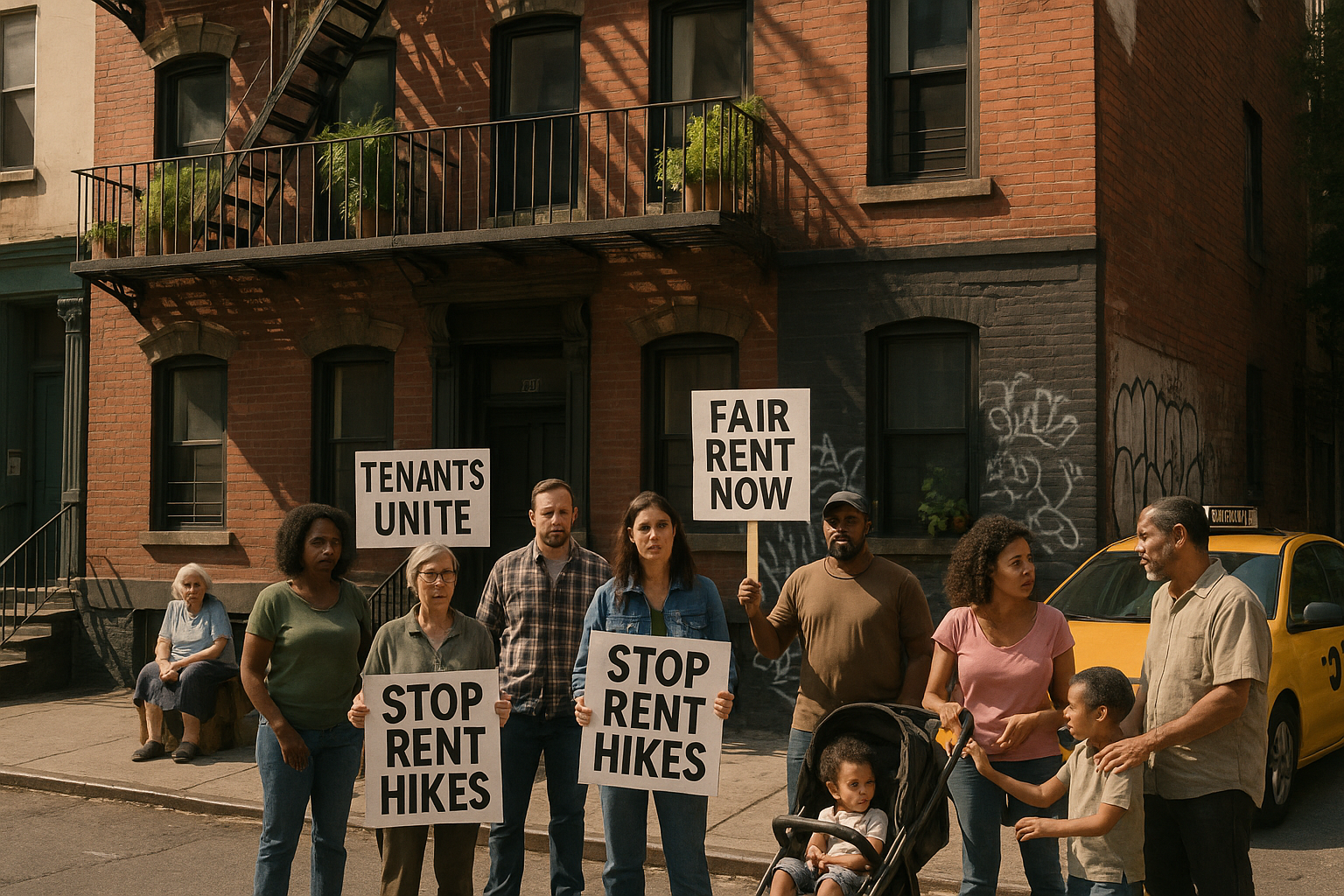
Rent increases are annual rights, not cumulative savings accounts — California law does not allow landlords to "bank" unused rent increases from prior years and apply them all at once in future years.
Statewide rent cap (AB 1482) limits increases to 5% + CPI (max 10%) annually — this limit applies fresh each year regardless of whether you increased rent in prior years; skipping a year does not create a larger increase pool the following year.
Local ordinances often impose stricter rules — rent-controlled cities like Los Angeles, Oakland, San Francisco, and Berkeley have their own increase formulas and may prohibit banking entirely or restrict carry-forward provisions; violation penalties range from $100–$500 per day per violation.
Annual notice requirement still applies even if you skip a year — California Civil Code §1947.6 requires 30–90 days' written notice before any rent increase takes effect; failure to provide proper notice voids the increase and may trigger tenant retaliation claims.
Violation liability includes attorney's fees and damages — tenants can sue under Civil Code §1950.7 (retaliation) or §1950.5 (unlawful increase) and recover actual damages plus treble damages in retaliation cases, plus plaintiff's attorney's fees and costs.
Local rent control boards enforce anti-banking rules strictly — Los Angeles Housing Department (LAHD), Oakland Community and Economic Development Agency (OCEDA), and other enforcement bodies have issued guidance explicitly prohibiting increase banking.
Why Landlords Ask About Rent Increase Banking (And Why It Matters)
You didn't raise rent last year. Maybe cash flow was strong enough. Maybe you wanted to retain a good tenant. Or maybe you simply forgot to send proper notice by the deadline.
Now it's 2026, and your lease anniversary is approaching. The question feels natural: "Can I make up for the increase I skipped and add it to this year's rent?"
The answer in California is almost always no. And the consequences of trying can be expensive.
This article covers the actual law on rent increase banking, the local ordinances that make the rules even stricter, how to calculate what you can legally increase, and what happens if you get it wrong.
California Statewide Rent Cap Law (AB 1482): The Annual-Only Rule
California's statewide rent increase cap, established by Assembly Bill 1482 (effective January 1, 2020, and updated through 2024), sets the framework for all landlords except those in specifically exempt categories.
What AB 1482 Allows
Civil Code §1947.6 caps annual rent increases at the lesser of:
5% of the current rent, plus the percentage increase in the cost of living (as measured by the Consumer Price Index for All Urban Consumers for the San Francisco Bay Area or Los Angeles area, depending on property location), or
10% of the current rent (the hard cap)
For 2026, this formula translates to a maximum increase of 5% + CPI. In 2024, the statewide cap was 5% (when CPI was low). In 2025, it rose to 6.1%. These rates change annually based on inflation data published by the Bureau of Labor Statistics.
Critical compliance point: The law references "annual" increases explicitly. Section 1947.6(b) states: "An owner of a residential rental property shall not increase, and shall not attempt to increase, the annual rent for a dwelling unit. The statute contemplates one increase per lease anniversary year, calculated on that year's permitted percentage. There is no provision for carry-forward, banking, or cumulative increases based on prior-year forgone raises.
The "Use It or Lose It" Principle
If you do not increase rent in Year 1, you do not gain the right to a larger increase in Year 2. Each calendar/lease year stands alone. Your Year 2 increase is still capped at 5% + CPI of the Year 2 rent, not of the Year 1 rent plus a bonus for skipping Year 1.
California courts and enforcement agencies treat this as absolute. The legislative history of AB 1482 makes clear that the intent was to create a predictable, transparent limit for tenants, not a system that penalizes compliance through the illusion of "catching up" later.
Exemptions (Properties Not Covered by AB 1482)
Before assuming the statewide cap applies to you, verify that your property is not exempt. AB 1482 does not apply to:
Single-family homes (unless owned by a real estate investment trust, corporation, or LLC formed after January 1, 2019)
Owner-occupied duplexes or triplexes
Properties with a Certificate of Occupancy issued less than 15 years prior (new construction exemption)
Properties in cities with their own rent control ordinances that are equal to or stricter than AB 1482 (though the city ordinance then governs)
Even if exempt from the statewide cap, many landlords in California remain subject to local rent control rules, which often add their own restrictions on banking. Do not assume exemption from AB 1482 means you can increase rent without limit or bank increases.
Local Rent Control Ordinances: The Real Enforcement Risk
California's largest cities have their own rent control laws, and many explicitly prohibit increase banking or impose stricter rules than state law.
Los Angeles Rent Stabilization Ordinance (RSO)
Los Angeles Ordinance §151.06 and §151.07 govern rent increases for units covered by the RSO (generally built before June 21, 1978, and not exempt).
Annual allowable increase: Each July 1, the Los Angeles Housing Department publishes the annual guideline, which in 2026 is 4.3% for units where the tenant pays utilities. The increase applies to the preceding July 1 lease anniversary only.
Banking rule: Los Angeles does not permit banking. If you do not raise rent by July 1 in a given year, you cannot add that percentage to the following year's increase. LAHD guidance (FAQ 307, updated 2024) explicitly states: "Owners are allowed only one increase per 12-month period based on the annual guideline. An owner cannot combine increases from previous years."
Violation penalty: Unauthorized increases under the RSO trigger civil penalties of $100–$500 per day per violation. A single tenant subjected to a non-compliant rent increase over 12 months could result in $36,500–$182,500 in cumulative penalties, plus the tenant's right to sue for damages and attorney's fees under Civil Code §1950.7.
Practical risk: LAHD inspectors, tenant advocates, and tenant lawsuits regularly target increases that violate the RSO or attempt banking. Los Angeles is one of the most actively enforced rent control jurisdictions in California.
San Francisco Rent Board Rules
San Francisco Rent Stabilization and Voluntary Arbitration Ordinance (RSVO), Chapter 37.9 of the Administrative Code, governs residential rental properties built before June 13, 1979.
Annual allowable increase: Published each January, the 2026 increase is 5.1%. However, landlords in San Francisco must register the property with the Rent Board and follow strict notice procedures. Failure to register is itself a violation subject to penalties.
Banking rule: Section 37.9(c)(5) states that allowable increases are "for each lease year." The Rent Board's official FAQ (updated March 2024) confirms that landlords cannot bank unused increases. If you skip an increase, you forfeit it.
Violation penalty: Non-compliant increases in San Francisco can result in the Rent Board issuing a "Notice of Non-Compliance," which bars the landlord from any increase for the following year. Additionally, tenants can file a Petition for Reduction seeking to reduce the rent retroactively by the unlawful portion, plus interest.
Oakland Rent Adjustment Ordinance
Oakland Municipal Code Chapter 8.22 (RAO) covers rental units built before 1979 and sets annual increase limits based on a formula tied to the Consumer Price Index.
Annual allowable increase (2026): 5.5% (the specific percentage changes annually based on Bay Area CPI).
Banking rule: OMC §8.22.020 specifies that the increase is permitted "for each 12-month period of tenancy." The Oakland Community and Economic Development Agency (OCEDA) Rent Adjustment Program guidance (2024 update) states: "An owner may raise rent by the allowable percentage once per lease year. Unused increases do not carry over."
Violation penalty: Unlawful rent increases in Oakland trigger Civil Code §1950.7 liability (retaliation/unlawful increase damages), plus local civil penalties up to $1,000 per violation. Repeat violators face escalating penalties and potential injunctive relief preventing further increases.
Berkeley Rent Stabilization Ordinance
Berkeley Municipal Code Chapter 13.76 covers properties built before 1980 and sets annual increase caps (currently 3.5% for 2026–2027).
Banking rule: Section 13.76.060 explicitly prohibits "carry-over" of unused increases. The Berkeley Rent Stabilization Board clarified in its 2024 guidance that "an owner forfeits the right to the annual increase if not exercised during the applicable lease year."
Enforcement: Berkeley's Rent Board has jurisdiction over disputes and can award treble damages to tenants for willful violations, plus attorney's fees.
Other Covered Cities and Ordinances
Additional California cities with rent control ordinances that restrict or prohibit banking include:
City
Key Banking Rule
2026 Increase Cap
Santa Monica
No banking; annual guideline only
3.0%
West Hollywood
No banking; increases tied to CPI
4.0%
Richmond
No banking; annual limit applies
5.0%
San Jose
No banking; increases reset annually
7.0%
Hayward
No banking; annual guideline only
5.0%
Action item: If your property is in a rent-controlled city, download the current year's increase guideline and read the local enforcement agency's FAQ. Each city publishes explicit guidance on banking. None permit it.
What Can You Do Instead of Banking?
If you intentionally skipped a rent increase in prior years (or if you missed the deadline), here are your legal options going forward:
Option 1: Increase by the Maximum Allowed for the Current Year (The Standard Path)
Calculate your legal increase based on current year rent and the applicable percentage. Provide proper notice (30–90 days depending on your local ordinance) and implement the increase on the lease anniversary date.
Example (Los Angeles RSO):
Current monthly rent: $2,000
2026 RSO guideline: 4.3%
Legal increase: $2,000 × 0.043 = $86/month
New rent: $2,086/month
You do not add any prior-year skipped amounts.
This is the only path that ensures compliance.
Option 2: Offer the Tenant a Lease Amendment (Market-Based, If Not Rent-Controlled)
If your property is not subject to local rent control, you have more flexibility at lease renewal. You can offer to renew the lease at a higher rent (up to the AB 1482 cap) and have the tenant sign a new lease. This is still subject to the statewide 5% + CPI limit, but at least it's transparent and voluntary.
Important: This does not permit banking either. You still cannot increase by 10% to cover two forgone years of 5% increases. The annual cap applies regardless.
Option 3: Negotiate Directly with the Tenant
If you have a good long-term tenant and want to address the below-market rent situation, you can negotiate a higher rent increase with the tenant's consent. Get the agreement in writing. However, this must still comply with the applicable increase cap—AB 1482, local ordinance, or both.
Negotiation does not override the law. A tenant cannot waive statutory protections, and a court will not enforce an increase that violates the cap.
Notice Requirements: You Can't Waive These Even If You Skipped a Year
California law requires strict notice procedures before any rent increase takes effect. These requirements do not relax if you skipped prior years.
Notice Periods (Civil Code §1947.6(e))
For rent-controlled properties under AB 1482:
Increase of 10% or less: 30 days' written notice required
Increase of more than 10%: 60 days' written notice required (though the increase itself is capped at 10%, so this typically applies only where local law permits higher increases)
For properties in local rent control ordinances, the notice period may be different:
Los Angeles RSO: 30 days' notice (Administrative Code §151.07(c))
San Francisco RSVO: 30 days' notice (Admin Code §37.9(c))
Oakland RAO: 30 days' notice (OMC §8.22.030)
Berkeley RSO: 30 days' notice (BMC §13.76.060)
Notice Content Requirements
The notice must include:
The new rent amount
The effective date of the increase
The date the notice is served
In rent-controlled jurisdictions: the applicable increase percentage and any justification (if required)
A statement of the tenant's right to dispute the increase (if applicable under local law)
Failure to include required information makes the notice defective, and the increase does not take effect. The tenant can withhold the additional rent, and you cannot evict for non-payment of an increase that was improperly noticed.
Notice Delivery Methods
California law (Civil Code §1946, cross-referenced in §1947.6) requires notice to be served either:
In person
By first-class mail (postage prepaid)
By email (if the tenant has consented to electronic service in writing)
Posting on the door or leaving a note does not satisfy the requirement. Use certified mail with return receipt or tracked email to prove delivery if there is a dispute.
Compliance tip: Use lease operations software that timestamps notice delivery and maintains records. If a tenant challenges the increase, you need documented proof of proper notice.
Penalties and Liability for Unlawful Increases
Civil Code §1950.7 (Retaliation and Unlawful Increases)
If you increase rent in violation of AB 1482 or a local rent control ordinance, the tenant can sue under §1950.7(a). The statute provides:
"It is unlawful for a lessor to increase, or to attempt to increase, the rent for a dwelling unit, in violation of subdivision (b) of Section 1947.6, or to attempt to do so on the basis of facts that would constitute a violation of that subdivision."
Remedies include:
Actual damages: All amounts paid in excess of the lawful increase
Treble damages: Three times the actual damages (if the court finds the violation was willful)
Attorney's fees and costs: The tenant's legal costs are recoverable
Injunctive relief: A court order requiring you to rescind the unlawful increase
Example calculation: You raise rent by $200/month (a 10% increase) when only a 5% increase ($100/month) was allowed. The tenant pays the excess $100/month for 12 months = $1,200 in actual damages. If the court finds the violation willful, damages become $3,600, plus attorney's fees (often $5,000–$15,000+), plus costs.
Local Enforcement Agency Penalties
In rent-controlled cities, the local enforcement agency can issue fines independently of tenant lawsuits:
Los Angeles LAHD: $100–$500 per day per violation (RSO §151.09)
San Francisco Rent Board: Up to $500 per violation; repeat violations escalate (Admin Code §37.9(f))
Oakland OCEDA: Up to $1,000 per violation; repeat violations result in loss of increase rights for following year (OMC §8.22.070)
An enforcement agency can investigate on its own initiative if a tenant files a complaint or if the agency discovers the violation during an audit.
Tenant Right to Reduce Rent (Rent Board Jurisdiction)
In San Francisco, Oakland, and other cities with active rent boards, a tenant can file a petition requesting the rent be reduced retroactively to the lawful amount, with interest. This is separate from a lawsuit and is administratively faster.
Step-by-Step Compliance Checklist for Annual Rent Increases
Use this checklist before implementing any rent increase:
Step
Action
Deadline
1
Verify whether your property is in a rent-controlled city. Check your city's housing authority website.
Before issuing any notice
2
Download the current year's increase guideline from your city's rent board (if rent-controlled) or calculate 5% + CPI for AB 1482 properties.
60–90 days before lease anniversary
3
Calculate the lawful increase: Current monthly rent × applicable percentage = increase amount.
60–90 days before lease anniversary
4
Prepare written notice including: new rent amount, effective date, percentage increase, applicable local ordinance citation.
60–90 days before lease anniversary
5
Serve notice by certified mail, email (if consented), or in person. Obtain proof of delivery.
30–90 days before lease anniversary (per local law)
6
Document the increase in your lease records. Do NOT include any prior-year amounts or "banking" justifications.
On the effective date
7
Update your rent-payment system and confirm tenant receives updated payment instructions. Flag calendar for next year's anniversary.
On the effective date
Pro tip: Use compliance engine functionality to track lease anniversaries and auto-generate compliant increase notices based on your property's local jurisdiction and the current year's guideline. This eliminates manual calculation errors and ensures you never miss a notice deadline.
FAQ: Common Questions About Rent Increase Banking
Q1: Can I increase rent by 5% one year and 5% the next if I skipped the year before?
A: No. Each year's increase is calculated on that year's current rent and is capped at the annual allowable percentage for that year. If you increase 5% in Year 2, the Year 3 increase is 5% of the Year 2 new rent amount, not 10% of the original rent. There is no "catching up" mechanism.
Q2: What if I have a tenant in a non-rent-controlled area and they agreed to a lower-than-market rent? Can I make up the difference in future years?
A: No. Even in non-rent-controlled properties, you are still subject to California's statewide AB 1482 cap (5% + CPI, max 10% per year). A tenant cannot waive statutory protections, and a court will not enforce an increase that exceeds the cap, even with consent. The only option is to renegotiate at market rates when the lease renews, still subject to the annual cap.
Q3: I missed the notice deadline last year. Can I increase rent now and make it effective retroactively?
A: No. Rent increases are only effective on the date specified in the properly served notice, which must be served 30–90 days in advance (depending on local law). You cannot backdate an increase or collect retroactive rent. If you missed the deadline, you forfeit that year's increase. Plan ahead for the next lease anniversary.
Q4: Does rent-controlled status change if my city decontrolls certain properties in 2026?
A: Monitor your city's legislative activity. As of July 2026, several cities are considering decontrol measures for buildings constructed after certain dates. However, existing controlled properties remain subject to the ordinance unless the law explicitly exempts them retroactively. Check your city's housing authority website quarterly and consult a local attorney if decontrol is proposed.
Q5: What records should I keep to defend against a tenant's claim that I didn't properly increase rent?
A: Keep: (1) a copy of the original notice, (2) proof of service (certified mail receipt, email delivery confirmation, or signed acknowledgment), (3) the tenant's payment records showing they paid the new amount, (4) a copy of the lease showing the original rent, and (5) documentation of the applicable increase percentage and the calculation. Store these in portfolio management software with date stamps and access logs for audit purposes.
How to Avoid This Compliance Problem Going Forward
The risk of rent increase banking penalties is preventable with systems. Here's how:
Automate lease anniversary tracking: Set calendar reminders 90 days before each lease anniversary so you never miss the notice deadline.
Use location-aware increase calculators: Plug in your property's address and lease anniversary date, and a compliance system automatically retrieves the applicable increase guideline (AB 1482 or local ordinance) and calculates the lawful new rent.
Generate templated, legally compliant notices: Use lease operations software to auto-populate the property details, tenant name, old rent, new rent, and effective date into a compliant notice template specific to your jurisdiction.
Maintain an audit trail: Document every increase, notice, and payment change in a system with timestamps and access logs. If a tenant sues, you have immediate proof of compliance.
Schedule annual ordinance checks: Each January, verify your city's current increase guideline and check for any new local law changes. Many cities update guidelines in spring.
The outcome: Know you're compliant before your tenant's attorney does. Avoid costly litigation, penalties, and the headache of retroactive rent refunds and treble damages.
Special Situations: Non-Profit and Subsidized Housing
If you manage subsidized housing, mobile home parks, or properties funded by non-profit grants, separate rules may apply:
HUD-subsidized units: Increases are subject to HUD regulations and may have different caps than state law. Do not assume AB 1482 applies.
Mobile home parks: Subject to Mobile Home Residency Law (Civil Code §798 et seq.), which has distinct increase rules and notice requirements.
Non-profit supportive housing: Some affordability covenants restrict increases below the state cap. Review your funding agreement.
Consult a housing law attorney for these categories to ensure you understand the interaction between state, federal, and donor-imposed requirements.
Key Takeaway: No Banking, Ever
California landlord-tenant law does not recognize rent increase banking, whether under statewide AB 1482 or any local rent control ordinance. Each year is independent. The percentage allowed in Year 2 is calculated on Year 2 rent, not on a cumulative pool of foregone increases.
Attempting to bank increases exposes you to:
Tenant lawsuits under Civil Code §1950.7 (actual, treble, attorney's fees)
Local enforcement agency fines ($100–$1,000+ per day)
Loss of the right to increase rent in following years (in some cities)
Negative tenant relations and potential retaliation claims
The solution is simple: calculate the lawful increase for the current year, serve proper notice 30–90 days in advance, and implement the increase on the lease anniversary date. Repeat every year. Never try to add prior-year amounts.
For landlords managing 2–75 units across multiple California jurisdictions, the complexity of tracking different local ordinances makes compliance software essential. The cost of a platform that auto-calculates increases and generates compliant notices is far lower than the cost of a single tenant lawsuit or enforcement action.
---
Disclaimer
This article is for informational purposes only and does not constitute legal advice. Landlord-tenant law varies by jurisdiction and changes frequently. Consult a qualified attorney licensed in California for guidance specific to your property, local ordinance, and situation before taking any rent increase action. LeaseBase does not provide legal advice and
Oregon rent increases are capped by CPI percentage under ORS 90.323(2) — for month-to-month tenancies and lease renewals, you cannot raise rent more than the 12-month average consumer price index for all urban consumers in the Portland-Salem-Eugene area
2026 allowable increase is 2.7% — based on the 12-month average CPI ending September 2025 (the metric Oregon uses for July 2026 increases)
Notice requirement: 90 days minimum — you must provide written notice of any rent increase at least 90 days before the new amount takes effect under ORS 90.323(3)
Violation penalties: treble damages plus attorney fees — excessive rent increases can expose you to actual damages multiplied by three, plus the tenant's legal costs under ORS 90.385
Exemptions exist for new construction (first 15 years) and certain property types — but you must verify eligibility and document your reasoning to avoid liability
Calculate your CPI percentage correctly — use only the BLS Portland-Salem-Eugene metropolitan statistical area (MSA) data, not national or other regional indices
Why Rent Increase Calculations Matter: The Compliance Risk You Can't Ignore
In July 2024, Oregon significantly expanded its rent-control protections when Governor Tina Kotek signed HB 2001 into law. What many self-managing landlords don't realize: the penalties for getting the calculation wrong aren't a minor fee. They're treble damages.
If you raise rent by 3.5% when Oregon allows 2.7%, and a tenant challenges you, you owe them the 0.8% excess on their annual rent plus two times that amount in damages, plus their attorney fees. On a $2,000/month unit, that's roughly $240 in excess rent, $480 in treble damages, plus $2,000–$5,000 in legal costs.
The calculation itself is straightforward once you understand which CPI index Oregon uses and when the measurement period ends. This guide walks you through the exact methodology, current 2026 limits, exemptions, and the documentation you need to stay compliant.
What ORS 90.323(2) Actually Says: The Statute Explained
Oregon Revised Statutes 90.323(2) reads:
"A landlord may not increase rent on a month-to-month tenancy or upon renewal of a lease unless the increase does not exceed the percentage increase in the consumer price index for all urban consumers (CPI-U) for the 12-month period ending in September of the previous calendar year, for the Portland-Salem-Eugene, Oregon, metropolitan statistical area (MSA)."
Let's break down what this means in practical terms:
Applies to month-to-month tenancies: Any rent increase on a tenant with no set lease end date must follow the CPI cap.
Applies to lease renewals: When a fixed-term lease expires and you renew it, the new rent cannot exceed the CPI percentage above the previous rent.
Does NOT apply to new leases with new tenants: If a tenant moves out and you lease the unit to a new tenant, you can charge whatever the market allows (though you must still follow fair housing and other state laws).
Uses the Portland-Salem-Eugene MSA, not national CPI: This is critical. Many landlords mistakenly use the U.S. All-Items CPI-U or other regions' data. Oregon specifically requires the Portland-Salem-Eugene MSA index.
Measures the 12-month period ending September of the previous year: If you're increasing rent in 2026, you use the CPI-U data from October 2024 through September 2025.
Finding the Correct CPI Data: The Portland-Salem-Eugene MSA Index
The Bureau of Labor Statistics (BLS) publishes regional CPI data monthly. To calculate your allowable 2026 rent increase, you need:
Data Point
Details
MSA Name
Portland-Salem-Eugene, Oregon
BLS Series ID
CUUR49AAU0000SA0 (All-Items CPI-U)
Measurement Period (2026 increases)
October 2024 – September 2025
Data Released
October 10, 2025 (for September 2025 index)
2026 Allowable Increase
2.7%
How to access BLS data:
Visit data.bls.gov (the official BLS data tools site)
Search for series CUUR49AAU0000SA0 (Portland-Salem-Eugene All-Items CPI-U)
Select the 12-month period: October 2024 through September 2025
Download the data and calculate the average index value
Compare to the previous 12-month period (October 2023 – September 2024) to find the percentage change
Why the Portland-Salem-Eugene MSA matters: Oregon law is intentionally specific. Using the national CPI-U or the Seattle MSA will expose you to liability. The Portland-Salem-Eugene MSA includes Marion, Polk, Yamhill, and Washington counties in Oregon, plus Clark County in Washington. Verify your rental property falls within this geography; if you own properties in Bend, Medford, or rural Oregon, the calculation may differ based on local cost variations, but you still use the state-wide index for legal compliance.
The 2026 Rent Increase Cap: 2.7% Explained
For any rent increase taking effect in 2026 (January through December), Oregon allows a maximum increase of 2.7%. This is based on the 12-month CPI-U average for the Portland-Salem-Eugene MSA ending September 2025.
Example calculation:
Current monthly rent: $2,000
Maximum increase: 2.7%
Calculation: $2,000 × 0.027 = $54
New maximum rent: $2,000 + $54 = $2,054
You can increase by anything from $0 (no increase) up to $54 per month. You cannot legally increase to $2,055 or higher. If you do, the excess violates ORS 90.323(2).
Does the 2.7% Cap Apply to Your Unit? Check These Exemptions
Oregon law includes exemptions. Verify your property qualifies before exceeding the CPI cap:
Exemption
Conditions & Evidence Required
Statute
New Construction (First 15 Years)
Unit completed after January 1, 2020. Keep: Certificate of Occupancy, construction completion date, building permit records showing completion.
ORS 90.323(7)(a)
Single-Family Home (Owner-Occupied)
You live in the home AND rent one additional unit (e.g., ADU, second bedroom). Owner must reside there. Document: Proof of residence, property deed.
ORS 90.323(7)(b)
Owner-Occupied Duplex
You own and live in one unit of a two-unit building. Document: Deed, proof of residence, occupancy lease.
ORS 90.323(7)(b)
Subsidized Housing (Low Income)
Rent is subsidized by a government program or nonprof it. Tenants pay only a percentage of income. Document: Subsidy agreement, HUD letter, nonprofit lease.
ORS 90.323(7)(c)
Critical compliance point: If you claim an exemption but don't actually qualify, you're still liable for treble damages. Keep documentary evidence. If you own a portfolio of 50 units and claim 10 are in new construction, have the certificates of occupancy organized and dated. A tenant's attorney will subpoena them.
The 90-Day Notice Requirement: Timing and Format
You cannot simply text a tenant "your rent is going up." Oregon law requires written notice at least 90 days before the new rent amount takes effect.
Notice Timing Rules
Start date of notice period: The date you deliver or mail the notice (or email, if the tenant consents in writing to email communications).
90-day clock: Begins the day after the notice is delivered or received.
Example timeline:
Action
Date
Notes
You mail/deliver notice
July 1, 2026
Certified mail recommended
90-day period begins
July 2, 2026
Day after delivery
90-day period ends
September 30, 2026
New rent effective date
New rent due
October 1, 2026
Or next rent-due date
Notice Content Requirements
Your rent increase notice must include:
Current rent amount
New rent amount
Effective date of the increase
The specific percentage increase (e.g., "2.7%")
A statement that this increase complies with ORS 90.323(2) (optional but recommended for documentation)
The tenant's right to dispute if they believe the increase exceeds the allowable percentage (optional but recommended)
Recommended notice template language:
Notice of Rent Increase
Dear [Tenant Name]:
This letter notifies you of a rent increase, effective [DATE], pursuant to Oregon Revised Statutes 90.323(2).
Current Monthly Rent: $[CURRENT AMOUNT]
New Monthly Rent: $[NEW AMOUNT]
Percentage Increase: [PERCENTAGE]%
Effective Date: [DATE]
This increase is within the allowable limit established by Oregon law, which permits annual increases up to the consumer price index percentage for the Portland-Salem-Eugene metropolitan area.
Sincerely,
[Your Name]
Delivery methods (all are legally sufficient):
Hand-delivered (get a signed receipt)
Certified mail, return receipt (most defensible)
Email (only if tenant previously consented to email notices in writing)
Text message (if lease specifies or tenant consents)
Posted on the rental unit door (if tenant cannot be located after reasonable effort)
Keep evidence of delivery. If the tenant later disputes the notice, you need to prove they received it 90 days before the new rent date. A certified mail receipt and signed acknowledgment are your best defense.
Calculating Your Exact Allowable Increase: Step-by-Step Worksheet
Use this worksheet to document your compliance:
1. Current Monthly Rent
$__________
2. Allowable CPI Percentage (2026)
2.7%
3. Calculate Maximum Dollar Increase (Current Rent × 0.027)
$__________
4. Maximum New Rent (Current Rent + Maximum Dollar Increase)
$__________
5. Proposed New Rent
$__________
6. Is Proposed New Rent ≤ Maximum New Rent?
☐ YES (Compliant) ☐ NO (Violation)
7. Property Qualifies for Exemption?
☐ YES ☐ NO If yes, type: _______
8. Date Notice Delivered to Tenant
__________
9. Effective Date of New Rent (90+ days after delivery)
__________
10. Document Stored / Filed
☐ Digital ☐ Paper Location: _______
Why document everything? If a tenant sues claiming you violated ORS 90.323(2), your worksheet proves your calculation. Without it, you're arguing from memory against their attorney's detailed timeline.
Penalties for Violating ORS 90.323: What Exceeding the Cap Costs You
Oregon's penalties for illegal rent increases are severe. This is not a $100 fine. This is statutory damages.
Civil Liability Under ORS 90.385
Statute: ORS 90.385(1) states that if a landlord violates ORS 90.323 (rent increase limits), the tenant may recover:
Actual damages (the excess rent paid)
Three times actual damages (treble damages)
Court costs
Attorney fees (the tenant's attorney costs)
Real-World Example of Liability
Scenario: You own a duplex in Portland. Current rent: $2,000/month. You increase it to $2,100/month (5% increase) instead of the allowable $2,054 (2.7%). The tenant pays the excess rent for 6 months before disputing it.
Calculation:
Monthly overage: $2,100 − $2,054 = $46
Actual damages (6 months): $46 × 6 = $276
Treble damages: $276 × 3 = $828
Tenant's attorney fees: $2,500–$5,000 (likely)
Court costs: $300–$500
Total liability: $3,600–$6,300
On a 2-unit duplex, a single miscalculation puts you in the red for months.
Enforcement: Who Can Sue and How
Who enforces ORS 90.323:
The tenant directly: Can file a small claims action (under $10,000) or civil lawsuit for damages
Oregon Attorney General: Can bring enforcement actions against widespread violations
Legal aid organizations: Tenant advocacy groups like Community Alliance of Tenants often file class-action suits against landlords
City enforcement (some jurisdictions): Portland and other cities have added local rent-control enforcement mechanisms
Statute of limitations: A tenant can sue within 6 years of discovering the violation (ORS 12.080).
Recent Changes and 2026 Updates
The 2024 Expansion: HB 2001 and What Changed
In July 2024, Oregon expanded rent-control protections significantly:
Increased cap on rent increases: Previously 7% annually; now it's the CPI percentage (2.7% in 2026, lower than the old 7% rule)
Extended "just cause" eviction protections: Landlords must now have documented cause to evict, not just month-to-month tenancies (previously 12+ months for cause requirement)
Strengthened protections for month-to-month tenancies: Any month-to-month tenant now has the same rent-increase protections as fixed-term leases
What this means for your portfolio: If you've been relying on the old 7% cap, your 2026 increases must drop to 2.7%. Any unit you increase beyond 2.7% is now exposed to treble damages liability.
CPI-U for Future Years: How to Stay Ahead
The CPI percentage changes annually. Mark your calendar to check BLS data:
Year of Increase
Measurement Period Ends
Data Released
When to Check
2026
September 2025
October 10, 2025
October 2025
2027
September 2026
October 11, 2026
October 2026
2028
September 2027
October 10, 2027
October 2027
Set reminders in early October each year to check data.bls.gov for the new CPI percentage.
Common Mistakes and How to Avoid Them
Mistake #1: Using National CPI Instead of Portland-Salem-Eugene MSA
What landlords do: They look up the national CPI-U (3.2% in 2025) and apply that to their Oregon rent.
Why it's wrong: ORS 90.323(2) explicitly requires the Portland-Salem-Eugene MSA index. National CPI may be higher or lower than the regional figure, and using the wrong number exposes you to liability.
How to avoid: Bookmark data.bls.gov and save the correct series ID (CUUR49AAU0000SA0) in your records.
Mistake #2: Counting Days Incorrectly on the 90-Day Notice Period
What landlords do: They mail a notice on July 1 and count 90 days as ending September 29, when it should be September 30.
Why it matters: A tenant's attorney will argue the notice was defective. If you try to enforce a rent increase on September 29 instead of October 1, you've violated ORS 90.323(3).
How to avoid: Use an online date calculator and add 90 days to the day AFTER you deliver the notice. Test: July 1 delivery = July 2 start date = September 30 effective date.
Mistake #3: Claiming an Exemption Without Documentation
Radon is a Class B carcinogen and a habitability issue in Illinois — 420 ILCS 46 requires landlords to make reasonable efforts to test and disclose radon test results to prospective and current tenants before lease execution.
Disclosure must occur before lease signing — Failure to disclose known radon results or test availability violates Illinois law and can trigger tenant remedies including lease termination and damages.
Testing is not always mandatory, but disclosure is — Landlords who have conducted radon tests must disclose results; those without tests should disclose that testing has not been done and provide radon awareness information.
Penalties for non-compliance include lease voidability and statutory damages — Tenants can terminate leases, pursue damages, and file complaints with enforcement agencies without penalty.
Illinois requires specific language in all residential leases — Radon warning language or reference to testing status must appear in written lease agreements as mandated by state law.
Multi-unit properties have higher scrutiny — Properties with 2+ units face greater regulatory attention; document all radon-related communications and test results to defend against enforcement actions.
What is Radon and Why Does Illinois Law Care?
Radon is a naturally occurring radioactive gas that seeps into buildings from soil and rock beneath foundations. The Environmental Protection Agency (EPA) classifies radon as a Class A human carcinogen—the same category as asbestos and tobacco smoke. In Illinois, long-term radon exposure is the second leading cause of lung cancer after smoking.
The Illinois Department of Public Health estimates that roughly 1 in 3 Illinois homes exceed the EPA's recommended action level of 4 picocuries per liter (pCi/L). Because radon is colorless, odorless, and undetectable without specialized testing, legislatures and regulators treat radon disclosure as a critical habitability issue, not optional property management.
Illinois codified radon disclosure requirements in the Radon Awareness Act (420 ILCS 46), which became effective in the 1980s and has been refined through updates. Unlike some habitability defects (mold, structural damage), radon defies visual inspection. This is why Illinois law places the burden on landlords to affirmatively disclose test results or the absence of testing.
420 ILCS 46: The Legal Framework
Illinois landlords must comply with three overlapping requirements under 420 ILCS 46:
1. Disclosure Before Lease Execution
420 ILCS 46/5 requires landlords to:
Provide radon information to prospective tenants in writing before they sign a lease or rental agreement.
Disclose all radon test results conducted on the property within the past 12 months (or available from prior testing).
Inform tenants whether testing has or has not been performed — silence or omission violates the statute.
Provide the EPA's "Consumers Guide to Radon Reduction" or equivalent radon awareness materials in writing.
The statute does not mandate that landlords conduct radon testing. However, it does mandate that landlords disclose whether testing has occurred and what results exist. This distinction is critical: a landlord who has never tested and discloses that fact is compliant; a landlord who has tested and fails to disclose is in violation.
2. Written Lease Acknowledgment
420 ILCS 46/5 requires that the written lease or rental agreement include:
A specific radon warning statement provided by the Illinois Department of Public Health, OR
A statement acknowledging that the tenant received radon information and understands radon risks.
The statute provides a model warning form. Landlords are not required to use it verbatim, but the lease must contain language substantially similar to the following:
"RADON GAS: Radon is a radioactive gas that comes from the decay of uranium in soil and rock. It can get trapped in buildings and create health risks from long-term exposure. Testing is the only way to know if radon is present."
Many landlords fail this requirement by omitting radon language entirely or including only vague references. Illinois courts have upheld tenant claims that missing or inadequate radon warnings render the lease unenforceable or create statutory violations subject to damages.
3. Continuous Disclosure Obligation for Current Tenants
Landlords must disclose new radon test results to current tenants, even mid-lease. If a landlord conducts radon testing after a tenant has moved in, results must be disclosed within a reasonable time. Withholding test results from sitting tenants—for example, delaying disclosure of a test showing radon above 4 pCi/L—can trigger:
Tenant right to terminate the lease without penalty.
Rent abatement claims.
Complaints filed with the Illinois Department of Public Health or state attorney general.
Radon Testing: Not Mandatory, But Practical
Illinois law does not require landlords to test for radon. However, strategic testing protects landlords in several ways:
Why Testing May Protect You
Demonstrates due diligence: A documented test showing levels below 4 pCi/L proves radon is not a habitability defect, reducing tenant complaints and enforcement risk.
Prevents tenant-ordered testing costs: If a tenant orders testing after a landlord's disclosure of "no testing performed," and results are elevated, tenants may demand the landlord pay for remediation or pursue lease termination. Landlord testing first avoids this surprise.
Supports lease enforcement: Courts are more likely to enforce leases and evictions if the landlord has proactively disclosed known conditions.
Reduces liability exposure: If a tenant or their family develops health issues, documentation of low radon levels or proper disclosure strengthens the landlord's defense in any tort claim.
Testing Standards and Protocols
If you choose to test, Illinois Department of Public Health recommends:
Use an EPA-certified radon measurement professional. Do not rely on home inspection general radon screens; they are often inaccurate.
Conduct testing for 48 hours to 7 days using passive (charcoal canister) or active (continuous monitor) devices.
Test the lowest livable level — typically the basement or lowest occupied room.
Follow EPA protocols (listed in EPA's "Radon Measurement Proficiency Program").
Keep all test results and certification documents for at least 3 years.
Test costs typically range from $150–$400 per property, significantly less than the cost of defending a tenant complaint or facing lease termination claims.
What Must Be Disclosed to Tenants?
If You Have Tested
Disclose all results in writing, including:
Test date and location (e.g., "basement, main dwelling").
Radon measurement in pCi/L.
Comparison to EPA action level (4 pCi/L).
Any remediation steps taken (if results were elevated).
Name and certification of the testing professional.
Example disclosure:
"A radon test was conducted on [date] in the basement of the property. The result was 2.8 pCi/L, which is below the EPA action level of 4 pCi/L and poses minimal health risk. Testing was performed by [Professional Name], EPA-certified radon measurement professional."
If You Have Not Tested
Disclose in writing that no radon testing has been performed and provide radon awareness information from the EPA or Illinois Department of Public Health. Example:
"No radon testing has been performed on this property. Radon is a radioactive gas that can accumulate in buildings. Testing is the only way to know radon levels. The tenant may request radon testing at tenant's expense, or the landlord may agree to conduct testing. Additional information is available from the EPA and Illinois Department of Public Health."
If Results Exceed 4 pCi/L
If radon levels are at or above 4 pCi/L, you must:
Provide contact information for EPA-certified radon mitigation contractors.
Clarify whether the landlord will fund remediation or whether the tenant may request lease termination.
Elevated radon can constitute a habitability defect under Illinois common law, even if the lease is silent. Tenants have remedies including rent abatement and lease termination if a landlord fails to remediate or disclose.
Compliance Checklist for Illinois Landlords
Use this checklist to ensure compliance with 420 ILCS 46:
Compliance Task
Deadline / Timing
Documentation
Responsibility
Conduct or obtain radon test results
Before first tenant move-in (optional, but recommended)
Test report with date, location, result (pCi/L), tester name
Landlord or certified professional
Write radon disclosure (if tested or not tested)
Before lease execution
Written disclosure letter or lease addendum
Landlord
Provide EPA radon information
Before lease execution
Copy of "Consumers Guide to Radon Reduction" or equivalent
Landlord
Include radon warning in lease
Before lease execution
Signed lease with radon warning language
Landlord
Obtain tenant acknowledgment / signature
Before lease execution
Signed disclosure or lease with date and tenant initials
Landlord (secure signatures)
File or maintain records
Ongoing; retain 3+ years
All disclosures, test reports, tenant signed acknowledgments
Landlord
Disclose new test results to current tenants
Within reasonable time after testing
Written notice with test results and date
Landlord
Remediate (if results ≥4 pCi/L)
Within reasonable time; vary by lease terms
Mitigation contractor reports, follow-up test results
Landlord (if obligated by lease)
Penalties and Legal Consequences for Non-Compliance
Statutory Violations Under 420 ILCS 46
Failure to comply with radon disclosure requirements can result in:
Lease voidability: Tenants can terminate leases without penalty if radon information was not disclosed before lease execution. Unlike some habitability defects, tenants do not need to prove harm; the omission itself is violation.
Statutory damages: While 420 ILCS 46 does not specify a damage amount, courts have awarded damages based on breach of statutory duty and implied covenant of habitability. Typical awards range from $500–$5,000 for failure to disclose, plus attorney fees.
Rent abatement: Tenants in properties with elevated radon can demand rent abatement if the landlord fails to remediate or disclose. Some Illinois courts have upheld abatement of 25–50% of rent until radon is mitigated.
Attorney fees: Prevailing tenants can recover attorney fees from landlords in radon cases, particularly if the violation was knowing or reckless.
Regulatory Enforcement
The Illinois Department of Public Health enforces radon disclosure requirements. Enforcement actions include:
Complaint investigations: Tenants can file complaints with the Department of Public Health. The agency investigates and may issue citations.
Cease-and-desist orders: Persistent violations can result in cease-and-desist orders prohibiting property rental until compliance is achieved.
Administrative fines: While 420 ILCS 46 does not specify fine amounts, the Department of Public Health can pursue penalties under general administrative law (typically $500–$2,000 per violation).
License or registration suspension: If your state requires property management licensing, radon violations can be grounds for suspension or revocation.
Common Law Habitability Claims
Beyond statutory violations, elevated radon can support habitability claims under the Illinois Residential Tenants Rights Act (765 ILCS 742). Tenants can assert that radon above EPA action levels renders a property uninhabitable and pursue:
Repair and deduct remedies (tenant pays for mitigation, deducts from rent).
Constructive eviction claims (abandonment and damages).
Breach of implied warranty of habitability (lawsuit against landlord).
These claims can result in damages significantly exceeding statutory penalties.
Multi-Unit Properties: Higher Stakes
Landlords with 2–75 units face elevated scrutiny because radon in one unit can affect adjacent units. Illinois enforces stricter disclosure requirements for multi-unit properties:
Building-level disclosure: If radon testing has been performed anywhere in the building, results must be disclosed to all prospective tenants, not just those in the tested unit.
Unit-specific testing: Radon levels can vary significantly between units. Testing should occur in units being rented or soon to be rented, or the landlord should disclose that unit-specific testing has not been performed.
Common area mitigation: If radon levels are elevated, mitigation may require ventilation or sealing in common areas, which creates cross-unit compliance burdens.
Inspection access: Tenants in multi-unit buildings have stronger rights to request radon inspection access, and landlords cannot deny access without creating presumptive violations.
For self-managing landlords with 2+ units, robust record-keeping and proactive testing are essential liability controls.
Remediation Options and Landlord Obligations
EPA-Recommended Mitigation Methods
If radon levels exceed 4 pCi/L, the EPA recommends:
Sub-slab depressurization: Installing a PVC pipe through the foundation to vent radon directly to the roof (most effective; costs $800–$2,500).
Caulking and sealing: Sealing foundation cracks and gaps (low-cost, $100–$500; limited effectiveness alone).
Improved ventilation: Installing exhaust fans or increasing air exchange (moderate cost, $200–$1,000).
Drainage improvements: Installing perimeter drains or sump pumps to reduce soil moisture (cost varies; $500–$3,000).
Who Pays for Mitigation?
Illinois law does not explicitly assign remediation costs. Instead, it depends on:
Lease terms: The lease may specify that the landlord is responsible for radon remediation. If the lease is silent, courts apply implied habitability obligations.
Common law habitability: Courts have held that landlords must remediate radon if levels are substantially above EPA action levels, treating it as a habitability defect. Tenants can repair-and-deduct if landlords refuse.
Tenant choice: If radon is disclosed and documented, some leases allow tenants to elect lease termination rather than wait for remediation. Landlords can negotiate this language.
Best practice: Include explicit language in your lease addressing radon:
"If radon testing reveals levels at or above 4 pCi/L after lease execution, the landlord will [remediate at landlord's expense / offer lease termination / share remediation costs]. Tenants may not unilaterally withhold rent for radon-related concerns without following the notice and cure procedures in this lease."
Post-Remediation Testing
After mitigation, conduct a follow-up radon test to confirm effectiveness (typically 7–30 days post-remediation). Disclose follow-up results to tenants. If levels remain elevated, further mitigation is required.
Real-World Compliance Scenarios
Scenario 1: New Lease, No Prior Testing
Situation: You are renting a 3-unit building for the first time. No radon testing has been performed.
Compliance steps:
Decide whether to test. (Recommended: test at least one unit to establish baseline.)
If not testing, write a disclosure: "No radon testing has been performed. The tenant may request testing or the landlord may arrange testing."
Provide EPA radon guidance document in writing.
Include radon warning language in lease.
Obtain tenant signature acknowledging receipt of radon information.
Retain all documents for 3+ years.
Outcome: Compliant. The lease is enforceable, and you have documented disclosure.
Scenario 2: Testing Reveals 6.2 pCi/L
Situation: A radon test on your 2-unit property shows 6.2 pCi/L in the basement (above 4 pCi/L action level). Unit 1 is currently occupied; Unit 2 is vacant and ready to lease.
Compliance steps:
Immediately disclose the result to the current tenant in Unit 1 in writing, including a copy of the test report.
Notify the tenant that radon levels are above EPA action level and explain health risks.
Offer remediation options or lease termination (depending on your lease and preference).
Engage an EPA-certified radon mitigation contractor to install sub-slab depressurization or equivalent.
Conduct follow-up testing 7–30 days after remediation.
Before leasing Unit 2, disclose the original test result (6.2 pCi/L), the mitigation work completed, and the follow-up result (e.g., 2.1 pCi/L post-mitigation).
Provide radon warning in Unit 2 lease and obtain tenant signature.
Document all communications and test reports.
Outcome: Compliant. You have disclosed known conditions and taken reasonable steps to remediate. The follow-up test protects you from future claims.
Scenario 3: Tenant Requests Testing; Results Are Low
Situation: A tenant in your property requests radon testing at their expense. The test returns 1.8 pCi/L (below action level).
Compliance steps:
Obtain a copy of the test report from the tenant (or hire your own certified professional if the tenant's test is questionable).
Disclose results in writing to the tenant: "Testing conducted [date] shows 1.8 pCi/L, below EPA action level."
Document that you have disclosed the result.
If you lease to a new tenant afterward, disclose the prior test result and explain it was below action level.
Outcome: Compliant. Low radon results are favorable and should be prominently disclosed to future tenants to support leasing.
Frequently Asked Questions
Q1: Is radon testing mandatory in Illinois?
A: No. 420 ILCS 46 does not require landlords to conduct radon testing. However, it requires landlords to disclose whether testing has been performed and what results exist. Tenants can request testing, but landlords are not obligated to conduct it unless the lease specifies otherwise. Best practice is to test at least once to establish baseline conditions and reduce liability exposure.
Q2: What happens if I sign a lease without including radon warning language?
A: The lease may be voidable at the tenant's election under 420 ILCS 46. Tenants can terminate without penalty, and you will have no legal recourse if the tenant claims they were not informed of radon risks. Additionally, the tenant could pursue damages for statutory violation. Always include radon warning language in all residential leases.
Q3: I did not disclose radon to my current tenant. Can I disclose now?
A: Disclosing now is better than not disclosing, but it does not cure the original violation. The tenant may have a claim for breach of statutory duty and may have grounds to terminate the lease retroactively. Consult an attorney and consider offering a rent abatement or lease modification to resolve potential disputes. Going forward, ensure all new leases include proper radon disclosures.
Q4: If I remediate radon, do I need to test again?
A: Yes. Follow-up testing 7–30 days after mitigation is essential to confirm that the radon level has decreased below 4 pCi/L. If follow-up testing shows levels remain elevated, additional mitigation is required. Disclose follow-up results to tenants. This documentation protects you from future habitability claims.
Q5: What if a tenant refuses to sign the lease with radon warning language?
A: The tenant's refusal does not waive your obligation to provide radon information. Document that you offered radon disclosure, explain it in writing, and note the tenant's refusal. Some landlords use email confirmations or certified mail. However, refusal to sign may be grounds to decline to lease to that tenant. You have no obligation to lease to a tenant who refuses to acknowledge statutory disclosures.
Integrating Radon Compliance into Your Leasing Workflow
Self-managing landlords often juggle multiple compliance requirements. To simplify radon compliance:
Create a radon disclosure template specific to each property. Include property address, test date (if tested), result (if tested), EPA action level reference, and signature block.
Maintain a radon testing schedule. Test new properties before first occupancy. Re-test every 3–5 years or when major foundation work is done (cracks repaired, etc.).
Store all test reports and disclosures digitally. Use cloud storage or your lease management system to ensure 3+ year retention and quick retrieval in case of tenant disputes or enforcement inquiries.
Include radon questions in pre-lease tenant communications. Ask if the tenant has radon concerns or has experienced radon issues in prior residences. This opens dialogue and demonstrates landlord diligence.
Standardize lease language. Use the same radon warning and remediation-cost-allocation language across all your properties (unless specific local rules differ).
Platforms like LeaseBase Lease Operations can centralize lease templates and ensure radon language is consistently included before tenants sign. This eliminates the risk of omitting radon warnings on individual leases.
Staying Current with Illinois Radon Law
Illinois radon law is not static. The Illinois Department of Public Health regularly updates guidance on radon testing standards and remediation. Recent trends include:
EPA update (2023): The EPA lowered its recommendation to focus on radon levels above 2.7 pCi/L as a potential health concern, though 4 pCi/L remains the official action level. Illinois has not yet adopted the lower standard in statute, but courts may reference EPA guidance in habitability disputes. Monitor for legislative updates.
Green remediation focus: Radon mitigation is increasingly viewed as a property improvement (not just a repair). Some state tax incentives exist for homeowners who install mitigation; landlords should investigate whether rent increases or tax deductions apply.
Digital disclosure standards: Illinois is gradually moving toward digital lease delivery. Ensure your radon disclosure language works in digital formats and that e-signatures are properly captured.
Subscribe to Illinois Secretary of State updates and the Department of Public Health's radon guidance page to stay informed of changes.
Documenting Radon Compliance: A Retention Strategy
Documentation is your defense. Retain:
All radon test reports with certified professional's name, license, test date, location, and result.
Copies of radon disclosures provided to tenants (dated and signed or initialed by tenant).
EPA guidance documents or Illinois Department of Public Health radon awareness materials provided to tenants.
Signed leases with radon warning language.
Email confirmations if disclosures were provided electronically.
Mitigation contractor reports and follow-up test results (if remediation was performed).
Tenant communications regarding radon concerns or requests for testing.
Retention period: 3 years minimum after lease termination (to cover most tenant claims and statute of limitations). Seven years is safer if you have capacity.
If a tenant or enforcement agency challenges your compliance, these documents prove you acted in good faith and followed Illinois law.
Key Takeaway: Radon Disclosure is Non-Negotiable
Radon is the second leading cause of lung cancer in the United States. Illinois takes radon disclosure seriously because the gas is invisible and dangerous. Unlike some landlord-tenant disputes that hinge on subjective judgments (e.g., "Is the unit habitable?"), radon violations are clear-cut: either you disclosed or you did not.
For self-managing landlords with 2–75 units, radon compliance is a baseline requirement, not an optional extra. The cost of disclosing and (if prudent) testing is trivial compared to the risk of lease terminations, rent abatement claims, statutory damages, attorney fees, and regulatory enforcement.
NYC Admin Code §26-138 restricts video surveillance in common areas — cameras cannot record audio, cannot be placed where tenants have a reasonable expectation of privacy, and must have a legitimate safety or security purpose documented in writing
Hallways, lobbies, and stairwells are permissible locations — but only with proper notice to all tenants via lease addendum or written disclosure before camera installation
Bathrooms, changing rooms, and bedrooms are absolutely prohibited — even if accessed through common areas; violations trigger Civil Rights Act liability and NYC Human Rights Law penalties up to $250,000 per violation
Audio recording is illegal in all tenant-accessible areas — including lobbies and hallways; violations expose you to wiretapping charges under Penal Law §250.00 and federal Title III wiretapping penalties up to $100,000 per instance
Written disclosure must occur before installation, not after — tenants have a right to know about surveillance when they sign or renew; failure to disclose violates §26-138 and gives tenants grounds to withhold rent or terminate the lease
Camera retention policies must be documented and enforced — footage older than 30 days should not be retained without business justification; data minimization is required under NYC privacy standards
Why Surveillance Camera Rules Matter Now
You install a camera in the lobby to catch package thieves. Two weeks later, a tenant's attorney sends a cease-and-desist letter claiming the camera violates her privacy rights. You check your lease—there's no disclosure. Now you're facing a §26-138 violation complaint filed with the NYC Department of Housing Preservation and Development (HPD), potential injunctive relief forcing removal, and a settlement demand for $15,000.
This scenario plays out dozens of times per month in New York City's rental market. Unlike states with broad surveillance permission, New York has specific, enforceable rules about where cameras can go, what they can record, and how landlords must notify tenants. Ignorance doesn't protect you—it's an affirmative violation that tenants and their attorneys know how to exploit.
As a self-managing landlord, you don't have a compliance officer. You need to know exactly where the law draws the line before you spend money on equipment that becomes a legal liability instead of a security asset.
What NYC Admin Code §26-138 Actually Says About Surveillance
NYC Admin Code §26-138, part of the Integrated Pest Management Law framework but also governing broader tenant privacy in common areas, establishes that landlords may install video surveillance in common areas of residential buildings only if:
There is a documented, legitimate business purpose (security, crime prevention, package theft prevention)
The camera does not record audio under any circumstances
The camera is not placed in areas where tenants have a reasonable expectation of privacy
Written notice is provided to all tenants before installation—not after
The footage retention policy is reasonable and minimizes unnecessary data storage
Additionally, the New York City Human Rights Law (§8-102 et seq.) overlays protection against discrimination based on protected classes. A tenant could claim surveillance targeting her disability, national origin, or family status violates NYCHRL even if the technical camera placement is legal.
The Penal Law §250.00 (wiretapping) and federal Title III (18 U.S.C. §2511) create criminal exposure if audio is recorded without consent. This is not a civil fine—this is potential felony exposure.
Permitted Camera Locations in Common Areas
Hallways and Corridors
Hallways are permissible locations for video surveillance because tenants do not have a heightened privacy expectation walking through a shared space. However, the camera must:
Be mounted in a location visible to tenants (not hidden)
Be disclosed in the lease or a separate addendum signed before move-in or lease renewal
Be positioned to avoid capturing doorways to individual apartments more than necessary for security
Not record audio
Best practice: Position hallway cameras to cover the central corridor and stairwell access points, not aimed at specific apartment doors where tenants might reasonably undress before entering their unit.
Lobbies and Building Entrances
Front lobbies and entryway areas are generally acceptable locations, particularly for buildings with package theft, mail tampering, or unauthorized entry issues. Cameras must still comply with §26-138:
Not record audio (no microphones)
Be disclosed to tenants in writing before installation
Not focus excessively on mail room or package delivery areas if tenants have privacy interest there
A building lobby camera is defensible because it serves the legitimate purpose of identifying intruders and monitoring common-area security. Courts in New York recognize this as a valid business purpose under §26-138(b)(1).
Stairwells and Fire Exits
Stairwell cameras are permissible with the same notice and audio-free requirements. They can help document unauthorized access and safety hazards. However, do not position a camera inside a stairwell landing where it captures someone entering from a specific apartment—that crosses into invasion of privacy.
Parking Areas and Loading Docks
If your building has a parking garage or loading area accessible to tenants, surveillance is permissible and often expected for theft prevention. The same §26-138 rules apply: no audio, written notice, legitimate purpose, and reasonable retention.
Strictly Prohibited Camera Locations
Bathrooms (Even Common Bathrooms)
Do not place cameras in any bathroom accessible to tenants, including shared bathrooms in common areas. This is a direct violation of Penal Law §250.00 and §26-138. Penalties include:
Criminal misdemeanor charges (Class E felony for intentional recording)
Civil liability up to $250,000 per violation under the NYC Human Rights Law
Mandatory injunctive relief (camera removal) plus damages
Potential sex offender registration in extreme cases
Changing Rooms, Locker Rooms, and Exercise Areas
If your building has a fitness room, yoga studio, or changing area, cameras are prohibited. Tenants have an explicit reasonable expectation of privacy in these spaces.
Apartments (Private Units)
You cannot install cameras inside a tenant's apartment, period. This is a criminal trespass and invasion of privacy violation. Some landlords attempt to claim a "maintenance portal" camera—illegal. Tenants have absolute privacy in their unit.
Bedroom Windows or Doors (Partial Common Area Adjacency)
If a camera positioned in a hallway can see into a bedroom window or captures someone entering a bedroom, it's prohibited. Courts in New York apply a "reasonable expectation of privacy" test. Even if technically in a common area, a camera aimed at a bedroom is a violation.
The Written Notice Requirement — Timing and Content
When Notice Must Happen
Under §26-138, notice must be provided before camera installation. This is not a post-installation notice scenario. If you already have cameras up and haven't notified tenants, you are currently in violation.
For new tenants: Include the surveillance disclosure in the lease or as a separate signed addendum. For existing tenants: You must provide written notice at least 10 days before installation. Provide notice in writing, in person or via certified mail.
Courts have held that verbal notice or email (without confirmation of receipt) is insufficient. You need a paper trail showing each tenant received the notice.
What the Notice Must Include
Your written notice should state:
The specific locations where cameras will be installed (e.g., "Lobby entrance, hallway third floor, stairwell between floors 2-3")
The business purpose (e.g., "to prevent package theft and monitor unauthorized entry")
The fact that audio is NOT recorded
How long footage is retained (e.g., "30 days")
Who can access footage (e.g., "Management and licensed security personnel only")
The tenant's right to request a copy of footage under FOIL (Freedom of Information Law) if applicable to their lease matter
Sample language: "Management has installed video surveillance in the building lobby and hallways for security and theft prevention purposes. These cameras record video only—no audio is recorded. Footage is retained for 30 days and accessed only by authorized management and security staff."
Documenting Tenant Acknowledgment
Have tenants sign an acknowledgment that they received and understood the notice. Keep these signed acknowledgments in your tenant file. If a dispute arises later, you can prove you complied with §26-138's notice requirement.
For month-to-month tenants, annual re-notification is prudent. For lease renewals, include the disclosure in the renewal addendum.
Audio Recording — Absolute Prohibition
New York is a two-party consent state for audio recording. This means all parties must consent to being recorded. Recording someone's voice in a common area without their explicit consent is a violation of:
Penal Law §250.00 (wiretapping/eavesdropping) — misdemeanor or felony depending on intent
Federal Title III (18 U.S.C. §2511) — civil penalties up to $100,000 per violation, plus criminal exposure
NYC Admin Code §26-138 (privacy protection)
Do not install cameras with built-in microphones or that record audio in any tenant-accessible area. Even if you never activate the audio, simply having the capability in a common area is problematic and invites tenant complaints.
If you purchase a camera system that includes audio capability, physically disable or remove the microphone before installation in a residential building. Document this action in your compliance records.
Consequence of audio recording: A tenant discovers your hallway camera has a microphone. She files a complaint with HPD and consults an attorney. Even if you never actually recorded audio, the presence of the capability gives her grounds to sue for invasion of privacy and demand camera removal plus damages. Many settlements exceed $20,000 in this scenario.
Retention Policies and Data Minimization
New York courts and regulatory guidance favor data minimization—keeping footage only as long as necessary for the stated business purpose. If your purpose is identifying package thieves, 30 days is reasonable. If your stated purpose is "general security," keeping footage for 90 days is defensible. Keeping footage for 6 months or 1 year requires documented justification.
Create a Written Retention Policy
Document your retention schedule in writing:
"Surveillance footage in common areas is retained for 30 days from the date of recording. Footage older than 30 days is automatically deleted unless it is evidence of a crime or maintenance issue, in which case it is retained for 90 days pending resolution. Only authorized management staff may access footage. Tenants may request copies of footage involving their unit for lease-related disputes via written request to [your contact info]."
Include this policy in your tenant handbook or lease addendum. It demonstrates compliance with §26-138's implicit requirement for reasonable, documented data practices.
If a tenant requests footage of a hallway incident involving her, you should have a process to provide it. If you cannot because it was deleted, your retention policy must justify the deletion (30-day standard = reasonable).
When Tenants Can Challenge Your Cameras
Non-Compliance with §26-138
A tenant can file a complaint with HPD if:
You did not provide written notice before installation
The camera records audio
The camera is placed in an area where she has a reasonable expectation of privacy (e.g., directed at her bedroom window)
No legitimate business purpose is documented
HPD can issue a violation notice to you. The penalty framework is not a published fine schedule—HPD determines violations on a case-by-case basis. However, documented HPD violations can trigger:
Injunctive relief (court order to remove the camera)
Civil penalties ranging from $500 to $5,000+ depending on severity and duration of violation
Tenant's right to break the lease without penalty due to landlord breach of §26-138
Human Rights Law Claims
If a tenant can demonstrate the surveillance targets her based on a protected class (race, national origin, disability, family status, etc.), she has a claim under NYC Human Rights Law §8-102. Penalties in these cases are substantial:
Punitive damages (up to $250,000 per violation in egregious cases)
Attorney's fees and costs
For example: You install a camera in the hallway outside a unit occupied by a single mother with a disability. She files a complaint alleging the camera was installed to monitor and discriminate against her. Even if your stated purpose was legitimate, the timing and placement fuel a plausible discrimination claim. Litigation costs and settlement demands become substantial.
Right to Withhold Rent
Under New York Real Property Law §223-b, a tenant may have the right to withhold rent if a landlord violates the warranty of habitability or violates tenant privacy rights under §26-138. If a tenant legitimately claims you violated surveillance rules, she can place rent in escrow pending resolution. While you can still pursue eviction for non-payment, the court will consider the landlord's violation a defense.
Compliance Checklist for Surveillance Installation
Use this step-by-step checklist before installing any camera system:
Task
Compliance Requirement
Status
Determine business purpose
Document the specific reason for surveillance (theft prevention, unauthorized access, etc.)
☐
Identify permitted locations only
Cameras only in lobbies, hallways, stairwells, parking areas—never bathrooms, bedrooms, changing areas
☐
Verify no audio recording
Confirm cameras have no microphones; disable audio capability if built-in
☐
Draft written notice
Include locations, purpose, retention policy, no-audio statement, access controls
☐
Distribute notice to all tenants
Provide written notice at least 10 days before installation; certified mail or in-person
☐
Obtain signed acknowledgments
Have each tenant sign confirmation of receipt; keep in file
☐
Install cameras
Position to avoid private areas; use visible mounting
☐
Document retention schedule
Create written policy (30-day default recommended); retain in building file
☐
Update lease/house rules
Include surveillance disclosure in lease addendum or tenant handbook
☐
Establish access controls
Limit who can view footage; log all access; document in compliance file
☐
Annual review
Re-notify tenants annually; confirm cameras are functioning and compliant
☐
Real-World Scenarios: What Compliance Looks Like
Scenario 1: Lobby Camera for Package Theft
Situation: Your 20-unit building has had recurring package thefts. You want to install a camera in the lobby focused on the package shelf area.
Compliant approach:
Document the business purpose: "Prevent mail and package theft" (dated memo in your file)
Select a camera without audio; confirm with the vendor
Position camera to cover the package area and lobby entry, but not directed at apartment doors or windows
Draft and send written notice to all 20 tenants at least 10 days before installation. Certified mail is safest.
Create a written access log: only you and your maintenance manager can view footage
Include the surveillance disclosure in all future lease renewals
Non-compliant approach (and why it fails): You install a camera without notice. A tenant sees it, files a complaint with HPD. HPD issues a violation for lack of prior notice under §26-138. You're ordered to remove it. Cost: removal, HPD fine ($500–$2,000), and damaged tenant relationship.
Scenario 2: Hallway Cameras on Upper Floors
Situation: You have a 50-unit building with unauthorized entry and break-ins occurring on the 5th and 6th floors. You want to install hallway cameras.
Compliant approach:
Document the business purpose: "Prevent unauthorized entry and identify break-in suspects" (dated memo)
Position cameras to cover the hallway corridor and stairwell entrance, NOT aimed at individual apartment doors
Confirm cameras are audio-free
Provide written notice to all tenants (not just 5th and 6th floor) because they all use common areas: "Surveillance cameras have been installed in the hallways on floors 5 and 6 to prevent unauthorized entry and identify intruders. Cameras record video only; no audio is recorded. Footage is retained for 30 days."
Set retention to 30 days and automate deletion
Document who can access footage (you, security company, police if requested with warrant)
Pitfall to avoid: Do not angle the camera to capture someone entering/exiting a specific apartment. This invades privacy of that tenant even though the camera is technically in a common area. Frame the shot to capture the broader hallway.
Scenario 3: Package Room with Tenant Access
Situation: Your building has a package room managed by tenants. You want to install a camera to track who takes what.
Compliant approach:
Camera is permissible if positioned to view the shelving and entry only
Documented purpose: "Prevent package misdelivery and theft"
Written notice to all tenants; no-audio confirmation
Retention: 30 days (reasonable for package-related disputes)
Access: only management; tenants can request footage if they claim a package was wrongly taken
Non-compliant approach: You angle the camera at a specific tenant's packages because you suspect her of taking others' deliveries. This appears discriminatory (targeting one tenant) and violates her reasonable expectation of privacy in a shared-access space. She files a Human Rights Law complaint. Cost: $15,000–$50,000 settlement.
Compliance Tools and Documentation for Self-Managers
Managing compliance manually with spreadsheets and email folders creates blind spots. Use the following tools to document and track your surveillance compliance:
Compliance checklist template — Save in your building file; update annually
Tenant notice template — Customize with your building address and camera locations; send certified mail
Signed acknowledgment forms — Keep copies in each tenant's file and in a master compliance binder
Camera access log — Record every instance footage is viewed, by whom, and why
Retention schedule reminder — Set a calendar alert to verify footage deletion is happening on schedule
Vendor documentation — Keep camera specifications and proof that audio is disabled
LeaseBase's compliance engine tracks statutory requirements by jurisdiction, including New York surveillance rules. You receive alerts when notice is due or when your retention policy is about to create a compliance gap. For multi-property owners, this prevents one building's violation from going unnoticed while you manage others.
Changes and Updates in 2024-2026
As of July 2026, New York has not substantially amended §26-138 regarding residential surveillance, but enforcement has tightened. HPD and the NYC Commission on Human Rights have increased focus on surveillance complaints filed by tenants, particularly in buildings serving vulnerable populations (seniors, disabled tenants, immigrant communities).
The trend in New York case law favors tenant privacy. Courts are interpreting "reasonable expectation of privacy" broadly, especially in hallways where tenants transition between public and private spaces. A camera positioned to see into an apartment from a hallway, or capturing someone undressing before entering a unit, has been found to violate privacy even with notice.
Recommendation: If you have existing surveillance, audit it now. Ensure all cameras comply with the 2026 interpretation of §26-138—position conservatively, retain footage minimally, and confirm tenants received proper notice.
Frequently Asked Questions
Q: Do I need a lawyer to install a surveillance camera in my building's lobby?
A: You do not need a lawyer if you follow §26-138 strictly: document your business purpose, confirm the camera has no audio, provide written notice to all tenants at least 10 days before installation, collect signed acknowledgments, and set a 30-day retention schedule. However, if your building is large (50+ units) or serves a vulnerable tenant population, a brief legal review of your notice language is prudent. The cost of a lawyer reviewing your notice ($300–$500) is far less than the cost of defending an HPD violation or tenant lawsuit ($5,000–$50,000).
Q: What if I already have cameras installed and haven't notified tenants?
A: You are currently in violation of §26-138. Take immediate action: (1) Notify all tenants in writing of the cameras' locations and purpose. (2) Include a statement that you are providing retroactive notice. (3) Offer tenants a reasonable grace period (e.g., 10 days) to file complaints or concerns. (4) Document that you have corrected the violation. (5) Going forward, obtain signed acknowledgments from all new tenants. While you cannot undo the violation, documenting your immediate correction limits HPD's ability to impose further penalties and may help if a tenant sues.
Q: Can I install a hidden camera in a hallway as long as it's audio-free?
A: No. §26-138 requires transparency. Tenants must be able to see the camera (or at minimum, must have been notified of its existence and location). A hidden camera, even if audio-free, violates tenant privacy expectations and gives HPD grounds for a violation. Additionally, hidden surveillance may trigger criminal charges under Penal Law §250 (unlawful surveillance) depending on intent.
Q: Can I use footage from a hallway camera to evict a tenant for violation of house rules?
A: Yes, but only if the footage directly shows a violation (e.g., a tenant bringing an unpermitted pet into the building, or a guest violating the guest policy). However, the footage was taken in compliance with §26-138 (proper notice, no audio, legitimate purpose). Use it judiciously. Relying on footage to pursue strict enforcement can escalate tenant relationships and invite counter-complaints about privacy violations.
Q: Does the camera need to be visible, or can it be discreet/small?
A: The camera doesn't need to be a large, obvious dome camera, but it must be discernible to a reasonable person in the hallway or lobby. A discreet camera mounted in a corner is acceptable as long as tenants were notified of its presence and location. Hidden cameras disguised as smoke detectors or sprinklers are not permitted.
Summary: Surveillance Compliance Roadmap for NY Landlords
New York's approach to residential surveillance prioritizes tenant privacy over landlord convenience. §26-138 is enforceable, and violations carry real penalties: HPD citations, injunctive relief, tenant rights to withhold rent, and civil liability under the Human Rights Law.
The good news: Compliance is achievable with a straightforward process. Document your business purpose, choose permitted locations, eliminate audio, notify tenants in writing, and set a reasonable retention schedule. These steps take a few hours per building and create a defensible record if a tenant or regulator questions your cameras.
For self-managing landlords, the challenge is tracking compliance across multiple tenants and lease cycles. Spreadsheets fail. A compliance platform that flags when notice is due, when retention needs to be enforced, and when lease renewals require updated disclosures eliminates guesswork.
LeaseBase's platform includes compliance tracking for state-specific requirements like New York surveillance rules. You receive reminders to re-notify tenants, verify camera functionality, and document your access controls. For landlords managing 2–75 units, this centralization prevents the §26-138 violations that cost thousands in fines and tenant disputes.
Start by auditing your current surveillance setup against the checklist above. If you find gaps, correct them immediately. The cost of proactive compliance is minimal; the cost of a tenant lawsuit over privacy violations is substantial.
Disclaimer: This article is for informational purposes only and does not constitute legal advice. Consult a qualified attorney for guidance specific to your situation. Laws and regulations change; verify current requirements with NYC HPD and the Commission on Human Rights before implementing surveillance systems.
Bed bugs are a habitability issue under California law — landlords must pay for treatment regardless of tenant behavior; shifting costs to tenants violates Civil Code §1942.5 and California habitability standards
Local ordinances override state law in many jurisdictions — San Francisco, Los Angeles, Oakland, and Berkeley have specific bed bug protocols requiring landlord-paid professional treatment within defined timelines
Tenant retaliation claims carry statutory damages — if you charge a tenant for bed bug treatment or fail to treat, Civil Code §1942.5 allows treble damages (3× actual damages) plus attorney fees, even for small dollar amounts
Professional treatment is mandatory, not optional — DIY sprays, heat treatments, or delay tactics expose you to habitability breach claims; tenants can withhold rent or pursue repair-and-deduct remedies
Documentation and timeline compliance are essential — respond to reports within 48 hours (or per local ordinance), confirm professional treatment completion, and maintain inspection records to defend against habitability lawsuits
Tenant cooperation is required but limited — you can require tenants to prepare units (decluttering, laundry) but cannot deny treatment access or shift baseline treatment costs
Why Bed Bugs Matter: The Habitability & Retaliation Risk
Bed bug infestations are not tenant cleanliness issues in California law—they are a landlord habitability obligation. This distinction is critical because it determines who pays and what happens if you don’t comply.
Under California Civil Code §1941, a rental unit must be fit for human occupancy. Courts and enforcement agencies treat severe bed bug infestations as a breach of this implied warranty of habitability. The California Court of Appeal has confirmed that pest-infested units violate habitability standards, and tenants have multiple legal remedies: rent withholding, repair-and-deduct repairs, lease termination without penalty, and damages for breach of warranty.
The retaliation risk is acute. If a tenant reports bed bugs and you respond by charging them for treatment, serving an eviction notice, raising rent, or reducing services, California Civil Code §1942.5 treats that as illegal retaliation. Penalties include:
Up to treble damages (3× actual damages)
Attorney fees and court costs (tenant’s lawyer paid for by you)
No cap on liability — even if treatment cost $500, treble damages = $1,500 minimum, plus fees
180-day rebuttable presumption — any adverse action within 180 days of a habitability complaint is presumed retaliatory
Small landlords managing 5–25 units often view bed bugs as isolated incidents. In California law, they’re constitutional habitability failures that trigger statutory remedies.
California State Law: What the Statutes Say (and Don’t Say)
Civil Code §1941 — Implied Warranty of Habitability
California Civil Code §1941 does not explicitly list bed bugs, but courts interpret it to include pest infestations that substantially impair the unit’s utility. The statute requires rental units to have:
Effective waterproofing and weather protection
Functioning plumbing and hot water
Functioning heating
Clean, safe conditions fit for human occupancy
Bed bugs violate the “clean, safe conditions” prong. A tenant sleeping on infested bedding, suffering bites, and unable to use the unit without pest exposure has a legitimate habitability claim.
Civil Code §1942.5 — Retaliation & Penalties
This statute is the enforcement mechanism that makes bed bug compliance mandatory:
“If a lessor retaliates against a lessee because the lessee has filed a complaint with, or provided information or testimony to, a public agency, the lessor’s claim for possession is unlawful.”
Retaliation includes:
Increasing rent or decreasing services within 180 days of a habitability complaint
Serving a notice to vacate or eviction within 180 days
Threatening to report immigration status (separately illegal under Civil Code §1940.35)
Charging the tenant for repairs that are the landlord’s legal obligation
Bed bug treatment is a landlord obligation, so charging tenants for it is inherently retaliatory. California courts have upheld this logic in unpublished decisions where tenants sued over cost-shifting.
Civil Code §1942 — Repair-and-Deduct Remedy
If you fail to treat bed bugs within a reasonable time (typically 14–30 days, depending on local ordinance), tenants can hire a licensed pest control company and deduct the cost from rent. This remedy applies even if the lease prohibits it. You cannot evict a tenant for using repair-and-deduct if it’s triggered by a habitability breach.
Practical risk: A tenant hires a $1,500 treatment, deducts it from rent, and you have no legal standing to evict for non-payment if the bed bugs caused the deduction.
Local Ordinances: The Real Enforcement Layer
While state law establishes the baseline, California’s major urban jurisdictions have enacted specific bed bug ordinances that landlords must follow. These are often stricter than state law and carry municipal penalties.
San Francisco — Apartment Building Health & Safety Ordinance §42A
Key requirements:
Landlord must treat the infested unit within 14 days of notice
Treatment must be performed by a licensed pest control operator (no DIY or unlicensed contractors)
Landlord must treat adjacent units proactively if there’s reason to believe infestation spread
Landlord must provide written proof of treatment to tenant
Tenant cooperation required but landlord cannot charge or penalize for preparation time
Enforcement & penalties:
City inspectors can issue citations to landlords for non-compliance
Fines up to $1,000 per violation per day
Tenants can file complaints with San Francisco Department of Building Inspection (DBI); no fee
City can order abatement and bill landlord for costs (passed to tenant as credits, not rent increase)
Los Angeles — Municipal Code §104.01 et seq. (Apartment Building Health & Safety)
Key requirements:
30-day treatment timeline from notice (longer than SF but still binding)
Licensed pest control professional required
Landlord must treat infested unit; adjacent unit treatment is discretionary but encouraged
Written proof of treatment must be given to tenant within 3 days of completion
Landlord cannot charge tenant for preparation or treatment
Enforcement & penalties:
Los Angeles Department of Housing and Community Investment (LAHCI) enforces via complaint process
Citations carry fines from $250 to $1,000 per violation
Repeated violations (2+ within 12 months) can trigger increased liability
Tenants can request LAHCI inspection at no cost; complaint is confidential
Oakland — Municipal Code §8.22.030 (Bed Bug Ordinance)
Key requirements:
21-day treatment timeline from verified report
Licensed pest control operator; IPM (Integrated Pest Management) approach preferred
Landlord must document treatment and provide proof to tenant
Tenant right to be present during treatment (but cannot refuse access)
No cost to tenant for treatment, inspection, or preparation assistance
Enforcement & penalties:
Oakland Housing Authority (part of Oakland Public Services) receives and investigates complaints
Administrative fines up to $500 per violation; repeat violations escalate
Failure to comply can trigger mandatory third-party treatment (city hires contractor, bills landlord)
Berkeley — Municipal Code §13.76 (Residential Pest Control Standards)
Key requirements:
14-day treatment timeline (tied to SF standard)
Licensed professional required
IPM emphasis: landlord must use least-toxic methods first
Tenant cooperation required but no penalty for non-cooperation
Zero cost to tenant
Enforcement & penalties:
Berkeley Rent Stabilization Board (RSB) and Health Department co-enforce
Citations and administrative fines available
RSB can order rent reductions if habitability is substantially impaired
Comparison Table: Major California Jurisdictions
Jurisdiction
Treatment Timeline
Licensed Contractor Required?
Adjacent Units
Max Fine
San Francisco
14 days
Yes (mandatory)
Treat if likely
$1,000/day
Los Angeles
30 days
Yes (mandatory)
Discretionary
$1,000/violation
Oakland
21 days
Yes (mandatory)
Not required
$500/violation
Berkeley
14 days
Yes (mandatory)
Not required
Not specified
Rest of CA (unincorporated)
14–30 days (implied)
Recommended
Case-by-case
Per §1942.5 (treble damages)
Cost Allocation: Who Pays?
The Rule: Landlord Pays, Always
California law does not permit landlords to charge tenants for bed bug treatment under any circumstance. This applies even if:
The tenant introduced bed bugs into the unit (unproven and irrelevant)
The tenant failed to cooperate with preparation (you cannot refuse treatment)
The tenant caused the infestation through hoarding or poor sanitation (still a habitability issue)
Your lease says the tenant is responsible (unenforceable)
Treatment is triggered by the tenant’s report (protected activity under §1942.5)
Why landlords lose this argument: Bed bugs are a structural/external pest control issue, not a consequence of tenant negligence. A unit infested with bed bugs is uninhabitable regardless of cause. The landlord’s duty to maintain habitability is non-delegable—it cannot be transferred to the tenant.
Cost Ranges (2026 California Market)
Single-unit treatment (professional): $800–$2,000 (depends on unit size, infestation severity, contractor market rate)
Acknowledge report in writing (email, text, or letter). Do not dismiss or delay.
Email receipt or dated letter sent/received
§1942.5 (shows good faith, undermines retaliation claim)
Within 48–72 hours
Schedule pest control inspection with licensed company. Confirm appointment with tenant in writing.
Pest control quote/appointment confirmation; evidence sent to tenant
Local ordinance (14–30 day window starts from inspection date)
3–5 days before inspection
Provide tenant with preparation requirements (decluttering, laundry, access). Make clear: preparation is tenant responsibility, but failure does not stop treatment.
Written preparation guide (email or printed form); signature of receipt recommended
Attend or have property manager present. Pest control operator documents infestation severity (photos, report). Confirm treatment plan and timeline with operator.
Pest control inspection report with findings; photos of infestation (if possible); written treatment plan
Proves professional diagnosis; defends against tenant claims of “you didn’t believe me”
Within treatment window (14–30 days, local rule)
Pest control company performs treatment. Ensure at least one follow-up visit (typical protocol: initial + follow-up 2–3 weeks later).
Pest control invoice with date(s), methods, chemicals used; proof of completion from contractor
Local ordinance (e.g., SF 14-day, LA 30-day); §1941 (habitability restoration)
Within 3 days of final treatment
Provide tenant with written proof of treatment completion (copy of final invoice, pest control invoice, or certificate of service). Include contractor details.
Email with proof attached; or certified letter with receipt; signature confirmation
Local ordinance (LA Municipal Code §104.01(d)); proves compliance
30 days post-treatment
Follow up with tenant: ask if any signs of bed bugs remain. If yes, escalate to pest control for re-inspection or additional treatment. Do not charge tenant.
Email or call log documenting tenant response
§1941 (ongoing habitability obligation)
Ongoing (60+ days post-treatment)
Retain all documentation (reports, invoices, proof of delivery, tenant communications) for 3+ years. File copies in tenant’s file within your management system (or use compliance platform like LeaseBase).
Organized file with timestamped records; digital backup recommended
Defense in habitability lawsuit or §1942.5 retaliation claim; shows documented compliance
Tenant Cooperation & Limits
What You Can Require
Tenants must cooperate with bed bug treatment. This includes:
Providing access to the unit on scheduled treatment dates
Decluttering living areas to allow pest control operator to reach infested areas
Washing bedding, clothing, and other soft goods at high heat
Vacating the unit during heat treatment (if applicable)
Not introducing new furniture from outside sources during treatment period
Keeping doors/windows closed during chemical treatment (standard protocol)
You can document these requirements in a bed bug preparation notice. If a tenant refuses access, you can pursue a breach of lease claim (separate from the bed bug issue), but you still cannot abandon your obligation to treat the unit.
What You Cannot Do
Refuse treatment if tenant is uncooperative about preparation. Treatment proceeds; pest control works around clutter if necessary.
Charge the tenant for preparation time or supplies. The cost of treatment is yours; tenant prep is their contribution.
Delay treatment beyond the legal timeline to punish the tenant. This violates §1942.5 and constitutes constructive eviction.
Attempt a “cost-share” where tenant pays half. All treatment costs are the landlord’s obligation.
Evict a tenant for reporting bed bugs. This is retaliation; treble damages apply.
Insurance & Loss Prevention
Does Your Landlord Insurance Cover Bed Bugs?
Most standard landlord (HO-4 or commercial) policies do not cover bed bug treatment. Bed bugs are classified as a maintenance/habitability issue, not a covered peril. Review your policy or contact your insurer to confirm.
What you should do:
Budget 1–2% of annual rent revenue for pest control reserves (including bed bug contingencies)
Use a pest control vendor program if available; many offer bulk discounts for multi-unit owners
Consider an annual preventive inspection ($200–$400/year) to catch infestations early when treatment is cheaper
Negotiate with pest control vendors for faster timelines in jurisdictions with short deadlines (SF, Berkeley)
Disclosure & Tenant Rights Pre-Tenancy
Are You Required to Disclose Past Bed Bug History?
California does not have a statewide bed bug disclosure law equivalent to mold or lead. However:
San Francisco requires landlords to disclose bed bug history in the past 5 years upon request or at lease signing
Berkeley has similar disclosure recommendations (not mandated but best practice)
Most other CA jurisdictions do not require pre-tenancy disclosure, though honesty is always legally safer
If you’ve treated a unit for bed bugs, disclosing that treatment (and successful eradication) is easier than hiding it and facing a claim later that the new tenant was misled. Transparency also reduces retaliation allegations.
Bed Bug Addendum
LeaseBase’s bed bug addendum (available as part of California-compliant lease templates) clarifies:
Tenant’s cooperation obligation in treatment
Landlord’s obligation to hire licensed professionals and pay all costs
Tenant’s right to request inspection/treatment
Timeline expectations (with local law references)
Retaliation prohibition and Civil Code §1942.5 notice
This is not a cost-allocation agreement (you can’t make one that shifts costs to tenants). It’s a procedural document that sets expectations and demonstrates legal awareness.
Practical Tools for Small Landlords
Finding Licensed Pest Control Operators
California Structural Pest Control Board (CPCB): Visit cpcb.ca.gov; search for licensed operators in your area. Verify company license before hiring.
IPM Certification: Many jurisdictions prefer Integrated Pest Management (IPM) approaches. Ask contractors if they hold IPM certification; it signals best practices and faster compliance.
Local health departments: SF Department of Building Inspection, LA Department of Housing and Community Investment, etc. often maintain preferred contractor lists.
Log pest control service dates, costs, and contractor details in a centralized tenant record
Generate timestamped proof of service for tenant delivery
Track follow-up visits and confirmations
Flag compliance deadlines (14-day SF, 30-day LA, etc.) automatically
This replaces email threads and spreadsheets; it’s evidence-ready if a tenant sues or a city inspector asks for records.
Tenant Communication Templates
Example: Bed Bug Report Acknowledgment (within 24 hours)
Subject: Bed Bug Report — Immediate Action Planned
Dear [Tenant Name],
Thank you for reporting the suspected bed bug activity in Unit [#] on [date]. We take all habitability concerns seriously.
We have scheduled a professional pest control inspection with [Contractor Name] on [date/time]. A licensed operator will confirm the infestation and provide a treatment plan.
Please prepare your unit as follows before the inspection:
[preparation checklist]
Your access and cooperation are essential. If you have questions, contact me at [phone/email].
All treatment costs are covered by us. You will not be charged.
Regards,
[Your Name]
Example: Proof of Treatment Delivery (within 3 days of completion)
Subject: Bed Bug Treatment Completed — Unit [#]
Dear [Tenant Name],
Bed bug treatment of Unit [#] has been completed as of [date]. A licensed pest control professional from [Contractor Name] performed [description of treatment: chemical/heat/IPM] on [date(s)].
Attached is the final service report and invoice.
Please allow 7–10 days for any residual effects to fully subside. If you notice any signs of bed bugs after [date], contact me immediately. Additional treatment will be provided at no cost to you.
Regards,
[Your Name]
Common Mistakes That Lead to Liability
Mistake
Legal Consequence
How to Avoid
Ignoring or delaying a bed bug report for more than a week
RCW 59.18.575 requires you to allow lease termination — Domestic violence, sexual assault, and stalking survivors can break leases with proper documentation, and you cannot charge penalties or rent beyond the termination date.
Qualifying survivors need written notice plus supporting documentation — A police report, protective order, medical records, or certified counselor letter satisfies the statute; you have no discretion to demand additional proof.
Minimum 20-day notice period applies — Tenants must provide notice within 30 days of the incident or when they first reasonably believed the need to move; you cannot extend this timeline or charge for the notice period.
Non-compliance exposes you to actual damages plus attorney fees — Violating RCW 59.18.575 creates civil liability; courts award damages for wrongful retention and may impose treble damages in bad faith cases.
Lease provisions that waive this right are void — Any clause attempting to block or charge for early termination under this statute is unenforceable; violating it strengthens a tenant's legal claim.
You must process requests confidentially — Washington's Residential Tenancy Act includes privacy protections; disclosure of a survivor's status or circumstances can create additional liability under state privacy law.
What Is RCW 59.18.575 and Why Does It Matter to Self-Managing Landlords?
In July 2023, Washington State enacted RCW 59.18.575, a statute that fundamentally changed how landlords handle lease terminations involving domestic violence, sexual assault, and stalking survivors. If you self-manage residential property in Washington, understanding this law is not optional—it is a compliance requirement that affects your ability to enforce leases, collect rent, and maintain occupancy predictability.
The statute creates an affirmative obligation: you must release tenants from their lease obligations early, free of penalty, when they provide evidence of being a victim of domestic violence, sexual assault, or stalking. This applies regardless of how long remains on the lease, the rental market, or whether you have replacement tenants ready.
Many Washington landlords operate under the assumption that lease terms are mutual and binding. This statute carves out a specific exception, grounded in public policy, that overrides traditional contract law. Non-compliance—including refusing a valid termination request, charging a fee, or withholding the security deposit—creates measurable legal liability.
The Full Text and Scope of RCW 59.18.575
RCW 59.18.575 states that a tenant may terminate a residential tenancy without penalty if the tenant, a family member, or an authorized occupant is a victim of domestic violence, sexual assault, or stalking. The statute applies to month-to-month leases, fixed-term leases of any length, and both furnished and unfurnished rental units.
Key definitions under the statute:
Domestic violence — As defined in RCW 26.50.010: assault, battery, sexual assault, stalking, or maltreatment of a family or household member by an intimate partner or household member.
Sexual assault — As defined in RCW 9A.44: any non-consensual sexual conduct or contact, including rape, child molestation, and indecent exposure.
Stalking — As defined in RCW 9A.46.110: intentional and repeated harassment or following that causes fear or emotional distress and serves no lawful purpose.
Victim — The tenant, a family member, or an authorized occupant who experiences or fears one of the above.
The statute does not limit the cause of termination to acts committed by a landlord, property manager, or co-tenant. A tenant can terminate because an intimate partner outside the lease is perpetrating abuse, or because a family member or roommate is the perpetrator. The statute's scope is intentionally broad to capture real-world DV and SA situations.
Documentation Requirements: What Evidence Do You Need to Accept?
RCW 59.18.575 specifies four types of documentation that satisfy the statute's proof requirement. You cannot demand additional verification, refuse valid documentation, or require the tenant to disclose details beyond what the statute allows.
Acceptable Forms of Documentation
1. Law Enforcement Report or Incident Report
A written report filed with any law enforcement agency documenting the incident. This includes reports from local police departments, county sheriffs, Washington State Patrol, tribal police, or federal law enforcement. The report must reference the domestic violence, sexual assault, or stalking incident. You are not required to verify the report's status (arrest, investigation ongoing, charges filed) or obtain a disposition. A copy of the report itself, provided by the tenant, is sufficient.
2. Protective Order or Order for Protection
A court-issued order that names the tenant or family member as the protected party. This includes:
Domestic violence protective orders (RCW 26.50)
Anti-harassment protective orders (RCW 10.14)
Stalking protective orders (RCW 9A.46)
Sexual assault protective orders (RCW 7.105)
Civil anti-harassment orders
Extreme risk protection orders (if DV-related)
A copy of the order, certified or uncertified, is acceptable. The order must clearly identify the tenant or family member as the protected person and name the respondent.
3. Medical or Mental Health Documentation
A written record from a healthcare provider, mental health professional, or counselor that documents the victim's condition consistent with being a victim of domestic violence, sexual assault, or stalking. This does not require a clinical diagnosis or explicit mention of abuse. For example, documentation noting trauma, anxiety, PTSD, or emotional distress arising from interpersonal violence satisfies the requirement.
The provider must be:
A licensed physician, physician assistant, or nurse practitioner
A licensed mental health professional (psychiatrist, psychologist, licensed clinical social worker, licensed professional counselor, marriage and family therapist)
A certified counselor or victim advocate working with a domestic violence, sexual assault, or stalking advocacy organization
4. Written Certification by the Tenant
If the tenant does not have access to law enforcement reports, protective orders, or medical records, they may provide a written statement under penalty of perjury certifying that they are a victim of domestic violence, sexual assault, or stalking. The statement must identify the type of abuse and, if relevant, the approximate date of the most recent incident. This self-certification is valid even if no other documentation is available.
Documentation You Cannot Require
The statute explicitly limits your authority. You cannot:
Demand the identity of the abuser or stalker
Require the tenant to disclose details of the abuse
Ask for additional proof beyond the four categories listed
Request social services evaluations, victim advocate interviews, or third-party verification
Demand proof that criminal charges were filed or that a conviction occurred
Require the tenant to obtain a protective order if they prefer not to pursue one
Ask questions about the nature, severity, or timing of the abuse beyond what is on the provided document
Many landlords worry about fraud—accepting a false claim to terminate early for other reasons. The statute addresses this by permitting written certification under penalty of perjury. If a tenant makes a false statement under oath, they expose themselves to criminal charges for perjury (RCW 9A.72.010), which is a Class B felony. This creates an incentive for truthfulness that protects you without requiring invasive investigation on your part.
The Termination Process: Timeline, Notice Requirements, and Rent Obligations
RCW 59.18.575 sets a clear procedural framework for early termination. Deviation from these requirements violates the statute and creates liability.
Notice and Timing
Tenant must provide notice within 30 days of the incident or first reasonable belief that moving is necessary. This is not a statute of limitations; it is a condition for invoking the statute. If a tenant experiences an assault on January 15 but does not notify you until March 1, the 30-day window has closed, and they may not have a valid claim under this statute (though they may have other legal remedies).
Notice must be in writing and must include the required documentation. The tenant should provide:
Written notice stating intent to terminate under RCW 59.18.575
One of the four forms of qualifying documentation
Requested move-out date (at least 20 days from the date you receive notice)
You can establish a process for receiving such notices (e.g., email, in-person delivery, certified mail) as part of your lease terms, but you cannot impose requirements that make it harder to submit a valid request. If a tenant email arrives on a Sunday and you don't see it until Tuesday, the notice is effective when sent, not when you read it.
Your Obligation to Accept and Confirm
Once you receive valid notice and documentation, you must:
Accept the termination request. You have no discretion. Even if the lease has two years remaining, you must release the tenant.
Confirm the termination in writing. Respond with a written confirmation stating the lease terminates on the requested date, the reason (simply reference the statute, not the details of abuse), and that rent is due only through that date.
Establish the move-out date. The statute requires a minimum of 20 days' notice. If a tenant notifies you on July 10 and requests a move-out date of July 25, you must accept it. You cannot demand 30, 60, or 90 days.
Collect rent only through the termination date. If the lease term runs monthly and the termination date falls mid-month, you calculate rent on a per-diem basis. If rent is $1,200/month and the tenant moves on the 15th, you are entitled to $600 (assuming a 30-day month), not the full month's rent.
Rent and Fee Obligations After Termination
Once the lease is terminated under RCW 59.18.575:
You cannot charge a lease termination fee, early termination fee, or breakage fee. Any such charge is a violation of the statute.
You cannot hold rent beyond the termination date. If the tenant is entitled to move on July 31 and you collect rent for August, you have unlawfully retained funds. They must be refunded with interest (RCW 59.18.370).
You cannot impose a penalty or loss of deposit. The tenant is not in breach of the lease by exercising this statutory right. Any deductions from the security deposit based on early termination are improper.
You must return the security deposit in accordance with RCW 59.18.370. Within 30 days of move-out, you must return the deposit (less any legitimate deductions for damage or unpaid utilities) along with an itemized statement. Improper deductions based on early termination can result in treble damages (triple the deposit amount) if you acted in bad faith.
Specific Compliance Violations and Penalties
Washington law provides multiple remedies for tenants whose rights under RCW 59.18.575 are violated. Understanding these penalties helps clarify why non-compliance is costly.
Actual Damages
A tenant who is wrongfully denied the right to terminate can recover:
Rent paid after the requested termination date (if you refuse to release them from the lease)
Costs incurred to secure alternative housing due to your refusal
Utility deposits and move-in costs for replacement housing
Difference in rent if forced to relocate to a more expensive unit
Attorney Fees and Court Costs
RCW 59.18.575 is part of the Residential Tenancy Act, which permits courts to award attorney fees to the prevailing party in any action. If a tenant sues you for violating this statute and wins, you must pay their attorney fees in addition to damages. A typical DV termination dispute, even if straightforward, can generate $2,000–$5,000 in attorney fees before trial.
Treble Damages (Triple Damages)
If you act in bad faith—meaning you knowingly or recklessly disregard the statute—the tenant may recover treble (triple) damages under RCW 59.18.370 and general civil remedy provisions. Bad faith examples include:
Refusing to release a tenant despite valid documentation and statutory notice
Withholding a security deposit as leverage to force a tenant to pay rent beyond the termination date
Charging a "termination fee" explicitly to punish the tenant for invoking this statute
Disclosing the tenant's abuse history to other tenants or the public
Injunctive Relief
A tenant can petition a court for injunctive relief (a court order) forcing you to accept the termination and cease any unlawful conduct. This bypasses the need to wait for damages and can result in immediate lease release. An injunction also becomes part of the public record and can affect your standing in future housing disputes.
Retaliation Claims
If you refuse a DV termination request and the tenant pursues legal action, and you then retaliate (such as by filing an eviction, increasing rent, or reducing services), you are liable under RCW 59.18.240 (the retaliation statute). Retaliation claims carry damages of up to three times the rent for the relevant period plus attorney fees.
Lease Language and Policy Compliance
A proactive compliance step is to audit your lease agreement and establish internal procedures that acknowledge RCW 59.18.575 explicitly.
Lease Provisions to Review
Early Termination Clause
If your lease includes a standard early termination clause (e.g., "Tenant may terminate by paying a $500 fee"), you must add language that this fee does not apply to terminations under RCW 59.18.575. For example:
"Notwithstanding any provision in this lease regarding early termination, a tenant who is a victim of domestic violence, sexual assault, or stalking, or whose family member is such a victim, may terminate this lease without penalty in accordance with RCW 59.18.575."
Severability Clause
Ensure your lease includes a severability clause stating that if any provision is found illegal or unenforceable, the rest of the lease remains valid. This protects you if a court strikes a lease provision that conflicts with RCW 59.18.575.
Notice Procedures
Your lease should specify how tenants provide notice to you (e.g., email to manager@property.com, hand-delivered, certified mail). However, do not create procedures so burdensome that they effectively block access to the statutory right. For example, requiring in-person notice with a notarized affidavit would likely be unenforceable as an unreasonable barrier to a statutory right.
Documentation Handling and Privacy
Establish a process for receiving and storing abuse documentation that protects tenant privacy:
Limit access: Only you (or a designated property manager) should review the documentation. Do not share it with maintenance staff, co-tenants, or other occupants.
Segregate storage: Keep DV-related documentation in a separate, locked file or encrypted digital folder, separate from standard lease files.
Limit disclosure: If you disclose the documentation to a third party (such as an attorney for legal advice), inform them of the confidential nature and ensure they do not disclose further.
Destruction policy: After the tenancy ends, establish a timeline for destroying the documentation (e.g., six months after lease termination) to minimize the risk of inadvertent disclosure.
Unnecessary disclosure of a tenant's abuse history can create liability under Washington's privacy laws (including potential claims under common law privacy tort or state privacy statutes) in addition to violation of the DV statute itself.
Practical Compliance Checklist for Landlords
Use this checklist to ensure you comply with RCW 59.18.575:
Task
When
Completed
Review lease for any clause that prohibits or penalizes early termination under RCW 59.18.575
Before next lease renewal
☐
Add explicit language to lease confirming RCW 59.18.575 rights and stating no fee applies
Before next lease renewal
☐
Document your notice procedures and require tenants to follow them for DV terminations
Before next lease renewal
☐
Create a written policy for handling DV termination requests (including documentation acceptance, rent calculation, deposit handling)
Immediately
☐
Establish secure, confidential storage for DV-related documentation
Immediately
☐
Train yourself (or property manager) on the four acceptable forms of documentation
Immediately
☐
Receive a DV termination request and provide written confirmation of lease release within 5 business days
Upon receipt of request
☐
Calculate and collect rent only through the termination date (pro-rated if mid-month)
Before move-out
☐
Process security deposit return within 30 days; do not deduct for early termination
Within 30 days of move-out
☐
Ensure no retaliation or adverse action taken against tenant for requesting DV termination
Ongoing
☐
Frequently Asked Questions
Q: Can I ask the tenant to provide a protective order instead of accepting another form of documentation?
A: No. RCW 59.18.575 lists four acceptable forms of documentation and does not prioritize one over another. If a tenant provides a police report, medical records, or written certification under penalty of perjury, you must accept it. You cannot demand a protective order if the tenant prefers not to pursue one. Many DV survivors avoid the court system, and the statute protects their choice by allowing alternative documentation.
Q: What if the tenant provides a protective order but it doesn't specifically mention domestic violence—just lists a restraining distance or contact prohibition?
A: The statute requires that the protective order "names the tenant or an authorized occupant as the protected party." It does not require explicit language stating "domestic violence" on the order itself. If the order is issued by a court under one of the relevant statutes (RCW 26.50, RCW 10.14, RCW 9A.46, RCW 7.105), you should treat it as qualifying documentation. If you are uncertain whether the order falls within one of these statutes, consult a Washington landlord-tenant attorney, but do not reject the order based on ambiguity.
Q: The tenant says they are a victim of stalking, but the alleged stalker is not their intimate partner—just an acquaintance they went on one date with. Does this qualify?
A: RCW 59.18.575 requires the conduct to meet the legal definition of stalking under RCW 9A.46.110, which does not limit stalking to intimate partners. A stranger's repeated, harassing, and threatening conduct that causes fear can constitute stalking. If the tenant provides a police report, protective order, or medical documentation showing stalking-related harm, it qualifies under the statute. You are not the arbiter of whether the stalking claim is valid—that is a law enforcement and court function. Your role is to accept valid documentation.
Q: If a tenant terminates under RCW 59.18.575 mid-month, how do I calculate the pro-rated rent they owe?
A: Most Washington residential leases use a calendar month basis (e.g., rent due on the 1st for occupancy during the full month). If a tenant terminates mid-month, you are entitled to rent only for the days they occupy the unit. Divide the monthly rent by the number of days in that month (28, 29, 30, or 31), then multiply by the number of days the tenant occupies the unit. Example: Monthly rent is $1,200; the tenant terminates on July 15. July has 31 days. Pro-rated rent = ($1,200 ÷ 31) × 15 = $581.45. Collect that amount, and return the remainder if they already paid the full month.
Q: The tenant provided a police report, but I'm worried it's forged or fake. Can I verify it with the police department?
A: The statute does not explicitly permit you to verify documentation with law enforcement. In practice, a forged police report exposes the tenant to criminal charges for forgery (RCW 9A.60.040) and false reporting (RCW 9.69.100), which creates a substantial deterrent. If you have reasonable suspicion that a document is fraudulent (e.g., inconsistent formatting, signature that does not match known officer signatures, impossible case numbers), you can reject it on that narrow ground. However, you cannot reject a report based on general distrust or because the incident is recent. If the document appears legitimate on its face, accept it. If you later discover it was forged, consult an attorney about potential remedies (civil fraud claim against the tenant, defense to any counter-suit, etc.), but do not retroactively charge the tenant rent or revoke the lease termination.
How LeaseBase Supports RCW 59.18.575 Compliance
Self-managing landlords juggle multiple compliance requirements across different states and jurisdictions. Tracking Washington's DV termination statute—including the 30-day notice window, acceptable documentation, pro-rated rent calculation, and deposit handling—adds operational friction.
LeaseBase's compliance engine flags incoming tenant requests and matches them against state-specific statutes. When a tenant submits notice of a DV termination, the platform:
Confirms the notice is within the 30-day window
Validates that the provided documentation matches one of the four RCW 59.18.575 categories
Calculates pro-rated rent automatically based on move-out date
Generates a compliant termination confirmation letter and security deposit worksheet
Flags the termination in your lease operations module to prevent accidental rent collection or retaliation
This removes the guesswork and reduces the risk of inadvertent violation. Portfolio management features also let you track lease terminations by reason, so you can identify patterns and audit your compliance over time.
You don't need a property manager at $800+/month to stay compliant; you need systems that know your state's rules.
Key Takeaway: Your Liability Is Real
RCW 59.18.575 is not a suggestion or best practice. It is a legal requirement that overrides lease terms, contract law, and landlord prerogative. Denying a valid termination request exposes you to:
Damages equal to rent retained after the valid termination date
Treble damages if you act in bad faith
Attorney fees (potentially $2,000–$10,000 or more)
Injunctive relief forcing immediate lease release
Retaliation claims if you pursue adverse action afterward
The statute's four forms of acceptable documentation are designed to balance tenant protection with landlord concerns about fraud. A police report, protective order, medical record, or written certification under penalty of perjury is sufficient. You cannot demand more. And once valid documentation is provided, you have no discretion to refuse the termination.
Compliance begins with a clear lease clause acknowledging this statutory right, a written process for receiving termination requests, and reliable calculations of pro-rated rent and deposit returns. For self-managing landlords, documenting your process protects you if a dispute ever arises.
---
Disclaimer: This article is for informational purposes only and does not constitute legal advice. Consult a qualified attorney for guidance specific to your situation. Laws change, and this article reflects the law as of July 2026. Always verify current statutes and case law before making landlord decisions.
RPL §226-c(2)(f) restricts evictions based on rent increases — you cannot evict a tenant for non-payment if the increase was above the "unreasonable rent increase" threshold, which is currently 10% above the prior year's legal rent or the CPI adjustment, whichever is lower.
Good cause eviction applies statewide in New York — this is not limited to rent-stabilized units. All residential tenancies (except owner-occupied 1-2 family homes and specific exemptions) must comply with RPL §226-c.
Violating good cause protections exposes you to penalties up to treble damages — tenants can sue for actual damages, attorney's fees, and up to three times the overcharge amount under RPL §223.
You must provide written notice of any rent increase 30 days in advance — failure to provide proper notice invalidates the increase and can trigger tenant defenses in eviction proceedings.
The 10% threshold resets annually on lease renewal dates — you must calculate the increase against the tenant's legal rent in the prior 12-month period, not your initial lease amount.
Document all rent history and lease terms meticulously — the burden of proving a rent increase was "reasonable" falls on you in court; inconsistent records will destroy your credibility.
What Is Good Cause Eviction Under RPL §226-c?
New York's good cause eviction statute, codified at Real Property Law §226-c, is among the nation's strongest tenant protections. Enacted in 2024 and effective June 18, 2024, this law fundamentally restricts when and why landlords can evict tenants. It applies statewide to all residential tenancies except owner-occupied buildings with 1-2 units where the owner lives on the premises, and certain other narrow exemptions.
The statute creates two distinct pathways for lawful eviction: (1) cause-based eviction (nonpayment of rent, lease violations, etc.) and (2) no-cause eviction with proper notice (only permitted at lease end, with 30, 60, or 90 days' notice depending on tenancy length). However, §226-c(2)(f) carves out a critical exception: you cannot evict for nonpayment if the nonpayment stems from an unreasonable rent increase.
This provision—the unreasonable rent increase threshold—is where self-managing landlords face the highest compliance risk. Understanding exactly what "unreasonable" means, how to calculate it, and what documentation you need is essential to avoid costly litigation.
Defining "Unreasonable Rent Increase" Under §226-c(2)(f)
The statute does not define "unreasonable" in a vacuum. Instead, it cross-references the rent stabilization framework and CPI adjustments. Specifically, a rent increase is presumed unreasonable if it exceeds 10% above the tenant's legal rent in the prior 12 months, or the percentage increase in the Consumer Price Index (CPI) for the region, whichever is lower.
As of July 2026, the most recent CPI adjustment for the Northeast (which includes New York) was published by the U.S. Bureau of Labor Statistics. Landlords must compare their proposed increase against both thresholds and apply the lower figure as the legal cap. If your increase exceeds that cap, it is presumed unreasonable—and tenants can raise this as an affirmative defense in an eviction action for nonpayment.
Critical distinction: This is not rent stabilization for all buildings. Even market-rate buildings outside rent-stabilized zones must comply. The statute treats the 10%/CPI threshold as a statewide floor for all tenancies.
The Calculation: A Practical Example
Assume you have a market-rate tenant in Brooklyn whose current legal rent is $2,000 per month (base rent, no utilities). The tenant's lease renews on July 1, 2026. Current Northeast CPI is 3.2% (hypothetical). You propose a $300 increase to $2,300.
Step 3: Apply the lower threshold: $64 (CPI is lower than 10%)
Result: Your $300 increase is $236 above the legal threshold. The tenant can refuse the increase, remain in the unit at $2,000, and if you pursue eviction for nonpayment of the $2,300, the tenant successfully raises §226-c(2)(f) as a complete defense. You cannot evict.
The tenant would owe only $2,000 per month—the legal rent. Your only remedy is to non-renew the lease at the end of the term (if no other basis for eviction exists) and provide proper notice.
Notice Requirements for Rent Increases Under RPL §226-b and §226-c
Before a rent increase can be enforced—and before you can sue for nonpayment based on that increase—you must comply with notice-of-increase procedures.
Minimum Notice Period
RPL §226-b(1) requires at least 30 days' written notice before a rent increase takes effect. The notice must:
Be in writing (email may satisfy this if the lease permits electronic delivery)
Clearly state the current legal rent and the new proposed rent
State the effective date of the increase
Include the tenant's right to request a detailed lease history and all prior rent amounts (if any)
Be hand-delivered, mailed, or sent via email (depending on the lease terms)
If you fail to provide 30 days' notice, the increase is void. The tenant is entitled to pay the old rent, and you cannot pursue an eviction for nonpayment of the new (illegal) increase.
Content Requirements for the Notice
New York courts have held that rent increase notices must be sufficiently detailed for a reasonable tenant to understand their legal obligation. Vague notices ("rent will increase") are unenforceable. Your notice should state:
Required Element
Format/Content
Example
Current Legal Rent
Dollar amount (base + utilities if any)
$2,000/month (base rent)
New Proposed Rent
Dollar amount (base + utilities if any)
$2,064/month (base rent + 3.2% CPI)
Effective Date
Specific date at least 30 days away
Effective August 1, 2026
Percentage Increase
Express percentage or calculation
3.2% annual increase
Justification (if over CPI)
Reason for increase above threshold (if applicable)
Increases in building insurance and utilities (market-rate)
Use a formal written notice template. Do not rely on verbal notice, text messages, or lease clauses that purport to allow automatic increases without specific written notice for each increase.
Penalties for Violating Good Cause Eviction Protections
The financial consequences of violating RPL §226-c are severe. Tenants can pursue civil actions against landlords under RPL §223(c), which provides remedies for illegal rent increases and evictions not supported by good cause.
Damages Available to Tenants
Actual damages: All overcharged rent paid by the tenant (including interest)
Attorney's fees and costs: The tenant can recover all legal fees if they prevail
Treble damages: Up to three times the amount of any overcharge (if the overcharge was willful or reckless)
Civil penalties: $1,000–$10,000 per violation (depending on severity and intent)
Additionally, if you pursue an eviction for nonpayment based on an unreasonable rent increase, the tenant can file a counterclaim in the eviction proceeding. The court will dismiss the eviction and may award damages to the tenant without requiring a separate lawsuit.
Regulatory Consequences
The New York Attorney General's office and local housing departments have begun enforcement actions against landlords who systematically violate good cause protections. Violations can result in:
Cease-and-desist orders
Administrative fines ($5,000–$50,000 per violation pattern)
Referral to criminal prosecution (in cases of repeat or egregious violations)
Negative publicity and reputational damage in tenant review forums
One 2025 enforcement action by the NY AG resulted in a $500,000 settlement against a small multi-unit owner who had evicted tenants for refusing unreasonable increases above the §226-c threshold.
Exemptions and Narrow Exceptions
RPL §226-c does not apply uniformly to all residential tenancies. Key exemptions include:
Owner-Occupied 1-2 Family Homes
If you own a building with 1-2 rental units and you live on the premises, §226-c does not apply. However, if you live off-premises or own a 3+ unit building, the law applies to all units.
Luxury Deregulated Units
Rent-stabilized apartments that have been deregulated (because rent exceeded $2,700/month as of 2019, with inflation adjustments) are subject to §226-c but may have different thresholds if they were previously covered by the RGB (Rent Guidelines Board). Consult a specialist if you own deregulated stock.
New Construction
Units that have never been occupied are subject to §226-c upon first occupancy. You cannot impose unlimited rent increases on the first tenant under the guise of "new construction." The good cause framework applies immediately.
Non-Renewal vs. Eviction
§226-c does not prevent you from non-renewing a lease at its end date. However, you must provide the proper notice period (30, 60, or 90 days depending on tenancy length per RPL §226-c(3)) and cannot cite an unreasonable rent increase as the reason in writing. If a tenant can show the non-renewal was pretext for avoiding the good cause framework (e.g., you immediately re-rent the unit at the illegal higher amount), courts may find it a retaliatory non-renewal.
Step-by-Step Compliance Checklist for Rent Increases
Use this checklist every time you prepare to increase a tenant's rent:
Obtain current CPI: Check the U.S. Bureau of Labor Statistics website for the most recent Northeast CPI. As of July 2026, verify the current rate.
Calculate 10% threshold: Multiply tenant's current legal rent by 0.10. Document this calculation.
Apply lower threshold: Compare 10% to CPI. Use the lower percentage as your legal cap.
Determine proposed increase: Decide on your increase amount. Ensure it does not exceed the legal threshold. If you believe an increase above the threshold is justified (market-rate building with documented cost increases), consult an attorney; you will likely lose this argument.
Draft written notice: Use a template that includes all required elements: current rent, new rent, effective date, percentage increase. Date and sign the notice.
Deliver notice 30+ days in advance: Hand-deliver, mail, or email per lease terms. Obtain proof of delivery (signed receipt, certified mail stub, email read receipt).
File notice in your records: Keep a copy in the tenant file with the date of delivery documented.
Confirm tenant's payment: If tenant pays the new rent amount on the effective date, issue a receipt showing the new legal rent. Do not accept partial payments without documenting the deficit.
Document ongoing payments: Each lease renewal, repeat steps 1–7. Do not assume tenants will accept repeated increases without notice.
Preserve lease history: Maintain a complete record of all prior rents for the tenant's entire occupancy. If a dispute arises, you must prove the prior year's "legal rent" to calculate the next increase.
Common Compliance Mistakes Self-Managing Landlords Make
Mistake 1: Conflating Market-Rate Increases with CPI
Many self-managing landlords believe they can raise rent to "market rate" at will. This is false. Even in a competitive market, RPL §226-c imposes the 10%/CPI cap. If market rent is $2,500 but CPI allows only a $64 increase on your current $2,000 rent, the tenant can stay at $2,064 and you cannot evict for nonpayment of the difference.
Mistake 2: Failing to Provide Timely Written Notice
Verbal notice, text messages, or notices provided fewer than 30 days before the increase date are all unenforceable. Tenants can ignore the increase, pay the old rent, and you have no legal basis to evict. Always use written notice with proof of delivery.
Mistake 3: Losing Lease History Documentation
If you cannot prove what the tenant paid in prior years, you cannot defend your rent increase calculation in court. Tenants' attorneys will argue that your "prior year's legal rent" is inaccurate. Maintain a ledger (digital or paper) of all payments, lease amendments, and any prior increases.
Mistake 4: Retaliatory Non-Renewal After Tenant Raises §226-c Defense
If a tenant refuses an unreasonable increase and you respond by non-renewing the lease, you may face a retaliatory conduct lawsuit under RPL §223-f. Courts will examine whether the non-renewal was prompted by the tenant's exercise of statutory rights. Non-renewal shortly after a tenant invokes §226-c is strong evidence of retaliation.
Some landlords incorrectly believe they are exempt from §226-c if they own a 2-unit building. Reread the exemption: it applies only if you live on the premises. If you own a 2-unit building and live elsewhere, §226-c applies to both units.
Using Technology to Stay Compliant
Self-managing landlords with multiple units face exponential compliance risk if they rely on spreadsheets, email, or paper files to track rent increases, CPI thresholds, and notice deadlines. Errors in calculation or documentation are nearly impossible to defend in court.
LeaseBase's compliance tools automatically calculate the legal rent increase ceiling for each tenant based on current CPI, compare it to your proposed increase, and flag violations before you send a notice. The platform maintains an immutable lease history for each tenant, generates compliant rent increase notices with delivery tracking, and alerts you to retaliation risks if you attempt a non-renewal shortly after a tenant raises §226-c defenses.
For portfolio-level compliance monitoring, portfolio management tools aggregate rent data across all your units and highlight properties where increases are trending above the legal threshold or where notice delivery is incomplete.
FAQ: Good Cause Eviction & Unreasonable Rent Increases
Q1: Can I evict a tenant for refusing to pay an unreasonable rent increase?
A: No. If you serve a Notice to Cure or Quit based on nonpayment, and the nonpayment is because the tenant refused an increase that exceeds the §226-c threshold, the tenant's defense will prevail in court. The eviction will be dismissed. You cannot evict for nonpayment of rent that was never lawfully increased. Your only remedy is to non-renew the lease at the end of the term (subject to proper notice and anti-retaliation rules).
Q2: Does the 10% cap apply to rent-stabilized apartments?
A: No and yes. Rent-stabilized apartments have their own annual increase limits set by the RGB (Rent Guidelines Board), which currently range from 1–3% for most leases as of 2026. Those limits supersede the §226-c threshold if they are lower. However, §226-c still provides a floor: you cannot increase a stabilized unit by more than the RGB allowance, and you must provide 30 days' written notice. If the RGB allows a 2.5% increase and you propose 5%, you violate both rent stabilization law and §226-c.
Q3: What if the tenant's lease is silent on rent increases?
A: The absence of a rent-increase clause in the lease does not prevent you from increasing rent upon renewal. However, you must still comply with §226-c: provide 30 days' written notice, limit the increase to 10% or CPI (whichever is lower), and calculate against the prior year's legal rent. Courts treat renewal rent increases as subject to the same rules as mid-term increases.
Q4: If the tenant pays a higher rent for one month and then stops, can I evict?
A: This is a gray area that depends on whether the tenant made a one-time payment or acknowledged the new rent as lawful. Generally, a single payment does not constitute acceptance of an unreasonable increase if the tenant immediately disputes it or pays only under protest ("paid under duress"). However, if the tenant pays the higher amount for 2–3 months without objection, a court may find the tenant accepted the increase. If you receive a higher payment and later the tenant claims it was unreasonable, document the payment carefully and do not assume acceptance. When in doubt, refund the overage and provide a corrected notice at the legal threshold.
Q5: What is the deadline to provide notice for a lease renewal 30 days before the lease expires?
A: If a lease expires on August 31, 2026, you must provide a rent increase notice by August 1, 2026, at the latest (30 days before). If you serve notice on August 2, the increase cannot be effective until September 1 at the earliest (still 30 days from service). Many leases allow automatic renewal unless a party provides notice; in those cases, a rent increase notice is your way of proposing renewal terms, and the tenant has the right to refuse the increase and treat the lease as non-renewed. Follow your lease language and provide notice within the timeline required.
Documentation and Record-Keeping Best Practices
Tenant disputes over rent increases often turn on documentation. Here is what you should retain:
Lease and all amendments: Scanned copies of original lease and any modifications, signed by both parties.
Rent history ledger: Month-by-month record of rent payments, increases, effective dates, and any periods of rent abatement or credits.
Rent increase notices: Original notices sent to tenant, with date of service and method (hand-delivery receipt, mail stub, email proof).
CPI documentation: Screenshot or printout of the CPI rate used to calculate the increase, dated and sourced.
Calculation worksheet: Document showing your math: prior legal rent × CPI% = legal ceiling. This is your defense if the tenant argues you miscalculated.
Tenant communications: Emails, texts, or letters in which the tenant acknowledged or disputed the increase.
Payment records: Bank deposits, cancelled checks, or online payment confirmations showing what the tenant paid and when.
Store these documents securely and separately by tenant. Cloud-based file systems (Google Drive, Dropbox, or lease management platforms) are preferable to paper files because they are searchable, time-stamped, and backed up automatically.
Interaction with Other Tenant Protections
RPL §226-c does not exist in isolation. It interacts with other New York tenant protections:
Retaliation (RPL §223-f)
If a tenant asserts §226-c rights (refusing an unreasonable increase, filing a complaint with the AG), you cannot retaliate by non-renewing, reducing services, or increasing harassment. A non-renewal within 6 months of the tenant's assertion of rights is presumed retaliatory unless you have clear, documented non-retaliatory cause.
Habitability (RPL §235-b and §27-2005)
You cannot use a rent increase to offset the cost of repairs you are legally required to make to maintain habitability. If you increase rent and the unit has code violations, the tenant can raise habitability as an offset and claim the increase was retaliatory.
Harassment (Executive Law §510)
Aggressive rent increases combined with other conduct (reducing maintenance, entering without notice, threatening eviction) may constitute harassment and trigger criminal liability and statutory damages of $1,000 per day.
Conclusion: Compliance Is Non-Negotiable
RPL §226-c represents a fundamental shift in New York landlord-tenant law. The days of unilateral, unlimited rent increases are over. Self-managing landlords who ignore the 10%/CPI threshold, fail to provide proper notice, or retaliate against tenants who invoke good cause protections face six-figure liability, treble damages, attorney's fees, and potential criminal exposure.
The path forward is straightforward: (1) calculate the legal ceiling annually using current CPI, (2) serve timely, detailed written notice, (3) document everything, and (4) respect tenant defenses when they arise. Compliance is not a barrier—it is your protection against costly litigation and regulatory action.
For self-managing landlords with 10+ units, the margin for error shrinks proportionally. Compliance tools that automate CPI calculations, generate notices, and flag violations are not luxuries—they are essentials. LeaseBase's platform consolidates lease management, rent increase compliance, and notice generation in one place, so you can scale without sacrificing adherence to statute.
Disclaimer: This article is for informational purposes only and does not constitute legal advice. Consult a qualified attorney licensed in New York for guidance specific to your situation. Rent increase laws, CPI adjustments, and good cause eviction provisions change annually. Verify current thresholds with the U.S. Bureau of Labor Statistics and the New York Attorney General's office before implementing any increase.
California Landlord Accounting & Bookkeeping: The Self-Manager's 2026 Guide
Key Takeaways
Self-managing landlords leave $2,000–$5,000+ annually on the table — disorganized records cause missed deductions and overpaid taxes
California requires landlords to track rent, deposits, and repairs separately — co-mingling personal and rental funds creates IRS audit risk
Accrual accounting (not cash basis) captures liability for the year you earned rent — critical for accurate tax filings and property valuation
Organizing records by property, month, and expense category takes 30 minutes per month — prevents scrambling at tax time and CPA bill shock
California landlords can deduct $1,500–$3,500+ in annual repairs and maintenance — if records prove the work was done and why
Why Most Self-Managing Landlords Get Accounting Wrong
You're collecting rent, managing tenants, and handling repairs yourself to save money. But without a simple accounting system, you're actually losing money—and creating audit risk.
Here's what happens: You get a bank statement in April, call your CPA, and say "I made about $40,000 in rent this year." Your CPA asks for receipts, invoices, and a breakdown of repairs vs. improvements. You have a shoebox of credit card statements and emails. Three hours of CPA time at $200/hour later, you're told you owe $8,500 in taxes because you couldn't document $2,000 in legitimate deductions.
Self-managing landlords in California—especially those with 2–20 units—face unique accounting challenges:
Mixing personal and rental expenses in the same checking account
Not tracking security deposits separately (California law requires it)
Failing to distinguish repairs (deductible) from improvements (capitalized)
Missing local rent control implications on revenue recognition
Underestimating depreciation and missing tax-loss carryforwards
This guide walks you through the accounting system that works for small California landlords—whether you're managing 3 units or 50.
Step 1: Separate Your Rental Finances from Personal
This is non-negotiable for California landlords and required by the IRS.
Open a dedicated rental property checking account. Use this account for:
All rent deposits (including late fees and NSF charges)
All property-related expenses (repairs, maintenance, property taxes, insurance, utilities)
Security deposit and last-month's rent escrow (California law)
Do not use this account for personal expenses. Even a $50 grocery store transaction creates a record-keeping nightmare and raises red flags in an IRS audit.
Many self-managers use one of these setups:
Account Structure
Best For
Complexity
One rental checking account (all properties)
2–10 units, single LLC
Low
Separate checking per property or LLC
10+ units, multi-property entities
Medium
One rental account + separate escrow (security deposits)
California landlords with 5+ units
Medium
California security deposit escrow requirement: AB 1482 and California Civil Code 1950.7 require landlords to hold security deposits in a separate account, trust account, or bonded account—not co-mingled with operating funds. If you're holding deposits in your operational rental checking account, you must clearly document the amounts owed to each tenant and keep them separate on your books.
Many banks offer free or low-cost business checking. Look for banks with good reporting tools (QuickBooks integration is ideal for self-managers).
Step 2: Choose Accounting Method: Cash vs. Accrual
This choice affects when you recognize income and expenses—and your tax liability.
Cash Basis (simpler for most self-managers):
You record income when you receive it; expenses when you pay them
If a tenant pays rent on July 15 for July, you record it in July
You deduct a repair expense only when you pay the invoice
Good for landlords with under $25,000 annual gross income or no business inventory
Accrual Basis (more accurate for rental properties):
You record income when it's earned; expenses when they're incurred (not paid)
If a tenant pays rent on July 15 for July, you record it when the rent was due (July 1)
You deduct a repair expense when the work is completed, even if you pay the invoice 30 days later
Required if your gross rental income exceeds $25,000 or if you have a business with inventory
More complex but shows true profitability and cash flow
Recommendation for self-managing California landlords: Use accrual accounting if you have more than 5 units or annual gross rent above $30,000. It's the standard that CPAs expect and the method that makes sense for property valuation and refinancing. Most accounting software (QuickBooks, Wave, Xero) supports both methods with a settings change.
Step 3: Set Up Monthly Record Organization
Spend 30 minutes monthly organizing receipts and expenses. This prevents an April tax-filing crisis and makes your CPA's job faster (saving you money).
By property (if multi-unit):
123 Maple St (4-plex)
456 Oak Ave (duplex)
By expense category:
Repairs & Maintenance
Property Management (if paying someone; or $0 if self-managing)
Property Taxes
Insurance
Utilities (if you pay)
HOA Fees (if applicable)
Legal & Professional Fees
Advertising (tenant recruitment)
Office Supplies & Software (including LeaseBase or property management tools)
Travel & Transportation
Depreciation (calculated annually, not monthly)
Create digital folders or a simple spreadsheet:
Save every receipt, invoice, and bank statement to a cloud folder (Google Drive, Dropbox) organized by month and property
Use a monthly expense log spreadsheet (or your accounting software) to record each transaction
Tag or categorize transactions in your bank account as they post
Tools that make this easier:
QuickBooks Self-Employed or QuickBooks Online: $15–$25/month; integrates with your bank account and auto-categorizes transactions
Wave (free): No monthly cost; auto-categorization and basic reporting; good for landlords under 10 units
Xero: $13–$40/month; more powerful reporting; integrates with LeaseBase's analytics for cross-reference
Spreadsheet (free but high-effort): Google Sheets or Excel with monthly tabs and formulas
Critical Deductions Most California Self-Managers Miss
Here are the deductions that separate organized landlords from disorganized ones—and can save $1,500–$4,000+ annually:
1. Repairs & Maintenance (100% deductible, year incurred)
Fixing a broken toilet, patching drywall, repainting a wall, replacing broken windows
Painting interior walls (not a capital improvement)
Roof repairs (not roof replacement)
HVAC service calls and routine maintenance
Landscaping and yard maintenance
Example: You pay $800 to fix a tenant's plumbing issue. Fully deductible in the year paid. Keep the invoice and contractor receipt.
Mileage to/from your rental properties (use 2026 IRS rate: $0.67/mile)
Flights or hotel to visit out-of-state rental properties
Mileage to meet contractors, inspectors, or CPAs
Example: You drive 50 miles round-trip to your rental properties twice monthly = 1,200 annual miles × $0.67 = $804 deduction. Keep a simple log of dates and mileage.
6. Office Supplies & Home Office (partial deduction)
Printer, paper, folders for tenant files
Phone line dedicated to rental business
Home office space (if you have a dedicated office room: square footage ÷ total home square footage × home expenses)
7. Depreciation (major multi-year deduction, often underutilized)
Buildings depreciate over 27.5 years; personal property (appliances, carpeting) over 5–7 years
Depreciation is calculated annually but is often the largest deduction for rental properties
Your CPA should handle this, but you need to provide the property purchase price and breakdown of building vs. land vs. personal property
This is where many self-managers lose thousands in deductions or create audit risk.
Repairs (deductible immediately): Restoring property to its existing condition. Examples:
Fixing a broken window ($200 glass + labor)
Repainting a bedroom ($1,200 interior paint)
Replacing broken flooring in one room ($800)
Patching a roof leak ($500)
Improvements/Capital Expenditures (depreciated over years): Adding value or extending life beyond original condition. Examples:
Replacing entire roof with new roof ($8,000) — capitalize and depreciate over 15–20 years
New bathroom or kitchen remodel ($15,000) — capitalize and depreciate over 27.5 years
Adding solar panels ($25,000) — capitalize and depreciate over 5–10 years
Replacing all windows in property with high-efficiency windows ($6,000) — capitalize
New HVAC system replacing old system ($4,500) — capitalize
Gray area (most common mistakes):
Work Type
Repair or Improvement?
Why
Repainting walls
Repair
Restores appearance only; doesn't add value beyond original condition
Installing new flooring in one room (replacing old worn carpet)
Repair
Restoring one section; not a whole-property upgrade
Installing hardwood throughout entire property (replacing existing carpet)
Improvement
Whole-property upgrade; increases value beyond original condition
Replacing broken appliance with same model
Repair
Restores functionality to original condition
Replacing old appliance with high-end stainless steel (upgrade)
Improvement
Adds value beyond original; upgrades market appeal
Rule of thumb: If you're restoring something to its original working condition, it's usually a repair. If you're upgrading, replacing an entire system, or adding value beyond original functionality, it's likely an improvement.
When in doubt, document the decision and ask your CPA. An organized landlord who says "I treated this as a repair because..." loses less credibility in an audit than one who has no documentation.
Rent Increase Accounting in California (AB 1482 & Local Controls)
California's rent control landscape affects how you record rental income. Here's what self-managers need to know:
If you're subject to AB 1482 (statewide limit) or local rent control:
Record rent increases separately to prove compliance with annual caps (5% + inflation, or local limits)
Keep notice to increase rent documents with your rent records
If you're in a city with stricter controls (San Francisco, Oakland, Los Angeles, Berkeley), document the effective date of each increase
Track "banking" of unused increases (AB 1482 allows some landlords to bank unused portions in future years)
Example: January 2026, tenant pays $2,000/month. You increase rent 5% in July 2026 = $2,100. Record both amounts with dates. If audited, you can prove compliance.
Rent collection reports show exactly when tenants paid and which rent periods were covered
Late fee records are itemized for tax reporting
Maintenance request logs document which repairs were completed and when
Lease operation data shows when leases started, renewed, or ended (affects income recognition)
This reduces manual data entry and creates an audit trail. Export reports monthly and import into QuickBooks, Wave, or Xero using CSV files.
Red Flags That Invite IRS Audits
Self-managing landlords are audited at higher rates because they often lack documentation. Avoid these patterns:
Round numbers: Claiming exactly $5,000 in repairs every year looks suspicious. Real repairs vary.
No receipts: If you claim $2,000 in deductions but have no invoices or receipts, you'll lose the deduction in an audit—or pay penalties.
Personal expenses mixed in: Deducting a vacation or car insurance as a rental expense.
Inconsistent categorization: Calling the same type of expense "repairs" one year and "improvements" the next.
Rental loss every year without a business plan: If you show a loss for more than 3 of 5 years, the IRS may classify you as a "hobby" and disallow losses. Keep a business plan or strategy memo.
Huge depreciation swings: If you claimed low depreciation in year 1 and suddenly high depreciation in year 5, it raises questions.
Audit-proofing strategy: Keep a simple "rental property business log" documenting your management activities, time spent, decisions, and why you categorized expenses as you did. A 1-page memo at year-end saves hours of explanation if audited.
California-Specific Accounting Considerations
1. Local Rent Control Registration Fees
Cities like San Francisco, Oakland, and Berkeley require annual registration. Deduct these fees as a rental business expense:
San Francisco Rent Board registration: ~$30–$60/property/year
Oakland rent board registration: included in general business licensing
2. Property Tax Base-Year Value Changes
Prop 13 limits assessment increases but new purchases and improvements reset the base year value. Track improvements separately because they're depreciable and may affect property tax assessments.
3. Habitability Compliance Costs
If you're required to make repairs under California's habitability warranty (Civil Code 1941–1942.1), these are deductible repairs, not improvements—even for large-scale fixes. Document them as "habitability compliance."
4. Eviction Costs
Attorney fees, court costs, and process server fees for evictions are deductible in the year paid. Keep invoices separate with "eviction" noted.
Frequently Asked Questions
Q: Do I need an accountant if I'm self-managing with simple accounting?
A: A CPA is highly recommended even with organized books. They'll identify deductions you missed, ensure tax-law compliance for your specific situation, and represent you if audited. Cost: $500–$2,000/year for a simple rental property. ROI: Often $2,000–$5,000+ in additional deductions and tax savings.
Q: Can I deduct my home office if I manage rentals from home?
A: Yes, if you have a dedicated room or space used exclusively for rental management. Two methods: (1) Simplified: $5 per square foot (max 300 sq ft = $1,500/year). (2) Actual: Calculate percentage of home used for office, then deduct that percentage of utilities, rent, insurance, etc. Most self-managers benefit from the simplified method.
Q: How long should I keep accounting records?
A: Keep all rental property records (receipts, invoices, statements, tax returns) for at least 7 years. The IRS can audit back 3 years normally, but 6 years if you underreport gross income by 25%+, and indefinitely if fraud is suspected. Digital storage (cloud backup) is safest.
Q: What if I made a mistake on last year's taxes and forgot to deduct something?
A: File an amended return (Form 1040-X) within 3 years of the original filing date. Your CPA can help. It's better to amend than to let the IRS find the error.
Q: Should I track business mileage manually or use an app?
A: Use a mileage tracking app (MileIQ, Stride Health) or a simple spreadsheet. Apps auto-capture location and categorize business vs. personal trips. Cost: $0–$80/year. Time saved at tax time: 3–5 hours. Worth it.
Final Checklist: Getting Your Accounting Right This Month
Open a separate rental property checking account (if you haven't already)
Set up security deposit escrow account (California required)
Choose accounting method (cash or accrual) and document it
Select accounting software (QuickBooks, Wave, or Xero)
Create digital folder structure for receipts by property and month
Build an expense category list matching your business (use the IRS Schedule E as guide)
Schedule monthly 30-minute bookkeeping session (first week of each month)
Find a CPA experienced in rental properties (ask local real estate investor groups)
Create a simple business log memo documenting your management activities
Good accounting takes 30 minutes monthly and saves you $2,000–$5,000+ annually in taxes and stress. Start this month.
Disclaimer: This article is for informational purposes only and does not constitute legal or tax advice. Consult a qualified accountant or tax attorney for guidance specific to your rental property situation, state laws, and individual circumstances.
Federal law (42 USC §4852d) requires lead-based paint disclosure for all properties built before January 1, 1978 — failure to disclose can result in fines up to $19,107 per violation (2026 adjusted amount) plus actual damages and attorney fees
California Civil Code §1102 mandates a separate, written Lead Hazard Information Pamphlet — tenants must receive this before signing a lease, not after move-in
Disclosure must occur during the lease negotiation period — providing it after the tenant has already agreed to lease terms violates federal law, even if the tenant signs it
You must provide a 10-day inspection period — tenants have the right to conduct a lead inspection or risk assessment at their expense before lease signing unless waived in writing
Pre-1978 buildings require disclosure even if you’ve never found lead paint — not knowing about lead paint presence does not exempt you from the disclosure requirement
Exemptions are narrow — only applies to properties certified lead-free by an EPA-certified inspector, or properties meeting specific architectural exclusions (rare for residential)
What Federal Law Actually Requires: 42 USC §4852d
The federal Residential Lead-Based Paint Hazard Reduction Act (also called the “RRP Rule” or “Disclosure Rule”) is not optional, not a suggestion, and not something you can interpret loosely. It applies to every landlord with pre-1978 rental properties in California, regardless of property size or your portfolio.
The statute requires you to disclose known lead-based paint and lead-based paint hazards before the tenant is bound by the lease. This is the critical timing issue that catches self-managing landlords off guard. “Before the tenant is bound” means before they have any legally enforceable obligation to lease the property — not before they move in, not after they’ve agreed verbally, and not after they’ve submitted an application. It means during the negotiation phase when both parties are still deciding whether to enter the lease.
Federal law defines “known lead-based paint and lead-based paint hazards” as any lead hazard you actually know about. You are not required to conduct testing to discover lead paint. However, if you have any actual knowledge — from a previous inspection, from a tenant complaint, from a contractor’s report, or from visible deteriorating paint — you must disclose it.
The disclosure must be in writing. Verbal disclosure is not enough. The EPA has a specific form called the “Disclosure of Lead-Based Paint and/or Lead-Based Paint Hazards” (EPA Form 1466-A or the state-approved California equivalent). You must provide this form or substantially similar language that identifies the location of any known lead hazards.
California’s Additional Requirement: Civil Code §1102 Lead Hazard Information Pamphlet
California goes beyond federal law. Under Civil Code §1102, you must also provide tenants with a copy of the EPA’s “Protect Your Family from Lead in Your Home” pamphlet (also called the Lead Hazard Information Pamphlet) before they are bound by the lease.
This is a separate document from the federal disclosure form. Many landlords make the mistake of providing only one document and calling it compliant. You need both:
The federal Lead-Based Paint Disclosure form (42 USC §4852d)
The EPA Lead Hazard Information Pamphlet (California Civil Code §1102)
The EPA pamphlet explains in plain language what lead is, where it’s found, health effects of lead exposure (especially for children), testing methods, and remediation options. It’s designed for tenants, not lawyers. You must provide the actual pamphlet or a link to it before lease signing.
California Civil Code §1102.6 specifies that the pamphlet must be provided in the same language as the lease agreement. If your lease is in Spanish, Vietnamese, Tagalog, Chinese, or Korean, you must provide the lead pamphlet in that language as well. The EPA offers pamphlets in multiple languages on its website.
The 10-Day Inspection Period: What It Means and How to Handle It
Federal regulation 40 CFR §745.118(c)(5) gives tenants a right to conduct a lead-based paint inspection or risk assessment before becoming bound by the lease. This inspection period is 10 days from when the tenant receives the disclosure.
You are not required to pay for this inspection. The tenant pays if they choose to conduct one. However, you cannot prevent them from conducting it, and you cannot charge them an unreasonable fee for access to the property during this inspection period.
Here’s what actually happens in practice:
You provide disclosure and lead pamphlet to prospective tenant during lease negotiation
Tenant has 10 days to arrange and conduct an EPA-certified lead inspector to test the property
Tenant receives results and decides whether to proceed with the lease
After 10 days (or earlier if tenant waives in writing), you can move forward with lease signing
The tenant can waive this 10-day period in writing at any time. Many tenants don’t know they have this right and will simply proceed without conducting an inspection. You are not required to tell them about the right to inspect — federal law assumes they’ve read the EPA pamphlet, which explains this right.
However, some California jurisdictions and attorneys interpret the disclosure requirement as including an affirmative statement that the tenant has 10 days to conduct an inspection. To be safe, include language in your disclosure that states: “You have the right to conduct a lead-based paint inspection at your own expense within 10 days of receiving this disclosure.”
Compliance Checklist: Step-by-Step Disclosure Process
Follow this exact sequence to avoid federal penalties:
Step
Action
Deadline
Document
1
Identify property built date
Before marketing
Permit records, county assessor
2
Determine if pre-1978
Before marketing
County records confirmation
3
Obtain EPA lead disclosure form (Form 1466-A)
Before lease offered
EPA.gov or California HCD
4
Obtain EPA Lead Hazard Information Pamphlet in correct language
The most critical error landlords make is providing disclosure after the tenant has signed an application or agreed to lease terms. If a tenant says “I’ll take it” and you then provide the disclosure form, you’ve violated federal law. The disclosure must be part of the negotiation process, before any commitment is made.
Penalties for Non-Compliance: What Non-Compliance Actually Costs
The federal penalty structure for failure to disclose lead hazards is severe and is actively enforced by the EPA, HUD, and state attorneys general.
Violation Type
Penalty
Statute
Failure to disclose known lead hazard (per property, per tenant)
Up to $19,107 (2026 adjusted)
42 USC §4852d(b)(2)
Failure to provide EPA pamphlet
Up to $19,107 (2026 adjusted)
42 USC §4852d(b)(2)
Failure to allow 10-day inspection period
Up to $19,107 (2026 adjusted)
40 CFR §745.118
Providing disclosure but not getting signed acknowledgment
Up to $19,107 (2026 adjusted)
42 USC §4852d(b)(2)
Violating disclosure rule + knowing lead hazard exists
Up to $38,214 (2026 adjusted; double penalty)
42 USC §4852d(b)(2)(C)
These are per-violation penalties. If you fail to disclose to three tenants, that’s three violations. If you fail to disclose and also fail to provide the pamphlet, that’s two violations. A pattern of non-disclosure across multiple units or multiple years can result in penalties in the six figures.
Beyond EPA fines, tenants can sue you privately under 42 USC §4852d(b)(1) for:
Actual damages (including diminished rent value, medical bills if lead exposure occurred, relocation costs)
Treble damages (three times the actual damages) if the violation was “willful”
Attorney fees and court costs (often $10,000–$50,000+ for litigation)
Statutory damages (in some cases)
California additionally allows tenants to assert non-disclosure as a defense in eviction proceedings. If you try to evict for non-payment and the tenant countersues for failure to disclose lead hazards, you will lose and owe damages while your eviction is dismissed.
The EPA adjusted civil penalties for inflation annually. The 2026 penalty amount of $19,107 per violation is current as of July 2026. These penalties increase each year.
What You Must Know About Your County Records
To comply with the disclosure rule, you must know your property’s construction date. Here’s how to verify it accurately:
County Assessor’s Office: Most California counties maintain public records showing when a residential property was built. You can access this online through your county assessor’s website or by calling the office. The assessor’s “year built” field is generally reliable but not always accurate for older properties that have been remodeled.
Building Permits and Department of Building & Safety: If you own the property and have questions about the construction date, request the original building permit from your city or county building department. Pre-1978 means the house was constructed or substantially renovated before January 1, 1978. If a house was built in 1970 but had a major renovation in 1980, the post-1980 portions may not require disclosure, though mixed-age properties are typically treated as pre-1978 for the entire structure.
Default Assumption: If you cannot determine the exact construction date, assume the property was built before 1978 and disclose accordingly. Guessing that it might be post-1978 and skipping disclosure is a violation if it turns out to be pre-1978.
Inspection by EPA-Certified Inspector: If you want definitive proof that your property is lead-free (which would exempt you from disclosure), you must obtain a written certification from an EPA-certified lead inspector stating the property contains no lead-based paint in a condition that poses a hazard. This inspection costs $300–$800+ and is optional but provides complete liability protection if done correctly.
Common Scenarios and How to Handle Them
Scenario 1: Tenant Applies Online and You Send Lease via Email
The mistake: Tenant submits an online application. You email the lease to their email address. Tenant signs and returns it electronically.
Compliance problem: The lease arrived before the disclosure. Once the tenant signed the lease, they were bound by it, and you delivered disclosure too late.
Correct process: Send disclosure and pamphlet as a separate document bundle BEFORE or simultaneously WITH the lease, and make clear in your email that they have 10 days to inspect. Do not present the lease as a done deal. Frame it as: “Here is the lease for your review. Attached are the required lead-based paint disclosures for this pre-1978 property and the EPA pamphlet. You have 10 days from today to have the property inspected if you’d like. Please sign the acknowledgment page and return it with the signed lease.”
Scenario 2: Tenant Says “I Don’t Care About Lead, Just Let Me Sign”
The mistake: Tenant verbally waves off the disclosure requirement. You skip the paperwork to move things along.
Compliance problem: Federal law does not allow tenant waiver of the disclosure requirement itself. A tenant cannot agree to skip the disclosure. They can waive the 10-day inspection period, but not the disclosure or pamphlet requirement.
Correct process: Provide the disclosure and pamphlet anyway. Get their written acknowledgment that they received it. Document their waiver of the 10-day inspection period if they don’t want to do an inspection. The paperwork protects you both.
Scenario 3: You Found Lead Paint During Inspection; Now Renting to New Tenant
The mistake: You know there’s lead paint on the exterior trim. You think if you don’t mention it, it’s not “known” lead.
Compliance problem: Once you know about lead paint, you must disclose it. Knowledge includes visual observation, prior inspection reports, tenant complaints, or contractor notices.
Correct process: On the lead disclosure form, check the box “Lead-based paint and/or lead-based paint hazards are PRESENT in the building.” In the description field, write exactly where the lead paint is (e.g., “exterior trim, window sills, exterior door frames”). You must also disclose if previous lead inspections were conducted and what they found. Provide this to the new tenant during lease negotiation.
Scenario 4: Property Was Built in 1977; You’re Uncertain If It’s Pre-1978
The mistake: Property records show “year built: 1977” but you’re not 100% certain because the records could be wrong. You decide to skip the disclosure.
Compliance problem: Any reasonable belief that the property might be pre-1978 triggers the disclosure requirement. If the year is unclear or close to 1978, disclose.
Correct process: Provide disclosure. If you’re uncertain, err on the side of compliance. The cost of disclosure is minimal (documents are free from EPA); the cost of non-compliance is $19,107+.
Using the Correct EPA Forms and Language
The EPA provides specific forms that satisfy federal requirements. Use these exact forms or substantially similar language:
EPA Form 1466-A: “Disclosure of Lead-Based Paint and/or Lead-Based Paint Hazards”
This is the official federal disclosure form. It includes:
A section for you (the landlord) to disclose known lead hazards
A section for the tenant to acknowledge receipt
Language about the 10-day inspection right
Space to list any prior lead inspection or risk assessment reports
You can download this form free from EPA.gov (search “Form 1466-A” or go to www.epa.gov/lead/disclosure-lead-based-paint-hazards-residential-rental-property).
EPA Pamphlet: “Protect Your Family from Lead in Your Home”
This is the required information pamphlet. It’s available in English and several other languages. Download it from EPA.gov in the language of your lease agreement.
California also allows use of the California Department of Housing and Community Development’s lead disclosure form, which incorporates both the federal and state requirements. If you use the California HCD form, ensure it includes all federal language required by 42 USC §4852d.
Do not create your own custom lead disclosure form unless you have an attorney review it to ensure it complies with all federal and state language requirements. Using the EPA or California HCD form is safer and avoids legal challenges.
Record Retention Requirements
Keep all lead disclosure documents for a minimum of three years:
Original signed disclosure forms
Tenant acknowledgment pages
Proof of delivery (email receipt, certified mail tracking, hand delivery signature)
Any inspection reports or testing results
Waiver of inspection period (if signed)
Correspondence about lead-related matters
If you use a property management platform like LeaseBase’s lease operations or portfolio management tools, store copies of disclosures in your tenant file. This creates an audit trail showing you complied at lease signing.
In case of a tenant lawsuit or EPA investigation, the first thing investigators request is your disclosure documentation. Complete, organized records demonstrate you followed the law and significantly reduce liability.
Exemptions: When You DON’T Need to Disclose
Exemptions are narrow, and most self-managing landlords will not qualify for them. Here’s what actually qualifies as an exemption:
Exemption 1: Property Certified Lead-Free by EPA-Certified Inspector
If you hire an EPA-certified lead-based paint inspector to test your pre-1978 property and they issue a written report stating “this property contains no lead-based paint,” you are exempt from disclosure for that property. The inspection must be done by someone certified by the EPA and must result in a written report. Keep this report with your lease files as proof of exemption.
Exemption 2: Certain Architectural Exclusions (Rare)
Some properties are excluded by federal definition. These are extremely rare for residential rentals and include:
Housing for the elderly (age 62+) where no children under 6 have access
Certain certified lead-free commercial properties (does not apply to residential rentals)
If you believe your property qualifies for an exemption, consult a California real estate attorney before skipping disclosure.
What is NOT an exemption:
“I’ve never found lead paint, so there’s no lead” — does not exempt you
“The property was recently painted” — does not exempt you
“Lead only affects young children, not adult tenants” — does not exempt you
“I disclosed verbally” — does not exempt you; must be written
“The tenant didn’t ask about lead” — does not exempt you; must proactively disclose
FAQ: Lead Disclosure Questions Landlords Commonly Ask
Q: What if the tenant refuses to sign the disclosure acknowledgment?
A: You cannot force a tenant to sign, but you must document your attempt to provide the disclosure. Send the disclosure via certified mail, email with read receipt, or hand-deliver with a witness. If the tenant refuses to sign the acknowledgment but you can prove you offered it and explained it, you have evidence of compliance attempt. Do not lease to someone who refuses to acknowledge receipt of the lead disclosure — this is a red flag for future legal problems.
Q: Do I need to disclose lead if the property is only being rented to adults (no children)?
A: Yes. The lead disclosure requirement applies regardless of tenant age or family composition. Federal law does not create an exemption for “adult-only” rentals. You must disclose for any residential tenant, any age. (The only exemption is elderly housing age 62+ with no children under 6 on the property, which is a very specific category.)
Q: Can I disclose lead hazards verbally and just have the tenant initial an email confirming they heard me?
A: No. Federal law requires disclosure in writing. An email summary or confirmation is not sufficient. You must use the EPA Form 1466-A (or California HCD equivalent) or substantially similar written language. Emails and verbal statements do not satisfy the statutory requirement.
Q: I bought the property recently. The previous owner never disclosed lead. Am I liable now?
A: You are liable for disclosure going forward with new tenants. You are generally not liable for the prior owner’s failure to disclose to prior tenants (they would have to sue the prior owner). However, if you knew about the prior non-disclosure and did not correct it with your new tenant, you could face liability. When you acquire a pre-1978 property, treat it as a fresh slate and ensure full disclosure with your next tenant.
Q: The EPA pamphlet is 20 pages. Do I have to give the whole thing, or can I summarize it?
A: You must provide the entire official EPA pamphlet or a link to it. You cannot summarize, paraphrase, or create your own version. The tenant has a statutory right to the actual pamphlet. Providing a summary is a violation of Civil Code §1102. Download the full pamphlet and provide it in the correct language with the lease documents.
Q: If the property is post-1978 but has an older addition that’s pre-1978, do I disclose?
A: Yes. If any substantial part of the residential property was built before 1978, the entire property is treated as pre-1978 for disclosure purposes. A house built in 1980 with a 1975 addition requires disclosure.
State and Local Enforcement: Who’s Actually Watching
The EPA has enforcement authority over all federal lead disclosure violations. In California, violations are also enforced by:
California Attorney General’s Office: The AG’s office has brought enforcement actions against landlords and property management companies for systematic lead disclosure violations. These cases often result in significant penalties and require corrective disclosure to all affected tenants.
County District Attorneys: Some California counties have active real estate fraud divisions that investigate lead disclosure complaints.
Local Health Departments: County and city health departments sometimes receive lead complaints and coordinate with EPA enforcement.
Private Lawsuits: This is where most enforcement happens. Individual tenants or tenant advocacy groups file lawsuits claiming non-disclosure. Even one lawsuit can cost $20,000+ in legal fees to defend, regardless of outcome.
Enforcement is not a rare event. The EPA publishes an enforcement database, and California sees dozens of lead disclosure cases filed annually.
Integrating Lead Disclosure Into Your Leasing Workflow
To ensure you don’t miss disclosure in the chaos of managing multiple properties, build it into your standard leasing process:
Step 1: Property Database — When you add a property to your portfolio, confirm and document the construction year. If pre-1978, flag it in your system.
Step 2: Lease Template — Create a pre-1978 lease template that includes a checklist page confirming that disclosure documents were attached and signed by tenant.
Step 3: Offer Letter Process — When you send an offer letter or lease to a prospective tenant, include a cover note stating: “Attached are (1) the lease, (2) Lead-Based Paint Disclosure form, and (3) EPA Lead Hazard Pamphlet. You have 10 days to inspect. Please review all documents and sign the disclosure acknowledgment before we execute the lease.”
Step 4: File Organization — Store each tenant’s disclosure documents in a dedicated folder with the lease. Use tools like LeaseBase’s compliance engine to flag when disclosures are missing or incomplete.
Step 5: Renewal Leases — When a lease renews, disclose again. The requirement applies to lease renewals as well as new leases.
Treating lead disclosure as a repeatable, documented step in your leasing process removes
7% hard cap on annual rent increases — RCW 59.18.140 prohibits increases exceeding 7% or the Consumer Price Index (CPI), whichever is lower, effective January 1, 2025
Exemptions are narrow but critical — new construction (first 5 years), subsidized housing, and certain commercial uses are excluded; most self-managed rentals are covered
Timing and notice requirements are strict — rent increases must be delivered with 60 days' written notice; increases effective mid-lease violate the statute unless lease allows it
Violations trigger statutory damages — tenants can recover actual damages plus $500-$1,000 per violation, plus attorney's fees and costs (RCW 59.18.140(2))
CPI formula is set statewide by Department of Commerce — you cannot use local or national CPI; Washington publishes the authorized percentage annually by December 31st for the following year
Documentation and calculation errors expose you to liability — keep detailed records showing the CPI percentage used, the prior year's rent, and the calculation; miscalculations can be challenged in court
What Is HB 1217 and When Did It Take Effect?
Washington House Bill 1217, passed in 2024 and codified in RCW 59.18.140, introduced the first statewide rent control law in Washington history. It became effective on January 1, 2025, and applies to all residential lease renewals and rent increase notices issued on or after that date.
The law imposes a cap on annual rent increases tied to either a fixed 7% ceiling or the Consumer Price Index (CPI-U for All Urban Consumers, West Region), whichever is lower. This means landlords cannot raise rent by more than the smaller of these two numbers each year.
For self-managing landlords with 2-75 units, HB 1217 is non-negotiable compliance territory. Unlike larger property managers who employ compliance teams, self-managers typically discover this law's requirements when a tenant raises a challenge or a legal aid organization files a complaint. By that point, miscalculations and improper notice can result in significant liability.
The Core Rent Cap Formula: 7% or CPI-U, Whichever Is Lower
How the Two-Tier System Works
RCW 59.18.140(1) establishes this formula:
Allowable Annual Rent Increase = Lesser of (A) 7% or (B) CPI-U for West Region
This means you calculate both figures and use the smaller one. In most years since 2025, the CPI has been lower than 7%, which is why this distinction matters.
2025 Example:
The Washington Department of Commerce announced the 2025 CPI factor as 2.76% (published December 31, 2024). Since 2.76% is lower than 7%, the maximum allowable increase for 2025 was 2.76%, not 7%.
2026 Example:
For 2026, the Department of Commerce set the authorized CPI factor at 2.59%. This remains your ceiling for any rent increase effective in 2026.
Self-managers often assume they can use the national CPI-U or a local Seattle-area CPI figure. This is a violation. RCW 59.18.140 explicitly requires use of the Consumer Price Index for All Urban Consumers (CPI-U), West Region, as calculated by the U.S. Bureau of Labor Statistics and adopted by the Washington Department of Commerce.
Where to Find the Official CPI Percentage
The Washington Department of Commerce publishes the authorized CPI percentage by December 31st each year for use in the following calendar year. Landlords must:
Check the Department of Commerce website or official guidance in late December
Use only the published percentage — not your own calculation of CPI-U
Document which percentage you used and the date you relied on it
Apply that percentage consistently to all tenant rent increases effective in that calendar year
Failure to use the official, state-designated percentage is non-compliant. A tenant can challenge a rent increase as violating RCW 59.18.140 if you used a different CPI source or calculation method.
Who Must Comply With HB 1217?
Covered Properties and Tenancies
HB 1217 applies to the vast majority of residential rentals in Washington, but not all. Understanding the scope is critical to avoid over-correcting or under-protecting tenant rights.
Covered residential tenancies include:
Single-family homes (rented)
Apartments and multi-unit buildings
Condos (when rented, not owner-occupied)
Mobile homes in parks
Subsidized and rent-restricted units (but with additional limitations)
Lease renewals and mid-lease increases
Exemptions (not subject to HB 1217 cap):
New construction: A dwelling first occupied on or after January 1, 2020, is exempt for five years from first occupancy. After five years, the cap applies to all subsequent increases.
Subsidized housing: Dwellings where rent is subsidized by a government agency or nonprofit (e.g., Section 8, LIHTC) may have different rules; check your subsidy contract.
Certain commercial uses: Residential units in primarily commercial buildings (e.g., apartment above a storefront where the storefront is the main use) may be exempt; this is fact-specific and should be reviewed with counsel.
Owner-occupied condos or duplexes: If you live in the unit and rent out one or more units on the same property, different rules may apply; consult local guidance.
If you are uncertain whether a specific property qualifies for an exemption, document your reasoning in writing. If a tenant challenges the rent increase, you will need to prove the exemption applies. The burden of proof is typically on the landlord.
Strict Notice Requirements: 60-Day Written Delivery
Timing and Delivery Rules
RCW 59.18.140 and Washington's broader landlord-tenant statute (RCW 59.18.200) require that rent increase notices comply with strict procedural rules:
60-Day Notice Period: You must deliver written notice of a rent increase at least 60 days before the effective date. This means if you want a rent increase to take effect on July 1, you must deliver notice by May 2 (counting 60 calendar days backward).
Proper Delivery Methods: Notice must be delivered via:
Personal delivery (hand-delivered to the tenant)
First-class mail (postmarked at least 60 days before the increase takes effect)
Email or electronic means (if the lease permits or the tenant has consented in writing)
Posting on the door plus first-class mail (if personal delivery is impossible after reasonable effort)
Email and electronic delivery are increasingly common, but you must have prior written consent from the tenant. A lease clause allowing electronic communications satisfies this requirement.
Content Requirements: The rent increase notice must include:
The current rent amount
The new rent amount
The effective date of the increase
The calculation method and percentage (e.g., "2.59% increase authorized by RCW 59.18.140")
The CPI percentage used or the 7% cap, as applicable
Statement that the increase complies with RCW 59.18.140
Vague notices ("Rent will increase") or notices lacking the specific new amount and effective date can be challenged as defective.
Common Timing Mistakes
Mistake 1: Mid-Lease Increases Without Lease Language
If the lease does not contain language allowing rent increases before the lease renewal date, you cannot increase rent until the lease renews. HB 1217 does not override lease terms; it only limits the amount of increase. If your lease runs through December 31 and forbids mid-lease increases, you cannot send a rent increase notice in June.
Mistake 2: Counting Business Days Instead of Calendar Days
The 60-day requirement uses calendar days, not business days. Postmarking a notice on May 3 for a July 1 increase that requires notice by May 2 is non-compliant by one day.
Mistake 3: Assuming Email Is Automatic
Sending a rent increase notice via email without prior tenant consent or lease language permitting it can result in the notice being deemed improperly delivered. Confirm consent in writing before using email for official notices.
Calculating the Increase: A Step-by-Step Compliance Checklist
The Calculation Process
To ensure compliance, follow this systematic approach:
Step
Action
Document
1. Confirm Coverage
Verify unit is subject to HB 1217 (not new construction in exemption window or subsidized)
Property address, occupancy date, lease terms
2. Identify Current Rent
Record the rent amount currently being paid (as of the notice date)
Lease, rent roll, most recent rent payment
3. Find Official CPI
Check Department of Commerce for the current year's authorized CPI percentage (published Dec. 31 of prior year)
Department of Commerce letter/website, dated receipt
Count backward 60 calendar days from desired effective date; ensure notice will be delivered by that deadline
Notice delivery date, postmark date (if mailed)
7. Draft Notice
Include all required content (see Content Requirements above)
Signed, dated notice with all required elements
8. Deliver & Record
Deliver via approved method; keep proof (postmark, email read receipt, photo of posted notice + mail)
Delivery proof file (organized by property and tenant)
Worked Example: 2026 Rent Increase
Scenario: You manage a duplex in Seattle. Unit A tenant has been paying $1,200/month. You want to increase rent effective September 1, 2026.
Step 1: Unit is a standard residential rental, occupied in 2015 (well outside new construction exemption). HB 1217 applies.
Step 2: Current rent: $1,200/month
Step 3: 2026 CPI percentage (published December 31, 2025): 2.59%
Step 4: Apply lesser of 7% or 2.59%: 2.59% is lower. Increase Amount = $1,200 × 0.0259 = $31.08
Step 5: New Rent = $1,200 + $31.08 = $1,231.08 (typically rounded to $1,231)
Step 6: Effective date: September 1, 2026. 60 days backward = July 3, 2026. Notice must be delivered by July 3 to be compliant.
Step 7 & 8: Draft notice stating: "Current rent: $1,200. New rent effective September 1, 2026: $1,231. This increase reflects a 2.59% adjustment authorized under RCW 59.18.140." Mail notice on July 1, 2026 (postmark date).
Penalties and Liability for Non-Compliance
Statutory Damages Under RCW 59.18.140
Violations of the rent cap trigger immediate statutory liability. A tenant can sue you directly or report the violation to an advocacy organization, which may bring suit on behalf of multiple tenants.
Actual Damages: The tenant recovers the difference between the illegal rent increase and the maximum allowable increase, plus all rent paid under the excessive increase.
Statutory Penalties: In addition to actual damages, the statute provides:
$500 to $1,000 per violation (RCW 59.18.140(2)). A single improper rent increase notice can trigger penalties; multiple units or multiple years can compound liability.
Attorney's fees and costs — the tenant's legal fees are recoverable if they prevail.
Court costs — filing fees, service costs, and related expenses.
Even a single tenant claim can exceed $2,000-$5,000 in total liability (actual rent differential + statutory penalty + legal fees). A legal aid organization pursuing a class action on behalf of 10-20 tenants can expose a landlord to $50,000+ in liability.
Criminal and Civil Penalties for Retaliation
If you increase rent in retaliation for a tenant's exercise of rights (reporting code violations, requesting repairs, filing a rent-increase complaint), additional penalties apply under RCW 59.18.240:
Treble damages (three times the amount illegally collected)
Attorney's fees and costs
Potential rent rollback ordered by a court
Timing matters: if a tenant reports a housing violation and you send a rent increase notice within six months, the law presumes retaliation unless you can prove independent, legitimate reasons for the increase (and the increase complies with the HB 1217 cap).
Exemptions and Special Situations
New Construction (Five-Year Grace Period)
Dwellings first occupied on or after January 1, 2020, are exempt from the rent cap for five years from the date of first occupancy. This means:
A unit first rented on March 15, 2024, is exempt through March 14, 2029. Any rent increase effective on or after March 15, 2029, must comply with HB 1217.
Important: The exemption applies to the unit, not the tenant. If the original tenant moves out and you lease the unit to a new tenant on July 1, 2024 (within the five-year window), the new lease is still exempt. However, once the five-year period ends, all subsequent increases must comply.
Document the first occupancy date carefully. If challenged, you must prove the unit meets the January 1, 2020, threshold. Certificates of occupancy, purchase/construction records, and first lease documents are useful.
Subsidized Housing and Rent-Restricted Units
If a unit receives rent subsidies or is subject to affordability restrictions (e.g., LIHTC, Section 8, community land trusts), HB 1217 may not apply, or may apply differently. Your subsidy contract or restriction document may impose its own rent increase limits. You must:
Review your subsidy contract or affordability restriction agreement
Determine whether HB 1217 or the subsidy program's rules govern rent increases
When in doubt, apply the more restrictive cap (usually the subsidy program's limit)
Document which rule you applied and why
Subsidized housing violations can result in loss of subsidy funds, in addition to tenant liability.
Lease Language That Pre-Dates HB 1217
If a lease signed before January 1, 2025, contains a clause allowing unlimited rent increases or increases above 7%, the clause is now superseded by HB 1217. The statutory cap overrides conflicting lease language. You cannot enforce the higher increase.
When renewing leases, update the rent increase language to reference RCW 59.18.140 compliance. This clarifies your intentions and reduces tenant disputes.
Documentation and Record-Keeping Best Practices
What to Keep on File
If a tenant challenges a rent increase or an advocacy group files suit, your documentation is your defense. Maintain:
Property and Unit Information: Address, unit number, occupancy date (for new construction exemption), lease commencement and renewal dates.
CPI Documentation: A copy of the Department of Commerce's official CPI percentage announcement (or email confirmation), dated. Reference the specific percentage used and the source URL.
Rent Increase Calculation Worksheet: Previous rent, new rent, increase percentage, and the formula applied (e.g., "$1,200 × 2.59% = $31.08; new rent $1,231"). Calculate and verify by hand or spreadsheet; audit for rounding errors.
Rent Increase Notice: A copy of the notice delivered, showing the new rent, effective date, and compliance language. Store originals in a compliance folder organized by property and year.
Delivery Proof: Postmark copy, email read receipt, certified mail receipt, or dated photo of posted notice with mailing proof. Do not rely on memory or tenant acknowledgment alone.
Lease Copies: Current lease for each unit, including any renewal amendments or modifications. Identify any language affecting rent increases.
Use a standardized rent increase form or template to ensure consistency and reduce calculation errors. LeaseBase Lease Operations tools can centralize this documentation and flag deadline misses before they become violations.
Frequently Asked Questions
Q1: Can I increase rent twice in one year?
A: Only if your lease language permits mid-lease increases. RCW 59.18.140 caps the total allowable increase to 7% or the CPI percentage per 12-month period (typically measured annually from the lease renewal date). If you increase rent twice within 12 months, the combined increase cannot exceed the annual cap. For example, a 1% increase in January plus a 1.59% increase in September would total 2.59%, compliant with 2026 law. However, most leases do not permit mid-lease increases; you are limited to the annual renewal date.
Q2: What CPI percentage should I use if the Department of Commerce hasn't published the number yet?
A: Do not increase rent until the official percentage is published. The Department of Commerce announces the CPI by December 31 each year for use in the following year. If you are planning a January increase and the December 31 announcement has not yet occurred, delay the increase notice until after the announcement. Using an estimated, prior year, or non-official CPI figure violates RCW 59.18.140 and exposes you to statutory penalties.
Q3: If my tenant's rent includes utilities, does HB 1217 apply to the entire amount?
A: Yes, the cap applies to the full rent amount, including any utilities bundled into the payment. If the tenant pays $1,300 total ($1,000 base + $300 utilities), the rent cap applies to the $1,300. However, if utilities fluctuate month-to-month and the base rent is separately stated, you may increase the base rent only by the HB 1217 percentage; utility charges can adjust separately based on actual consumption. Document the breakdown clearly in your lease and rent increase notice to avoid disputes. See Washington's utility billing disclosure rules for additional requirements.
Q4: Does HB 1217 apply to month-to-month tenancies?
A: Yes. Month-to-month tenancies are covered by HB 1217. When you provide a rent increase notice on a month-to-month tenancy, the same 60-day notice period and rent cap apply. The increase takes effect at the end of the notice period (typically the end of the month following the 60-day notice window).
Q5: What if I made a calculation error on a rent increase notice already delivered?
A: If you discover an error before the increase takes effect, send a corrected notice immediately, explaining the error and providing the correct new rent amount. Both notices should be dated and kept on file. If the increase has already taken effect, consult with an attorney before taking action. Retroactive rent reductions or refunds may be required, and you should understand your liability before communicating with the tenant.
Practical Compliance Strategy for Self-Managing Landlords
December 31 of each year: Check Department of Commerce for next year's CPI percentage. Save the announcement in your records folder.
60+ days before each lease renewal: Calculate the allowable rent increase using the official CPI. Prepare the rent increase notice.
60 days before the effective date: Deliver all rent increase notices via recorded method (mail with postmark or email receipt).
Use Standardized Templates
Create a rent increase notice template that includes:
Tenant and property identification
Current rent and new rent (dollar amounts, not percentages alone)
Effective date and 60-day notice confirmation
Specific language: "This increase complies with RCW 59.18.140 and is limited to [CPI percentage]% for [year]."
Space for your signature, date, and contact information
Avoid form letters that require manual calculation; errors in handwritten figures are common. Use a spreadsheet to calculate increases, then populate the template.
Audit Annually
Once per year (e.g., in January), review all rent increases issued in the prior year for compliance:
Did notices include the correct CPI percentage?
Were all notices delivered at least 60 days in advance?
Do calculations match the documented worksheet?
Are all delivery proofs in the file?
If errors are found, determine whether tenants were overcharged and take corrective action (refund, credit, or amended notice) immediately. Prompt self-correction demonstrates good faith and may limit your liability if a tenant later challenges the increase.
Integration With LeaseBase Compliance Tools
LeaseBase's Compliance Engine can automatically track HB 1217 deadlines, flag rent calculations that exceed the state's published CPI, and alert you when 60-day notice periods are approaching. Rather than relying on manual spreadsheets or scattered calendar reminders, a compliance-focused platform ensures you document every step and receive warnings before deadlines pass.
For portfolios with multiple units and tenants, reporting dashboards provide visibility into which properties have compliant rent increases, which are pending, and which may have miscalculations. This reduces the risk of inadvertent violations across a larger portfolio.
Disclaimer
This article is for informational purposes only and does not constitute legal advice. Consult a qualified attorney for guidance specific to your situation. Laws and regulations change; verify all references with current statutes and Department of Commerce guidance before taking action. LeaseBase is not liable for errors or omissions in this content.
One satisfying spreadsheet away from a $10,000 mistake.
Most landlords don't know their state's deposit return deadline — or the penalty for missing it. Get the free checklist before it costs you.